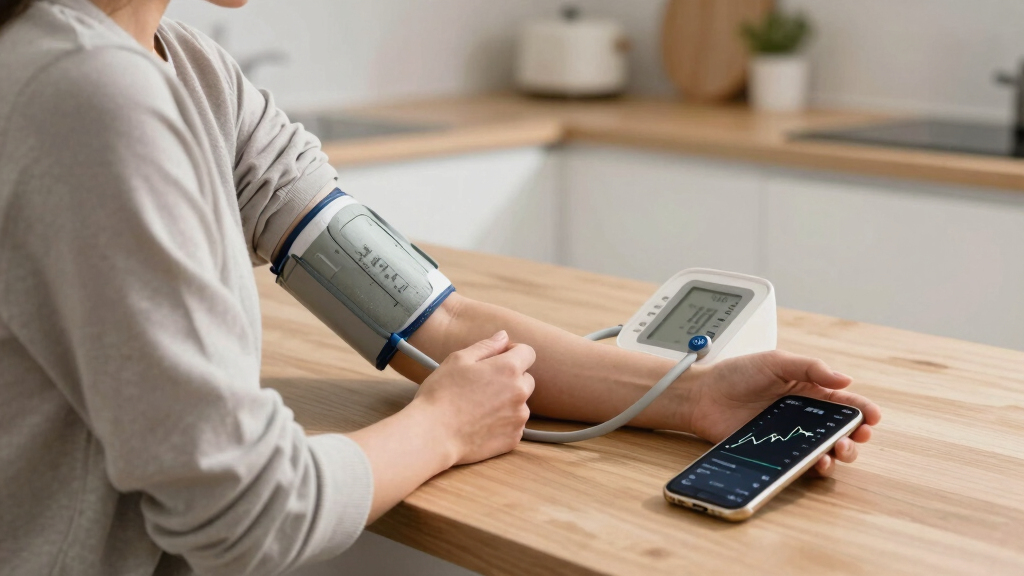

When choosing the best blood pressure monitors for stress tracking at home, accuracy and ease of use are essential. The Oklar Blood Pressure Monitor stands out for its large display and adjustable cuff, making it suitable for regular, comfortable use. The Dario Blood Pressure Monitor offers smart Bluetooth connectivity for seamless tracking via apps, ideal for tech-savvy users. The iHealth Track Pro combines a full-view LED screen with body detection features, making it a versatile choice. However, tradeoffs often involve balancing advanced features against simplicity and cost. Keep reading to see how these options compare and which one fits your needs best.
Key Takeaways
- Top monitors provide a combination of accurate readings and user-friendly interfaces, essential for stress-related tracking.
- Bluetooth and app integration are standard in higher-end models, allowing better trend tracking over time.
- Adjustable cuffs and large displays improve usability for a wide range of arm sizes and visual preferences.
- Wrist monitors tend to be more compact but may sacrifice some accuracy compared to upper arm devices.
- Price varies widely; investing in features like app connectivity and larger cuffs often means paying more, but adds valuable convenience.


More Details on Our Top Picks
Oklar Blood Pressure Monitor Upper Arm Monitors for Home Use BP Machine Sphygmomanometer with 2×120 Reading Memory Adjustable Arm Cuff 8.7″-15.7″ Large Display with LED Background Light Storage Bag
This Oklar monitor stands out for its straightforward one-button operation, making it ideal for users who want quick, hassle-free readings without complex setup. Its large, backlit LED display ensures readability even in dim lighting, which is especially helpful for elderly users. Compared with more advanced models like the Dario Gen2, Oklar offers fewer connectivity features, but it compensates with simplicity and affordability. The device supports up to 240 stored readings, catering well to families monitoring multiple members, though its lack of Bluetooth means manual tracking is necessary. The adjustable cuff fits a wide range of arm sizes, and dual power options enhance portability. However, it doesn’t include app integration or irregular heartbeat detection, which could be drawbacks for those seeking smarter tracking. This monitor makes the most sense for budget-conscious buyers who prioritize ease of use and large displays over digital connectivity.
Pros:- Simple one-button operation for quick measurements
- Large, easy-to-read LED display with backlight
- Supports two users and stores up to 120 readings each
Cons:- No Bluetooth or app connectivity, limiting digital tracking
- Lacks irregular heartbeat detection
Best for: Elderly users or beginners seeking a straightforward, reliable blood pressure monitor for home use.
Not ideal for: Tech-savvy individuals wanting detailed health trend analysis or app integration.
- Arm cuff range:8.7 – 15.7 inches
- Display:Large LED backlit
- Memory:240 readings (120 per user)
- Power supply:3 AAA batteries or Type-C
- Operation:One-button
- Connectivity:None
- Suitable for:Adults, elderly
Bottom line: This is best suited for users who need a basic, reliable monitor without the fuss of digital features.
Dario Blood Pressure Monitor for Home Use Gen2 Automatic Machine, LCD Backlit Display, Large Adjustable Arm Cuff (8.75-16.5in) Smart Bluetooth App & Carry Case
The Dario Gen2 earns its place for its seamless Bluetooth connectivity, which allows easy storage and sharing of up to 400 readings via the dedicated app. Its ergonomic design and color-coded indicator make it user-friendly, especially for those who want detailed trend analysis over time, similar to the iHealth Track Pro. Unlike the Oklar, Dario emphasizes smart management, enabling users to send reports directly to healthcare providers, which is ideal for managing stress-related blood pressure fluctuations. Its large cuff fits a broad range of arm sizes, and the device detects irregular heartbeat, adding a layer of health insight. The tradeoff lies in its higher price and reliance on app compatibility; it’s not suitable for those who prefer a simple, device-only solution. Overall, this pick makes sense for users who prioritize data tracking and remote sharing for stress management or medical consultation.
Pros:- Bluetooth connectivity for automatic data syncing
- Stores up to 400 readings with timestamps
- Detects irregular heartbeat for early warning
Cons:- No included A/C adapter, relies on batteries
- Higher cost compared to basic models
Best for: Individuals managing hypertension who want detailed data logs and easy sharing with healthcare providers.
Not ideal for: Users who prefer a device with no app dependency or limited tech features.
- Memory capacity:Up to 400 readings
- Cuff size:8.75 – 16.5 inches
- Connectivity:Bluetooth
- App compatibility:iOS & Android
- Irregular heartbeat detection:Yes
- Power source:Batteries
Bottom line: Ideal for those who want comprehensive tracking and effortless sharing of blood pressure data over time.
iHealth Track Pro Upper Arm Blood Pressure Monitor, Full-View LED Screen, Body & Cuff Detection, App-Enabled for iOS & Android, Adjustable Cuff Large Adults Arm Friendly
The iHealth Track Pro excels in delivering clear, instant readings thanks to its wide-angle LED display and color-coded indicators, making it especially suitable for older adults or those who want quick visual cues. Its automatic sensors detect body movement, cuff positioning, and irregular heartbeats, reducing measurement errors, unlike simpler models such as the Oklar. It offers both on-device storage and unlimited cloud syncing via its app, making it ideal for users tracking stress-related fluctuations over time. While it supports a broad cuff size and provides accurate results, its reliance on batteries and need for app pairing could be inconvenient for those preferring stand-alone devices. This monitor is best for users who value visual clarity and digital data management in a single device.
Pros:- HD, full-view LED display with color-coded indicators
- Automatic detection of movement and irregular heartbeats
- Syncs with iOS & Android apps for unlimited data storage
Cons:- Requires batteries and app setup for full functionality
- Slightly more complex to operate than single-button models
Best for: Older adults or caregivers who want reliable, easy-to-read results with detailed data management options.
Not ideal for: Tech-averse users who prefer purely manual monitoring without app dependency.
- Display:Full-view LED
- Cuff size:8.7 – 16.5 inches
- Memory:120 readings on device, unlimited via app
- Detection features:Irregular heartbeat, body movement
- App compatibility:iOS & Android
- Power:Batteries
Bottom line: Best suited for users who want a combination of clear visuals and comprehensive digital tracking.
iHealth Track Smart Upper Arm Blood Pressure Monitor with Wide Range Cuff that fits Standard to Large Adult Arms, Bluetooth Compatible for iOS & Android Devices
This model from iHealth combines ease of use with smart features, offering a large, multi-color backlit display that instantly indicates if your blood pressure is within a healthy range—perfect for stress tracking. Its automatic operation and ability to manage up to 99 readings directly on the device appeal to those who want quick checks without app reliance, but it also supports Bluetooth, allowing unlimited data storage and sharing via the companion app. Unlike the Oklar, it emphasizes health alerts with color-coded results, which can help users notice stress spikes quickly. However, its smaller storage capacity on the device and dependence on Bluetooth for extensive tracking might be less appealing for those seeking comprehensive long-term data without a smartphone. It’s a great choice for users prioritizing quick, visual feedback combined with optional app use.
Pros:- Multi-color LED display for instant health status
- Coded display indicating pressure zones
- Supports up to 99 readings on device plus unlimited via app
Cons:- Limited on-device storage compared to other models
- Requires Bluetooth connection for full tracking capabilities
Best for: Busy individuals who want immediate visual cues and optional smartphone tracking for stress monitoring.
Not ideal for: Users needing extensive historical data storage without using a smartphone app.
- Display:Multi-color LED
- Cuff size:8.7 – 16.5 inches
- Memory:99 readings on device
- Connectivity:Bluetooth
- Alerts:Color-coded pressure zones
- App support:iOS & Android
Bottom line: Designed for users who want quick visual feedback with optional detailed tracking via smartphone.
iProven Blood Pressure Monitor Bluetooth for Home Use – Upper Arm with App Integration, Easy-to-Use One-Touch Operation, and Large Display for Convenient Monitoring.
The iProven Bluetooth monitor shines in its combination of simplicity and smart features, providing a large backlit display with high-contrast digits and one-touch operation, making it suitable for all ages, especially caregivers or elderly users. Its Bluetooth integration supports unlimited data logging, trend analysis, and personalized reminders, which can be particularly useful for tracking stress fluctuations over time. Compared to the iHealth Track Pro, it emphasizes customizable alerts and long-term monitoring, though it may lack some advanced irregular heartbeat detection found in higher-end models. The device fits a wide range of arm sizes and is FSA/HSA eligible, making it a practical choice for daily stress management. The tradeoff involves slightly less detailed app features than premium monitors but offers a well-rounded balance of simplicity and connectivity.
Pros:- Large, high-contrast backlit display
- One-touch operation for quick use
- Customizable reminders for consistent monitoring
Cons:- Less advanced health detection features than some competitors
- Requires Bluetooth pairing for app features
Best for: Caregivers and individuals managing ongoing stress who want reminders and data insights in a simple package.
Not ideal for: Users seeking highly detailed health analytics or extensive app features beyond basic tracking.
- Display:Large backlit
- Cuff size:8.75 – 16.5 inches
- Memory:Unlimited via app
- Connectivity:Bluetooth
- Reminders:Customizable
- FSA/HSA:Yes
Bottom line: Best for users who want an easy-to-use device with helpful reminders and long-term data tracking.
Oklar Blood Pressure Monitors for Home Use Rechargeable Wrist Digital BP Machine Cuff with LED Backlit Display, Voice Broadcast, 240 Memory Storage for 2 Users
This wrist monitor stands out for its combination of voice broadcast and large LED display, making it ideal for users with visual impairments or those who prefer audible guidance. Compared with the iHealth Track options, this device offers a more user-friendly experience for individuals who need voice prompts, but it sacrifices some accuracy and consistency that upper arm monitors like the Dario provide. The 240-memory capacity for two users makes it suited for tracking stress-related fluctuations over time for multiple people, yet its wrist-based measurement can sometimes be less precise than upper arm models, especially if not positioned correctly. The rechargeable battery and portable design make it a strong choice for on-the-go monitoring, but the absence of an included charging adapter may inconvenience some users. Overall, this pick is best for those seeking an easy-to-use, accessible device that can be operated independently without replacing batteries frequently.
Pros:- Voice broadcast feature enhances usability for visually impaired users
- Large, backlit LED display improves readability in low-light conditions
- Rechargeable battery with Type-C charging offers convenience and portability
- Stores up to 240 readings for two users, facilitating long-term stress tracking
Cons:- Wrist-based measurements can be less accurate than upper arm monitors, especially if not positioned properly
- No included charging adapter, which may inconvenience some users
Best for: Individuals with eyesight challenges or who prefer auditory feedback for stress monitoring at home
Not ideal for: Users seeking the highest accuracy in blood pressure readings, especially for medical diagnoses, who should opt for upper arm models like the iHealth Track
- Measurement Method:Wrist
- Memory Capacity:240 readings for 2 users
- Display:Large LED backlit
- Voice Broadcast:Yes
- Battery:Rechargeable via Type-C
- Cuff Size Range:4.92 to 8.46 inches
Bottom line: This device is best suited for users who prioritize accessibility and ease of use over absolute measurement precision.

How We Picked
The products in this roundup were selected based on their ability to deliver reliable blood pressure readings with features that support stress tracking. We prioritized accuracy, ease of use, cuff adjustability, and smart features like app integration for tracking trends over time. Durability, display readability, and user feedback also played a role in our evaluation. The ranking reflects a balance between performance, value, and usability, ensuring each option serves a distinct user need or preference.Factors to Consider When Choosing Best Blood Pressure Monitors For Stress Tracking At Home
Choosing the best blood pressure monitor for stress at home involves evaluating several key factors beyond just the device’s features. Accuracy is paramount, as stress management relies on precise readings. Ease of use, including cuff size and display clarity, affects daily usability. Smart features like app connectivity can help track trends, but they also add complexity and cost. Consider your budget and how much you value automation versus manual operation to find the right balance.Accuracy and Validation
Accurate measurements are crucial for stress tracking, as inconsistent readings can lead to misguided health decisions. Look for monitors that are clinically validated and have been tested against standard medical devices. Be wary of overly cheap models lacking proper validation, as they can produce misleading results. Investing in a proven, validated device ensures your stress management efforts are based on reliable data.
Ease of Use and Comfort
Devices with adjustable cuffs and large, easy-to-read displays make daily monitoring less stressful and more consistent. Wrist monitors tend to be more portable but may compromise accuracy, so consider your priorities carefully. Comfort during measurement encourages regular use, which is essential for effective stress management. Simple one-touch operation and clear instructions help prevent user error and frustration.
Smart Connectivity and App Features
Many modern monitors include Bluetooth or Wi-Fi for syncing data with smartphones. This feature is valuable for tracking trends over time and sharing data with healthcare providers. However, it can introduce complexity for less tech-savvy users, and some apps may have limited functionality or compatibility issues. Decide if app integration justifies the extra cost and potential setup effort in your routine.
Cuff Size and Fit
An improper cuff fit can lead to inaccurate readings, making it a critical factor. Most upper arm monitors come with adjustable cuffs that fit a range of arm sizes, but verify the size range before purchasing. Larger cuffs are better suited for individuals with bigger arms, preventing discomfort and measurement errors. Wrist monitors typically have fixed sizes, so check the specifications carefully if you opt for one.
Price and Value
While budget models may seem attractive, they often lack features like app connectivity, validation, or large displays. Conversely, premium devices tend to offer better accuracy and smarter features but at a higher price point. Consider how much you are willing to spend based on your need for detailed tracking versus simple, reliable readings. Sometimes, a mid-range device provides the best balance of features and affordability for most users.
Frequently Asked Questions
Can wrist blood pressure monitors be as accurate as upper arm monitors?
Wrist monitors can be accurate if used correctly and if they are validated, but they are generally more sensitive to body position and movement. Proper placement at heart level during measurement is essential for accuracy. For consistent, reliable readings especially for stress tracking, upper arm monitors are typically preferred, as they tend to produce more stable results under normal conditions.
How often should I check my blood pressure for stress management?
To effectively monitor stress-related blood pressure changes, aim for daily measurements at similar times, ideally morning and evening. Consistency helps identify patterns, especially during stressful periods. However, avoid excessive readings, which can cause anxiety; focus on regular, moderate checks to build an accurate picture of your baseline and how it fluctuates with stress levels.
Is app connectivity necessary for effective stress tracking?
App connectivity is not essential but can significantly enhance your ability to track trends over time and share data with healthcare providers. If you prefer simple, straightforward measurements without additional features, a basic device may suffice. However, if you want detailed logs and insights to identify stress patterns, choosing a monitor with reliable app support adds value, especially for long-term management.
What cuff size should I consider if I have larger arms?
Having the correct cuff size is vital for accurate readings. If you have larger arms, look for devices that specify a cuff size range that accommodates your arm circumference, often 16 inches or more. Using a cuff that is too small can artificially inflate readings, which might lead to unnecessary concern or misdiagnosis. Always check product specifications before purchasing.
Are rechargeable blood pressure monitors more convenient than battery-operated ones?
Rechargeable monitors eliminate the need for frequent battery replacements, making them more convenient for regular use. They also often come with features like quick recharging and longer lifespan. However, they may be slightly more expensive and require access to power for recharging. For consistent daily monitoring, a rechargeable device offers a practical, hassle-free option.
Conclusion
For most users seeking reliable stress tracking, the Oklar Blood Pressure Monitor offers a solid balance of accuracy and ease of use, making it ideal for everyday monitoring. Those who prioritize detailed trend analysis and smartphone integration might prefer the Dario Blood Pressure Monitor, especially if they are comfortable with app-based data management. If affordability and simplicity are key, the iHealth Track models provide effective options without sacrificing core functionality. For beginners or those with larger arms, choosing a device with a large cuff and straightforward operation ensures consistent, stress-free measurements. Ultimately, your choice should reflect your comfort with technology, budget, and specific health needs.