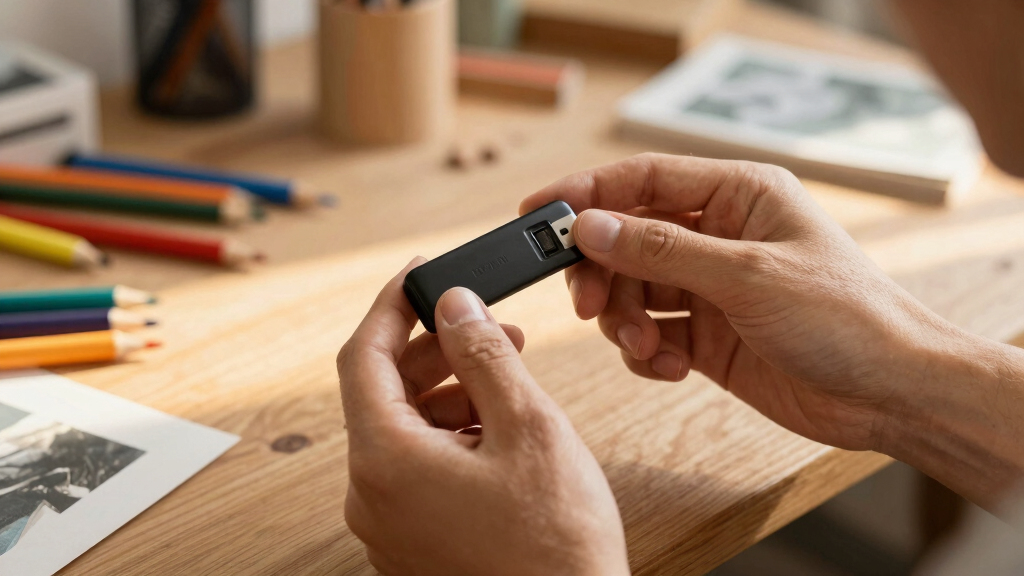
When choosing the best encrypted USB drives for sensitive files, security and ease of use are paramount. The Kingston IronKey Locker+ 50 stands out for its military-grade encryption and rugged build, making it ideal for high-security needs. Meanwhile, the Apricorn ASK3-NX offers a balance of fast performance and reliable encryption, perfect for professional users. The main tradeoffs in this category often involve price versus security features or portability versus durability. Keep reading for a detailed breakdown to find the best fit for your security requirements.
Key Takeaways
- Top picks combine strong encryption standards like AES-256 with user-friendly interfaces.
- Durability and physical security features vary widely, influencing suitability for travel or harsh environments.
- Price often correlates with advanced security features; premium models tend to offer more comprehensive protection.
- Smaller capacity drives can be surprisingly secure but may lack features needed for larger data sets.
- Ease of setup and management is critical for non-technical users, making some drives better suited for beginners.


More Details on Our Top Picks
Kingston IronKey Locker+ 50 32GB Encrypted USB Flash Drive
The Kingston IronKey Locker+ 50 distinguishes itself through military-grade XTS-AES encryption and comprehensive security features like brute force and BadUSB attack protection. Compared to the Apricorn ASK3-NX, it offers advanced hardware security but at a smaller 32GB capacity, which might be limiting for users with larger data needs. The inclusion of multi-password options, automatic cloud backup, and a durable metal casing makes it ideal for professionals handling sensitive information, especially in regulated environments. However, its higher price point for limited storage and absence of additional features like onboard PIN protection may be drawbacks for budget-conscious buyers. This drive makes the most sense for security-focused users who prioritize ruggedness and encryption over capacity.
Pros:- Military-grade XTS-AES encryption with multiple security layers
- Multi-password and cloud backup options
- Durable metal casing with high-speed performance
Cons:- Limited 32GB storage capacity
- Premium price for entry-level encryption features
Best for: Professionals requiring military-grade encryption and durability for sensitive data
Not ideal for: Users needing high storage capacity or budget-friendly options
- Capacity:32GB
- Encryption Type:XTS-AES
- Read Speed:145MB/s
- Write Speed:115MB/s
- USB Version:3.2 Gen 1
- Security Features:Multi-password, Brute Force Protection, BadUSB Defense
Bottom line: This drive is best suited for security-conscious professionals needing rugged, military-grade protection, despite its limited capacity.
Integral 4GB Crypto-197 256-Bit 3.0 USB Flash Drive Encrypted – FIPS 197 Certified, Brute Force Password Attack Protection & Waterproof Double Layer Design
The Integral Crypto-197 stands out for its FIPS 197 certification and waterproof, double-layer design, making it ideal for government agencies and field operations. Unlike the Apricorn ASK3-NX, which emphasizes hardware PIN authentication, this drive offers a superior security standard with automatic data erasure after multiple failed attempts, ensuring high-level protection. Its rugged construction shields against physical damage, making it perfect for harsh environments. However, with only 4GB of storage, it is unsuitable for users with larger data needs, and its slower transfer speeds compared to newer USB 3.1 drives could hinder productivity. This product is ideal for users who prioritize strict compliance and ruggedness over capacity.
Pros:- FIPS 197 certification for high security standards
- Waterproof and shock-resistant design
- Automatic data erasure after brute force attempts
Cons:- Limited 4GB storage capacity
- Slower transfer speeds than newer drives
Best for: Government agencies or fieldworkers needing certified, tamper-resistant security
Not ideal for: Everyday users requiring large storage or fast data transfer
- Memory Storage Capacity:4GB
- Encryption Type:256-bit hardware AES
- Certification:FIPS 197
- Durability:Waterproof, double-layer
- Transfer Speed:variable, but slower than USB 3.1
- Protection Features:Brute force attack protection, auto-erase
Bottom line: Best suited for security-critical environments where durability and certification trump storage size.
Apricorn ASK3-NX 64GB USB 3.1 Encrypted Secure Drive (ASK3-NX-64GB)
The Apricorn ASK3-NX offers a versatile 64GB capacity with hardware-based 256-bit AES encryption and software-free authentication. Compared to the Lexar D40E, which has no hardware encryption, the ASK3-NX provides a more robust security solution suitable for users needing cross-platform compatibility with no software dependencies. Its embedded PIN keypad enhances security while maintaining ease of use across Windows, Mac, and Linux systems. However, its 64GB capacity may not suffice for large datasets, and the absence of additional features like cloud backup or rugged casing limits its appeal for extreme environments. This drive makes the best choice for professionals seeking reliable, software-free security across multiple OSs.
Pros:- Hardware-based 256-bit AES encryption
- No software needed for authentication
- Cross-platform compatibility
Cons:- Limited 64GB storage capacity
- Lacks rugged or waterproof features
Best for: IT professionals and security-conscious users needing platform-agnostic, software-free encryption
Not ideal for: Users requiring large storage or ruggedized devices for outdoor use
- Memory Storage Capacity:64GB
- Encryption Type:256-bit hardware AES
- Authentication:Embedded PIN keypad
- Compatibility:Windows, Mac, Linux
- Form Factor:USB 3.1
- Durability:Standard plastic casing
Bottom line: Ideal for cross-platform professionals seeking hardware encryption without software dependencies, despite modest storage and lack of ruggedness.
Apricorn ASK3-NX 8GB USB 3.1 Encrypted Secure Drive (ASK3-NX-8GB)
The Apricorn ASK3-NX 8GB is tailored for users with small data sets needing high security. It offers the same hardware 256-bit AES encryption and PIN authentication as its larger sibling, but its 8GB capacity makes it less suitable for larger files. Compared to the Lexar D40E, which uses software encryption, the ASK3-NX’s hardware-based approach significantly enhances security, especially against malware attacks like BadUSB. Its rugged, compact design ensures portability and durability. The main tradeoff is the limited storage, which restricts its use to critical documents rather than large media or extensive backups. This device is perfect for professionals or travelers who prioritize security for small but sensitive data.
Pros:- Hardware-based 256-bit AES encryption
- PIN authentication with physical keypad
- Rugged, compact design
Cons:- Very limited 8GB capacity
- Not suitable for large files or extensive backups
Best for: Travelers and security-minded professionals with minimal data needs
Not ideal for: Users with larger storage requirements or needing rugged hardware for outdoor use
- Memory Storage Capacity:8GB
- Encryption Type:256-bit hardware AES
- Authentication:PIN keypad
- USB Version:3.1
- Durability:Rugged, compact
- Speed:72MB/s write, 77MB/s read
Bottom line: Best for those needing portable, highly secure storage for small files, accepting the capacity constraints.
Lexar D40E 128GB Dual USB 3.2 Gen 1 Type-C Jump Drive, USB-C Flash Metal Housing Swivel Design Thumb Drive
The Lexar D40E offers a generous 128GB capacity with dual USB Type-A and Type-C connectors, making it highly versatile. It includes advanced security software with 256-bit AES encryption, providing robust data protection, but unlike the Apricorn ASK3-NX, it relies on software-based security which may be less resistant to malware attacks like BadUSB. Its metal swivel housing adds durability and style, suitable for everyday secure storage. Transfer speeds up to 100MB/s are decent but slower than the newer USB 3.1 drives, which could impact workflow in time-sensitive contexts. Still, this pick balances capacity, security, and portability well for general users.
Pros:- 128GB high capacity
- Dual USB Type-A and Type-C connectors
- Secure with 256-bit AES encryption
Cons:- Software-based security may be less tamper-proof
- Transfer speeds slower than newer models
Best for: Business users and IT departments needing large, secure portable storage
Not ideal for: High-security environments demanding hardware-based encryption or rugged outdoor use
- Memory Storage Capacity:128GB
- Encryption Type:256-bit AES (software)
- Connectors:USB-C and Type-A
- Speed:up to 100MB/s
- Housing:Metal swivel
- Compatibility:USB 3.2 Gen 1
Bottom line: Suitable for users seeking large, versatile storage with strong security, but not ideal for high-threat environments.
Integral Courier 16GB Encrypted USB Flash Memory – Keep Sensitive Data Safe with USB Drive Hardware Encryption – USB Flash Drive with FIPS 197 Security Standard to Help with GDPR Compliance, Blue
This drive stands out for its adherence to FIPS 197, a high-level security standard approved by the U.S. Government, making it ideal for users with strict compliance needs. It offers AES 256-bit hardware encryption and brute-force attack protection, including automatic data erasure after six failed attempts, providing a solid security layer compared to software-based encryption solutions. Its auto-lock feature and secure entry via a high-strength password make it suitable for sensitive environments. Unlike less secure models, it requires no software installation, simplifying setup on both Windows and Mac. However, its 16GB capacity might be limiting for users needing larger storage, and the lack of additional security features like biometric access is a drawback. This pick makes the most sense for professionals managing confidential data in regulated industries who prioritize government-grade security.
Pros:- Certified to FIPS 197, ensuring compliance with strict security standards
- Automatic data erasure after multiple failed login attempts enhances security
- No software installation required, compatible with Windows and Mac
Cons:- Limited storage capacity at 16GB for large files or extensive backups
- Lacks biometric or multi-factor authentication options
Best for: Security-conscious professionals handling regulatory-compliant sensitive data
Not ideal for: Users needing large storage capacity or simple everyday file transfer without high security
- Security Standard:FIPS 197
- Encryption:AES 256-bit hardware
- Password Length:8-16 characters
- Connection:USB 3.0
- Compatibility:Windows and Mac
- Data Erasure:after 6 failed attempts
Bottom line: This drive is best suited for users who need government-grade security and are okay with lower capacity.
Lexar 128GB 2-Pack Flash Drive A30E USB 3.2 Gen 1, USB Drive up to 100MB/s, Storage Expansion and Backup for PC and Mac Systems
Compared to the Integral Courier, the Lexar A30E offers a significantly larger capacity at 128GB, making it suitable for users who need more space without sacrificing speed, as it supports transfer rates up to 100MB/s. Its password protection with auto-encryption provides a straightforward security feature that is easier to set up than hardware encryption. The dual-pack makes it a practical choice for those needing multiple drives or backups. Unlike the more security-focused Integral, it prioritizes ease of use and capacity over government-grade certifications, which might be a concern for highly regulated sectors. Its slim, retractable design and compatibility with both Windows and Mac make it ideal for everyday secure file transfers. However, it does not provide hardware-level encryption, which is a limitation for the most sensitive files, and it lacks biometric access or advanced security features.
Pros:- 128GB capacity suitable for large files and backups
- Transfer speeds up to 100MB/s for quick data movement
- Auto-encryption and password protection for easy security
Cons:- Lacks hardware encryption certified to government standards
- No biometric or multi-factor authentication options
Best for: Small business owners or power users seeking large capacity and fast transfers with decent security
Not ideal for: Professionals needing compliance with strict security standards like FIPS 197
- Storage Capacity:128GB
- Transfer Speed:up to 100MB/s
- Encryption:Auto-encryption with password
- Connection:USB 3.2 Gen 1
- Compatibility:Windows and Mac
- Design:Slim, retractable
Bottom line: This drive makes the most sense for users seeking affordability and capacity with moderate security needs.
Integral 128GB Secure 360 Encrypted USB3.0 Flash Drive (256-bit AES Encryption)
This model offers a unique dual-partition system, allowing users to store regular files separately from encrypted sensitive data, which is a major advantage over simpler encryption drives like the Lexar A30E. Its 256-bit AES encryption provides strong security comparable to the Integral Courier but with added flexibility. The drive automatically deletes data after 10 failed attempts, similar to the Courier’s brute-force protection, but with a more user-friendly setup that requires no software installation. Unlike the Courier, it supports encrypted partitions up to full capacity, making it more versatile for different data types. However, its larger size and lack of FIPS certification might make it less suitable for highly regulated environments. It’s an excellent choice for users who want a blend of security and convenience without complex setup.
Pros:- Dual partition capability for separating sensitive and regular files
- 256-bit AES encryption ensures high data security
- Automatic data deletion after 10 failed attempts
Cons:- No FIPS certification, limiting use in highly regulated sectors
- Bulkier design compared to simpler drives like Lexar A30E
Best for: Professionals needing partitioned storage for different data sensitivity levels
Not ideal for: Users requiring government-certified security or biometric access
- Encryption:256-bit AES
- Partitioning:Dual partitions
- Data Deletion:after 10 failed attempts
- Connection:USB 3.0
- Size:Standard USB size
- Compatibility:Windows and macOS
Bottom line: This drive suits users who want flexible, high-security encryption with partitioning features for everyday use.

How We Picked
We evaluated each product based on security strength, ease of use, build quality, and value for money. Performance benchmarks, such as transfer speeds, were also considered to ensure practicality. We prioritized drives with proven encryption standards like AES-256 and FIPS 140-2 or 197 certification, which are key for sensitive data protection. The ranking reflects a balance between security features, user experience, and price, helping buyers find options suitable for both casual and high-security needs.Factors to Consider When Choosing Best Encrypted USB Drives For Sensitive Files
Selecting the right encrypted USB drive involves understanding several key factors. Beyond basic encryption, consider how the drive’s physical durability, user interface, and compatibility impact everyday use. It’s also vital to weigh the security standards and certification levels, especially if you handle highly sensitive information. Knowing these broader considerations can help you avoid common pitfalls like choosing a drive with weak encryption or poor usability.Encryption Standards and Certification
Look for drives that use AES-256 encryption, which is currently the gold standard for data security. Certification standards like FIPS 140-2 or 197 add an extra layer of assurance, especially for corporate or government use. Choosing a drive with proven standards helps ensure your data remains protected against brute-force attacks and unauthorized access.
Physical Durability and Portability
Consider whether you need a drive that can withstand drops, water, or dust. Rugged designs or waterproof features can protect your data in harsh environments, but they often come at a higher cost or bulkier form factors. If portability is a priority, look for compact models that balance size with durability.
Ease of Use and Management
User-friendly interfaces, simple setup procedures, and management software can make encryption and access straightforward, especially for non-technical users. Beware of drives that require complex software or have limited support, as these can complicate daily use or recovery in emergencies.
Performance and Transfer Speeds
Fast read/write speeds are essential for handling large files efficiently. USB 3.1 or 3.2 standards typically offer the best balance of speed and compatibility. However, high security features sometimes impact speed, so consider your workflow needs when prioritizing performance versus security.
Price and Value
Higher-priced drives often include more advanced security features, better build quality, and longer warranties. Balance your budget against the level of protection you need; for casual use, mid-range models might suffice, while professionals handling highly sensitive data should consider premium options with comprehensive certifications.
Frequently Asked Questions
Can I use these encrypted USB drives on different operating systems?
Most modern encrypted USB drives support multiple operating systems like Windows, Mac, and Linux, but compatibility varies. Some drives come with software that needs to be installed, which might not be available or fully functional across all platforms. Check the manufacturer’s specifications to ensure seamless cross-platform use, especially if you switch between systems regularly.
What happens if I forget my password or PIN?
For drives with strong encryption, losing your password can mean permanent data loss, as these devices often lack backdoors. Some models offer additional security features like recovery keys or biometric access, but these are not universal. Always choose a drive with a reliable recovery process if losing access is a concern, and keep backup copies of recovery information securely stored.
Are there risks of data breaches if I lose the encrypted USB drive?
While encryption significantly reduces the risk of data breaches if lost or stolen, no security measure is foolproof. Physical damage, malware, or vulnerabilities in the encryption implementation can pose risks. It’s essential to combine encryption with good security practices, such as strong passwords and regular updates, to protect sensitive information effectively.
How often should I update or replace my encrypted USB drive?
Encryption standards evolve, and hardware can degrade over time. It’s advisable to replace drives every 3-5 years or sooner if you notice physical damage or performance issues. Regularly updating security software and firmware provided by manufacturers can also help maintain security integrity over the drive’s lifespan.
Is it safe to use encrypted USB drives for cloud backups or transfers?
Encrypted USB drives are designed for local data protection, but they can be used in conjunction with cloud services for added security. Always ensure the drive’s encryption is robust and compatible with your backup or transfer methods. Remember that transferring data over the internet introduces additional risks, so encrypting files before uploading provides an extra layer of security.