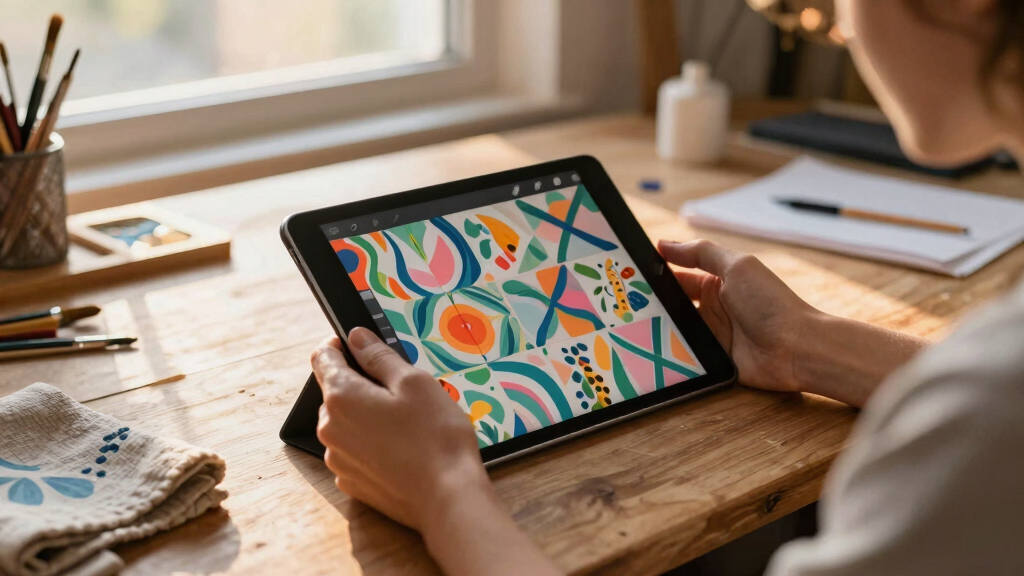
Finding the best iPad for digital pattern design involves balancing power, display quality, and affordability. The Apple iPad Pro 12.9-inch (6th Generation) stands out for its stunning Liquid Retina XDR display and robust performance, making it ideal for detailed work. The Apple iPad Air 13-inch (M2) offers a sleek design with the latest M2 chip and excellent display, perfect for artists on the go. Meanwhile, the XPPen Artist13.3 Pro provides a dedicated drawing tablet experience for those who prefer pen-on-screen precision. The main tradeoffs involve choosing between high-end displays, processing power, and budget constraints. Continue reading for a detailed breakdown of each option and find the best fit for your digital pattern design needs.
Key Takeaways
- The top-tier iPads like the Pro models excel with high-resolution displays and powerful processors, ideal for intricate pattern work.
- Budget options such as the renewed iPad 10.2-inch still provide decent performance but may lack advanced features like ProMotion or high refresh rates.
- Apple Pencil compatibility varies; the latest Pencil Pro models offer the most precision, but require device compatibility checks.
- Display quality, especially true color accuracy and refresh rates, is crucial for detailed pattern design, influencing your choice.
- Connectivity and storage options significantly impact workflow flexibility, especially for professional or on-the-go use.



More Details on Our Top Picks
Apple Pencil Pro: Latest Model – Device Compatibility Check Required – Pixel-Perfect Precision, Tilt and Pressure Sensitivity, Perfect for Note-Taking, Drawing, and Art. Charges and Pairs Magnetically
This version of the Apple Pencil Pro stands out for its advanced gesture controls, haptic feedback, and pixel-perfect precision, making it ideal for intricate pattern design. Compared with the Apple Pencil (2nd generation), it offers more nuanced tilt and pressure sensitivity, which enhances shading and detail work. The magnetic attachment simplifies charging and pairing, providing a seamless workflow. However, its compatibility is limited to newer iPad models, so older devices won’t benefit from its features. The low latency and tilt support make it a top choice for detailed digital pattern creation, but the need to check device compatibility can be a hurdle for some users.
Pros:- Pixel-perfect precision for detailed work
- Advanced tilt and pressure sensitivity
- Seamless magnetic charging and pairing
- Haptic feedback enhances control
Cons:- Compatibility limited to newer iPads, requiring device check
- Stylus sold separately, increasing overall cost
Best for: Professional pattern designers who own compatible iPad Pro or iPad Air models and need precise control.
Not ideal for: Casual users or those with older iPads, as the stylus requires newer hardware and offers features that won’t be utilized otherwise.
- Compatibility:iPad Pro 13-inch (M4, M5), iPad Air 11-inch (M2, M3, M4), iPad mini (A17 Pro)
- Precision:Pixel-perfect, tilt and pressure sensitive
- Charging:Magnetic wireless
- Latency:Low latency
- Additional Features:Gestures, haptics, hover support (iPad Pro, M4/M5)
Bottom line: This pick is perfect for professionals with compatible iPads who demand precise and responsive stylus input for pattern design.
Apple Pencil Pro: Latest Model – Device Compatibility Check Required – Pixel-Perfect Precision, Tilt and Pressure Sensitivity, Perfect for Note-Taking, Drawing, and Art. Charges and Pairs Magnetically
This version of the Apple Pencil Pro stands out for its advanced gesture controls, haptic feedback, and pixel-perfect precision, making it ideal for intricate pattern design. Compared with the Apple Pencil (2nd generation), it offers more nuanced tilt and pressure sensitivity, which enhances shading and detail work. The magnetic attachment simplifies charging and pairing, providing a seamless workflow. However, its compatibility is limited to newer iPad models, so older devices won’t benefit from its features. The low latency and tilt support make it a top choice for detailed digital pattern creation, but the need to check device compatibility can be a hurdle for some users.
Pros:- Pixel-perfect precision for detailed work
- Advanced tilt and pressure sensitivity
- Seamless magnetic charging and pairing
- Haptic feedback enhances control
Cons:- Compatibility limited to newer iPads, requiring device check
- Stylus sold separately, increasing overall cost
Best for: Professional pattern designers who own compatible iPad Pro or iPad Air models and need precise control.
Not ideal for: Casual users or those with older iPads, as the stylus requires newer hardware and offers features that won’t be utilized otherwise.
- Compatibility:iPad Pro 13-inch (M4, M5), iPad Air 11-inch (M2, M3, M4), iPad mini (A17 Pro)
- Precision:Pixel-perfect, tilt and pressure sensitive
- Charging:Magnetic wireless
- Latency:Low latency
- Additional Features:Gestures, haptics, hover support (iPad Pro, M4/M5)
Bottom line: This pick is perfect for professionals with compatible iPads who demand precise and responsive stylus input for pattern design.
Apple Pencil Pro: Latest Model – Device Compatibility Check Required – Pixel-Perfect Precision, Tilt and Pressure Sensitivity, Perfect for Note-Taking, Drawing, and Art. Charges and Pairs Magnetically
This version of the Apple Pencil Pro stands out for its advanced gesture controls, haptic feedback, and pixel-perfect precision, making it ideal for intricate pattern design. Compared with the Apple Pencil (2nd generation), it offers more nuanced tilt and pressure sensitivity, which enhances shading and detail work. The magnetic attachment simplifies charging and pairing, providing a seamless workflow. However, its compatibility is limited to newer iPad models, so older devices won’t benefit from its features. The low latency and tilt support make it a top choice for detailed digital pattern creation, but the need to check device compatibility can be a hurdle for some users.
Pros:- Pixel-perfect precision for detailed work
- Advanced tilt and pressure sensitivity
- Seamless magnetic charging and pairing
- Haptic feedback enhances control
Cons:- Compatibility limited to newer iPads, requiring device check
- Stylus sold separately, increasing overall cost
Best for: Professional pattern designers who own compatible iPad Pro or iPad Air models and need precise control.
Not ideal for: Casual users or those with older iPads, as the stylus requires newer hardware and offers features that won’t be utilized otherwise.
- Compatibility:iPad Pro 13-inch (M4, M5), iPad Air 11-inch (M2, M3, M4), iPad mini (A17 Pro)
- Precision:Pixel-perfect, tilt and pressure sensitive
- Charging:Magnetic wireless
- Latency:Low latency
- Additional Features:Gestures, haptics, hover support (iPad Pro, M4/M5)
Bottom line: This pick is perfect for professionals with compatible iPads who demand precise and responsive stylus input for pattern design.
Apple Pencil Pro: Latest Model – Device Compatibility Check Required – Pixel-Perfect Precision, Tilt and Pressure Sensitivity, Perfect for Note-Taking, Drawing, and Art. Charges and Pairs Magnetically
This version of the Apple Pencil Pro stands out for its advanced gesture controls, haptic feedback, and pixel-perfect precision, making it ideal for intricate pattern design. Compared with the Apple Pencil (2nd generation), it offers more nuanced tilt and pressure sensitivity, which enhances shading and detail work. The magnetic attachment simplifies charging and pairing, providing a seamless workflow. However, its compatibility is limited to newer iPad models, so older devices won’t benefit from its features. The low latency and tilt support make it a top choice for detailed digital pattern creation, but the need to check device compatibility can be a hurdle for some users.
Pros:- Pixel-perfect precision for detailed work
- Advanced tilt and pressure sensitivity
- Seamless magnetic charging and pairing
- Haptic feedback enhances control
Cons:- Compatibility limited to newer iPads, requiring device check
- Stylus sold separately, increasing overall cost
Best for: Professional pattern designers who own compatible iPad Pro or iPad Air models and need precise control.
Not ideal for: Casual users or those with older iPads, as the stylus requires newer hardware and offers features that won’t be utilized otherwise.
- Compatibility:iPad Pro 13-inch (M4, M5), iPad Air 11-inch (M2, M3, M4), iPad mini (A17 Pro)
- Precision:Pixel-perfect, tilt and pressure sensitive
- Charging:Magnetic wireless
- Latency:Low latency
- Additional Features:Gestures, haptics, hover support (iPad Pro, M4/M5)
Bottom line: This pick is perfect for professionals with compatible iPads who demand precise and responsive stylus input for pattern design.
Apple Pencil Pro: Latest Model – Device Compatibility Check Required – Pixel-Perfect Precision, Tilt and Pressure Sensitivity, Perfect for Note-Taking, Drawing, and Art. Charges and Pairs Magnetically
This version of the Apple Pencil Pro stands out for its advanced gesture controls, haptic feedback, and pixel-perfect precision, making it ideal for intricate pattern design. Compared with the Apple Pencil (2nd generation), it offers more nuanced tilt and pressure sensitivity, which enhances shading and detail work. The magnetic attachment simplifies charging and pairing, providing a seamless workflow. However, its compatibility is limited to newer iPad models, so older devices won’t benefit from its features. The low latency and tilt support make it a top choice for detailed digital pattern creation, but the need to check device compatibility can be a hurdle for some users.
Pros:- Pixel-perfect precision for detailed work
- Advanced tilt and pressure sensitivity
- Seamless magnetic charging and pairing
- Haptic feedback enhances control
Cons:- Compatibility limited to newer iPads, requiring device check
- Stylus sold separately, increasing overall cost
Best for: Professional pattern designers who own compatible iPad Pro or iPad Air models and need precise control.
Not ideal for: Casual users or those with older iPads, as the stylus requires newer hardware and offers features that won’t be utilized otherwise.
- Compatibility:iPad Pro 13-inch (M4, M5), iPad Air 11-inch (M2, M3, M4), iPad mini (A17 Pro)
- Precision:Pixel-perfect, tilt and pressure sensitive
- Charging:Magnetic wireless
- Latency:Low latency
- Additional Features:Gestures, haptics, hover support (iPad Pro, M4/M5)
Bottom line: This pick is perfect for professionals with compatible iPads who demand precise and responsive stylus input for pattern design.
Apple Pencil Pro: Latest Model – Device Compatibility Check Required – Pixel-Perfect Precision, Tilt and Pressure Sensitivity, Perfect for Note-Taking, Drawing, and Art. Charges and Pairs Magnetically
This version of the Apple Pencil Pro stands out for its advanced gesture controls, haptic feedback, and pixel-perfect precision, making it ideal for intricate pattern design. Compared with the Apple Pencil (2nd generation), it offers more nuanced tilt and pressure sensitivity, which enhances shading and detail work. The magnetic attachment simplifies charging and pairing, providing a seamless workflow. However, its compatibility is limited to newer iPad models, so older devices won’t benefit from its features. The low latency and tilt support make it a top choice for detailed digital pattern creation, but the need to check device compatibility can be a hurdle for some users.
Pros:- Pixel-perfect precision for detailed work
- Advanced tilt and pressure sensitivity
- Seamless magnetic charging and pairing
- Haptic feedback enhances control
Cons:- Compatibility limited to newer iPads, requiring device check
- Stylus sold separately, increasing overall cost
Best for: Professional pattern designers who own compatible iPad Pro or iPad Air models and need precise control.
Not ideal for: Casual users or those with older iPads, as the stylus requires newer hardware and offers features that won’t be utilized otherwise.
- Compatibility:iPad Pro 13-inch (M4, M5), iPad Air 11-inch (M2, M3, M4), iPad mini (A17 Pro)
- Precision:Pixel-perfect, tilt and pressure sensitive
- Charging:Magnetic wireless
- Latency:Low latency
- Additional Features:Gestures, haptics, hover support (iPad Pro, M4/M5)
Bottom line: This pick is perfect for professionals with compatible iPads who demand precise and responsive stylus input for pattern design.
Apple Pencil Pro: Latest Model – Device Compatibility Check Required – Pixel-Perfect Precision, Tilt and Pressure Sensitivity, Perfect for Note-Taking, Drawing, and Art. Charges and Pairs Magnetically
This version of the Apple Pencil Pro stands out for its advanced gesture controls, haptic feedback, and pixel-perfect precision, making it ideal for intricate pattern design. Compared with the Apple Pencil (2nd generation), it offers more nuanced tilt and pressure sensitivity, which enhances shading and detail work. The magnetic attachment simplifies charging and pairing, providing a seamless workflow. However, its compatibility is limited to newer iPad models, so older devices won’t benefit from its features. The low latency and tilt support make it a top choice for detailed digital pattern creation, but the need to check device compatibility can be a hurdle for some users.
Pros:- Pixel-perfect precision for detailed work
- Advanced tilt and pressure sensitivity
- Seamless magnetic charging and pairing
- Haptic feedback enhances control
Cons:- Compatibility limited to newer iPads, requiring device check
- Stylus sold separately, increasing overall cost
Best for: Professional pattern designers who own compatible iPad Pro or iPad Air models and need precise control.
Not ideal for: Casual users or those with older iPads, as the stylus requires newer hardware and offers features that won’t be utilized otherwise.
- Compatibility:iPad Pro 13-inch (M4, M5), iPad Air 11-inch (M2, M3, M4), iPad mini (A17 Pro)
- Precision:Pixel-perfect, tilt and pressure sensitive
- Charging:Magnetic wireless
- Latency:Low latency
- Additional Features:Gestures, haptics, hover support (iPad Pro, M4/M5)
Bottom line: This pick is perfect for professionals with compatible iPads who demand precise and responsive stylus input for pattern design.
Apple iPad Pro 13-inch (M5): Ultra Retina XDR Display, 256GB, Landscape 12MP Front Camera/12MP Back Camera, LiDAR Scanner, Wi-Fi 7 with Apple N1, Face ID, All-Day Battery Life — Space Black
This iPad Pro 13-inch with M5 chip stands out for combining industry-leading performance with a stunning display that’s ideal for digital pattern design. Its high-end Ultra Retina XDR screen offers exceptional color accuracy and contrast, making it perfect for detailed pattern work. Compared with the iPad 11-inch (2023), this model provides more screen real estate and power, but at a higher price and with a larger size that might be less portable. The presence of a LiDAR Scanner and Wi-Fi 7 ensures future-proof connectivity and advanced features for creative workflows. The tradeoff is that its premium features are best utilized by serious designers and professionals willing to invest in a robust device.
Pros:- Exceptional Ultra Retina XDR display with precise color and contrast
- Powerful M5 chip handles multitasking and heavy apps seamlessly
- Large storage options up to 2TB support massive project files
- ProMotion technology for smoother drawing and navigation
Cons:- High price point may be prohibitive for casual users
- Size and weight make it less portable for on-the-go use
Best for: Professional pattern designers who need maximum screen size, performance, and color accuracy for detailed work.
Not ideal for: Casual users or hobbyists who prefer a lightweight, budget-friendly device with less emphasis on high-end specs.
- Display:13-inch Ultra Retina XDR
- Processor:Apple M5 chip
- Storage Capacity:up to 2TB
- Memory:16GB
- Connectivity:Wi-Fi 7
- Camera:12MP front and back, LiDAR Scanner
Bottom line: This iPad Pro is best suited for professional designers who prioritize display quality and raw power over portability.
Wacom MovinkPad 11, Android Mobile Drawing Tablet, 11″ with Battery-Free Slim Pro Pen 3, 8GB RAM/128 GB Storage, Quick Draw Feature, Anti-Glare Etched Glass Matte Screen, No Computer Needed
The Wacom MovinkPad 11 excels for artists and pattern designers who prefer a dedicated drawing device without the bulk of a laptop. Its 11.45-inch anti-glare etched glass screen offers a tactile experience similar to paper, which is ideal for detailed sketching and pattern work. Unlike the iPad Pro, it runs on Android 14 and focuses solely on drawing, making it a simpler, more affordable solution for creatives who want a device primarily for sketching. The Battery-Free Pro Pen 3 with 8,192 pressure levels guarantees precise control, but its limited app ecosystem compared to iPadOS might be a drawback for some. The compact design makes it perfect for artists who work on the go but may feel limiting for those wanting advanced multi-app workflows.
Pros:- Dedicated sketching experience with natural paper-like surface
- Battery-free Pen 3 offers high pressure sensitivity and accuracy
- Lightweight and portable for on-the-go use
- Supports major image formats and easy file organization
Cons:- Limited app ecosystem compared to iPadOS devices
- Lacks the multitasking capabilities of larger tablets
Best for: Digital pattern designers who prioritize portability, precise drawing, and a paper-like feel in their sketches.
Not ideal for: Users seeking a multi-purpose tablet or those who want seamless integration with creative apps like Procreate or Adobe Fresco on iPadOS.
- Display:11.45-inch etched glass
- Operating System:Android 14
- Storage:128GB
- RAM:8GB
- Pen:Battery-Free Pro Pen 3
- Weight:1.3 lbs
Bottom line: This tablet is ideal for artists who want a focused, portable sketching device with professional pen performance.
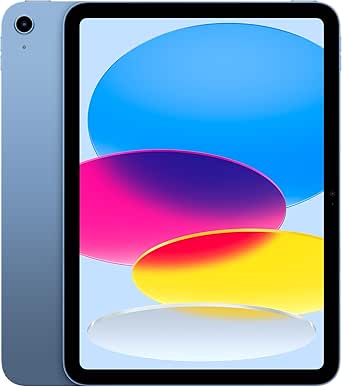
Apple iPad 11-inch (2023) with A16 Chip, Liquid Retina Display, 128GB Storage, Wi-Fi 6, Dual 12MP Cameras, Touch ID – Blue
This iPad 11-inch (2023) offers a high-performance A16 chip combined with a vibrant Liquid Retina display, making it a solid choice for digital pattern design at a more accessible price. Compared to the iPad Pro 13-inch, it sacrifices some display size and advanced features but still delivers fast multitasking and crisp visuals essential for pattern work. Its 128GB storage is suitable for most projects, though heavy users might find it limiting without expandable storage options. The device’s compact size and support for Apple Pencil (USB-C) make it a versatile tool for mobile creatives, but it lacks the power and professional features found in the Pro model. It’s perfect for hobbyists or those starting out in digital design.
Pros:- Powerful A16 chip ensures smooth multitasking and editing
- Vibrant Liquid Retina display with True Tone
- Supports Apple Pencil (USB-C) and Magic Keyboard Folio
- Lightweight and portable for mobile workflows
Cons:- Base storage of 128GB may be limiting for large projects
- No included keyboard or Pencil in the base package
Best for: Amateur and semi-professional pattern designers seeking a balance of performance, portability, and affordability.
Not ideal for: Heavy professionals or those working with very large files who need maximum storage and display size.
- Processor:A16 chip
- Display:11-inch Liquid Retina
- Storage:128GB
- Connectivity:Wi-Fi 6
- Cameras:Dual 12MP
- Security:Touch ID
Bottom line: This iPad offers a compelling mix of power and portability for casual to intermediate pattern designers on a budget.
How We Picked
Our evaluation focused on performance, display quality, stylus compatibility, and value for digital pattern design. We prioritized iPads with high-resolution screens that support detailed work and color accuracy, crucial for pattern creation. Processing power was another key factor, ensuring seamless multitasking and smooth drawing experience. Devices offering good battery life and portability also ranked higher, as these are essential for working sessions away from outlets. We compared each device’s features relative to their price, emphasizing the best balance of performance and affordability to help different types of creatives find their ideal iPad.
Factors to Consider When Choosing Best Ipad For Digital Pattern Design
Choosing the best iPad for digital pattern design requires understanding several key factors. Not all iPads are created equal when it comes to display quality, pen support, and processing power. Making an informed decision involves balancing these features against your budget and workflow needs. Here are some important considerations to help you find the right device.Display Quality and Size
For pattern design, a high-resolution display with true-to-life color reproduction is essential. Liquid Retina and Liquid Retina XDR screens offer vibrant visuals and excellent detail. Larger screens, like the 12.9-inch iPad Pro, provide more workspace, which can streamline your workflow, but they also come at a higher price. Smaller models are more portable but may limit your ability to see fine details at a glance. Consider your workspace and whether portability or screen real estate is more important for your style of work.
Apple Pencil Compatibility and Support
The stylus is your primary tool for digital pattern design, so choosing an iPad compatible with a high-precision Pencil is vital. The latest Apple Pencil Pro models offer tilt and pressure sensitivity, enabling nuanced control over your strokes. Compatibility varies, with some iPads only supporting the standard Pencil or second-generation models. Think about your need for pressure sensitivity or tilt for shading and intricate detailing, and verify device compatibility before purchasing.
Processing Power and Performance
Fast processors like the M2 chip make a noticeable difference when working with complex designs or multitasking across apps. Higher processing power reduces lag and increases productivity, especially when handling large files or running multiple design tools simultaneously. While premium models offer the latest chips, they also come with a higher price tag. Balance your performance needs against your budget to avoid overspending on features you might not fully utilize.
Storage and Connectivity
Ample storage ensures you can save large pattern files locally without constant cloud reliance. Look for models with at least 128GB, but consider 256GB or higher if you handle many projects or high-resolution assets. Connectivity options like Wi-Fi 6E and Wi-Fi 7 improve upload/download speeds, which is helpful when sharing or backing up work. Some models offer cellular options, adding flexibility for working remotely without Wi-Fi. Evaluate your storage and network needs based on your typical workflow.
Budget and Future Proofing
High-end iPads with the latest features are more expensive but may last longer and support future updates better. If your budget is tight, refurbished or older models like the iPad 10.2-inch can still serve well for pattern design, though they might lack the latest display or processing technology. Investing in a slightly more capable device can save money in the long run by avoiding early upgrades. Consider what features are essential now versus what can wait for future device upgrades.
Frequently Asked Questions
Can I use an older iPad for digital pattern design effectively?
Older iPads can handle basic pattern design tasks, especially if they support Apple Pencil and have decent display quality. However, they might lack the processing power, color accuracy, and refresh rates of newer models, which can affect precision and workflow. For detailed work or professional use, upgrading to a recent iPad with a better display and faster processor is advisable. Otherwise, an older device can still serve casual or hobbyist purposes effectively.
Is the latest Apple Pencil Pro necessary for digital pattern design?
The latest Apple Pencil Pro offers tilt and pressure sensitivity, which can significantly improve control over detailed patterns and shading. While older stylus models are compatible with some iPads, they lack these advanced features, potentially limiting your precision. For professional or highly detailed pattern work, investing in the newest Pencil Pro is worth considering, but if you’re a casual user, a second-generation Apple Pencil may suffice.
How important is display size versus portability?
Display size directly impacts your workspace and ability to see intricate details at once. Larger screens like the 12.9-inch iPad Pro make pattern design more comfortable but are less portable. Smaller models are easier to carry around but might require zooming or panning more often, which can slow down workflow. Your choice depends on whether you prioritize a bigger canvas or need a device that fits easily into your bag for on-the-go work.
Should I prioritize storage capacity or processing power?
Both are important, but your workflow determines which to emphasize. If you work with very large files or a vast library of patterns, higher storage is essential. However, if your files are manageable in size but you need smooth, lag-free operation for detailed editing, processing power takes precedence. Balancing both features based on your typical project size and multitasking needs will lead to a more satisfying purchase.
Are cellular models worth the extra cost for pattern design?
Cellular models offer the flexibility to work remotely without relying solely on Wi-Fi, which can be beneficial for professionals who travel or work in varied environments. However, if you primarily work at a dedicated workspace with reliable internet, Wi-Fi-only models are more cost-effective and still capable of handling pattern design tasks. Assess your mobility needs carefully before paying extra for cellular connectivity.
Conclusion
For the most comprehensive experience, the Apple iPad Pro 12.9-inch (6th Generation) remains the best overall choice, especially for professionals needing maximum screen real estate and power. The Apple iPad Air 13-inch (M2) offers a perfect blend of performance and portability for serious hobbyists and on-the-go designers. Budget-conscious users or hobbyists might prefer the renewed iPad 10.2-inch for basic pattern work. Those seeking a dedicated drawing tablet should consider the XPPen Artist13.3 Pro. Ultimately, your decision should hinge on your workflow, budget, and the level of detail you require for digital pattern creation.