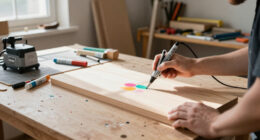
This checklist is for new wood carvers who want to choose a few useful tools and materials before starting their first projects. It covers the main categories in a beginner setup, from knives and gouges to carving wood and protective gear.

Get business pricing on tools and workshop supplies
- Business-only prices and quantity discounts
- Tax-exempt purchasing
- Multiple users, one account, clear invoices
The sections follow the workbench: cutting tools first, then supporting tools and safety, followed by basswood blocks. Product names appear where a pick was provided; the advice-only sections explain what to consider without naming a product.
Use it to build a setup around the projects you plan to try. Start with a comfortable fit and compatible tools, then add specialized pieces as your skills and carving interests develop.
Wood carving knives
A carving knife is a practical starting point for shaping wood and making controlled cuts. The listed pick is the BeaverCraft Deluxe Wood Carving Kit S18X – Wood Carving Knife Set with. Since the supplied name ends with “with,” check the full product listing to confirm exactly what the set contains before deciding whether it suits your needs. A common beginner mistake is choosing by the number of pieces alone. Consider which knife shapes are included and whether they match the cuts you expect to make. Handle comfort matters: look for a grip that feels secure in your hand and allows controlled movement. If possible, compare the handle shape with how you naturally hold a carving knife. Also check how the set is stored and whether its components suit your workspace and projects. Make sure you understand the intended use of each included tool before carving. A manageable selection you can handle confidently is a better foundation than a large collection you are not sure how to use. Pair the knife with suitable carving wood and plan a stable work area before you begin.What to look for:
- Confirm the complete kit contents in the product listing.
- Check that the included knife shapes suit your planned cuts.
- Look for handles that feel secure and comfortable in your grip.
- Review how the tools are stored between sessions.
- Match the set to the scale of projects you want to try.
BeaverCraft Deluxe Wood Carving Kit S18X – Wood Carving Knife Set with Leather P

This deluxe wood carving kit includes 8 high-carbon steel whittling tools with chocolate walnut handles, a stropping kit, and a genuine leather pouch for organization and safety. Ideal for both beginners and experienced carvers, it offers a comprehensive set for detailed woodworking projects.
Pros:
- High-quality high-carbon steel blades for durability
- Stylish chocolate walnut handles for comfortable grip
- Complete set with leather pouch and stropping kit for organization and maintenance
- Great gift idea for woodworkers and hobbyists
Cons:
- Limited to wood carving, not suitable for other crafts
- May be expensive for casual users
- Handle design might not suit all hand sizes
Best for: Beginners comparing a provided knife-set pick
Not ideal for: Shoppers who need confirmed kit contents before choosing
Bottom line: Review the full listing and choose a knife set whose shapes and grip suit your first projects.
Carving gouge set
Gouges add curved cutting edges to a carving setup, making them a category to consider when your projects call for shaped or scooped cuts. The listed pick is FLEXCUT Carving Tools. The supplied product name does not specify a particular set or its contents, so inspect the listing to identify the included tools and their intended uses. Avoid assuming that every carving-tools listing contains the same shapes or sizes. Check which gouge profiles are included and whether they fit the scale and details of the work you have in mind. The handle and overall tool length should feel manageable for your hand and workspace. If the tools will be used alongside a mallet, confirm that the listing describes them as suitable for that type of use rather than relying on appearance alone. For a beginner, a few relevant profiles are easier to learn than unfamiliar tools bought without a project in mind. Consider how the gouges complement your knife, and plan how you will keep and organize them between sessions. Read the product details carefully so you know what you are choosing before adding the set to your kit.What to look for:
- Check the listing for the exact tools included.
- Compare gouge profiles with the cuts your projects require.
- Choose tool sizes suited to the scale of your carving.
- Look for handles that feel manageable in your hand.
- Confirm whether the tools are intended for hand use or mallet use.
FLEXCUT Carving Tools

This gouge set includes seven different high-quality carving tools with ergonomic ash hardwood handles, razor-sharp 1095 high carbon steel blades, and an elegant storage box. Designed for precision and comfort, it is ideal for woodworking and carving projects.
Pros:
- High-quality high carbon steel blades for sharpness and durability
- Ergonomic handles provide comfort and precision control
- Stylish storage box keeps tools organized and protected
- Made in the USA with quality craftsmanship
Cons:
- No manufacturer warranty included
- Limited to woodworking and carving only
Best for: Carvers whose projects call for gouge profiles
Not ideal for: Anyone needing a specific set without checking its contents
Bottom line: Use the FLEXCUT listing as a starting point and verify the included profiles against your project plans.
Wood carving mallet
A mallet can be useful when a carving task calls for tapping a tool, so it is worth considering alongside chisels and gouges. Choose one that feels controlled in your hand and is appropriate for the tools you intend to use. The right choice depends on your carving approach and the work you plan to do. A frequent buying mistake is choosing a mallet before checking whether your tools are designed for mallet use. Review the tool maker’s guidance and consider how the mallet’s shape and size feel in your workspace. A tool that is awkward to control can make careful work harder, particularly when you are still learning. If your projects begin with knife work and hand pressure, you may not need a mallet immediately. When you do add one, consider the tool compatibility, your grip, and the space needed to work safely. Keep the setup simple and expand it when your projects give you a clear reason to use one.What to look for:
- Confirm compatibility with your chisels or gouges.
- Choose a size you can control comfortably.
- Consider the space available for swinging and positioning it.
- Check the maker’s guidance for tools you plan to tap.
- Add one when your projects call for mallet use.
Detail carving chisels
Detail chisels are worth considering when a project calls for narrow or precise cuts. Before choosing any, identify the kinds of details you want to carve and the scale of your work. A chisel that suits a small feature may not be the right fit for a larger project, so prioritize project scale and the shapes you expect to make. One common mistake is buying a variety of specialized chisels before learning which profiles are useful. Look at the edge shapes, tool lengths, and handle styles, then consider whether you can control them comfortably. Check product descriptions for intended use and any compatibility notes, especially if you expect to tap the tools with a mallet. For a first setup, choose only tools that answer a specific need in your planned projects. Keep the grip stable and your working area arranged so you can guide each cut with care. As your carving develops, you can identify which additional chisel profiles would be useful instead of guessing in advance.What to look for:
- Match edge profiles to the details you plan to carve.
- Choose sizes appropriate to your project scale.
- Look for a grip that supports controlled movement.
- Check whether the chisel is intended for hand or mallet use.
- Start with profiles that serve a clear project need.
Carving glove
A carving glove is a protective item to consider as part of a beginner’s work setup. Since no product pick is provided, focus on how a glove fits your hand and whether its coverage suits the way you hold the wood and tools. The goal is a secure, comfortable fit that does not interfere with controlled handling. A common mistake is assuming that any glove will work equally well for carving. Check the product description for intended use, coverage, and sizing guidance. Follow the maker’s instructions, and make sure the glove fits without feeling loose or restricting the movements you need. A glove is one part of a careful setup; it does not replace controlled technique or a stable workpiece. Before buying, compare the sizing information with your hand measurements and consider which hand or areas need coverage for your carving approach. If you are uncertain about fit, consult the seller’s sizing details. Keep your work area organized and use tools as directed so protective equipment supports, rather than complicates, your handling.What to look for:
- Check sizing guidance against your hand measurements.
- Review the product description for intended use and coverage.
- Choose a fit that stays secure without restricting movement.
- Consider which hand and areas need coverage for your approach.
- Follow the maker’s directions for use and care.
Basswood carving blocks
Carving blocks give beginners material to practice on and develop a project. The listed pick is MANCHAP 10 Pack 6 x 2 x 2 Inch Basswood Carving Blocks for Whittling. Its name identifies a ten-piece pack and block dimensions, which can help you compare the material format with your plans. A common mistake is choosing blocks without checking whether their dimensions suit the intended project. Compare the listed size with the shapes you want to carve and consider whether you would rather practice on several smaller pieces or work toward a particular form. Read the full listing for details about the blocks and confirm that the product description matches your expectations. Basswood blocks are a straightforward material category to consider for whittling practice. Before ordering, make sure the stated dimensions work with your tools and available workspace. Having multiple blocks can give you material for more than one practice attempt, but plan your projects around the actual block size and the details provided in the listing.What to look for:
- Compare the stated block dimensions with your project plans.
- Check the listing for the exact number of blocks included.
- Confirm the product description matches the material and use you expect.
- Choose a block size that works with your tools and workspace.
- Plan practice projects around the supplied dimensions.
MANCHAP 10 Pack 6 x 2 x 2 Inch Basswood Carving Blocks for Whittling

A set of 10 unfinished basswood blocks, each measuring 6 x 2 x 2 inches, made from natural basswood that is uniform, smooth, and free of knots and cracks. The finely textured blocks are ready to use and easy to carve, making them ideal for whittling, wooden decorations, and art projects.
Pros:
- Made from natural basswood with no knots or cracks
- Smooth, uniform texture that is easy to carve and whittle
- Includes 10 blocks, providing ample material for multiple projects
- Versatile for crafts, decorations, and art projects
Cons:
- Intended for adults over 18 only, not suitable for children
Best for: Beginners who want several stated-size basswood blocks
Not ideal for: Carvers whose projects require different block dimensions
Bottom line: Check the pack details and make sure the 6 x 2 x 2 inch blocks suit your first projects.
Build your setup in a project-first order: choose a carving knife, select suitable wood, and add a glove that fits your approach. Then consider gouges, a mallet, or detail chisels when a planned project gives you a clear reason to use them.
Start with tools and materials you understand, and give yourself room to learn one cut at a time. A small, considered kit can be a comfortable way to begin; add pieces as your carving interests take shape.