
When searching for interactive stem robots for kids, parents and educators often face a tradeoff between complexity, price, and educational value. The best overall pick is the Coding Robot Set for Kids 4+, which combines screen-free programming with engaging activities. The Smart Robot Dog offers a playful pet experience with voice control and app programming, making it ideal for younger kids who love animals. Meanwhile, the Apitor Robot Wheels kit stands out for its durability and hands-on building experience. Keep reading for a detailed breakdown of these options and what makes each one unique.

Get business pricing on tools and workshop supplies
- Business-only prices and quantity discounts
- Tax-exempt purchasing
- Multiple users, one account, clear invoices
Complete the kit


Key Takeaways
- The most versatile robots combine coding with physical building components, offering a comprehensive learning experience.
- Screen-free options are best suited for younger children or those who prefer tactile play over digital interaction.
- Higher-priced premium models often include advanced features like app programming, but may be less accessible for beginners.
- Durability and ease of assembly are critical for long-term engagement, especially for younger users.
- Different age groups benefit from tailored features: younger kids need simple controls, while older children can handle complex coding kits.
| Coding Robot Set for Kids 4+ – Screen-Free STEM Programming Toy |  | Best Overall for Early Coding and Hands-On Play | Includes: MatataBot, Command Tower with image recognition camera, Control Board, 37 coding blocks, challenge booklets, game map, USB-C cable, obstacles, flags | Recommended Age: 4+ | Learning Focus: Coding concepts, problem-solving, critical thinking, creativity, collaboration | VIEW ON AMAZON | See Our Full Breakdown |
| Apitor Robot Wheels STEM Learning Kit for Kids Ages 5-8 |  | Best for Creative Problem-Solving with Physical Coding Cards | Includes: 48 coding cards, space map, 12 activity cards, guide card, user guide | Batteries: 3 AA batteries required, not included | Sensor: Infrared obstacle detection | VIEW ON AMAZON | See Our Full Breakdown |
| Smart Robot Dog – Interactive STEM Pet with Voice Control, 30+ Actions & App Programming |  | Best for Creative Play and App-Enhanced STEM Learning | Actions: 30+ | Control Methods: Voice commands, touchscreen app, physical remote | Battery: 600mAh | VIEW ON AMAZON | See Our Full Breakdown |
| Ozobot Ozo at Home: Interactive STEM Coding Robot for Kids Ages 5+ |  | Best for Progressive, Screen-Free Coding Skills | Brand: Ozobot | Age Range: 5 years and up | Number of Items: 1 | VIEW ON AMAZON | See Our Full Breakdown |
| TaleBot Pro Coding Robot for Kids 3-5, Screen-Free STEM Toy | 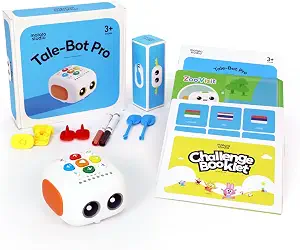 | Best for Early Language and Storytelling Skills | Brand: MatataStudio | Model Name: TaleBot Pro | Unit Count: 1 | VIEW ON AMAZON | See Our Full Breakdown |
| Learning Resources Cooper the STEM Robot |  | Best for Early Screen-Free Coding Experience | Includes: 1 Cooper robot, 40 coding cards, activity guide with 10 challenges, ball accessory, USB-C charging cable | Age Range: 5+ | Features: Reacts to light, follows paths, senses objects, communicates with other Coopers | VIEW ON AMAZON | See Our Full Breakdown |
| Apitor STEM Coding Robot Toy 6-in-1 Building Kit for Kids 8-12 |  | Best Versatile Building and Coding Kit | Item Count: 480 | Recommended Age: 7-12 years | Dimensions: 12 x 8.3 x 2.5 inches | VIEW ON AMAZON | See Our Full Breakdown |
| TracerBot Mini Inductive Robot – Line Following STEM Toy |  | Best for Creative Pathway Design and Logical Thinking | Power: 4 Button Batteries | Included: Washable Marker, Starter Paper, Test Trail Paper | Colors: Red, Blue, Green | VIEW ON AMAZON | See Our Full Breakdown |
| Ozobot Crawler for Evo Robot STEM Kit | Ages 8-13 | 6 Kits |  | Best for Mechanical Engineering and Programming Practice | Ages: 8-13 | Number of Kits: 6 | Material: Plastic | VIEW ON AMAZON | See Our Full Breakdown |
More Details on Our Top Picks
Coding Robot Set for Kids 4+ – Screen-Free STEM Programming Toy
This set stands out for its commitment to screen-free learning, making it ideal for parents seeking tactile, unplugged coding experiences. Compared with the Ozobot Ozo at Home, which offers a progression from tactile to Blockly coding, this set emphasizes physical block manipulation, promoting problem-solving without digital screens. The inclusion of various components like challenge booklets and obstacle courses makes it highly versatile, but it requires adult supervision for younger children to ensure proper setup. Its focus on fundamental coding skills and creative collaboration makes it a comprehensive choice, though it might feel limited for those wanting more advanced programming later on.
Pros:- Promotes screen-free learning and hands-on play
- Develops fundamental coding and problem-solving skills
- Encourages creativity and collaboration
Cons:- Requires adult supervision for younger children
- Limited to physical blocks, may need add-ons for expanded play
Best for: Parents and educators seeking an engaging, screen-free introduction to coding for children aged 4 and above.
Not ideal for: Families looking for a robot with extensive app-based programming or advanced features; it’s better suited for early learners who thrive on physical play.
- Includes:MatataBot, Command Tower with image recognition camera, Control Board, 37 coding blocks, challenge booklets, game map, USB-C cable, obstacles, flags
- Recommended Age:4+
- Learning Focus:Coding concepts, problem-solving, critical thinking, creativity, collaboration
- Type:Screen-free STEM coding toy
Our verdict“This pick is perfect for parents wanting a simple, tactile way to introduce preschoolers to coding fundamentals without screens.”
Apitor Robot Wheels STEM Learning Kit for Kids Ages 5-8
Compared to the MatataBot set, which emphasizes physical blocks, the Apitor Robot Wheels kit integrates physical cards and buttons, supported by an app for remote control and drag-and-drop programming. This hybrid approach offers versatility, appealing to children who enjoy both tactile play and digital interaction. Its durability and straightforward controls make it ideal for younger kids, but the reliance on batteries and limited scope of coding activities may leave more advanced learners wanting more. The infrared obstacle sensor adds a layer of challenge, but the basic programming skills it teaches might not suffice for future STEM pursuits.
Pros:- Screen-free coding with physical cards and buttons
- Encourages hands-on STEM learning and problem-solving
- Durable and easy to use for young children
Cons:- Requires 3 AA batteries not included
- Limited to basic coding activities suitable for early learners
Best for: Parents of children aged 5-8 who want a durable, approachable robot that combines physical and digital coding elements.
Not ideal for: Families seeking a robot with extensive programming complexity or advanced sensor integration; it’s best for early-stage learners.
- Includes:48 coding cards, space map, 12 activity cards, guide card, user guide
- Batteries:3 AA batteries required, not included
- Sensor:Infrared obstacle detection
- Age Range:5-8 years
Our verdict“This robot is an excellent choice for young children starting their STEM journey with a blend of tactile and digital play.”
Smart Robot Dog – Interactive STEM Pet with Voice Control, 30+ Actions & App Programming
This robot dog offers a lively, engaging experience through over 30 lifelike actions and voice commands, making it ideal for kids who enjoy imaginative play. While it supports STEM education via customizable app programming, it’s more suited for children who can navigate smartphone controls—compared to the Ozobot Ozo, which focuses more on tactile and Blockly coding. Its durability, long battery life, and variety of actions make it appealing, but the need for a compatible device and potential complexity for younger children limits its accessibility. It balances entertainment with educational value but may be overkill for children under 6 who prefer simpler toys.
Pros:- Offers extensive lifelike actions and voice control
- Supports STEM education with custom programming
- Durable, kid-safe materials with auto-shutdown for safety
Cons:- Requires a smartphone with iOS or Android for full control
- May be complex for very young children to operate independently
Best for: Parents of kids 6+ who enjoy expressive, voice-controlled robots that combine play with coding customization via apps.
Not ideal for: Families seeking a purely screen-free experience or children too young to handle smartphone controls comfortably.
- Actions:30+
- Control Methods:Voice commands, touchscreen app, physical remote
- Battery:600mAh
- Charging:USB-C fast charging (1.5 hours)
- Runtime:6 hours
- Materials:Non-toxic ABS plastic
Our verdict“This robotic pet suits tech-savvy kids who enjoy expressive, programmable companions with a mix of active and educational play.”
Ozobot Ozo at Home: Interactive STEM Coding Robot for Kids Ages 5+
Compared with the TaleBot Pro, which is geared toward very young children, the Ozobot Ozo at Home offers a gradual coding progression—from tactile color codes to Blockly programming—making it suitable for a wider range of early learners. Its guided activities and variety of challenges promote problem-solving and engineering skills, yet it requires additional devices like a computer or tablet for full Blockly use, which could pose a barrier for some families. The inclusion of 27 activities and a high user rating highlight its educational value, though some activities demand adult supervision, especially for younger children just starting out with coding.
Pros:- Encourages screen-free STEM learning with hands-on activities
- Progresses from tactile color coding to Blockly programming
- Includes 27 guided activities for a range of skill levels
Cons:- Requires additional devices like a computer or tablet for Blockly programming
- Some activities may need adult supervision
Best for: Homeschoolers or classroom teachers wanting a versatile, screen-free coding robot that grows with the child’s skill level from age 5 onward.
Not ideal for: Families seeking a standalone robot without the need for extra devices or those preferring simple, non-digital play for preschoolers.
- Brand:Ozobot
- Age Range:5 years and up
- Number of Items:1
- Included Components:Ozo at home robot, Charging Cable
- Model Number:70101KIT
- Customer Reviews:4.6/5
Our verdict“Ideal for children ready to advance from tactile coding toward visual programming, making it a flexible educational tool.”
TaleBot Pro Coding Robot for Kids 3-5, Screen-Free STEM Toy
Compared with the Ozobot Ozo at Home, which emphasizes a broad progression in coding skills, the TaleBot Pro focuses specifically on storytelling and early programming for preschoolers. Its voice feedback and multi-language support make it accessible for very young children, and its compatibility with Lego blocks encourages creative, imaginative building. While it promotes early coding and problem-solving, its commands are basic, and it may require adult assistance for more complex activities. Its compact size and storytelling focus make it well-suited for early learners who thrive on narrative-driven play.
Pros:- Encourages early coding and problem-solving skills
- Screen-free and easy to use for preschoolers
- Supports multiple languages and interactive storytelling
Cons:- Requires additional activity materials for extended play
- Limited to basic commands suitable for preschoolers
Best for: Parents of children aged 3-5 who want a simple, story-based, screen-free robot that fosters early language and problem-solving skills.
Not ideal for: Families seeking a robot with advanced programming or sensor features; it’s best for very young children just beginning their STEM journey.
- Brand:MatataStudio
- Model Name:TaleBot Pro
- Unit Count:1
- Age Range:3-5 years
- Included Components:robot, interactive map, challenge booklet, configuration card, washable markers
- Dimensions:10.28 x 11.06 x 3.5 inches
Our verdict“This robot is perfect for early childhood educators or parents looking to introduce storytelling and coding in a simple, engaging way.”
Learning Resources Cooper the STEM Robot
Cooper stands out as an excellent choice for introducing young children to coding without screens. Its reactive features—such as sensing objects and reacting to light—offer hands-on interaction that fosters problem-solving and logical thinking. Compared with the TracerBot Mini, Cooper’s emphasis on engaging challenges and communication with other units makes it more suitable for group play and social learning. However, Cooper’s need for physical space and its basic programming scope mean it’s less ideal for compact areas or kids ready for more complex coding. Its rechargeable USB-C power offers convenience, but battery life can vary based on activity levels.
BestFor: Families seeking a tactile, screen-free introduction to coding for ages 5 and up.
NotIdealFor: Kids who prefer digital coding interfaces or have limited space for robot movement.
- Encourages screen-free, hands-on learning
- Develops problem-solving and critical thinking
- Interactive features promote engagement
- Requires ample space for movement and activities
- Limited to basic programming suited for young children
Verdict: This pick is ideal for families wanting a simple, engaging, and screen-free robot for early learners.
Pros:- Encourages screen-free, hands-on learning
- Develops problem-solving and critical thinking skills
- Interactive features promote engagement and exploration
Cons:- Requires physical space for movement and activities
- Limited to basic programming concepts for young children
Best for: Parents or educators seeking a tactile, screen-free coding experience for young children aged 5 and up
Not ideal for: Kids who want advanced programming or limited physical space for robot activities
- Includes:1 Cooper robot, 40 coding cards, activity guide with 10 challenges, ball accessory, USB-C charging cable
- Age Range:5+
- Features:Reacts to light, follows paths, senses objects, communicates with other Coopers
- Power:Rechargeable via USB-C
Our verdict“Best for early learners who need a simple, interactive, and screen-free robot to develop foundational coding skills.”
Apitor STEM Coding Robot Toy 6-in-1 Building Kit for Kids 8-12
This 6-in-1 building kit appeals to kids ready for more complex STEM projects, offering 480 colorful blocks and a Bluetooth-controlled module. Unlike the TracerBot, which emphasizes simple line following, the Apitor kit promotes creativity through multiple build options and app-controlled coding. It’s well-suited for children aged 8-12 who enjoy hands-on construction and programming, though its assembly can challenge younger builders and the need for 3 AA batteries (not included) adds a small hurdle. Connectivity issues may also arise, especially with less experienced users.
BestFor: Kids interested in building, coding, and exploring multiple robot configurations within the 8-12 age range.
NotIdealFor: Younger children under 8 or those preferring ready-to-run robots without assembly challenges.
- Encourages STEM learning through construction and coding
- Includes multiple models and flexible control modes
- Enhances fine motor skills and creativity
- Assembly may be difficult for younger children
- Requires batteries not included and may encounter connectivity issues
Verdict: An engaging, multi-model kit that suits kids eager for creative building and programming experiences.
Pros:- Encourages STEM learning through hands-on building and coding
- Includes multiple models and control options
- Fosters creativity and problem-solving skills
Cons:- Assembly can be challenging for younger kids
- Batteries not included and potential connectivity issues
Best for: Kids aged 8-12 who enjoy building multiple robots and coding via a smartphone app
Not ideal for: Younger children or those seeking a straightforward, pre-assembled robot experience
- Item Count:480
- Recommended Age:7-12 years
- Dimensions:12 x 8.3 x 2.5 inches
- Material:Plastic
- Control:Bluetooth app
- Batteries Required:3 AA (not included)
Our verdict“Best suited for older children who enjoy flexible building projects combined with coding control.”
TracerBot Mini Inductive Robot – Line Following STEM Toy
TracerBot’s simple design makes it a perfect starting point for younger children exploring robotics and logic. Its ability to follow black lines drawn on paper encourages creative pathway design, similar to the Ozobot Crawler, but with fewer programming features. This robot’s ease of use and immediate playability make it ideal for introducing basic STEM concepts, although its functionality is limited to line following, which might bore kids seeking more interactive challenges. Battery life is modest, but its portability and low cost add to its appeal for quick, fun projects.
BestFor: Kids new to robotics who enjoy designing pathways and solving simple logical puzzles.
NotIdealFor: Kids looking for robots with advanced features or programmable behaviors beyond line following.
- Encourages logical thinking and design skills
- Easy to set up with included accessories
- Portable and simple for quick play sessions
- Limited to line-following functionality
- Requires drawing and pathway design for play
Verdict: An excellent starter robot for younger children interested in drawing and basic coding concepts.
Pros:- Encourages STEM learning and creativity
- Easy to set up and use with included accessories
- Promotes logical thinking and problem-solving
Cons:- Limited to line-following functionality
- Requires drawing and designing pathways for play
Best for: Kids new to robotics who enjoy drawing pathways and solving simple logical challenges
Not ideal for: Children seeking robots with programmable or multi-functional capabilities
- Power:4 Button Batteries
- Included:Washable Marker, Starter Paper, Test Trail Paper
- Colors:Red, Blue, Green
- Size:Small, lightweight, portable
Our verdict“Ideal for beginners exploring basic robot control and pathway design in a fun, simple format.”
Ozobot Crawler for Evo Robot STEM Kit | Ages 8-13 | 6 Kits
This STEM kit expands the engineering possibilities for kids comfortable with basic robotics, offering six bug-like crawlers compatible with Evo robots. Unlike the TracerBot, which is limited to line following, these kits focus on mechanical assembly and programming, suitable for ages 8-13. While the inclusion of six kits provides variety and keeps multiple children engaged, the need for compatibility with the Evo robot (sold separately) could be a barrier for some. Assembly might challenge younger children, but it offers valuable hands-on experience in building and coding complex mechanisms.
BestFor: Older children interested in mechanical design and coding with Evo robots in classroom or home settings.
NotIdealFor: Younger kids or those not owning compatible Evo robots, as assembly and programming might be too advanced.
- Encourages mechanical engineering and programming skills
- Includes multiple kits for variety and extended use
- Suitable for classroom or home STEM activities
- Requires compatibility with Evo robots (not included)
- Assembly may be challenging for younger children
Verdict: Best for kids who want to explore advanced mechanical projects with compatible robots and programming.
Pros:- Encourages STEM learning and programming
- Includes multiple kits for extended engagement
- Promotes hands-on mechanical engineering skills
Cons:- Requires compatible Evo robots not included
- Assembly may be difficult for younger children
Best for: Older children interested in building and programming mechanical crawlers with Evo-compatible robots
Not ideal for: Younger children or those without Evo robots, due to assembly complexity and compatibility requirements
- Ages:8-13
- Number of Kits:6
- Material:Plastic
- Safety Standards:ASTM F963, CPSC
Our verdict“Ideal for older kids who want to delve into mechanical design and programming with advanced robot kits.”

How We Picked
Our evaluation focused on several key factors: the educational value of each robot, ease of use, durability, and versatility. We prioritized products that balance fun with learning, ensuring they are accessible for various age groups and skill levels. Price was also a consideration, with an eye toward offering options that provide good value for different budgets. To determine the ranking, we assessed how well each robot encourages problem-solving, creativity, and coding skills, along with their build quality and safety features. The result is a curated list that serves as a practical guide for parents, teachers, and gift-givers alike.Factors to Consider When Choosing Interactive Stem Robots For Kids
Choosing the right interactive stem robot involves understanding several key factors that influence how effectively a child can learn and enjoy their device. Not all robots are suitable for every age or skill level, so considering the child’s developmental stage and interests is vital. Additionally, features like programming complexity, durability, and compatibility with other tools can significantly affect the long-term value. Here are the main considerations to keep in mind before making a purchase.Age Appropriateness and Skill Level
Matching the robot’s complexity to the child’s age ensures they stay engaged without feeling overwhelmed or bored. Younger kids benefit from screen-free, simple control options, while older children might enjoy advanced coding features and customization. Selecting a robot designed for their current skill level helps foster confidence and sustained interest, paving the way for more complex projects later.
Educational Content and Programming Features
Some robots focus on basic coding concepts through tactile controls, while others integrate app-based programming or even AI elements. Think about whether you want a robot that teaches foundational skills or one that offers more advanced, expandable coding opportunities. A well-designed educational experience will include progressive challenges, keeping the child motivated to learn more.
Durability and Build Quality
Kids can be rough on toys, especially those that involve movement and interaction. Look for robots made with sturdy materials and reinforced components. For active play, durability translates into longer-lasting engagement and less frustration from broken parts. At the same time, consider whether the robot is easy to repair or replace parts if needed.
Ease of Assembly and Use
A robot that’s simple to assemble and operate reduces setup time and encourages immediate play. Overly complicated kits risk discouraging children or requiring adult supervision. Clear instructions, minimal tools, and intuitive controls are signs of a well-designed product that can foster independent exploration.
Price and Value
Budget constraints are common, but investing in a quality robot can pay off in sustained educational value. Cheaper options might lack durability or advanced features, while more expensive models often include expandability and better materials. Balance your budget with the features that will most benefit the child’s learning and enjoyment, aiming for the best long-term value.
Frequently Asked Questions
Are interactive stem robots suitable for very young children?
Yes, but it’s important to choose models specifically designed for younger users, typically aged 3-6, which favor simple controls, tactile play, and basic problem-solving. These robots often have fewer complex features and focus on foundational STEM concepts, making them safer and more engaging for early learners. Always check age recommendations to ensure suitability and safety.
Can these robots be used without a screen?
Several options in this lineup, like the Coding Robot Set for Kids 4+, are designed to be screen-free, relying on physical controls and tactile programming. These choices are ideal for reducing screen time while still offering meaningful STEM activities. However, many advanced robots include app-based programming, which provides richer features but requires a compatible device.
How durable are these robots for active play?
Durability varies widely among models. Robots built with reinforced plastic and simple moving parts tend to withstand active play better. Cheaper or overly complex designs may be more prone to damage, especially if children are rough with them. Look for products with good reviews on durability and consider whether replacement parts are available to extend their lifespan.
Are these robots programmable for more advanced users?
Many of these robots, such as the Apitor STEM Coding Robot Toy and Ozobot kits, offer layers of programming complexity suitable for older children or those looking to deepen their skills. Some come with app support, coding challenges, or even modular building options. Ensure you select a robot aligned with the child’s current skill level and potential for growth.
What should I consider when choosing a robot for a specific age group?
For younger children, prioritize simple, tactile, and durable robots that emphasize basic problem-solving and motor skills. For middle-grade kids, look for options with expandable coding features and construction elements. Older children and pre-teens may enjoy robots with advanced programming, customization, and integration with other STEM tools. Matching the robot’s features to the child’s developmental stage encourages ongoing engagement.
Conclusion
For parents seeking a versatile and educational experience, the Coding Robot Set for Kids 4+ stands out as the best overall, offering a good balance of simplicity and learning potential. Those on a tighter budget or looking for a tactile, screen-free option may prefer the TaleBot Pro for its age-appropriate design. If you’re investing in a long-term, expandable coding platform, the Apitor STEM Coding Robot Toy 6-in-1 provides excellent value for older kids. For young children just starting with STEM, the Smart Robot Dog offers a playful, interactive pet experience. Ultimately, your choice should align with the child’s age, interest, and your budget, ensuring they get the most engaging, educational experience possible.
Fall Picks
fall essentials
As an affiliate, we earn on qualifying purchases.