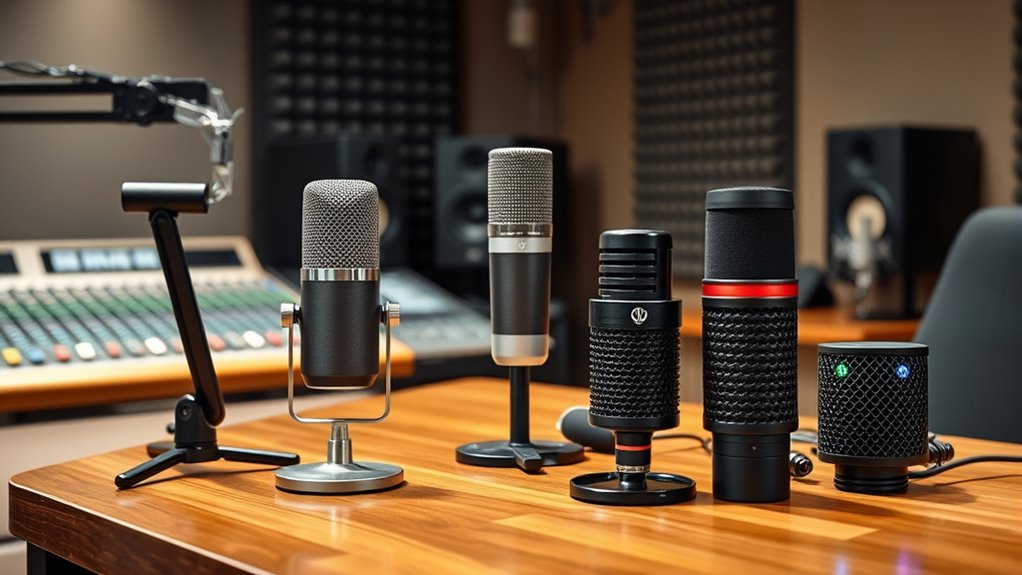
Choosing the right microphone for podcasting depends on your setup, budget, and sound quality needs. The Logitech Blue Yeti stands out as the best overall for its versatility and ease of use, while the Shure MV7+ offers professional-grade sound for serious podcasters. Budget options like the Amazon Basics Condenser Microphone deliver decent quality at a lower price, but may lack advanced features. Tradeoffs often involve balancing sound quality, connectivity options, and ease of setup. Continue reading for a detailed comparison to find the best fit for your podcasting goals.

Get business pricing on tools and workshop supplies
- Business-only prices and quantity discounts
- Tax-exempt purchasing
- Multiple users, one account, clear invoices
Complete the kit


Key Takeaways
- The best microphones balance sound quality with ease of use, especially for beginners.
- USB microphones dominate for simple setup, but XLR options tend to offer superior audio fidelity for advanced users.
- Many top picks include features like gain control, mute buttons, and monitoring, which enhance recording flexibility.
- Budget-friendly options can deliver good results but often lack durability or advanced features found in premium models.
- Microphone type (dynamic vs. condenser) impacts noise rejection and tone, which should match your recording environment.


| microphones for podcasting | Connectivity |
|---|---|
| FIFINE AmpliGame AM8 USB/XLR D | — |
| FIFINE AmpliGame AM8T XLR/USB | USB and XLR |
| Maono PD200W Hybrid Wireless P | Wireless, USB, XLR |
| Maono A04 USB Microphone | — |
| Logitech Blue Yeti USB Microph | USB |
| ZealSound Podcast Microphone f | USB-C, Lightning adapters included |
| Shure MV7+ USB-C & XLR Podcast | USB-C and XLR |
| FIFINE AmpliTank K688CT Podcas | USB and XLR |
| RØDE PodMic Cardioid Dynamic B | XLR |
| TONOR Podcast Microphone | USB 2.0 |
| Amazon Basics Condenser Microp | — |
| FIFINE T669 Studio Condenser U | — |
| Logitech Blue Yeti USB Microph | USB |
More Details on Our Top Picks
FIFINE AmpliGame AM8 USB/XLR Dynamic Microphone for Gaming Streaming
The FIFINE AmpliGame AM8 stands out for its dual connectivity options, allowing seamless switching between USB and XLR for different recording needs. Compared to the Blue Yeti, it offers more flexibility with professional-grade XLR output, though its RGB lighting features are limited to USB mode, which might disappoint gamers who want constant visual effects. Its noise rejection and mute controls provide tangible improvements in clarity, especially in noisy environments. However, the RGB lighting is inactive when using XLR, and the XLR cable isn’t included, adding extra cost. This model suits those who need a flexible microphone for both casual streaming and semi-professional recording, but less so for users who only record via USB or want built-in lighting in XLR mode.
Pros:- Dual USB and XLR connectivity for maximum flexibility
- Built-in noise rejection for clearer audio
- Customizable RGB lighting for gaming aesthetics
- Mute and volume controls for easy adjustments
Cons:- RGB lighting is inactive in XLR mode, limiting visual effects
- XLR cable not included, requiring extra purchase
- Some features are limited to USB connection only
Best for: Content creators who want a versatile mic that can adapt from gaming to professional podcasting with both USB and XLR setups
Not ideal for: Beginners who prefer a straightforward USB setup without dealing with XLR cables or additional accessories
- Connectivity Technology:XLR, USB
- Polar Pattern:Unidirectional
- Frequency Response:50Hz-16KHz
- Maximum Frequency:16 KHz
- Signal-to-Noise Ratio:80 dB
- Color:Black
Our verdict“This microphone is ideal for users who need adaptable recording options and don’t mind managing XLR cables for professional use.”
FIFINE AmpliGame AM8T XLR/USB Gaming Microphone Set, Dynamic PC Mic
The FIFINE AmpliGame AM8T set enhances gaming and streaming with its included boom arm and comprehensive accessories, making it a strong choice for those seeking a professional-looking setup. Unlike the Blue Yeti, which offers more pattern options but lacks a dedicated boom arm, this set emphasizes flexible positioning. Its RGB lighting and gain controls add visual flair and control, but the XLR cable must be purchased separately, adding to the cost. The included stand and clamp make it easier to set up, but the desk clamp’s compatibility is limited to less than 2 inches thick. This pick is well-suited for streamers and gamers wanting a complete package, though beginners who prefer plug-and-play simplicity may find the setup more involved.
Pros:- Includes a sturdy boom arm stand for flexible positioning
- Versatile USB and XLR connectivity for different setups
- Customizable RGB lighting for gaming aesthetics
- Features mute button, gain knob, and headphone monitoring
Cons:- XLR cable not included, requiring additional purchase
- Clamp max thickness limit may restrict placement options
- Setup is more involved compared to plug-and-play models
Best for: Streamers and gamers who want a professional-looking microphone with a sturdy boom arm and versatile connection options
Not ideal for: Users seeking a simple, all-in-one USB microphone without additional accessories or setup complexity
- Connectivity:USB and XLR
- Microphone Type:Dynamic
- Polar Pattern:Cardioid
- RGB Lighting:Yes, customizable
- Included Accessories:Boom arm stand, C-clamp, USB-C cable
- Desk Clamp Max Thickness:2 inches
Our verdict“This set suits gamers and streamers who want a professional kit with accessories but are prepared for a more involved setup process.”
Maono PD200W Hybrid Wireless Podcast Microphone for PC, Dynamic XLR USB Mic
The Maono PD200W offers remarkable flexibility with its wireless, USB, and XLR options, making it suitable for professional broadcasters and mobile podcasters alike. Its high signal-to-noise ratio and 128dB SPL handling ensure studio-quality sound, comparable to the Blue Yeti, but with the added convenience of wireless operation. The long battery life and 60-meter range support dynamic recording scenarios. However, its setup can be complex, especially for those unfamiliar with multiple connection modes, and the need for external accessories for video sync may deter some users. This microphone is ideal for those who value mobility and versatility in a single device, but less so for users seeking a straightforward, purely USB setup.
Pros:- Three-way connectivity: wireless, USB, XLR for maximum flexibility
- Studio-quality sound with noise cancellation and high SPL handling
- Long battery life and 60-meter wireless range
- Supports dual microphones for interviews or duo podcasts
Cons:- Requires additional accessories for video or camera sync
- Setup can be complex for users unfamiliar with multiple modes
- RGB lighting may be unnecessary for some users
Best for: Podcast hosts who need a wireless solution with high audio quality and multiple connection options
Not ideal for: Beginners seeking a simple plug-and-play microphone without wireless or extra accessories
- Connectivity:Wireless, USB, XLR
- Pickup Pattern:Cardioid
- Signal-to-Noise Ratio:82dB
- Maximum SPL:128dB
- Wireless Range:60 meters
- Battery Life:Up to 60 hours
Our verdict“Perfect for mobile podcasters and professionals who prioritize wireless freedom and high audio fidelity, despite setup complexity.”
Maono A04 USB Microphone, 192kHz/24Bit Condenser Mic Kit for PC, Podcast, Streaming
The Maono A04 excels at delivering crisp, high-resolution audio thanks to its 192kHz/24Bit recording capability, making it a strong candidate for professional podcasters and streamers. Unlike the Blue Yeti, which offers multiple pattern options, the A04 is a straightforward condenser mic optimized for clear voice capture. The included accessories—pop filter, shock mount, and adjustable arm—facilitate a professional setup, but it’s limited to USB connectivity, which may restrict flexibility for those wanting XLR options. It also requires an external stand or arm for best positioning. Overall, this microphone makes sense for creators wanting studio-grade sound in a easy-to-use package, but less so for those seeking multiple recording modes or XLR compatibility.
Pros:- High-resolution 192kHz/24Bit audio quality
- Complete accessories kit for professional positioning
- Plug-and-play with compatibility across devices
- Ideal for voice clarity and studio recordings
Cons:- Limited to USB connection, no XLR option
- Requires external stand or arm for optimal positioning
- No multiple polar pattern options
Best for: Podcasters and streamers who prioritize high audio fidelity and easy setup with comprehensive accessories
Not ideal for: Gamers or users needing multiple polar patterns or XLR connectivity for more complex setups
- Sampling Rate:192kHz
- Bit Depth:24Bit
- Condenser Element:16mm electret
- Compatibility:PC, Mac, PS4, PS5, mobile phones
- Included Accessories:Pop filter, foam windscreen, shock mount, adjustable arm
Our verdict“This mic suits creators demanding high-res audio and straightforward setup, but isn’t ideal for multi-pattern recording or XLR users.”
Logitech Blue Yeti USB Microphone for PC, Mac, Gaming, Recording, Streaming, Podcasting, Studio – Blackout
The Blue Yeti offers a wide range of pickup patterns, making it an excellent choice for versatile recording needs, from solo podcasts to group discussions. Its multiple pattern options—cardioid, omnidirectional, bidirectional, and stereo—outshine simpler models like the TONOR in adaptability, though the Yeti’s bulkier design takes up more desk space. The onboard controls for gain, mute, and headphone volume, combined with Blue VO!CE effects, enable professional-sounding results with minimal effort. Compared to the Maono A04, which emphasizes high resolution, the Yeti focuses on ease of use and pattern flexibility. However, its size can be a drawback for smaller setups, and it lacks XLR connectivity, limiting future upgrade potential.
Pros:- Multiple pickup patterns for versatile recording
- Built-in effects and customizable controls
- Easy plug-and-play setup for PC and Mac
- Adjustable desktop stand and pivoting microphone
Cons:- Bulky design requires considerable desk space
- No XLR output for professional upgrades
- Requires external stand for best positioning
Best for: Content creators seeking a flexible, all-in-one USB microphone with multiple recording patterns and effects
Not ideal for: Desk users with limited space or those wanting XLR connectivity for professional studios
- Pickup Patterns:Cardioid, Omnidirectional, Bidirectional, Stereo
- Connectivity:USB
- Software:Blue VO!CE effects
- Controls:Headphone volume, pattern selection, mute, mic gain
- Design:Adjustable desktop stand
Our verdict“This microphone suits users who want maximum versatility and ease of use in a single USB device, despite its size.”
This microphone excels in delivering studio-quality sound with noise reduction, making it a strong competitor to the Blue Yeti, especially for creators who need flexibility across devices. Its compatibility with USB-C and Lightning adapters broadens its use beyond just computers, perfect for streamers and mobile content creators. However, being limited to USB connections means it lacks the robustness and professional audio control of XLR options like the RØDE PodMic. The real-time monitoring and intuitive physical controls provide an easy recording experience, but manual adjustments are necessary for optimal sound, and the mute button’s placement could lead to accidental toggling.
Pros:- High-quality studio sound with effective noise reduction
- Wide device compatibility including USB-C and Lightning adapters
- Real-time zero-latency monitoring with physical controls
- Plug-and-play setup for quick recording
Cons:- Limited to USB connection, no XLR option
- Requires manual adjustment for best sound quality
- Mute button may be pressed accidentally
Best for: Content creators who need a plug-and-play, multi-device microphone with noise reduction for streaming or mobile recording
Not ideal for: Pro audio engineers or those seeking XLR connectivity for high-end studio setups, as it lacks XLR output
- Frequency Response:40Hz–18kHz
- Sampling Rate:46kHz
- Sensitivity:–45dB ±3dB
- Connectivity:USB-C, Lightning adapters included
- Device Compatibility:Windows, Mac, iPhone, iPad, Android, PS4, PS5
- Monitoring:Zero-latency monitoring
Our verdict“This is a strong choice for mobile content creators and streamers who prioritize ease of use and device compatibility.”
Shure MV7+ USB-C & XLR Podcast Dynamic Microphone with Stand – Black
The Shure MV7+ combines the versatility of both USB-C and XLR outputs, making it ideal for users who want professional sound quality and adaptable setup options. It surpasses the FIFINE AmpliTank K688CT in terms of connectivity and feature richness, especially with app-based sound customization and LED touch controls. However, its complexity may overwhelm beginners, and full utilization of its features requires downloading and managing additional software. Its advanced noise reduction and voice isolation technology make it a go-to for serious podcasters seeking studio-quality results in a single package.
Pros:- Dual USB-C and XLR connectivity for versatile setups
- Advanced noise reduction and voice isolation tech
- Customizable LED touch controls for easy operation
- App-based sound customization options
Cons:- Requires software for full feature access, adding complexity
- May be too sophisticated for novice users
- Higher price point compared to simpler models
Best for: Producers and advanced podcasters needing flexible connectivity and advanced sound control
Not ideal for: Beginners or casual users who prefer simple plug-and-play microphones without extra software or control features
- Connectivity:USB-C and XLR
- Features:OBS Certified, Voice Isolation, Built-in DSP
- LED Controls:Touch panel
- Included:Microphone, Stand
Our verdict“This microphone suits experienced users seeking flexibility and professional-grade audio tuning in a compact form.”
FIFINE AmpliTank K688CT Podcast Microphone Kit, USB/XLR Dynamic Vocal Mic
Compared with the simpler TONOR Podcast Microphone, the FIFINE AmpliTank K688CT stands out for its inclusion of both USB and XLR connections, offering more flexibility for different recording environments. Its sturdy boom arm, shock mount, and windscreen help reduce noise and vibrations, making it suitable for serious podcasters and musicians alike. The tradeoff lies in the fact that some controls are only accessible via USB and that adjusting XLR inputs requires an external mixer or audio interface, adding complexity for less experienced users. This kit balances versatility and quality, but setup may be more involved.
Pros:- Flexible USB and XLR connectivity for different setups
- Includes essential accessories for professional recording
- Sturdy boom arm and noise-reduction accessories
- High SPL handling for versatile use
Cons:- Some controls disabled when using XLR connection
- Requires external mixer or interface for XLR input adjustment
- More complex setup process
Best for: Musicians, streamers, and podcasters who need a durable, multi-connection microphone kit with accessories
Not ideal for: Casual users or those who prefer a simple, all-in-one USB-only solution, as it involves additional setup for XLR use
- Microphone Type:Dynamic
- Connectivity:USB and XLR
- Maximum SPL:130dB
- Included Accessories:Boom arm, windscreen, shock mount
- Pattern:Cardioid
- Compatibility:Computers, mixers, audio interfaces
Our verdict“Ideal for users seeking a comprehensive kit that adapts to both beginner and professional environments with multiple connection options.”
RØDE PodMic Cardioid Dynamic Broadcast Microphone, XLR
The RØDE PodMic offers broadcast-quality sound with internal pop protection and shock mounting that greatly reduces room noise, making it a top choice over the TONOR condenser for professional podcasting. Its all-metal construction ensures durability, though its reliance on external XLR interfaces limits portability and simplicity. The heavier weight and XLR requirement make it less appealing for casual or mobile podcasters, but for dedicated broadcasters, it delivers unmatched clarity and reliability in a stable, professional package.
Pros:- Excellent sound quality tailored for podcasting
- Built-in pop filter and shock mount reduce noise
- All-metal build ensures longevity
- Compatible with any XLR interface or mixer
Cons:- Requires external audio interface or mixer
- Heavy and less portable
- Limited to XLR connection, not USB
Best for: Professional podcasters and broadcasters with XLR setups seeking high-quality, durable microphones
Not ideal for: Beginners or casual users who want a simple USB setup or portable microphone without additional equipment
- Connectivity:XLR
- Frequency Response:20Hz–20kHz
- Impedance:150 ohm
- Weight:937 g
- Build Material:Metal
- Special Features:Built-in pop filter, shock mounting
Our verdict“This microphone is an ideal choice for professional setups where high-quality XLR audio is a priority.”
TONOR Podcast Microphone, USB Computer Mic, Cardioid Condenser
The TONOR Podcast Microphone offers a straightforward USB solution for those new to podcasting, providing clear voice capture and background noise reduction. Its included accessories—such as a foldable tripod, shock mount, and pop filter—make it easy to start recording right out of the box, outperforming basic condenser mics without additional gear. While it doesn’t support XLR connections like the FIFINE AmpliTank K688CT, its plug-and-play setup and compatibility with common communication platforms make it perfect for casual users or beginners aiming for decent audio quality without fuss. Still, it won’t suit those needing a pro-level or XLR-based system.
Pros:- Simple plug-and-play USB connection
- Includes accessories for improved recording quality
- Clear and crisp voice capture with noise suppression
- Compatible with multiple communication platforms
Cons:- Limited to USB, no XLR option
- Requires a stable, flat surface for best results
- Not suitable for professional studio use
Best for: Beginners, students, or casual streamers looking for an easy-to-use, reliable USB microphone
Not ideal for: Advanced users or those requiring XLR connectivity for professional audio production, as it lacks that option
- Pickup Pattern:Cardioid
- Connectivity:USB 2.0
- Included Accessories:Tripod, shock mount, pop filter
- Compatibility:Windows, Mac, PS4, PS5, Zoom, Skype, Discord
- Color:Black
Our verdict“This microphone makes a solid choice for beginners seeking an affordable, easy setup for casual podcasting or streaming.”
Amazon Basics Condenser Microphone for PC, Cardioid Pickup, USB Mic for Streaming, Recording, and Podcasting, 360° Adjustable Stand, Plug and Play, 5.8″ x 3.4″, Black
This Amazon Basics condenser microphone stands out for its straightforward, plug-and-play design that makes it accessible for newcomers. Its high sensitivity and low noise profile deliver clear audio, comparable to more expensive models like the Logitech Blue Yeti, but without the advanced features or multiple pickup patterns. The 360° adjustable stand offers flexible positioning, yet it requires a compatible stand or mount, which can add to the setup complexity. While it excels in simplicity and quality for its price, it’s limited to USB connectivity, making it less suitable for professional studio environments that benefit from XLR connections. Overall, this mic is a solid choice for beginners or casual podcasters who prioritize ease of use over extensive features.
Pros:- High sensitivity and low noise for clear recordings
- 360° adjustable stand for flexible positioning
- Easy plug-and-play setup with no drivers needed
- Built-in shock absorber and mute function
Cons:- Limited to USB connection, not suitable for studio-grade setups
- Requires a compatible stand or mount for optimal use
Best for: Beginners or casual podcasters seeking an affordable, easy-to-use USB microphone with decent audio quality.
Not ideal for: Professional broadcasters or those needing multiple pickup patterns and XLR connectivity, as it offers limited features and flexibility.
- Diaphragm Size:14mm
- Dimensions:5.8″ x 3.4″
- Pickup Pattern:Cardioid
- Stand:360° adjustable
- Compatibility:Windows 7/XP/8/10 or higher, Mac OS 10.10 or higher
- Mounting:Standard 5/8 inch thread
Our verdict“This mic is ideal for beginners who want straightforward quality without the need for professional-grade features.”
FIFINE T669 Studio Condenser USB Microphone for Recording and Podcasting
The FIFINE T669 makes a compelling case for those who want an all-in-one podcasting setup. Its included accessories, such as a sturdy boom arm, pop filter, and shock mount, make it easier to achieve professional sound quality without additional purchases—setting it apart from basic models like the Amazon Basics mic. Its wide frequency response captures a broad range of audio nuances, ideal for voice recordings and streaming. However, its size and included stand mean it takes up more desktop space, and it’s incompatible with Xbox consoles, limiting versatility. While it offers excellent value for home studio users, those with limited space or console gamers should look elsewhere. This kit suits users who want high-quality sound with minimal hassle.
Pros:- Includes a complete setup with boom arm, pop filter, and shock mount
- Easy plug-and-play USB connectivity
- High-quality sound capture with wide frequency response
- Durable construction
Cons:- Requires desktop space for the arm and microphone setup
- Incompatible with Xbox consoles
- May pick up ambient noise if not carefully positioned
Best for: Home podcasters or streamers seeking a comprehensive microphone kit that’s ready to use out of the box.
Not ideal for: Console gamers or those with very limited desk space, as the setup requires room for the boom arm and additional accessories.
- Connection:USB
- Frequency Response:Wide
- Polar Pattern:Cardioid
- Includes:Boom arm, pop filter, shock mount, USB cable
- Compatibility:PC, Laptop (not Xbox)
Our verdict“This kit offers a well-rounded, professional-grade solution for home podcasters who want everything included for quick setup.”
Logitech Blue Yeti USB Microphone for PC, Mac, Gaming, Streaming, Podcasting, Studio, Condenser Mic, Midnight Blue
The Blue Yeti is distinguished by its versatility, offering four pickup patterns—cardioid, omni, bidirectional, and stereo—that adapt to a variety of recording scenarios. Compared to more straightforward models like the Amazon Basics mic, it includes onboard controls, software enhancements with Blue VO!CE, and a flexible desktop stand, making it suitable for podcasting, streaming, and even music recording. Its bulkier size, however, can clutter a small desk, and its reliance on USB limits it for those who want XLR connectivity for professional studio quality. While it’s easy to set up and highly customizable, its size and limited connectivity options make it less ideal for portable or space-constrained environments. It’s best suited for users who want a one-stop solution with advanced features.
Pros:- Multiple pickup patterns for versatile recording
- User-friendly with onboard controls and software effects
- High-quality broadcast sound
- Adjustable desktop stand and pivoting mic
Cons:- Bulky design may take up significant desk space
- Limited to USB connectivity, no XLR option
- Requires a stable surface for best performance
Best for: Content creators who need a flexible, high-quality microphone with onboard controls and multiple pickup patterns for diverse recording needs.
Not ideal for: Users with limited desk space or those seeking a compact, portable mic, as the Blue Yeti’s size can be cumbersome and it only connects via USB.
- Pickup Patterns:Cardioid, Omni, Bidirectional, Stereo
- Software:Blue VO!CE
- Connectivity:USB
- Color:Midnight Blue
- Onboard Controls:Headphone volume, pattern selection, mute, mic gain
Our verdict“This microphone excels for creators who value adaptability, onboard controls, and high-quality sound but have sufficient space for its size.”

How We Picked
The microphones in this roundup were evaluated based on key factors such as audio performance, build quality, ease of use, connectivity options, and value for money. We prioritized models that cater to a range of experience levels, from novice to professional, ensuring each product offers a clear advantage for specific use cases. The ranking reflects a combination of sound quality, versatility, and user-friendly features, with a bias toward microphones that excel in typical podcasting environments. We also considered customer reviews and brand reputation to ensure durability and consistent performance over time.Factors to Consider When Choosing Microphones For Podcasting
When choosing a microphone for podcasting, it’s important to consider several factors that affect your recording quality and overall experience. Not all microphones are created equal, and what works for one setup may not suit another. Understanding your environment, technical needs, and budget can help you make a more informed decision. Here are some key considerations to guide your choice.Microphone Type (Dynamic vs. Condenser)
Dynamic microphones are generally better at rejecting background noise, making them ideal for less controlled environments or noisy rooms. Condenser microphones, on the other hand, tend to capture more detail and provide richer sound, which is often preferred for studio-quality podcast recordings. Your choice should depend on your environment and desired sound profile. For noisy setups, a dynamic mic offers a clear advantage, while condenser mics excel in controlled spaces.
Connectivity: USB vs. XLR
USB microphones are plug-and-play, making them perfect for beginners or those who want a simple setup. XLR microphones typically require an audio interface, but they deliver higher audio fidelity and more control, which benefits serious podcasters. Consider your future plans; if you might upgrade your setup, investing in an XLR mic now could be worthwhile, but for quick, straightforward recordings, USB is often sufficient.
Sound Quality and Frequency Response
Sound quality hinges on the microphone’s frequency response and overall audio clarity. Look for models with a flat or tailored frequency response suited to voice recording. A wider frequency range can capture more natural and vibrant sound, but may also pick up unwanted background noise if your environment isn’t sound-treated. Testing or reading reviews about real-world clarity can help you gauge suitability.
Features and Controls
Features like gain control, mute buttons, headphone monitoring, and adjustable stands enhance your recording experience. These controls allow for quick adjustments during recordings and help maintain consistent sound levels. However, more features can mean higher costs and complexity, so consider what you genuinely need. For most podcasters, a simple microphone with some onboard controls strikes the best balance.
Budget and Long-Term Value
While budget options can deliver reasonable results, investing a bit more often yields better durability, sound quality, and future-proofing. Cheaper microphones may lack robustness or clarity, leading to frustrations over time. Conversely, premium models come with advanced features and superior components, but may be unnecessary for casual or beginner podcasters. Balance your current needs with potential growth when considering your budget.
Frequently Asked Questions
Is a USB microphone sufficient for professional podcasting?
For most amateur or semi-professional podcasters, a good-quality USB microphone provides excellent sound quality with minimal setup and hassle. However, for high-end production or broadcasting, an XLR microphone paired with an audio interface can offer superior control and fidelity. The decision depends on your goals, budget, and whether you plan to expand your setup over time. Many successful podcasters start with USB and upgrade later as needed.
Can I use a microphone in a noisy environment?
Dynamic microphones are generally better suited for noisy environments because they are less sensitive to ambient sounds. If your recording space isn’t soundproofed, choosing a dynamic model can make a noticeable difference in clarity. Condenser mics tend to pick up more background noise, which may require additional sound treatment or a quieter space. Positioning and room acoustics also play a significant role in achieving clean recordings.
What is the best microphone for beginners on a budget?
Budget-conscious beginners should look for a USB condenser microphone that offers good sound quality without breaking the bank, such as the Amazon Basics Condenser Microphone or TONOR models. These options are easy to set up and require minimal technical knowledge. Keep in mind that investing in a decent microphone early on can prevent the need for immediate upgrades, but don’t sacrifice essential features like gain control or headphone monitoring.
Are XLR microphones worth the extra cost?
XLR microphones generally provide higher sound quality and greater flexibility for future upgrades, making them a worthwhile investment for serious podcasters. They require additional equipment like an audio interface, which adds to the cost and complexity. If you’re committed to podcasting long-term or want professional-grade sound, choosing an XLR model like the RØDE PodMic can be beneficial. For casual or beginner use, USB models often suffice.
How important is microphone placement for recording quality?
Microphone placement is critical to capturing clear, natural sound. Position the mic about 6-12 inches from your mouth, slightly off to the side to reduce plosive sounds. Using a pop filter or windscreen can also improve clarity by minimizing unwanted noise. Proper placement reduces the need for post-production editing and helps ensure consistent audio quality, regardless of the microphone type.
Conclusion
For those just starting out or recording in less controlled environments, the Logitech Blue Yeti offers a versatile, plug-and-play solution that balances quality and convenience. Serious podcasters seeking professional sound should consider the Shure MV7+ for its XLR and USB options. Budget creators will find the Amazon Basics Condenser Microphone a practical choice, while advanced users aiming for maximum control might prefer XLR setups. Overall, your choice should align with your experience level, recording environment, and long-term goals.