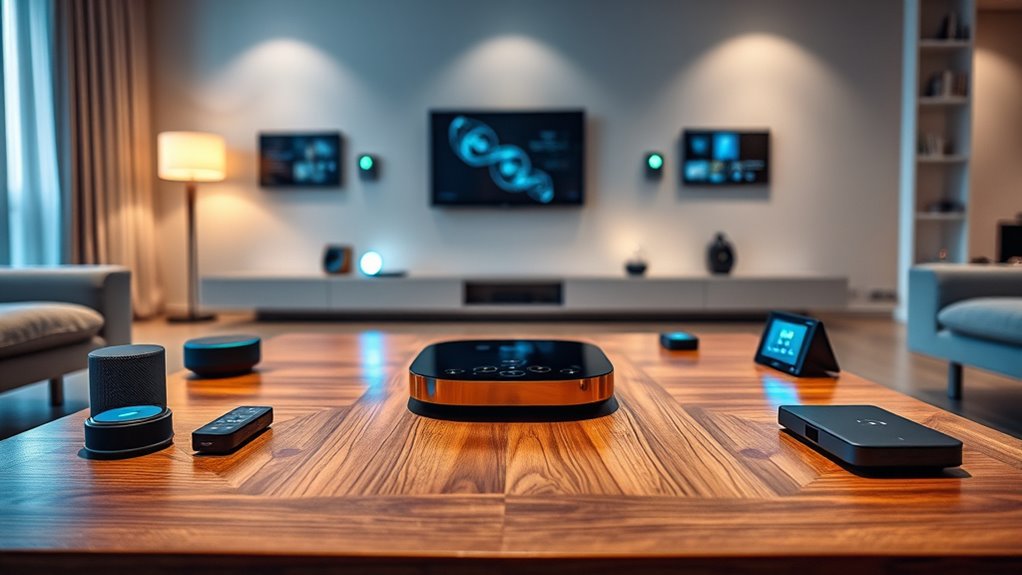

Smart home hubs serve as the central control point for all your connected devices, simplifying automation and management. The best models combine broad device compatibility, reliable connectivity, and user-friendly interfaces. The Home Assistant Green stands out for advanced automation, while the Amazon Echo Hub offers seamless Alexa integration for ease of use. Tradeoffs often involve balancing versatility, price, and local versus cloud control. Continue reading for a detailed breakdown of the top options to fit every need.

Get business pricing on tools and workshop supplies
- Business-only prices and quantity discounts
- Tax-exempt purchasing
- Multiple users, one account, clear invoices
Complete the kit


Key Takeaways
- The strongest smart amazon.com/dp/B0DMTMM1RJ?tag=lovehandmade-20&ascsubtag=dc-373398″ target=”_blank” rel=”nofollow sponsored noopener”>amazon.com/dp/B0CXVKSG19?tag=lovehandmade-20&ascsubtag=dc-373398″ target=”_blank” rel=”nofollow sponsored noopener”>home hubs excel in device compatibility, supporting Zigbee, Z-Wave, and Matter standards.
- Local control capabilities are a key factor for faster automations and increased privacy, favoring brands like Hubitat.
- Price varies significantly, with premium options offering advanced features and budget models focusing on core functionality.
- User interface and setup ease are critical for non-technical users, with some hubs offering more intuitive apps and dashboards.
- Supports for ecosystems like Apple HomeKit or Alexa can heavily influence choice based on existing smart home setups.
| Home Assistant Green | Smart Home hub with Advanced Automation | Official Home Assistant Hardware |  | Best Overall for Customizable Automation | Processor: Quad-core | Storage: 32GB | RAM: 4GB | VIEW ON AMAZON | See Our Full Breakdown |
| Tapo Smart Hub with Built-in Chime, 2.4GHz Wi-Fi, Long-Range Connectivity, Supports Up to 64 Devices | 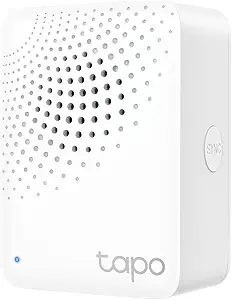 | Best for Security-Focused Automation | Connectivity: 2.4GHz Wi-Fi, Sub-1G wireless | Maximum Devices: 64 | Range: Up to 30 meters | VIEW ON AMAZON | See Our Full Breakdown |
| Philips Hue Bridge Pro Smart Lighting Hub |  | Best for Extensive Lighting Control | Processor: 1.7 GHz quad-core | Memory: 4 GB DDR4 | Supported Lights: 150+ | VIEW ON AMAZON | See Our Full Breakdown |
| Amazon Echo Hub 8” Smart Home Control Panel with Alexa |  | Best for Voice-Integrated Control | Display Size: 8 inches | Connectivity: WiFi, Bluetooth, Zigbee, Matter, Sidewalk, Thread | Compatibility: Alexa-compatible devices, locks, cameras | VIEW ON AMAZON | See Our Full Breakdown |
| Aqara Smart Home Hub M3 with Matter, Zigbee, Thread, IR, Wi-Fi, PoE, and Apple HomeKit Support |  | Best for Protocol Compatibility and Privacy | Protocols Supported: Zigbee, Thread, Matter | Device Capacity: 127 Zigbee and 127 Thread | Connectivity: Wi-Fi 2.4/5 GHz, PoE, USB-C | VIEW ON AMAZON | See Our Full Breakdown |
| Aeotec Smart Home Hub2 – V4, Works as a SmartThings Hub, Zigbee, Matter Gateway, Compatible with Alexa, Google Assistant, WiFi (No Z-Wave) |  | Best Overall for a Matter-Ready Ecosystem | Protocol Support: Zigbee, Matter, Wi-Fi | Connectivity: Wi-Fi, Ethernet | Local Automation: Yes | VIEW ON AMAZON | See Our Full Breakdown |
| Aeotec Smart Home Hub, Works as a SmartThings Hub, Z-Wave, Zigbee, Matter Gateway, Compatible with Alexa, Google Assistant, WiFi |  | Best Value for Versatile Protocol Support | Protocols Supported: Z-Wave Plus, Zigbee, Matter | Connectivity: Wi-Fi, Ethernet | Automation: Supports local and cloud automations | VIEW ON AMAZON | See Our Full Breakdown |
| Amazon Echo Hub (newest model), 8″, Redesigned with customizable control and Alexa+, Compatible with thousands of devices | | Best for Centralized In-Wall Control with Alexa | Display Size: 8 inches | Connectivity: Wi-Fi, Bluetooth, Zigbee, Thread | Compatibility: Alexa, Ring, Thryme | VIEW ON AMAZON | See Our Full Breakdown |
| Hubitat Elevation C-8 Pro Smart Home Hub, Local Control and Automations |  | Best for Privacy-Conscious, Advanced Local Automation | Protocols Supported: Matter 1.5, Z-Wave 800 LR, Zigbee 3.0, Bluetooth, Wi-Fi | Automation Type: Local AI-driven | Updates: Continuous free updates | VIEW ON AMAZON | See Our Full Breakdown |
| Aqara Hub M1S Gen 2, Smart Home Bridge for Alarm System, Home Automation | (2.4 GHz Wi-Fi Required, Not Support Wi-Fi 6) |  | Best for Apple HomeKit Integration and Security Features | Wi-Fi: 2.4 GHz only | Zigbee Support: 3.0 | Apple HomeKit: Yes | VIEW ON AMAZON | See Our Full Breakdown |
| smart home hub | Connectivity | Compatibility |
|---|---|---|
| Home Assistant Green | Smart H | Ethernet, USB expandability | — |
| Tapo Smart Hub with Built-in C | 2.4GHz Wi-Fi, Sub-1G wireless | — |
| Philips Hue Bridge Pro Smart L | — | — |
| Amazon Echo Hub 8” Smart Home | WiFi, Bluetooth, Zigbee, Matter, Sidewalk, Thread | Alexa-compatible devices, locks, cameras |
| Aqara Smart Home Hub M3 with M | Wi-Fi 2.4/5 GHz, PoE, USB-C | Apple HomeKit, Alexa, SmartThings |
| Aeotec Smart Home Hub2 | Wi-Fi, Ethernet | — |
| Aeotec Smart Home Hub | Wi-Fi, Ethernet | Alexa, Google Assistant |
| Amazon Echo Hub | Wi-Fi, Bluetooth, Zigbee, Thread | Alexa, Ring, Thryme |
| Hubitat Elevation C-8 Pro Smar | — | — |
| Aqara Hub M1S Gen 2 | — | Aqara Zigbee devices, Apple Home, Alexa, Google |
More Details on Our Top Picks
Home Assistant Green | Smart Home hub with Advanced Automation | Official Home Assistant Hardware
This official Home Assistant hardware stands out for its powerful quad-core processor, 32GB storage, and seamless integration with a wide variety of smart devices. Unlike the Philips Hue Bridge Pro, which excels at managing extensive lighting setups, the Green hub offers a broader scope for automating entire homes, making it perfect for tech-savvy users who want full control. Its fanless, compact design ensures quiet operation, and the USB expandability adds flexibility. The tradeoff, however, is a steeper learning curve and setup complexity, especially for beginners. If you prefer a highly customizable, privacy-conscious hub capable of automating more than just lighting, this makes the most sense.
Pros:- Highly customizable automation capabilities
- Supports Z-Wave, Zigbee, and Thread via USB expansion
- Built-in privacy controls and local data storage
Cons:- Requires some technical knowledge for initial setup
- Lacks a built-in display or user interface for direct control
Best for: Homeowners who want a powerful, expandable, and customizable automation hub with full control over their smart devices
Not ideal for: Less tech-savvy users or those seeking a plug-and-play solution without configuration hassles
- Processor:Quad-core
- Storage:32GB
- RAM:4GB
- Connectivity:Ethernet, USB expandability
- Supported Protocols:Z-Wave, Zigbee, Thread
- Power:Plug-in
Our verdict“This hub is ideal for users seeking deep customization and local control over complex smart home systems.”
Tapo Smart Hub with Built-in Chime, 2.4GHz Wi-Fi, Long-Range Connectivity, Supports Up to 64 Devices
The Tapo Smart Hub H100 offers reliable long-range connectivity for up to 64 devices, making it a solid choice for expanding your security and automation setup. Its built-in chime and siren enhance alarm capabilities, setting it apart from the Philips Hue Bridge Pro, which mainly focuses on lighting. However, its incompatibility with Tapo smart plugs and lighting limits its versatility for complete home automation. The reliance on 2.4GHz Wi-Fi and potential environmental range issues may affect performance in larger spaces. This hub makes the most sense for homeowners prioritizing security sensors and alarm integration over extensive lighting control.
Pros:- Long-range reliable connectivity up to 30 meters
- Supports up to 64 devices for comprehensive setup
- Built-in chime and siren for security alerts
Cons:- Cannot directly connect to Tapo smart plugs or lighting
- Range may be affected by obstacles or environment
Best for: Homeowners looking to enhance security and automation with a long-range, device-rich hub
Not ideal for: Those seeking a hub that manages a wide array of smart lighting or appliances directly, or with large, Wi-Fi-challenging homes
- Connectivity:2.4GHz Wi-Fi, Sub-1G wireless
- Maximum Devices:64
- Range:Up to 30 meters
- Built-in Chime:Yes
- Supports Sensors:Yes
- Alarm Volume:Up to 90 dB
Our verdict“This hub is best suited for users prioritizing security sensors and alarms in a large or complex home environment.”
Philips Hue Bridge Pro Smart Lighting Hub
The Philips Hue Bridge Pro is a powerhouse for managing large lighting systems, supporting over 150 lights and 50 accessories with fast response times and robust security. Comparing to the Aqara M3 Hub, which offers multi-protocol support and automation, the Hue Bridge excels in dedicated lighting environments, especially for those already invested in Hue’s ecosystem. Its lack of included motion sensors and setup complexity might challenge beginners, but its reliability and security make it ideal for serious lighting enthusiasts. If lighting is your main focus, this hub makes the most sense, though it isn’t designed for broader device integration beyond Hue products.
Pros:- Supports over 150 lights and 50 accessories
- Fast processing for quick responses
- Enhanced security features
Cons:- Requires additional sensors for motion sensing
- Complex setup for newcomers
Best for: Homeowners who want extensive, reliable lighting control with advanced automation features
Not ideal for: Users seeking a multi-protocol hub or broader device compatibility outside lighting
- Processor:1.7 GHz quad-core
- Memory:4 GB DDR4
- Supported Lights:150+
- Supported Accessories:50+
- Motion Sensing:Hue MotionAware
- Security:Zigbee Trust Center
Our verdict“This hub is perfect for dedicated lighting control in large, Hue-centric smart homes.”
Amazon Echo Hub 8” Smart Home Control Panel with Alexa
The Amazon Echo Hub combines an 8-inch touchscreen with Alexa’s voice control, providing a user-friendly interface for managing lights, cameras, locks, and more. Unlike the Philips Hue Bridge, which focuses solely on lighting, the Echo Hub supports multiple protocols like Zigbee, Thread, and Matter, broadening device compatibility. Its ease of installation and customizable widgets make it suitable for users wanting a centralized, voice-enabled control panel. However, being a refurbished product and requiring additional accessories like wall mounts can be drawbacks. This pick makes the most sense for households that prioritize voice control and a versatile, all-in-one interface.
Pros:- Easy to install and customize with widgets
- Supports a wide range of protocols and device types
- Alexa voice control enhances usability
Cons:- Requires additional purchase for mounting or stand
- Refurbished units may have packaging or warranty limitations
Best for: Families seeking a straightforward, voice-supported smart home control panel with broad protocol support
Not ideal for: Users desiring a dedicated, high-capacity lighting hub or those who prefer a fully integrated home security system
- Display Size:8 inches
- Connectivity:WiFi, Bluetooth, Zigbee, Matter, Sidewalk, Thread
- Compatibility:Alexa-compatible devices, locks, cameras
- Materials:27% recycled
- Warranty:Limited (refurbished)
Our verdict“This control panel suits users who want a flexible, voice-activated interface for their smart home.”
Aqara Smart Home Hub M3 with Matter, Zigbee, Thread, IR, Wi-Fi, PoE, and Apple HomeKit Support
The Aqara M3 Hub offers broad protocol support, including Zigbee, Thread, and Matter, making it highly adaptable for various smart devices. Its built-in IR blaster adds control over traditional appliances, setting it apart from hubs like the Tapo or Hue Bridge, which lack IR functionality. Its support for Apple HomeKit, along with encrypted local storage, prioritizes privacy and local control, appealing to security-conscious users. The main tradeoff is the need to place it within 6 to 19 feet of your router for optimal performance, and its PoE power supply isn’t included, adding extra cost. This hub is well-suited for users seeking multi-protocol flexibility with a focus on privacy.
Pros:- Supports Zigbee, Thread, and Matter for broad device compatibility
- Includes a smart IR blaster for traditional device control
- Encrypted local storage enhances privacy
Cons:- Requires placement within close proximity to router
- PoE power adapter not included
Best for: Tech-savvy homeowners needing multi-protocol support and privacy-focused local automation
Not ideal for: Casual users or those with large homes where placement distance from router is problematic
- Protocols Supported:Zigbee, Thread, Matter
- Device Capacity:127 Zigbee and 127 Thread
- Connectivity:Wi-Fi 2.4/5 GHz, PoE, USB-C
- Storage:8GB encrypted local
- IR Blaster:360° with learning
- Compatibility:Apple HomeKit, Alexa, SmartThings
Our verdict“Ideal for users who prioritize protocol versatility and privacy in a smart home hub, accepting some placement constraints.”
Aeotec Smart Home Hub2 – V4, Works as a SmartThings Hub, Zigbee, Matter Gateway, Compatible with Alexa, Google Assistant, WiFi (No Z-Wave)
This version of the Aeotec Smart Home Hub2 emphasizes compatibility with the latest Matter standard and Zigbee, making it an excellent choice for those building a future-proof smart home. Compared with the original Aeotec Hub, the V4 model improves speed and reliability via local processing and supports a broader range of protocols—minus Z-Wave, which might disappoint users with existing Z-Wave devices. Its straightforward setup with Wi-Fi or Ethernet makes it accessible for most homes, but the lack of Z-Wave support limits compatibility with some popular devices. If your focus is on a versatile, future-ready hub with local automation capabilities, this stands out. However, users who rely heavily on Z-Wave will need a different solution.
Pros:- Supports the latest Matter and Zigbee standards for broad device compatibility
- Local processing ensures automations run reliably without internet dependence
- Easy setup via Wi-Fi or Ethernet, suitable for various home layouts
Cons:- No Z-Wave support, limiting compatibility with many existing smart devices
- Lacks some advanced customization options found in more open platforms
Best for: Homeowners seeking a highly compatible, future-proof hub with local automation support and Zigbee/Matter standards.
Not ideal for: Users with extensive Z-Wave device networks who need support for legacy Z-Wave automations.
- Protocol Support:Zigbee, Matter, Wi-Fi
- Connectivity:Wi-Fi, Ethernet
- Local Automation:Yes
- Z-Wave Support:No
- Platform Compatibility:SmartThings app
- Device Compatibility:Supports thousands of Zigbee and Matter devices
Our verdict“This hub is best suited for those building a modern, flexible smart home focused on Zigbee and Matter devices, willing to forego Z-Wave support.”
Aeotec Smart Home Hub, Works as a SmartThings Hub, Z-Wave, Zigbee, Matter Gateway, Compatible with Alexa, Google Assistant, WiFi
This Aeotec hub combines Z-Wave, Zigbee, and Matter support, making it a flexible choice for many smart homes. Unlike the newer V4, this model supports Z-Wave Plus (V3), appealing to users with existing Z-Wave devices. Its compatibility with Alexa and Google Assistant simplifies voice control, while the support for both wired Ethernet and Wi-Fi ensures easy setup. Compared to the Aeotec V4, it offers broader protocol coverage but might lack the latest Matter features and local automations focused on Zigbee/Matter. It’s a reliable all-rounder for users who want to unify multiple protocols without breaking the bank.
Pros:- Supports Z-Wave Plus, Zigbee, and Matter for broad device compatibility
- Works with major voice assistants for easy control
- Flexible setup options with Wi-Fi and Ethernet
Cons:- May lack support for the latest Matter updates compared to newer hubs
- Setup can be more complex for advanced automations
Best for: Homeowners with diverse device ecosystems including Z-Wave and Zigbee, looking for a cost-effective, flexible hub.
Not ideal for: Tech-savvy users seeking the newest standards like full Matter support or advanced local automations.
- Protocols Supported:Z-Wave Plus, Zigbee, Matter
- Connectivity:Wi-Fi, Ethernet
- Automation:Supports local and cloud automations
- Compatibility:Alexa, Google Assistant
- Device Limit:Supports thousands of devices
- Platform:SmartThings app
Our verdict“This hub is ideal for users needing a versatile, protocol-rich system without the latest protocol features.”
Amazon Echo Hub (newest model), 8″, Redesigned with customizable control and Alexa+, Compatible with thousands of devices
The Amazon Echo Hub integrates a large 8-inch display with Alexa+, offering a centralized control panel for smart home management. Its visual interface makes device management, camera viewing, and routines straightforward—especially compared to standalone hubs like the Aeotec. While it excels in user-friendly control and integrates seamlessly with Alexa and Ring devices, it’s less flexible for those wanting extensive protocol support like Z-Wave or Zigbee alone, since it’s heavily tied to Alexa’s ecosystem. This makes it perfect for households already invested in Amazon’s ecosystem, but less ideal for those seeking protocol diversity or advanced automations outside of Alexa routines.
Pros:- Large, customizable touchscreen interface for effortless control
- Integrates seamlessly with Alexa, Ring, and thousands of compatible devices
- Easy installation with wall-mount options
Cons:- Limited support for protocols outside Alexa ecosystem, like Z-Wave
- Primarily a control interface, not a full automation hub for complex automations
Best for: Families heavily invested in Amazon Alexa and Ring, needing an in-wall control panel with visual feedback.
Not ideal for: Users who prefer custom automation platforms or require extensive protocol support beyond Alexa-compatible devices.
- Display Size:8 inches
- Connectivity:Wi-Fi, Bluetooth, Zigbee, Thread
- Compatibility:Alexa, Ring, Thryme
- Automation Features:Supports routines and voice control
- Build:Wall-mounted, customizable dashboard
- Privacy:Multiple privacy controls
Our verdict“This device suits households seeking a visual, centralized control point within Amazon’s ecosystem, especially if they already use Alexa and Ring.”
Hubitat Elevation C-8 Pro Smart Home Hub, Local Control and Automations
The Hubitat Elevation C-8 Pro emphasizes privacy and speed, operating entirely locally with no reliance on cloud services. It supports Z-Wave, Zigbee, Matter, Bluetooth, and Wi-Fi, making it a versatile choice for advanced users who prefer control over their data and automations. Compared with the Aeotec hubs, it offers greater customization for tech-savvy users, with AI-driven automation suggestions and seamless local control. The tradeoff lies in its less polished user interface, which requires some technical knowledge. For those prioritizing privacy and reliability over simplicity, this hub offers a compelling option.
Pros:- Operates entirely locally, ensuring maximum privacy and speed
- Supports multiple protocols including Z-Wave, Zigbee, and Matter
- No subscription fees for core automations
Cons:- Requires some technical knowledge for setup and advanced use
- User interface is less intuitive for non-technical users
Best for: Tech-savvy homeowners seeking robust local control and privacy, with support for multiple protocols and advanced automations.
Not ideal for: Beginners or users who prefer a plug-and-play experience with minimal setup and customization.
- Protocols Supported:Matter 1.5, Z-Wave 800 LR, Zigbee 3.0, Bluetooth, Wi-Fi
- Automation Type:Local AI-driven
- Updates:Continuous free updates
- Subscription:None
- Control:Local automation and device management
- Size:Supports multiple protocols with a compact design
Our verdict“This hub is best suited for users who want complete local control, high privacy, and are comfortable with technical setup.”
Aqara Hub M1S Gen 2, Smart Home Bridge for Alarm System, Home Automation | (2.4 GHz Wi-Fi Required, Not Support Wi-Fi 6)
The Aqara Hub M1S Gen 2 stands out for its full support of Apple HomeKit, making it a top choice for Apple-centric households. Its Zigbee 3.0 support allows seamless integration with Aqara’s ecosystem, complemented by a built-in RGB light and illumination sensor. Compared to the other hubs, it combines automation with security features like a siren, alarm modes, and customizable ringtones, acting as a mini alarm station. Its focus on security and HomeKit compatibility makes it ideal for users prioritizing privacy and Apple ecosystem integration. However, its reliance on 2.4 GHz Wi-Fi and limited third-party Zigbee device support can be restrictive for users with more diverse setups.
Pros:- Full Apple HomeKit support for secure automation and remote access
- Built-in RGB light and illumination sensor for automation and ambiance
- Supports Aqara’s extensive Zigbee device range
Cons:- Limited to 2.4 GHz Wi-Fi, not supporting Wi-Fi 6
- Only compatible with Aqara Zigbee devices, limiting third-party integration
Best for: Apple users seeking secure, integrated home automation with security features and customizable lighting.
Not ideal for: Homeowners wanting protocol diversity beyond Aqara’s Zigbee devices or who rely on Wi-Fi 6 features.
- Wi-Fi:2.4 GHz only
- Zigbee Support:3.0
- Apple HomeKit:Yes
- Built-in Features:RGB light, illumination sensor, siren
- Compatibility:Aqara Zigbee devices, Apple Home, Alexa, Google
- Device Capacity:Up to 128 Aqara devices
Our verdict“This hub works best for Apple-based smart homes prioritizing security, automation, and Aqara device integration.”
How We Picked
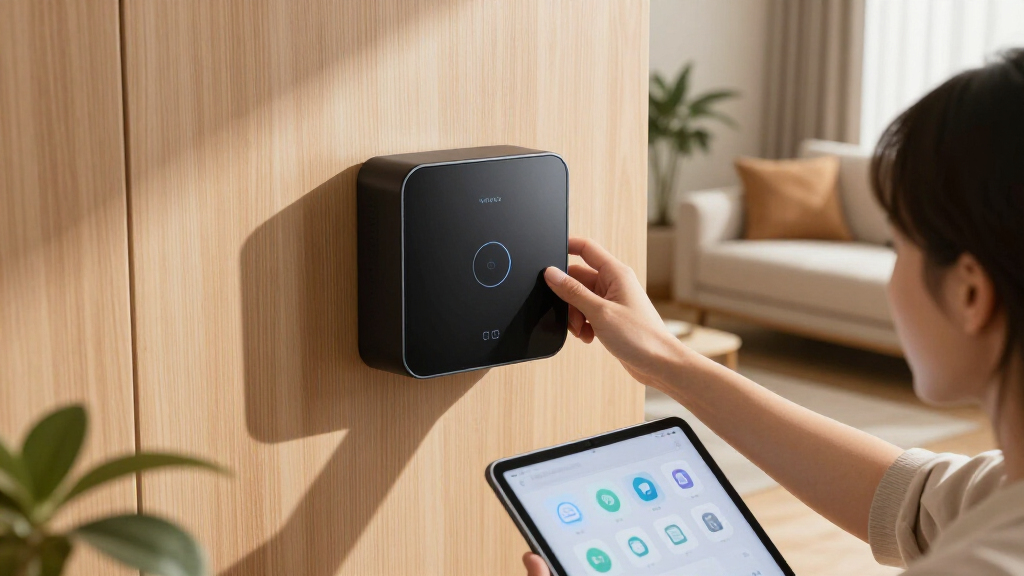
Our evaluation focused on compatibility, ease of use, automation capabilities, build quality, and value. We prioritized hubs that support multiple standards such as Zigbee, Z-Wave, and Matter, ensuring broad device integration. Ease of setup and app usability were also key, since a complicated interface can hinder everyday use. We considered local control options for faster automations and increased privacy, along with price points to match various budgets. Hubs that support popular ecosystems like Alexa, Google Assistant, and Apple HomeKit received higher ratings, as these integrations influence flexibility and future-proofing.
| smart home hub | Compatibility |
|---|---|
| Home Assistant Green | Smart H | — |
| Tapo Smart Hub with Built-in C | — |
| Philips Hue Bridge Pro Smart L | — |
| Amazon Echo Hub 8” Smart Home | Alexa-compatible devices, locks, cameras |
| Aqara Smart Home Hub M3 with M | Apple HomeKit, Alexa, SmartThings |
| Aeotec Smart Home Hub2 | — |
| Aeotec Smart Home Hub | Alexa, Google Assistant |
| Amazon Echo Hub | Alexa, Ring, Thryme |
| Hubitat Elevation C-8 Pro Smar | — |
| Aqara Hub M1S Gen 2 | Aqara Zigbee devices, Apple Home, Alexa, Google |
Factors to Consider When Choosing Smart Home Hubs
Choosing the right smart home hub involves balancing several factors beyond brand reputation. Understanding your ecosystem, compatibility needs, and automation goals helps narrow options and avoid costly mistakes. Here are some key considerations to keep in mind when selecting a smart home hub.Device Compatibility and Standards
Look for a hub that supports multiple communication protocols like Zigbee, Z-Wave, and Matter. This ensures you can connect a wide range of devices from different manufacturers, avoiding vendor lock-in. Devices that only support a single standard may limit future expansion and automation possibilities. Prioritize hubs with broad compatibility if you plan a diverse ecosystem, but be aware that more standards can sometimes increase setup complexity.
Local Control vs. Cloud Dependency
Local control offers faster automations and better privacy since commands are processed within your home network. Hubs like Hubitat excel here, but may lack some cloud-based integrations. Cloud-dependent hubs, like some from Amazon or Google, often provide easier setup and more remote access, but could face delays or outages. Decide which aligns better with your automation needs and privacy preferences.
Ease of Use and App Experience
An intuitive app and straightforward setup process can make a significant difference, especially for beginners. Some hubs provide visual dashboards and simple automation builders, reducing the learning curve. Conversely, more advanced hubs may require technical knowledge but offer deeper customization. Consider your comfort level with technology when weighing usability against advanced features.
Ecosystem Integration
If you already use Alexa, Google Assistant, or Apple HomeKit, selecting a compatible hub simplifies integration and future expansion. Hubs that support multiple ecosystems give you flexibility and ease of voice control. However, some hubs are optimized for specific ecosystems, which might limit your options if you want cross-platform control. Make sure the hub aligns with your existing smart home setup.
Price and Future-Proofing
Budget models can handle basic automation but may lack advanced features like local processing or broad protocol support. Premium hubs tend to include more features, better build quality, and longer-term compatibility with new standards. Consider your long-term goals: investing more upfront can reduce the need for future upgrades, but only if the features align with your needs. Balance cost against potential growth and automation complexity.
Frequently Asked Questions
Can I use multiple smart home hubs together?
Using multiple hubs can extend compatibility and functionality, especially if different hubs support different ecosystems or standards. Some hubs, like those supporting Matter, are designed to unify device control across platforms, reducing the need for multiple units. However, managing multiple hubs can introduce complexity and potential conflicts in automations. It’s generally better to choose a versatile hub that covers most of your needs unless you have very specialized devices or ecosystem preferences.
Do I need a hub if I use Wi-Fi-connected smart devices?
Many Wi-Fi-connected devices can operate without a dedicated hub, directly connecting to your home network. However, a hub often provides centralized control, better automation capabilities, and improved stability for larger setups. If you plan a simple, few-device system, Wi-Fi alone might suffice, but for complex or expanding setups, a hub offers significant advantages in management and reliability.
Is local control more secure than cloud-based control?
Local control minimizes exposure to internet threats since commands stay within your home network, reducing risks associated with cloud breaches. It also ensures automations run even if your internet connection drops. Cloud-based systems, however, often have stronger remote access, updates, and support, which can be more convenient but come with potential security tradeoffs. The best approach balances local control for privacy and speed, with cloud options for flexibility.
How important is protocol support for future device compatibility?
Supporting protocols like Zigbee, Z-Wave, and Matter is vital for future-proofing your smart home. New devices increasingly adopt standardized protocols, making a hub that supports multiple standards more adaptable over time. Relying solely on Wi-Fi can limit compatibility to internet-connected devices, which might not be as reliable or secure. Choosing a hub with broad protocol support reduces the risk of obsolescence and expands your device options.
Should I prioritize a hub with built-in voice assistant or separate control device?
Hubs with integrated voice assistants like Alexa or Google Assistant offer convenient voice control without additional devices, making setup more streamlined. However, dedicated control panels or hubs without voice assistants often provide more advanced automation features and better privacy control. Your choice depends on whether voice commands are central to your setup or if you prefer a dedicated automation interface. Consider your daily interaction style and automation complexity when deciding.
Conclusion
For most users seeking a reliable, versatile experience, the Home Assistant Green delivers comprehensive automation and broad compatibility, making it the best overall choice. Budget-conscious buyers or those wanting straightforward setup might prefer the Tapo Smart Hub for its balance of features and affordability. Tech enthusiasts or those prioritizing privacy should consider the Hubitat Elevation C-8 Pro with local control. If seamless ecosystem integration is key, the Aqara Hub M1S Gen 2 or Amazon Echo Hub will fit well. Ultimately, the right hub depends on your current devices, automation needs, and comfort with technology.
Fall Picks
fall essentials
As an affiliate, we earn on qualifying purchases.