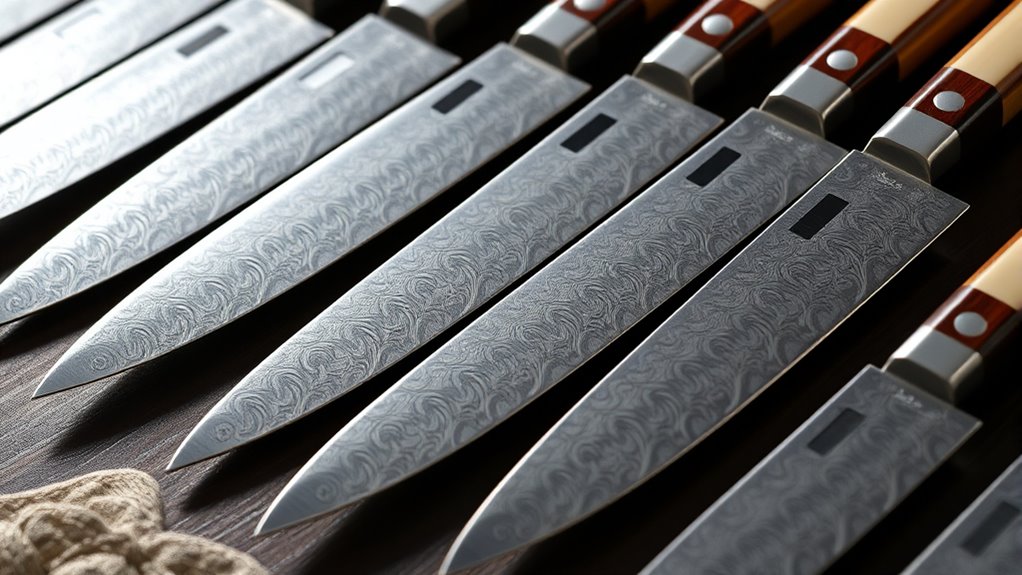

If you’re looking for the 15 best traditional Japanese knives for 2026 that chefs love, I’ve got you covered. These knives feature high-quality steels like VG10 and 9CR18MOV, expert craftsmanship, and ergonomic handles that feel great in hand. From versatile Gyuto to precision Kiridashi blades, each knife is designed for exceptional performance and durability. Continue exploring to discover detailed insights on these top tools that will elevate your culinary skills.
Key Takeaways
- The list features top traditional Japanese knives known for craftsmanship, high-quality steel, and exceptional sharpness in 2026.
- It includes various types like Gyuto, Santoku, Nakiri, and specialized knives for different culinary tasks.
- Emphasis on hand-forged blades with layered patterns, unique textures, and ergonomic handles for optimal control.
- Many knives are crafted from premium steels such as VG10, 9CR18MOV, and AUS-8, ensuring durability and rust resistance.
- The collection highlights knives favored by professional chefs, combining traditional artistry with modern functionality.
| 8-Inch Hand Forged Japanese Chef Knife with Rosewood Handle |  | Artisan Hand-Forged | Blade Material: 5-layer 9CR18MOV high carbon steel | Blade Length: 8 inches | Handle Material: Rosewood | VIEW LATEST PRICE | See Our Full Breakdown |
| Japanese Gyuto Chef’s Knife 8-inch High Carbon Steel | 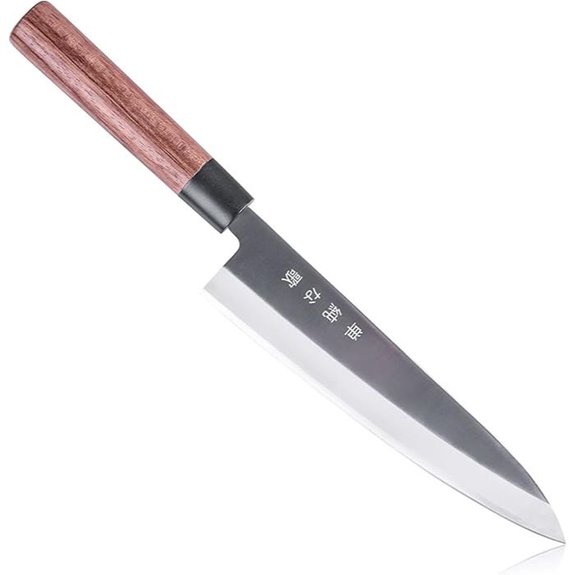 | Traditional Precision | Blade Material: 420HC stainless steel | Blade Length: 8 inches | Handle Material: Rosewood | VIEW LATEST PRICE | See Our Full Breakdown |
| MITSUMOTO SAKARI Japanese Chef’s Knife Set (4 pcs) | 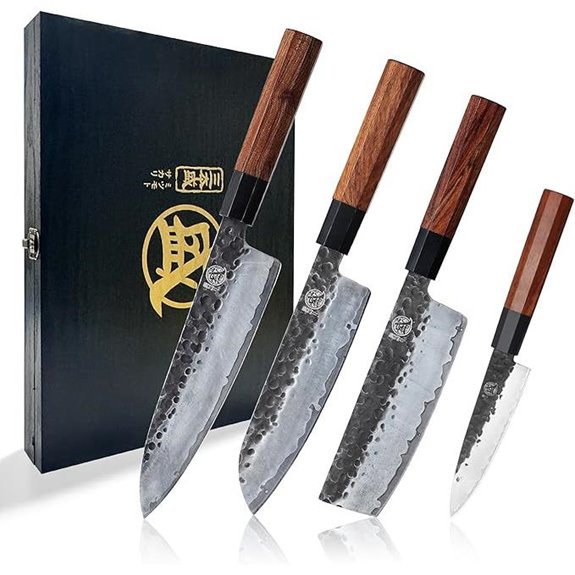 | Professional Craftsmanship | Blade Material: 3-layer 9CR18MOV high carbon steel | Blade Length: 8 inches | Handle Material: Sourwood (summer sourwood) | VIEW LATEST PRICE | See Our Full Breakdown |
| Japanese Kitchen Knife Set of 5 (Wooden Box Case) Mr. Takaaki Nakamura | 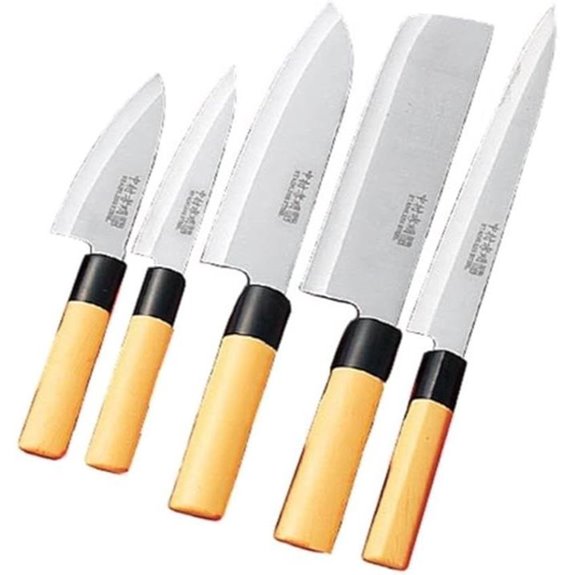 | Kitchen Versatility | Blade Material: Stainless steel | Blade Length: 5 pieces (varied, set) | Handle Material: Rosewood (various sets) | VIEW LATEST PRICE | See Our Full Breakdown |
| MITSUMOTO SAKARI 8″ Japanese Gyuto Chef Knife |  | Ultra-Sharp Edge | Blade Material: 3-layer 9CR18MOV high carbon steel | Blade Length: 8 inches | Handle Material: Rosewood | VIEW LATEST PRICE | See Our Full Breakdown |
| Japanese Chef Knife 8.27 Inch with Sandalwood Handle | 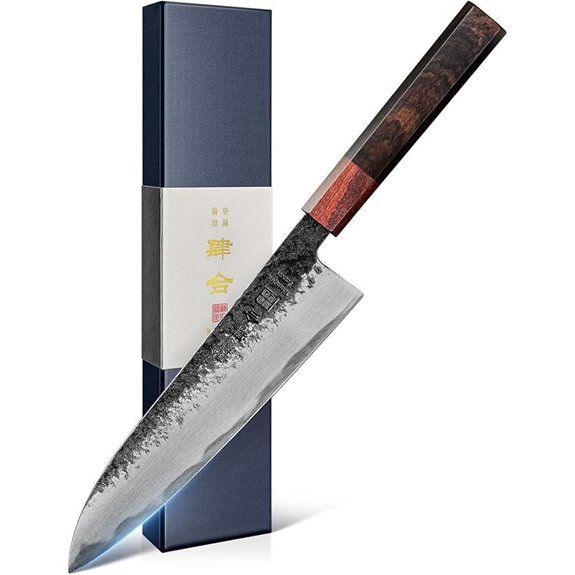 | Elegant Layering | Blade Material: AUS-8 alloy steel | Blade Length: 8.27 inches | Handle Material: Rosewood with G10 | VIEW LATEST PRICE | See Our Full Breakdown |
| KAWAHIRO Japanese Chef Knife 210mm VG10 Forged | 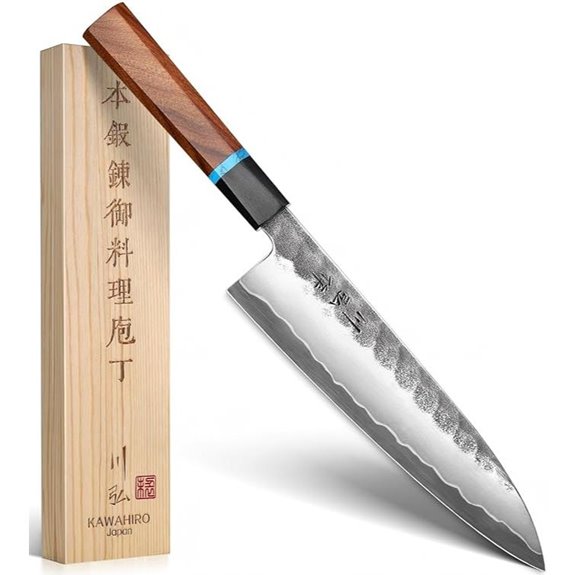 | Classic Hand-Forged | Blade Material: VG10 layered steel | Blade Length: 8 inches | Handle Material: Rosewood | VIEW LATEST PRICE | See Our Full Breakdown |
| Japanese Chef Knife Set with High Corrosion Resistance | 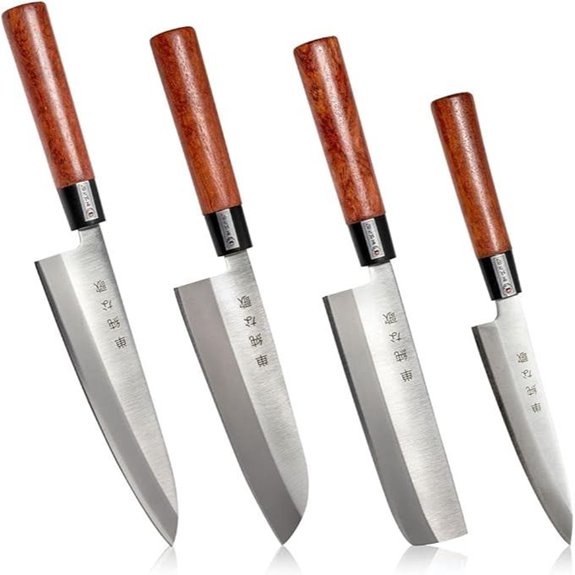 | High-Performance Steel | Blade Material: 420HC stainless steel | Blade Length: 4 pieces (varied sizes) | Handle Material: Rosewood | VIEW LATEST PRICE | See Our Full Breakdown |
| SHAN ZU 8-Inch Japanese Chef Knife with Rosewood Handle |  | Artistic Craftsmanship | Blade Material: 10Cr15CoMoV high-carbon steel | Blade Length: 8 inches | Handle Material: Rosewood | VIEW LATEST PRICE | See Our Full Breakdown |
| KEEMAKE 8-Inch Japanese Gyuto Chef Knife |  | Vacuum-Hardened | Blade Material: 9CR18MOV high-carbon steel | Blade Length: 8 inches | Handle Material: Rosewood | VIEW LATEST PRICE | See Our Full Breakdown |
| 10” Japanese Sushi Sashimi Knife with Pakkawood Handle | 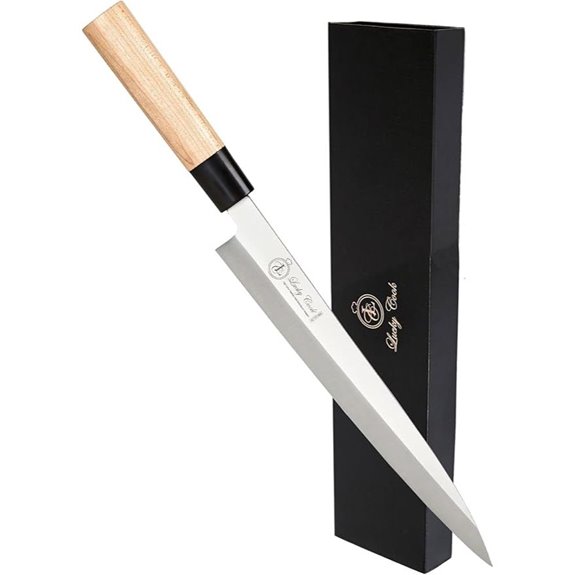 | Sushi Precision | Blade Material: Stainless steel | Blade Length: 10 inches (sashimi) | Handle Material: Pakkawood | VIEW LATEST PRICE | See Our Full Breakdown |
| SHAN ZU 8-Inch Japanese Damascus Chef Knife |  | Damascus Beauty | Blade Material: 10Cr15Mov Damascus steel | Blade Length: 8 inches | Handle Material: Rosewood | VIEW LATEST PRICE | See Our Full Breakdown |
| KAKURI Kiridashi Knife Right Hand Japanese Steel | 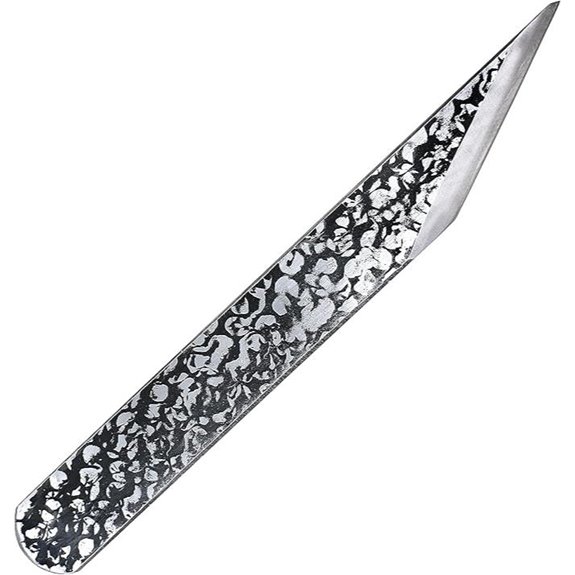 | Fine Detailing | Blade Material: High carbon steel laminated with soft iron | Blade Length: 24mm blade width (~1 inch) | Handle Material: Soft iron laminated with high carbon steel | VIEW LATEST PRICE | See Our Full Breakdown |
| Handmade Kiridashi Knife for Woodworking & Leatherwork |  | Unique Layering | Blade Material: 12C27 steel | Blade Length: 7.1 inches | Handle Material: Not specified (assumed wood) | VIEW LATEST PRICE | See Our Full Breakdown |
| MITSUMOTO SAKARI 5.5″ Paring Chef Knife | 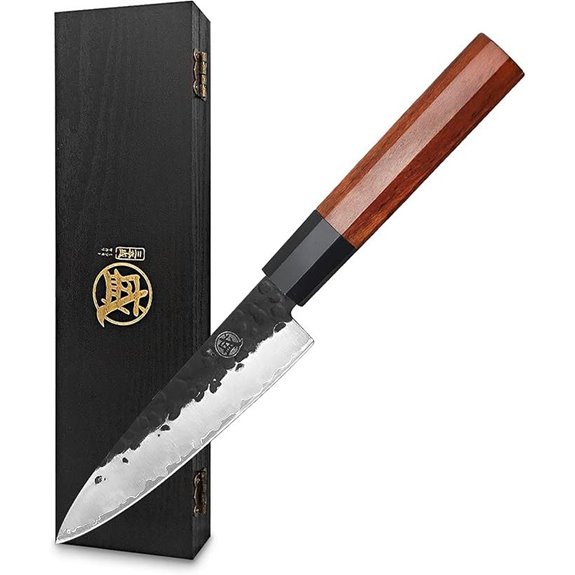 | Compact Control | Blade Material: 9CR18MOV high carbon steel | Blade Length: 5.5 inches | Handle Material: Rosewood | VIEW LATEST PRICE | See Our Full Breakdown |
More Details on Our Top Picks
8-Inch Hand Forged Japanese Chef Knife with Rosewood Handle
If you’re a home chef or professional looking for a reliable, precise knife, the Inch Hand Forged Japanese Chef Knife with Rosewood Handle is an excellent choice. Its 5-layer 9CR18MOV high carbon steel blade is handcrafted through traditional techniques and advanced technology, ensuring sharpness and durability. The lightweight rosewood handle offers an ergonomic, non-slip grip, providing exceptional balance and safety. With a hardness of HRC 62, it resists rust and corrosion while maintaining its edge over time. This knife boosts cutting efficiency, making prep faster and more precise. It’s also a thoughtful gift for culinary enthusiasts, reflecting craftsmanship and excellence.
- Blade Material:5-layer 9CR18MOV high carbon steel
- Blade Length:8 inches
- Handle Material:Rosewood
- Handle Shape:Octagonal ergonomic
- Crafting Technique:Hand-forged, traditional + tech
- Special Features:Rust-resistant electroplating
- Additional Feature:Traditional hand-forged process
- Additional Feature:Rust-resistant electroplating
- Additional Feature:Ergonomic octagonal handle
Japanese Gyuto Chef’s Knife 8-inch High Carbon Steel
The Japanese Gyuto Chef’s Knife, 8-inch High Carbon Steel, stands out as an essential tool for professional chefs and serious home cooks who demand precision and durability. Its high-quality 420HC stainless steel blades are heat treated for excellent hardness and edge retention while resisting rust, making it perfect for slicing meat, vegetables, and sashimi. The full-tang construction with a polished rosewood handle ensures strength, balance, and comfort during extended use. Designed with a traditional single bevel grind at 15°, it delivers exceptional sharpness and precise cuts. This versatile knife is ideal for both Japanese and Western cuisine, offering reliability and performance in every kitchen.
- Blade Material:420HC stainless steel
- Blade Length:8 inches
- Handle Material:Rosewood
- Handle Shape:Full-tang round
- Crafting Technique:Machine heat-treated, traditional grind
- Special Features:Single bevel grind, 15°
- Additional Feature:Single bevel grind
- Additional Feature:Full-tang construction
- Additional Feature:Versatile slicing tool
MITSUMOTO SAKARI Japanese Chef’s Knife Set (4 pcs)
For serious home cooks and professional chefs who value precision and craftsmanship, the MITSUMOTO SAKARI Japanese Chef’s Knife Set (4 pcs) offers an exceptional choice. These knives are handcrafted using traditional Japanese forging techniques, with skilled artisans shaping each blade over 45 days. The high-grade 9CR18MOV steel and 3-layer construction guarantee durability, sharpness, and peak performance. The ultra-thin blades cut through fruits, vegetables, and meats with ease, while the ergonomic sourwood handles provide comfort and control. Packaged in a beautiful sandalwood box, this set makes a perfect gift. It embodies quality, tradition, and precision—ideal for elevating any culinary experience.
- Blade Material:3-layer 9CR18MOV high carbon steel
- Blade Length:8 inches
- Handle Material:Sourwood (summer sourwood)
- Handle Shape:Octagonal ergonomic
- Crafting Technique:Hand-forged, manual pounding
- Special Features:Ultra-thin blade, 2.5mm
- Additional Feature:Premium summer sourwood handles
- Additional Feature:45-day hand forging
- Additional Feature:Elegant sandalwood box
Japanese Kitchen Knife Set of 5 (Wooden Box Case) Mr. Takaaki Nakamura
Crafted by master craftsman Mr. Takaaki Nakamura, this Japanese Kitchen Knife Set of 5 in a wooden box offers exceptional versatility. It includes specialized knives: a sushi sashimi knife, vegetable nakiri, chef’s knife, petty knife, and small deba, each designed for precise tasks like slicing fish, chopping vegetables, or making small cuts. Made from durable stainless steel, these knives are easy to maintain, resistant to rust, and built to last. The wooden box not only protects the tools but also makes a beautiful gift. Overall, this set provides everything needed for a well-rounded, efficient, and professional kitchen.
- Blade Material:Stainless steel
- Blade Length:5 pieces (varied, set)
- Handle Material:Rosewood (various sets)
- Handle Shape:Traditional Western (varied)
- Crafting Technique:Hand-forged, traditional
- Special Features:Set with storage box
- Additional Feature:Includes five specialized knives
- Additional Feature:Made for versatile tasks
- Additional Feature:Comes with storage case
MITSUMOTO SAKARI 8″ Japanese Gyuto Chef Knife
If you’re a professional chef or serious home cook seeking a reliable, high-performance kitchen knife, the Mitsumoto Sakari 8-inch Gyuto chef knife is an excellent choice. Its traditional hand-forged blade features a water ripple pattern, combining craftsmanship with modern tech to guarantee durability and a razor-sharp edge. Made from three layers of high-carbon 9CR18MOV steel, it offers uniform hardness and toughness, ideal for precise cuts. The ergonomic octagonal rosewood handle provides comfort and control, reducing wrist tension. Versatile and reliable, this knife excels in everything from delicate slicing to heavy-duty chopping, making it a must-have for those who demand excellence in their kitchen.
- Blade Material:3-layer 9CR18MOV high carbon steel
- Blade Length:8 inches
- Handle Material:Rosewood
- Handle Shape:Octagonal ergonomic
- Crafting Technique:Hand-forged, traditional
- Special Features:Water ripple forging pattern
- Additional Feature:Water ripple forging pattern
- Additional Feature:Vacuum nitrogen treatment
- Additional Feature:Balanced ergonomic handle
Japanese Chef Knife 8.27 Inch with Sandalwood Handle
The Japanese Chef Knife 8.27 Inch with Sandalwood Handle stands out as an ideal choice for both professional chefs and serious home cooks who value precision and craftsmanship. Its Kurouchi Tsuchime finish not only looks stunning but enhances durability and reduces friction, making slicing effortless. Crafted from AUS-8 alloy steel with a hardness of HRC 59±2, it offers toughness, corrosion resistance, and long-lasting sharpness. The ergonomic handle combines ebony and red sandalwood, ensuring comfort and balance during extended use. Packaged in an elegant box, it’s perfect as a gift and a testimonial to traditional Japanese artistry. This knife truly elevates any culinary experience.
- Blade Material:AUS-8 alloy steel
- Blade Length:8.27 inches
- Handle Material:Rosewood with G10
- Handle Shape:Octagonal ergonomic
- Crafting Technique:Hand-forged, black-forged Tsuchime
- Special Features:Hammered Tsuchime finish
- Additional Feature:Kurouchi Tsuchime finish
- Additional Feature:Hammered textured blade
- Additional Feature:Elegant gift box
KAWAHIRO Japanese Chef Knife 210mm VG10 Forged
For professional chefs and serious home cooks who demand exceptional performance, the KAWAHIRO Japanese Chef Knife, 210mm VG10 Forged stands out as an ideal choice. Its hand-forged construction from premium 3-layer composite steel, including VG10 stainless steel, ensures extraordinary hardness and edge retention. The razor-sharp blade features a unique layered pattern from traditional forge techniques, combining durability with beauty. The ergonomic handle, crafted from ruby wood, turquoise, and ebony, fits naturally in my hand, reducing fatigue. Perfectly balanced and precisely engineered, this knife offers effortless slicing and control, making it a reliable, elegant tool for any culinary task.
- Blade Material:VG10 layered steel
- Blade Length:8 inches
- Handle Material:Rosewood
- Handle Shape:Octagonal ergonomic
- Crafting Technique:Hand-forged, layered forging
- Special Features:Damascus layered pattern
- Additional Feature:VG10 stainless steel
- Additional Feature:Seamless blade-handle transition
- Additional Feature:Luxurious ruby handle
Japanese Chef Knife Set with High Corrosion Resistance
A Japanese chef knife set with high corrosion resistance is an excellent choice for both professional and home chefs who demand durability and longevity in their kitchen tools. These sets feature high-quality 420HC stainless steel blades, heat-treated for exceptional hardness and edge retention. The full-tang construction with traditional Rosewood handles guarantees strength, balance, and aesthetic appeal. The four-piece set includes a Gyuto, Santoku, Nakiri, and Petty, covering all essential tasks. Designed to withstand rust and corrosion, these knives stay sharp longer and require less maintenance. Plus, with a 30-day satisfaction guarantee, I feel confident in their quality and performance.
- Blade Material:420HC stainless steel
- Blade Length:4 pieces (varied sizes)
- Handle Material:Rosewood
- Handle Shape:Full-tang traditional
- Crafting Technique:Heat-treated, modern manufacturing
- Special Features:Rust-resistant, multi-piece set
- Additional Feature:Includes four knives
- Additional Feature:Rust-resistant steel
- Additional Feature:Professional-grade design
SHAN ZU 8-Inch Japanese Chef Knife with Rosewood Handle
If you’re looking for a reliable, high-performance chef knife that combines traditional craftsmanship with modern durability, the SHAN ZU 8-Inch Japanese Chef Knife with Rosewood Handle is an excellent choice. Its 9-layer clad steel with a 62 HRC core offers exceptional hardness, flexibility, and corrosion resistance. The ultra-sharp 12° edge delivers precise cuts, and its edge retention lasts longer thanks to quality steel. Hand-forged with hammered patterns, the blade combines strength and elegance. The ergonomic handle, featuring slip-resistant G10 and smooth rosewood, ensures comfort and control. Balanced and versatile, this knife handles everything from chopping vegetables to slicing meat effortlessly.
- Blade Material:10Cr15CoMoV high-carbon steel
- Blade Length:8 inches
- Handle Material:Rosewood
- Handle Shape:Octagonal
- Crafting Technique:Hand-forged, hammering
- Special Features:Hammered textured steel
- Additional Feature:Hammered textured surface
- Additional Feature:12° precision edge
- Additional Feature:Hand-forged craftsmanship
KEEMAKE 8-Inch Japanese Gyuto Chef Knife
The KEEMAKE 8-Inch Japanese Gyuto Chef Knife stands out with its expertly crafted blade, making it an essential tool for both professional chefs and passionate home cooks. Its traditional hand-forged techniques combined with advanced technology create a blade with stunning hammered textures that reflect authentic forging art. Made from five layers of high-carbon 9CR18MOV steel, it offers exceptional durability and sharpness. The ultra-thin design enhances flavor and ripeness during slicing, while the rosewood octagonal handle ensures a comfortable, balanced grip. Perfect for various kitchen tasks, this knife is a versatile, elegant addition that performs beautifully in both home and restaurant settings.
- Blade Material:9CR18MOV high-carbon steel
- Blade Length:8 inches
- Handle Material:Rosewood
- Handle Shape:Octagonal
- Crafting Technique:Hand-forged, traditional
- Special Features:Vacuum nitrogen cooled
- Additional Feature:Five-layer high-carbon steel
- Additional Feature:Vacuum nitrogen cooling
- Additional Feature:Elegant gift packaging
10” Japanese Sushi Sashimi Knife with Pakkawood Handle
Designed for professional chefs and serious home cooks, the Japanese Sushi Sashimi Knife with Pakkawood Handle delivers razor-sharp precision and elegant craftsmanship. Its 10-inch blade, handcrafted with a traditional single-bevel design, ensures perfect slices of fish, meat, vegetables, and fruits. Made from premium stainless steel, it resists rust, stains, and corrosion, maintaining its sharpness over time. The ergonomic pakkawood handle offers comfort, slip resistance, and balanced control, making slicing effortless. Lightweight and well-balanced, it enhances speed and accuracy. Packaged in a luxurious box, this knife combines functionality with timeless aesthetics, making it an exceptional addition to any kitchen.
- Blade Material:Stainless steel
- Blade Length:10 inches (sashimi)
- Handle Material:Pakkawood
- Handle Shape:Pakkawood ergonomic
- Crafting Technique:Hand-forged, Japanese tradition
- Special Features:Polished, elegant presentation
- Additional Feature:Single-bevel sashimi design
- Additional Feature:Perfect for fish slicing
- Additional Feature:Lightweight, balanced build
SHAN ZU 8-Inch Japanese Damascus Chef Knife
For professional chefs and serious home cooks seeking exceptional precision, the SHAN ZU 8-Inch Japanese Damascus Chef Knife stands out with its razor-sharp edge and durable construction. Crafted from high-quality 10Cr15Mov Damascus steel with 67 layers, it offers excellent toughness, rust resistance, and a stunning layered pattern. The 15° cutting angle ensures precise slicing, while the 2.2 mm thickness provides strength without sacrificing agility. Its ergonomic G10 handle delivers a comfortable, balanced grip, making it ideal for long prep sessions. Weighing around 270 grams, this knife combines elegance with functionality, backed by a 12-month warranty for peace of mind.
- Blade Material:10Cr15Mov Damascus steel
- Blade Length:8 inches
- Handle Material:Rosewood
- Handle Shape:Traditional rounded
- Crafting Technique:Advanced forging, layered
- Special Features:Layered Damascus pattern
- Additional Feature:67-layer Damascus pattern
- Additional Feature:Frosted G10 handle
- Additional Feature:Repeated folding forging
KAKURI Kiridashi Knife Right Hand Japanese Steel
If you need a dependable knife for precise incisions and detailed work, the KAKURI Kiridashi Knife right-hand version stands out. Its 24mm blade, forged from high carbon Japanese steel laminated with soft iron, delivers exceptional sharpness straight out of the box. Crafted by skilled artisans, it offers outstanding performance for marking, shaving, and deburring in woodworking or leatherwork. The hammered pattern not only enhances grip but also adds a traditional aesthetic. Its durable, two-layer construction makes sharpening straightforward and prevents breakage. Compact and expertly designed, this knife combines authentic craftsmanship with reliable precision, making it a must-have for fine, detailed tasks.
- Blade Material:High carbon steel laminated with soft iron
- Blade Length:24mm blade width (~1 inch)
- Handle Material:Soft iron laminated with high carbon steel
- Handle Shape:Straight, simple
- Crafting Technique:Hand-forged, traditional
- Special Features:Hammered, traditional pattern
- Additional Feature:Compact design
- Additional Feature:Traditional hammer pattern
- Additional Feature:Precise incision tool
Handmade Kiridashi Knife for Woodworking & Leatherwork
The Handmade Kiridashi Knife stands out as an essential tool for woodworkers and leatherworkers who demand precision in their craft. Its compact design—7.1 inches long and just 0.7 inches wide—makes it easy to handle for detailed marking, carving, and scribing. Crafted from solid 12C27 steel, it offers excellent edge retention and durability, thanks to traditional hand-forging by Jayger. Whether you’re working on joinery, patterns, or artisan projects, this versatile knife delivers control and sharpness. Its 2.5mm chisel edge is perfect for right-handed users, making it a reliable addition to any woodworking or leatherworking toolkit.
- Blade Material:12C27 steel
- Blade Length:7.1 inches
- Handle Material:Not specified (assumed wood)
- Handle Shape:Straight, simple
- Crafting Technique:Hand-forged, artisan
- Special Features:Compact, artisan craftsmanship
- Additional Feature:Hand-forged 12C27 steel
- Additional Feature:Multi-purpose craft knife
- Additional Feature:Artisan craftsmanship
MITSUMOTO SAKARI 5.5″ Paring Chef Knife
The MITSUMOTO SAKARI 5.5″ Paring Chef Knife stands out as an essential tool for those who value precision and craftsmanship in their kitchen. Its traditional hand-forged blade combines Japanese techniques with modern technology, using three layers of 9CR18MOV high carbon steel that’s vacuum cooled for durability and sharpness. The ultra-thin, finely crafted blade excels at slicing fruits and vegetables with precision. The ergonomic octagonal handle, made from Southeast Asian summer sourwood, offers a comfortable, balanced grip that reduces wrist tension. Packaged in a beautiful sandalwood box, this knife embodies artistry and reliability, making it a must-have for professional and home cooks alike.
- Blade Material:9CR18MOV high carbon steel
- Blade Length:5.5 inches
- Handle Material:Rosewood
- Handle Shape:Octagonal
- Crafting Technique:Hand-forged, vacuum treated
- Special Features:Whipped textured blade
- Additional Feature:Traditional vacuum cooling
- Additional Feature:Elegant whipped texture
- Additional Feature:Octagonal rosewood handle
Factors to Consider When Choosing Traditional Japanese Knives
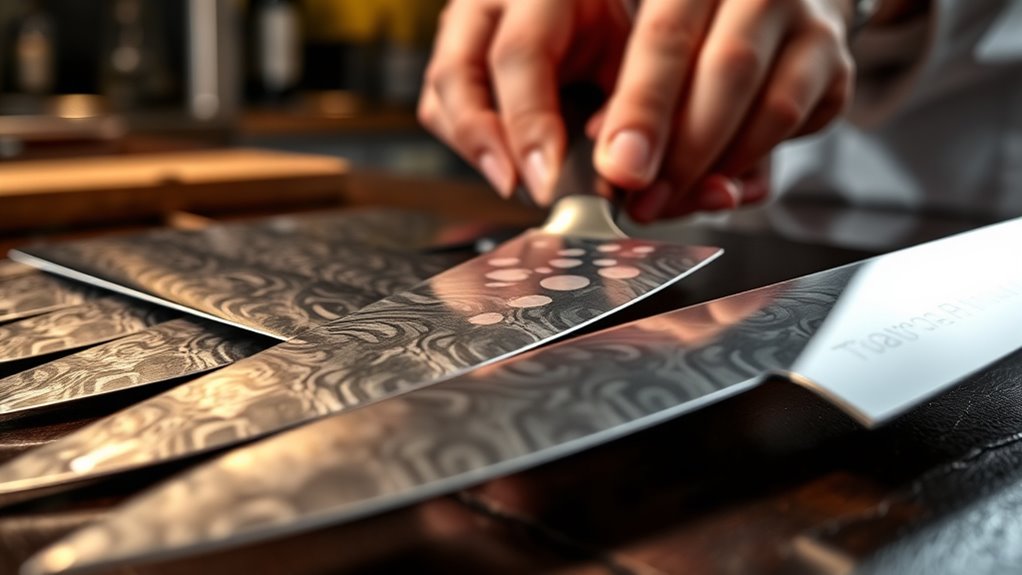
When selecting a traditional Japanese knife, I focus on blade material quality, as it affects durability and edge retention. I also consider handle ergonomics for comfort during extended use, along with the knife’s overall craftsmanship. Finally, I look at blade flexibility and toughness to guarantee it meets my specific needs in the kitchen.
Blade Material Quality
Choosing the right blade material is essential because it directly impacts the knife’s sharpness, durability, and ease of maintenance. High-quality Japanese knives often feature high-carbon steels like 9CR18MOV or VG10, which are known for exceptional hardness and edge retention. Layered or Damascus steel constructions enhance durability, flexibility, and resistance to rust and corrosion. The steel’s hardness, measured in HRC, influences how long the blade stays sharp; a higher HRC (around 60-62) usually means better edge retention. Traditional techniques, like laminated steel, combine softer outer layers with a tougher, high-carbon core, optimizing performance. Keep in mind, high-carbon steels demand careful cleaning to prevent rust but offer superior sharpness, making them a favorite among professional chefs.
Handle Ergonomics & Comfort
A well-designed handle can make all the difference in how a traditional Japanese knife feels and performs during extended use. An ergonomic handle reduces wrist fatigue and offers precise control, essential for delicate tasks. Handles with textured or octagonal surfaces improve grip stability and safety, even when wet. The material, like rosewood or pakkawood, impacts durability and comfort, making long hours more manageable. Proper balance, achieved through thoughtful weight distribution, enhances maneuverability and lessens hand strain. Handles shaped to fit the natural contours of your hand promote better leverage and reduce slipping risks. Overall, choosing a handle that combines comfort, stability, and durability ensures not only better performance but also a more enjoyable cooking experience.
Blade Sharpness & Edge Retention
The sharpness of a Japanese knife’s edge considerably impacts its cutting performance and ease of use. A precise bevel angle, typically around 15° to 20°, ensures effortless slicing and minimizes food damage. High-carbon steel blades usually stay sharp longer than stainless steel but need proper care to prevent rust. Edge retention depends on the steel quality, hardness (measured in HRC), and sharpening angle—harder blades generally hold their edge better. Hand-forged traditional knives often feature a convex or beveled edge that enhances sharpness and offers better control. To maintain this sharpness, regular honing and proper sharpening are vital, as they prolong edge retention and keep the blade performing at its best. Investing in these factors makes a significant difference in everyday kitchen use.
Craftsmanship & Hand-Forging
Hand-forging is the hallmark of traditional Japanese knives, demonstrating the skill and dedication of artisans who meticulously craft each blade. This process involves repeatedly heating, hammering, and shaping high-quality steel, resulting in blades with distinctive textures and patterns like hammered or layered effects. These patterns not only add beauty but also improve the knife’s functionality. Skilled artisans spend several weeks forging each knife, carefully controlling flexibility, toughness, and edge sharpness. The layered steel construction enhances durability, corrosion resistance, and edge retention, making these knives reliable and long-lasting. The craftsmanship behind hand-forging guarantees top-tier performance and creates unique, artisanal tools that are highly prized by chefs and collectors alike. Each knife is a proof of the mastery and tradition embedded in Japanese knife-making.
Blade Flexibility & Toughness
When choosing a traditional Japanese knife, considering its flexibility and toughness is essential because these qualities directly impact performance and durability. Flexibility allows for precise, delicate cuts, especially when slicing thin or intricate foods. Toughness, often measured by hardness (HRC), ensures the blade can handle bending and twisting without cracking or breaking. Achieving a balance between the two is crucial to prevent chipping during high-pressure cuts or when working with tough ingredients. Multi-layered forging enhances both flexibility and durability by evenly distributing stress across the steel. Additionally, the steel composition and heat treatment process play a vital role—they determine how well the blade can bend slightly without losing sharpness or integrity. Ultimately, selecting a blade with the right balance ensures longevity and ideal cutting performance.
Size & Weight Balance
Choosing the right size and weight balance for a traditional Japanese knife is essential because it directly affects how comfortable and precise your cuts feel. A knife typically ranges from 6 to 10 inches, and selecting the right length depends on your specific tasks and hand size. Proper weight distribution between the blade and handle is crucial for control and reducing fatigue, especially during long prep sessions. A well-balanced knife feels evenly weighted when held, making slicing smoother and more effortless. Heavier blades can offer more chopping power, but may cause fatigue if they’re too heavy for your strength or the task at hand. The ergonomic design of the handle also plays a vital role in overall balance, ensuring stability and comfort for precise techniques.
Maintenance & Durability
Proper maintenance is key to ensuring your Japanese knives stay sharp and last for years. I always hand-wash mine and dry them thoroughly to prevent rust and corrosion. The durability of these blades largely depends on the high-quality steel and craftsmanship behind them. Regular honing keeps the edge sharp, and professional sharpening every so often restores the blade’s precision. Using the right cutting surfaces—like wooden or plastic boards—helps minimize dulling and chipping. Storing knives properly, whether in protective sheaths, knife blocks, or on magnetic strips, reduces wear and prevents accidental damage. By taking these simple steps, I’ve found my knives maintain their performance and longevity, making them valuable tools in the kitchen for years to come.
Aesthetic & Gift Appeal
The visual appeal of traditional Japanese knives plays a significant role in their overall value and desirability. Their intricate forging patterns, layered steel finishes, and hammered textures showcase exceptional craftsmanship and reflect Japan’s rich culinary heritage. Handles made from rosewood or pakkawood add elegance, making these knives attractive display pieces or collector’s items. High-quality packaging, such as wooden boxes or luxurious cases, enhances their giftability, making them perfect for special occasions. An aesthetically pleasing knife doesn’t just look stunning; it also serves as a statement piece in the kitchen, elevating the cooking environment. For culinary enthusiasts or gift-givers, these knives combine beauty with tradition, making them a thoughtful, impressive addition to any kitchen or collection.
Frequently Asked Questions
How Do I Properly Care for Japanese Knives to Maintain Their Sharpness?
To keep my Japanese knives sharp, I always hand wash them with mild soap and warm water immediately after use. I dry them thoroughly to prevent rust and avoid dishwashers, which can damage the blade. I hone my knives regularly with a whetstone or honing rod and avoid cutting on hard surfaces like glass or stone. Proper storage in a knife block or on a magnetic strip also helps maintain their edge.
What Is the Ideal Steel Type for Different Japanese Knife Uses?
Think of steel types as different tools in a toolbox; each is suited for specific tasks. For general use, high-carbon steel like VG-10 offers sharpness and easy maintenance. For harder tasks, white or blue steel provides exceptional edge retention but requires more care. Damascus steel combines beauty with durability. Choosing the right steel depends on your kitchen needs, but I always lean toward high-carbon for precision and edge-holding.
How Does Handle Material Affect Knife Balance and Comfort?
Handle material greatly impacts a knife’s balance and comfort. I find that lightweight, smooth materials like wood or resin offer a comfortable grip, reducing hand fatigue during long use. Heavier materials can shift the balance, making precise cuts more challenging. I recommend choosing a handle that suits your hand size and grip style, as this guarantees better control, reduces strain, and makes the overall cutting experience more enjoyable and efficient.
Can Traditional Japanese Knives Be Used for Western-Style Cooking?
Absolutely, traditional Japanese knives work well for Western-style cooking. I’ve found they excel at precise slicing, chopping, and dicing, making prep work more efficient. Their sharp, thin blades handle ingredients delicately yet effectively, whether you’re preparing vegetables, meat, or fish. I enjoy incorporating them into my routine because they bring a level of precision and finesse that elevates any culinary task, regardless of cuisine style.
What Are the Signs That a Japanese Knife Needs Professional Sharpening?
When I notice my Japanese knife isn’t slicing as smoothly, I know it’s time for professional sharpening. For example, I once struggled to cut tomatoes evenly—no matter how sharp I thought I was. If your knife’s edge feels dull, pulls at ingredients, or requires excessive pressure, those are clear signs. Sharpness loss is normal, so don’t wait; professional sharpening restores that razor-sharp edge and keeps your knife performing at its best.
Conclusion
Ultimately, choosing the right traditional Japanese knife elevates your culinary craft, blending artistry with precision. While some might worry about maintenance or cost, investing in a quality knife pays off in durability and performance. Remember, a well-chosen knife isn’t just a tool—it’s an extension of your skill and passion. So, don’t hesitate to select one that resonates with your style; the craftsmanship will truly inspire you in the kitchen.