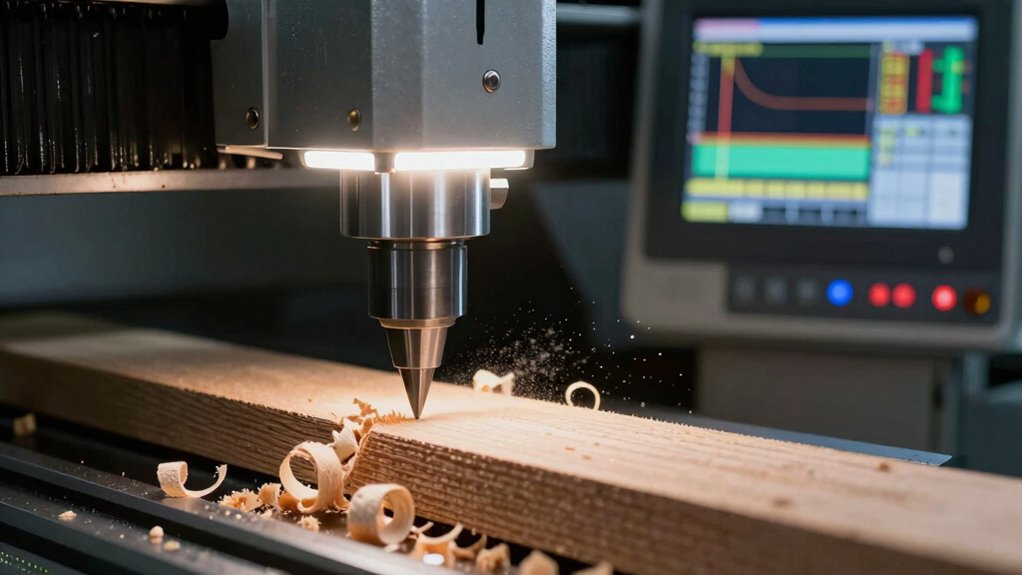
To dial in your CNC feeds and speeds without math, start with material-specific charts that give you recommended settings based on tested data. Use simple tools like mobile apps or calculators to quickly adjust and confirm your settings. Conduct small test cuts to observe performance, then fine-tune your speeds and feeds based on results. By following these streamlined steps, you’ll achieve better cuts faster—and if you keep exploring, you’ll discover even more tips to optimize your CNC setup.
Key Takeaways
- Use proven material-specific charts to select recommended speeds and feeds without complex calculations.
- Conduct quick test cuts to observe tool performance and adjust settings accordingly.
- Rely on simple tools like mobile apps or calculators for instant, accurate adjustments.
- Monitor tool wear and surface finish to fine-tune spindle speed and feed rates easily.
- Regularly calibrate and maintain tools to ensure consistent, high-quality CNC results.

Calculated Industries 4088 Machinist Calc Pro 2 Advanced Machining Calculator | Speeds and Feeds, DOC, LOC and WOC for Materials and Tool settings | Machinists, Setters, Tool & Die Makers, Shop Owners
- Machinist-Specific Keys: Quick job entry with dedicated function keys
- Custom Material and Tool Data: Tailor calculations for materials and tools
- Built-In Tables: Access common data for materials and processes
As an affiliate, we earn on qualifying purchases.
As an affiliate, we earn on qualifying purchases.
Learn How to Dial in Your CNC Feeds and Speeds Without Math
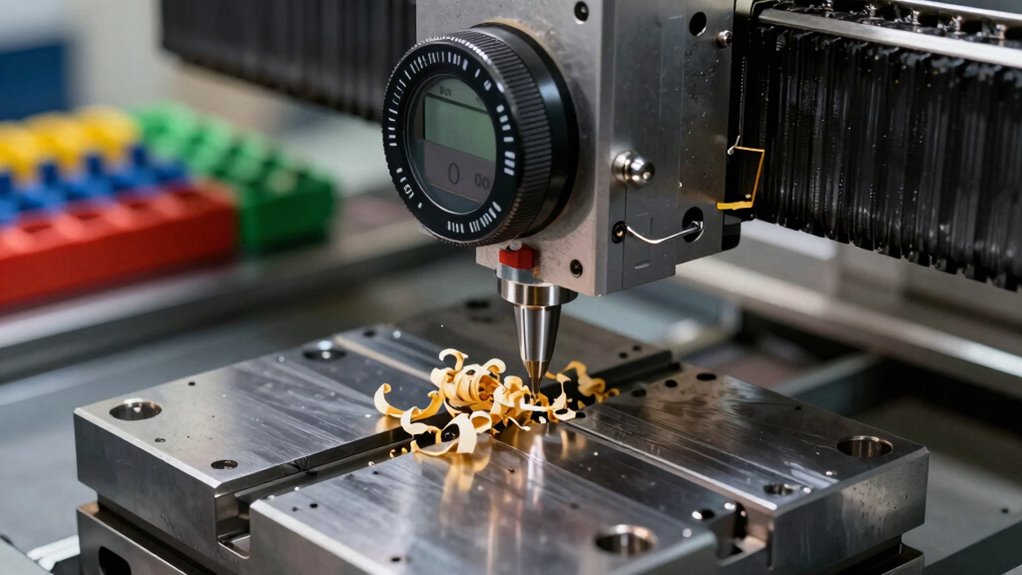
If you want to dial in your CNC feeds and speeds without getting bogged down in complex calculations, the key is to start with practical, proven guidelines. Focus on your material selection first, as different materials require distinct feed and speed settings. Softer materials like aluminum allow for higher speeds, while harder materials like steel demand slower feeds to prevent excessive tool wear. Pay close attention to how your tool wears over time; increased tool wear can lead to poor finishes and even tool breakage. By choosing the right material and monitoring tool wear, you can adjust your settings more effectively without complicated math. Additionally, understanding the contrast ratio can help you optimize your cutting performance, extend tool life, and achieve consistent results confidently. Recognizing the Free Floating nature of your setup can also assist in making minor adjustments that improve overall machining accuracy. Moreover, being aware of European cloud innovation can provide insights into sustainable and secure cloud solutions that support your manufacturing data management. Being mindful of material properties enables you to fine-tune your process for better efficiency and quality, while also considering factors like equity to ensure your operations align with industry standards and best practices.
Use Charts and Simple Tools to Set Your CNC Settings Easily
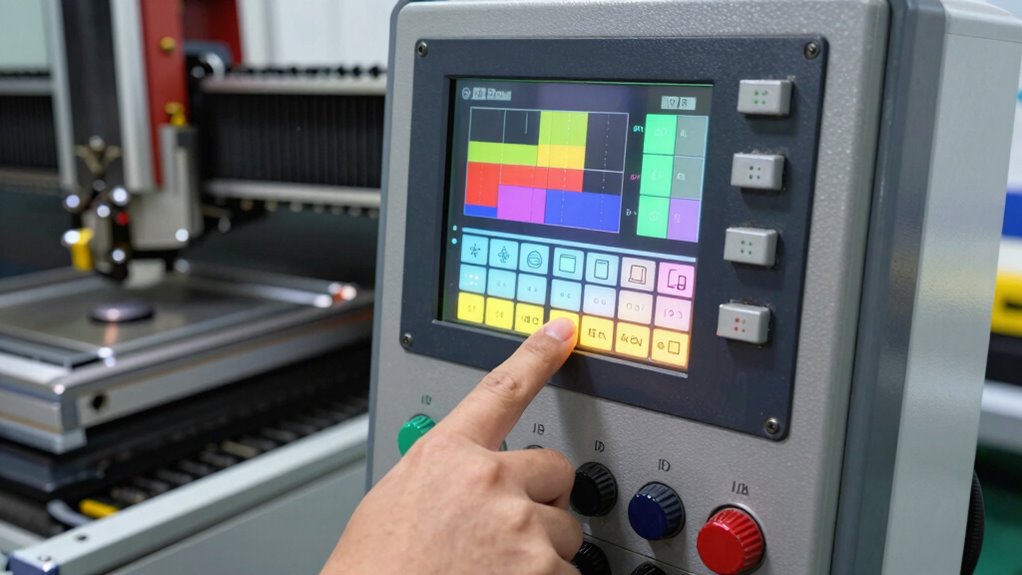
Using charts and simple tools makes setting your CNC parameters straightforward and less time-consuming. Start by referencing material selection charts, which show recommended speeds and feeds for different materials. These charts are based on tested data, so you don’t need to do complex calculations. They also help you anticipate tool wear by suggesting appropriate settings to minimize excessive heat and friction. Using these resources, you can quickly dial in the right spindle speeds and feed rates, reducing guesswork and protecting your tools. Simple tools like speed calculators or mobile apps can complement charts, giving you instant adjustments for specific materials and tools. This approach streamlines setup, saves time, and ensures consistent results, even if you’re new to CNC machining.
Test Your Settings Quickly and Fine-Tune for Perfect Cuts

To achieve the best cuts, it’s essential to test your CNC settings quickly and make precise adjustments as needed. Start with a small test piece, focusing on material selection, to see how your setup performs. Observe how the tool interacts with the material, noting any signs of tool wear or burning. Adjust feed rates and spindle speeds based on these results for ideal performance. Use this simple table to evaluate:
| Material | Tool Wear Signs | Adjustment Needed |
|---|---|---|
| Wood | None | Increase feed slightly |
| Aluminum | Slight wear | Reduce feed or speed |
| Plastic | Melting | Lower RPM, slower feed |
| MDF | Burning | Reduce speed, check tool |
Fine-tuning ensures you get perfect cuts without damaging your material or prematurely wearing your tools. Proper document management practices can also help you keep track of your settings and adjustments for future projects.
Troubleshoot Common CNC Problems Without Complex Calculations
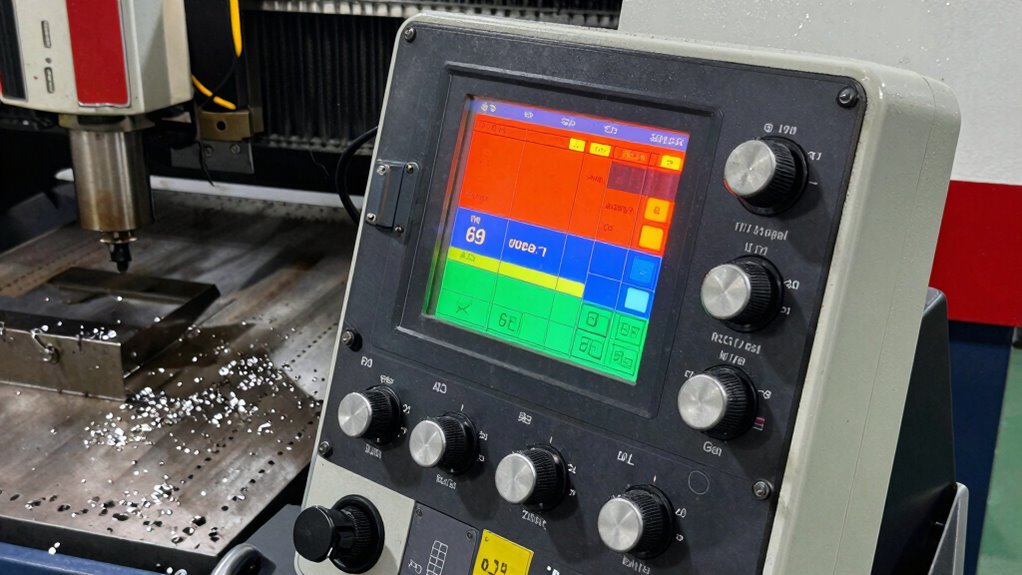
Many common CNC problems can be identified and resolved quickly without complex calculations. If your cuts are rough or uneven, start by checking your tool calibration—ensure your tools are sharp and properly set. Incorrect tool calibration often causes chatter, burns, or dimensional inaccuracies. Next, review your material selection; using the wrong material for your tooling or feed rates can lead to excessive wear or broken bits. If you notice excessive vibration or poor surface finish, try adjusting your feed rate and spindle speed based on how the machine responds. Sometimes, simply changing the material or recalibrating your tools can solve issues without diving into complicated formulas. Trust your senses and observations—small adjustments often produce quick, effective results. Additionally, understanding feed rates and spindle speeds helps you make informed adjustments that improve cut quality and prolong tool life.
Maintain Consistent Performance and Fine-Tune Your CNC With Ease
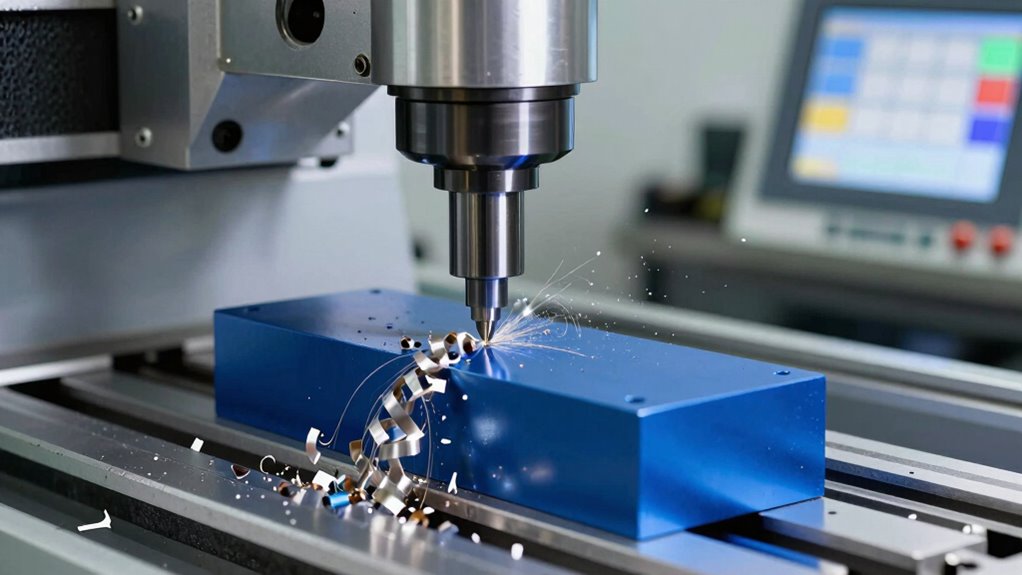
Maintaining consistent performance on your CNC machine is essential for high-quality results and efficient operation. Regular tool calibration ensures your machine cuts accurately every time, preventing errors and tool wear. Keep your tools sharp and properly aligned, checking calibration frequently to avoid inconsistencies. Material selection also plays a crucial role; choosing the right material for your project helps achieve predictable cuts and finish quality. Adjust feed rates and speeds based on material properties, and fine-tune your machine as needed. Simple adjustments, like updating calibration or switching materials, can markedly improve performance. By staying attentive to these factors, you’ll keep your CNC running smoothly, produce precise results, and reduce downtime—all without complex calculations. Additionally, proper ventilation considerations help maintain optimal machine performance and safety during operation.
Frequently Asked Questions
How Often Should I Recalibrate My CNC Machine for Optimal Performance?
You should recalibrate your CNC machine every few weeks or after any major changes, like tool replacements or crashes, to maintain ideal performance. Regular calibration ensures performance consistency, helping your machine cut accurately and efficiently. Keep an eye on output quality and machine behavior; if you notice inaccuracies or irregularities, recalibrate sooner. Consistent calibration routines prevent errors, extend machine lifespan, and keep your projects precise.
Can I Use These Methods With All Types of CNC Materials?
Imagine your CNC machine as a skilled chef, adapting to different ingredients. Yes, these methods work across various materials, but you need to contemplate material compatibility and tool selection. Harder materials may require different speeds and feeds, while softer ones might be more forgiving. Adjust your approach accordingly, ensuring your tools are suited for each material. This way, you optimize your results without risking damage or poor finishes.
What Safety Precautions Should I Follow When Adjusting Feed and Speed Settings?
When adjusting feed and speed settings, you should always wear personal protective equipment like safety glasses and gloves to protect yourself from debris and sharp edges. Keep a close eye on the machine, and be ready to hit the emergency shutdown button if anything goes wrong. Never work alone, and double-check your settings before starting. Following these safety precautions helps prevent accidents and keeps you safe during adjustments.
Are There Specific Tools Recommended for Measuring and Fine-Tuning CNC Cuts?
To fine-tune your CNC cuts, you’ll want precise tools that don’t leave you guessing. Digital calipers are perfect for measuring depths and widths accurately, giving you the confidence to make adjustments. Surface gauges help verify surface flatness and consistency. Keep these tools handy, and you’ll quickly identify discrepancies, making real-time tweaks effortless. With the right measurement tools, your CNC becomes a precision instrument, delivering flawless results every time.
How Do Environmental Factors Like Temperature Affect CNC Feed and Speed Adjustments?
Environmental factors like temperature can impact your CNC’s feed and speed settings because material expansion occurs with temperature changes. If it’s too hot, materials may expand, requiring you to slow down or adjust feeds for accuracy. Conversely, cooler temperatures promote temperature stability, helping your cuts stay consistent. Always monitor your shop environment and make small adjustments as needed, ensuring precise results regardless of ambient temperature fluctuations.
Conclusion
Think of your CNC as a finely tuned orchestra, where each setting is a crucial instrument. With these simple tools and charts, you hold the conductor’s baton, guiding your machine to harmony without complex math. Trust your quick tests and fine-tuning as the melody’s crescendo, bringing flawless cuts and smooth performance. As you master this symphony, your CNC becomes an extension of your skill—powerful, precise, and effortlessly in tune.