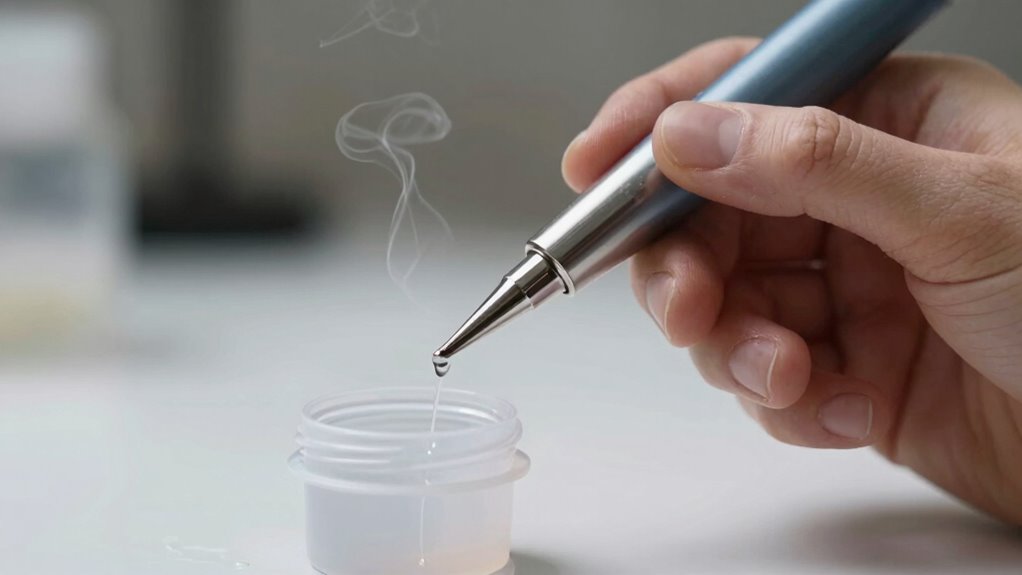

To thin your paint correctly and prevent constant clogging, start by using the right thinning medium—water for water-based paints or a specialized acrylic thinner for acrylics. Mix gradually, testing the consistency on scrap first to guarantee smooth flow without resistance. Keep your airbrush clean and maintain proper pressure settings. With these tips, you’ll achieve a smooth, even spray every time. Keep going to discover more ways to perfect your airbrushing technique.
Key Takeaways
- Thin paint gradually with water or acrylic thinner, testing on scrap to achieve proper viscosity before spraying.
- Use the correct nozzle size for your paint thickness; larger nozzles handle thicker paint to prevent clogging.
- Maintain consistent mixing and recommended paint-to-thinner ratios, adjusting as needed based on spray performance.
- Filter compressed air and keep the airbrush clean to prevent debris buildup and ensure smooth, clog-free operation.
- Regularly clean and disassemble the airbrush, especially after use, to prevent residue buildup and maintain optimal spray quality.
As an affiliate, we earn on qualifying purchases.
Why Properly Thinning Paint Prevents Clogs and Ensures a Smooth Finish
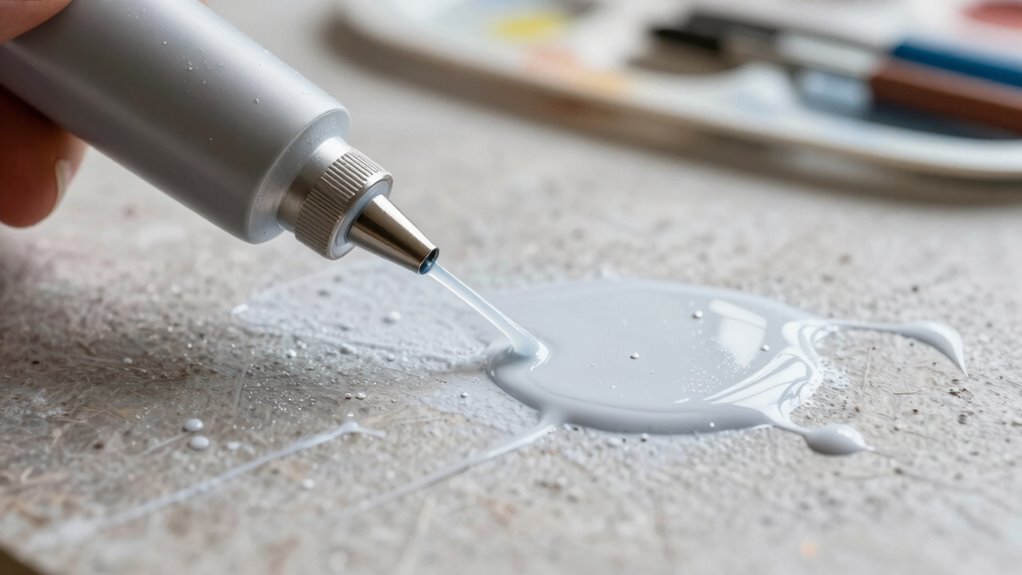
Properly thinning your paint is essential because it helps prevent clogs in your airbrush and results in a smoother finish. When paint has the right viscosity, it flows easily through the nozzle without pooling or causing blockages. If your paint is too thick, it can clog the nozzle, especially if you’re using a smaller nozzle size. Conversely, if it’s too thin, it can sputter or produce an uneven spray. Adjusting the viscosity ensures a consistent flow, which improves your control and the quality of your work. Choosing the correct nozzle size also plays a role; smaller nozzles require thinner paint for smooth application. Additionally, understanding the contrast ratio of your projector can significantly enhance your home cinema experience by providing deeper blacks and more vibrant images. Proper paint consistency is key to achieving professional-looking results and minimizing frustration during your project. Ensuring consistent paint viscosity helps maintain optimal performance and prevents common issues like sputtering or uneven coverage. It’s also helpful to consult manufacturer guidelines for specific thinning ratios tailored to your paint type and airbrush model. Using the right paint thinning techniques can make a significant difference in the final outcome of your airbrushing.
How to Choose the Right Thinning Medium for Your Airbrush Paint
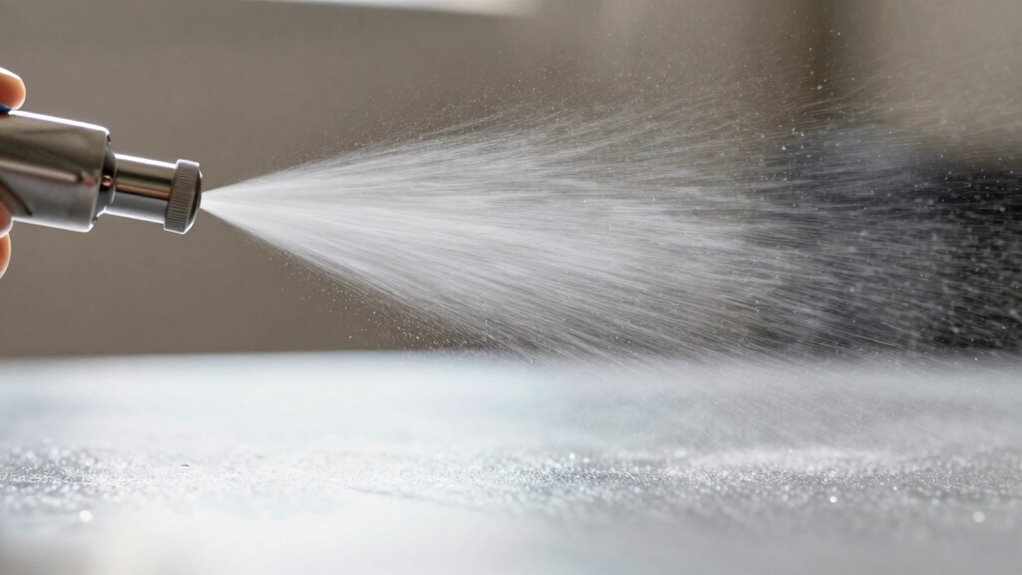
Choosing the right thinning medium is key to achieving the perfect flow of your airbrush paint. The type of medium you select affects not only how smoothly the paint sprays but also how it interacts with your paint storage and airbrush maintenance routines. Using water works for water-based paints, but for acrylics or other mediums, specialized thinners guarantee proper consistency. Some mediums help keep your paint at the right viscosity and prevent clogging, reducing cleanup time. Always consider how your thinning choice impacts storage; improper thinning can cause paint to dry faster or clog nozzles. Proper thinning also helps maintain paint consistency, which is crucial for achieving professional results and reducing the need for repeated corrections. Selecting the appropriate medium can also influence the airbrush maintenance, making cleaning easier and extending the lifespan of your tools. By selecting the appropriate medium, you simplify airbrush maintenance, keep your tools clean, and ensure consistent, professional results. Proper thinning is essential for a smooth, clog-free finish. Additionally, choosing the correct exfoliation methods can help maintain optimal paint flow and prevent buildup within the nozzle.
Step-by-Step: How to Thin Your Paint for Airbrushing

To get the best results, you need to start with the right type of paint and mix it properly. Use the correct thinning ratios to achieve the ideal consistency, and always test your mixture before spraying. Consistent mixing and testing make certain of smooth application and professional-looking finishes. Incorporating outdoor wisdom about proper preparation can also help prevent common issues like clogging during airbrushing. Ensuring your equipment is clean and well-maintained is another key factor that contributes to preventing clogging and achieving optimal spray performance.
Choose Proper Paint Type
Selecting the right paint type is essential for achieving smooth, consistent airbrush results. You want a paint color that matches your project and flows easily through your airbrush. Water-based acrylics are popular because they thin well and clean up easily, but make sure to choose one designed for airbrushing. Additionally, consider paint additives like flow improvers or retarders, which help control paint viscosity and drying time. These additives can prevent clogging and ensure a smooth spray. Avoid thick, latex, or automotive paints unless specifically formulated for airbrush use, as they can cause uneven spraying or damage your equipment. Picking the proper paint type and incorporating the right additives will make your airbrushing smoother, easier, and more professional-looking. Proper paint viscosity is crucial for preventing clogs and achieving fine detail, especially when considering sound healing science principles that emphasize the importance of precise control and harmony in the process. Ensuring you select the correct paint consistency can make a significant difference in the quality of your finished work. Paying attention to paint formulation helps maintain consistent spray patterns and prevents frustrating interruptions, especially as some AI cybersecurity techniques evolve to monitor and detect inconsistencies in digital workflows.
Use Correct Thinning Ratios
Once you’ve picked the right paint type for your project, the next step is to thin it properly for smooth airflow. Achieving the correct paint viscosity depends on using proper thinning ratios, which vary based on your airbrush and paint. Start with a common ratio, such as 1 part paint to 1 part thinner, and adjust as needed. If the paint flows too thick, increase the thinner; if it’s too runny or splatters, reduce it. Consistently testing and adjusting your thinning ratios ensures a smooth, clog-free spray. Remember, the goal is a fluid, even consistency that sprays evenly and doesn’t clog your airbrush. Proper thinning gives you control over your application and results in cleaner, more professional-looking finishes.
Mix and Test Consistently
Before you start spraying, it is essential to mix and test your paint consistently. Proper paint mixing ensures your paint’s texture stays uniform, preventing clogs and uneven flow. Conduct consistency testing by spraying a small test pattern onto scrap material. This helps you verify if your paint flows smoothly and coats evenly. To visualize, imagine this table:
| Paint Type | Thinning Level | Spray Result | Adjustment Needed |
|---|---|---|---|
| Thick Acrylic | Slightly Thinner | Uneven, clogging | Add more thinner |
| Proper Mix | Well-Adjusted | Smooth, fine spray | Ready to spray |
| Too Thin | Over-thinned | Sparse, runs | Add more paint |
| Inconsistent | Uneven mix | Variable results | Re-mix thoroughly |
Consistency testing is your key to flawless airbrush work. Additionally, understanding paint viscosity helps you achieve the ideal spray pattern and prevent common issues. Recognizing proper thinning techniques is crucial for maintaining consistent results and avoiding costly mistakes.
Common Mistakes That Cause Clogs and How to Avoid Them
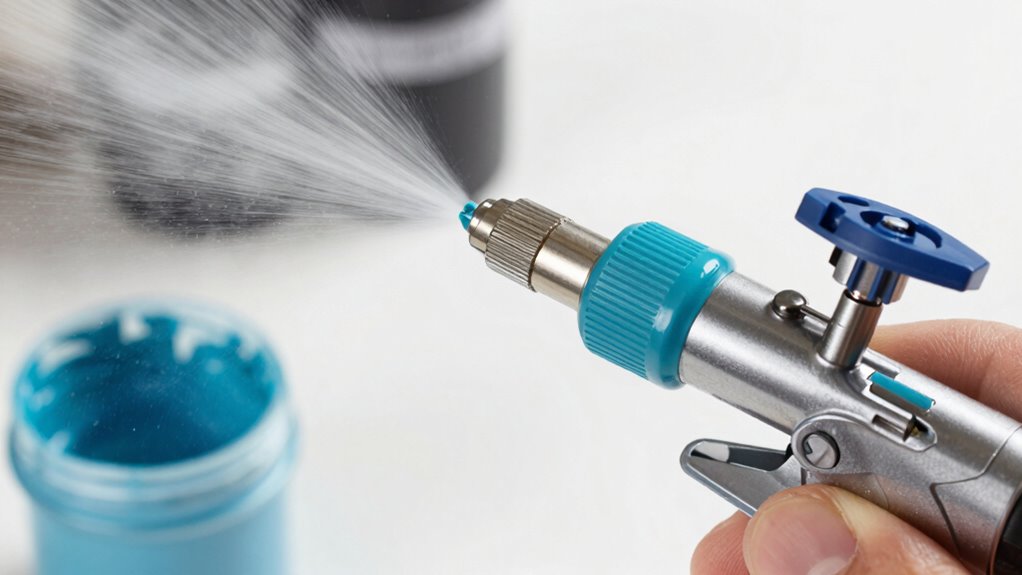
One common mistake is using paint that’s too thick or too thin, which can cause clogs or uneven spray. Skipping regular cleaning also leads to buildup that blocks the nozzle over time. Additionally, setting the wrong air pressure can disrupt the flow and increase the risk of clogs. Employing effective filtration ensures that debris does not enter the spray gun, thereby reducing the likelihood of clogs and maintaining a consistent finish. Properly filtered air can also help prevent contaminants from entering the paint, which can cause irregularities in the spray pattern. Maintaining airbrush pressure at appropriate levels helps achieve a smooth and even coat, minimizing spray issues. Incorporating proper maintenance practices can extend the lifespan of your airbrush and keep it functioning smoothly. Regular inspection and cleaning schedules are essential practices to prevent buildup and ensure optimal performance.
Using Incorrect Paint Consistency
Using the wrong paint consistency is a common mistake that often leads to airbrush clogs and uneven spray patterns. When your paint is too thick, it can cause brush strokes that clog the nozzle or result in uneven coverage. Conversely, if the paint is too thin, it may spray inconsistently or fail to adhere properly, affecting paint adhesion. Proper thinning guarantees smooth, even flow and prevents buildup inside the airbrush. Always test your paint on a scrap surface before spraying your project to check its consistency. Maintaining the correct thickness allows the paint to atomize properly, reducing clogs and ensuring a cleaner, more professional finish. Recognizing the importance of paint consistency helps prevent common issues and achieves better results. Remember, the right consistency is key to achieving flawless results with your airbrush. Additionally, understanding airbrush maintenance routines can extend the lifespan of your equipment and improve overall performance.
Neglecting Regular Cleaning Routines
Neglecting regular cleaning routines is a common mistake that can lead to persistent clogs and uneven spray patterns. If you don’t clean your airbrush and cleaning brushes after each session, paint residue builds up, causing blockages. Proper storage is also essential; leaving your airbrush dirty or improperly stored allows dried paint to harden inside, making cleaning more difficult later. Always disassemble and thoroughly clean all parts, especially small crevices, to prevent buildup. Store your airbrush in a clean, dry place to avoid dust and debris that can clog the nozzle. Developing a routine of regular cleaning and proper storage saves you time, maintains peak performance, and guarantees smooth, consistent spray patterns every time you use your airbrush. Recognizing the importance of preventive maintenance can help extend the lifespan of your equipment and ensure optimal performance. Incorporating professional cleaning techniques into your routine can further reduce the risk of clogs and improve overall results. Regularly inspecting and replacing worn parts also contributes to consistent spray quality, ensuring your airbrush functions at its best.
Overlooking Proper Air Pressure
Have you ever experienced clogs or uneven spray patterns without understanding why? Overlooking proper air pressure is a common mistake that causes these issues. Incorrect air pressure adjustments can make paint flow uneven or cause splattering. If your paint container size isn’t suited for your air pressure, you may struggle to achieve consistent coverage. Larger containers often require more pressure, while smaller ones need less. Here’s a quick guide:
| Paint Container Size | Recommended Air Pressure |
|---|---|
| Small (2 oz or less) | 10-15 PSI |
| Medium (4-8 oz) | 15-20 PSI |
| Large (16 oz or more) | 20-25 PSI |
Adjust your air pressure based on container size to prevent clogs and assure smooth spraying. Proper creative storytelling can help you understand these technical aspects better, ensuring your airbrush work is both effective and expressive.
How to Test and Adjust Your Paint’s Consistency for Perfect Spray

To achieve smooth, even sprays, you need to make sure your paint’s consistency is just right. Start by checking your paint viscosity—if it’s too thick, it’ll clog your nozzle or produce uneven spray; too thin, and you’ll lose control. Test the consistency by dipping a clean brush or stir stick into the paint and lifting it out; the paint should flow smoothly and form a thin film without dripping or running. Adjust by adding a small amount of thinner if needed. Also, consider your nozzle size: larger nozzles handle thicker paints better, reducing clogging risks. Always test spray on a scrap surface before working on your project. Fine-tuning your paint’s viscosity and understanding your nozzle size helps ensure consistent, professional results.
Tips for Keeping Your Airbrush Clean and Clog-Free During Use
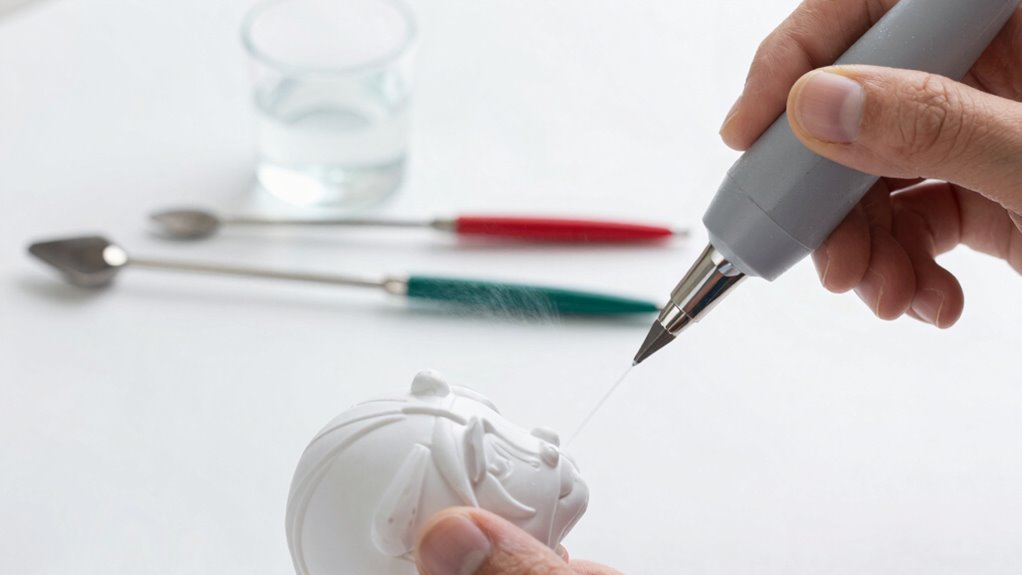
Keeping your airbrush clean and clog-free during use is essential for consistent performance. Regular airbrush maintenance helps prevent buildup that can disrupt paint consistency and cause clogs. To keep it clean, flush the brush with water or cleaner between color changes, especially when working with thicker paints. Avoid letting paint dry inside by cleaning parts immediately after use or during breaks. Always check the needle and nozzle for debris, and wipe them gently to prevent blockages. Using a fine brush or needle tool can help clear any stubborn material. Maintaining proper paint consistency also reduces the risk of clogs, so ensure your paint is thinned correctly. Consistent cleaning and attentive maintenance keep your airbrush functioning smoothly and produce flawless results.
Quick Fixes for Clogs and Uneven Spray When Airbrushing
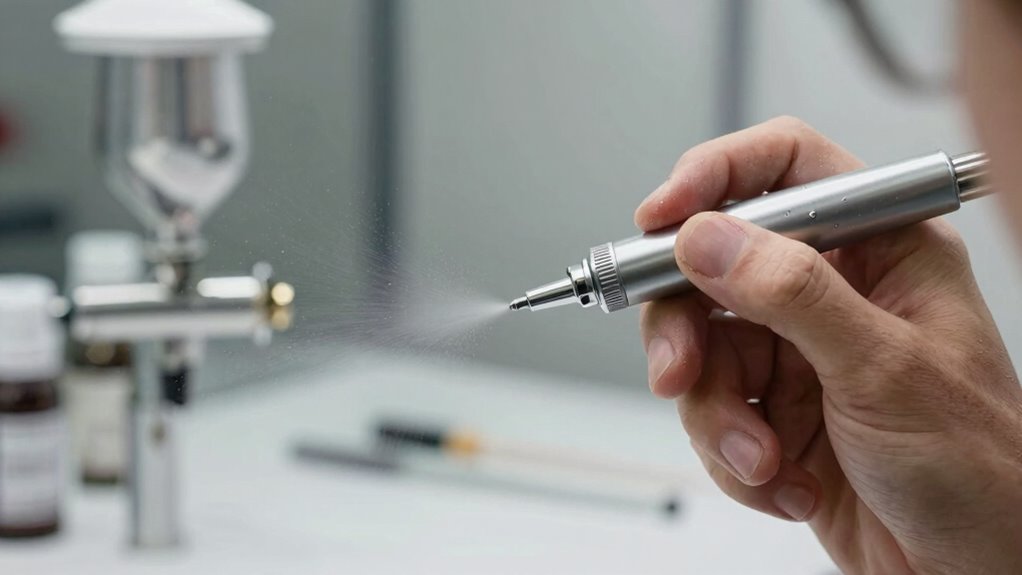
When you encounter clogs or uneven spray while airbrushing, quick troubleshooting can save you time and frustration. First, check the paint consistency—if it’s too thick, thin it more and stir thoroughly. Sometimes, a simple flush with clean water or airbrush cleaning solution clears minor blockages. Regular airbrush maintenance also helps prevent future issues; disassemble and clean parts that may be clogged or dried out. If the spray pattern is uneven, ensure the needle is straight and free of dried paint. Adjust the air pressure if needed, as inconsistent pressure can cause uneven spray. Always keep your airbrush clean between uses and periodically check for buildup. These quick fixes keep your airflow smooth and your paint application flawless.
Frequently Asked Questions
Can I Reuse Thinned Paint for Multiple Projects?
Yes, you can reuse thinned paint for multiple projects if you store it properly. Use airtight containers for paint storage to keep it fresh and prevent drying out. Make sure to clean your thinning tools thoroughly after each use to avoid contamination. When reusing, stir the paint well to maintain consistency and check for any separation or drying. Proper storage and careful handling ensure your paint stays usable across different projects.
How Often Should I Clean My Airbrush During a Session?
You should clean your airbrush frequently during a session, especially after every few color changes or if you notice uneven spray. Regular airbrush maintenance prevents clogs and guarantees smooth application. To make things easier, consider proper paint storage and thinning techniques, which reduce buildup. A quick flush after each use keeps your equipment in top shape, letting you enjoy your project without interruptions. Happy spraying!
What Are Signs of Over-Thinning Paint?
You can tell you’re over-thinning your paint when it becomes too watery, causing uneven spray and weak color coverage. Signs include paint dripping or running, difficulty maintaining a consistent spray pattern, and poor adhesion on your surface. To avoid this, use proper thinning techniques to achieve the right paint consistency, which helps prevent over-thinning issues. Adjust your thinning process gradually and test frequently to ensure smooth, even application.
Does Thinning Paint Affect Color Accuracy?
Thinning paint can affect color accuracy because it changes the paint’s consistency, which may dilute the pigments and impact color fidelity. If you add too much thinner, the colors may appear dull or less vibrant. To maintain true colors, you need to strike a balance, ensuring the paint’s consistency allows for smooth application without compromising the integrity of the original hues. Proper thinning preserves both color fidelity and workability.
Are There Any Eco-Friendly Thinning Options?
Yes, there are eco-friendly thinning options available. You can use eco-friendly solvents or natural thinning agents like water, aloe vera juice, or herbal extracts. These options reduce harmful fumes and environmental impact while effectively thinning paint. Always test them first to verify compatibility with your paint. Switching to natural or biodegradable products helps protect both your health and the planet without sacrificing performance.
Conclusion
Mastering the art of thinning paint prevents pesky clogs and promotes a perfect, polished finish. By choosing the right medium, testing your consistency, and staying vigilant with cleaning, you’ll enjoy seamless sprays and stunning results. Remember, patience and practice pave the way to proficiency. So, stay steady, streamline your process, and savor the satisfying spray of success every time you pick up your airbrush. Happy airbrushing!