
To safely power your market equipment, always verify the wattage and voltage needs of each device and use a generator that exceeds your total load. Avoid powering sensitive electronics, hazardous, or medical devices, and make certain cords are organized and properly grounded. Regular maintenance and safety precautions are essential to prevent damage or hazards. Keep your setup secure and reliable, and if you’d like to learn more, you’ll find helpful tips for effective power management ahead.
Key Takeaways
- Calculate total power needs and select a generator with capacity exceeding that load for safe operation.
- Avoid powering sensitive or medical devices that require stable, specialized power sources.
- Use surge protectors and proper grounding to protect equipment and ensure safety.
- Refrain from connecting high surge or incompatible voltage devices that may damage the generator or equipment.
- Regularly inspect and maintain power sources, and follow safety practices to prevent hazards during operation.
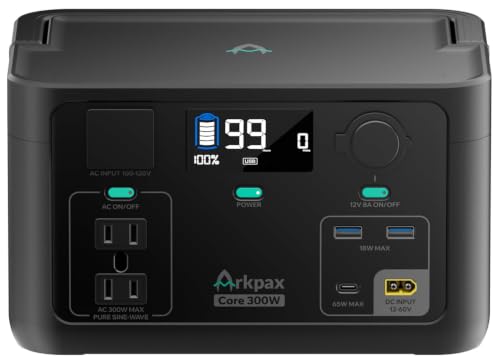
Arkpax Portable Power Station 300W, 600W Peak Backup LiFePO4 Battery 192Wh with 10ms UPS, 1Hr Fast Charge Solar Generator with 120V AC Outlet for Camping Emergency Travel Home Blackout
- Fast Recharge in 1 Hour: Recharge from 0% to 80% quickly
- Multiple Charging Options: AC, car, and solar charging compatible
- Pure Sine Wave Output: Safe for sensitive devices up to 300W
As an affiliate, we earn on qualifying purchases.
As an affiliate, we earn on qualifying purchases.
How to Safely Power Your Market Equipment With Portable Generators
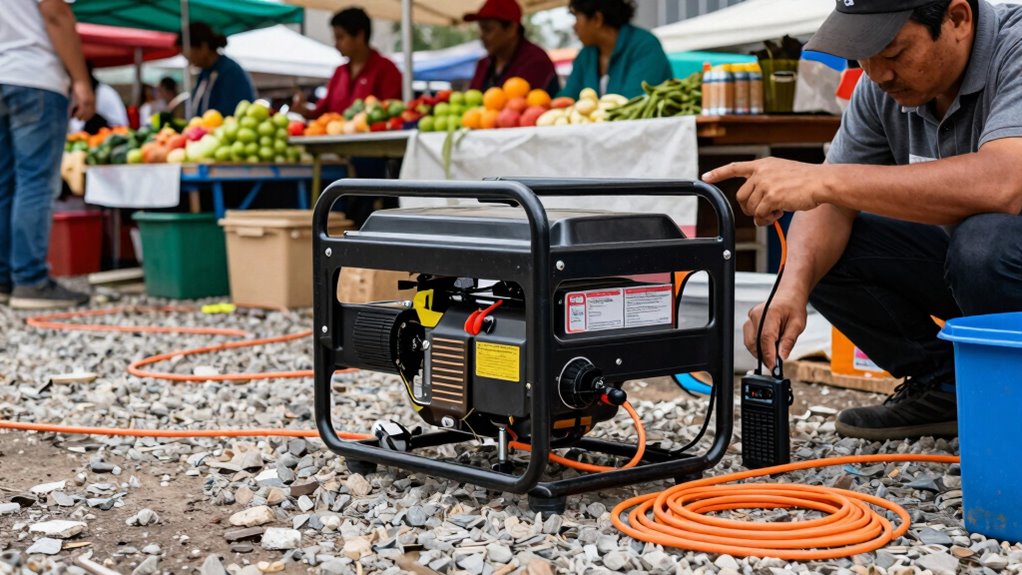
To safely power your market equipment with portable generators, it’s essential to understand their proper setup and operation. Regular generator maintenance ensures the unit runs smoothly and reduces the risk of failure during critical times. Check oil levels, clean air filters, and inspect spark plugs routinely. Additionally, consider battery compatibility if your equipment relies on batteries; ensure they are charged and compatible with your generator’s power output. Using the correct battery type prevents damage and ensures reliable operation. Always connect equipment properly, avoiding overloads, and keep cords and connections dry. Following these safety practices keeps your equipment running efficiently and minimizes hazards, so you can focus on your market without interruption or concern. Integrating innovative European cloud servers can further enhance your operational security and sustainability in managing equipment data and control systems.
Determining the Power Requirements of Your Devices

How can you guarantee your portable generator supplies enough power? First, check the voltage compatibility of your devices and your generator; they must match to prevent damage. Next, determine each device’s power rating, usually listed in watts or amps, to know how much energy it needs. Add up these power ratings to find your total load. Keep in mind that exceeding your generator’s capacity can cause it to shut down or fail. Always select a generator with a higher power rating than your total combined requirements to ensure reliable operation. Additionally, understanding the power output capabilities of your generator helps prevent overloads and ensures optimal performance. By understanding your devices’ voltage compatibility and accurately calculating the total power demand, you can confidently choose the right portable power source for your market needs.
Devices You Should Never Power on Generators or Batteries
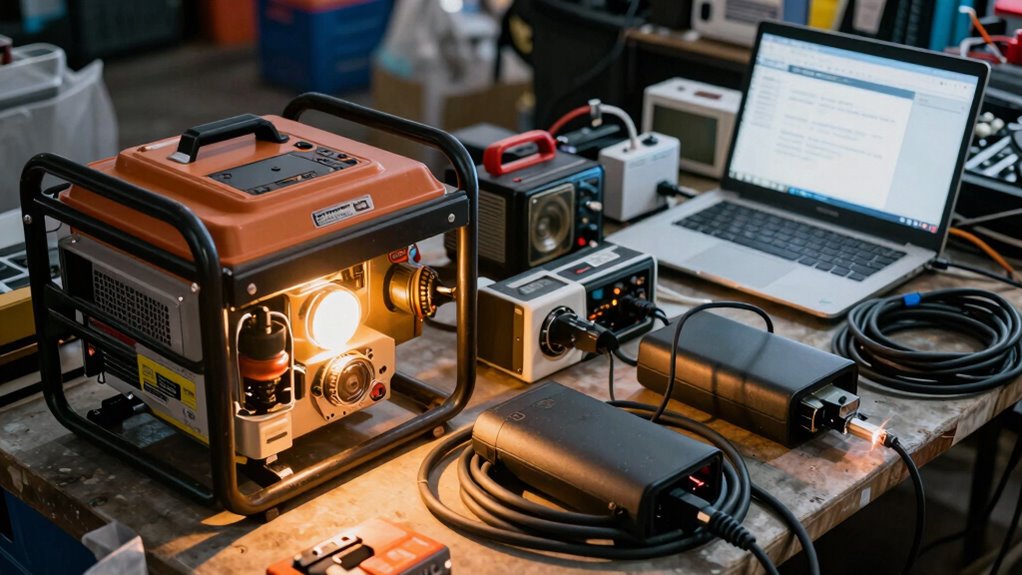
Certain devices can cause serious damage or safety hazards if powered by generators or batteries. Hazardous devices, like laser equipment or medical devices, often require stable, specialized power sources and should never be run off portable power. Incompatible appliances, such as sensitive electronics with high surge demands or appliances with incompatible voltage requirements, can be damaged or cause dangerous electrical issues. Never attempt to power devices that lack proper grounding or have the potential to produce power surges. These hazardous devices and incompatible appliances pose risks of fire, electrical shock, or equipment failure. Always check the manufacturer’s guidelines and avoid connecting equipment that isn’t designed for portable or generator power to ensure safety and prevent costly damage. Additionally, floating on water devices like watercraft or floating recreational equipment typically require dedicated power sources and should not be powered by portable generators or batteries due to safety considerations. It is also important to be aware of electrical compatibility to prevent unintended damage when using portable power sources. Furthermore, some electrical systems may not function properly or safely when supplied by unstable or inappropriate power sources. Being aware of proper grounding techniques can further reduce the risk of electrical hazards during portable power use.
A thorough understanding of power quality is essential to avoid equipment malfunction and maintain safety in portable power applications.
Best Practices for Safe and Effective Use of Portable Power
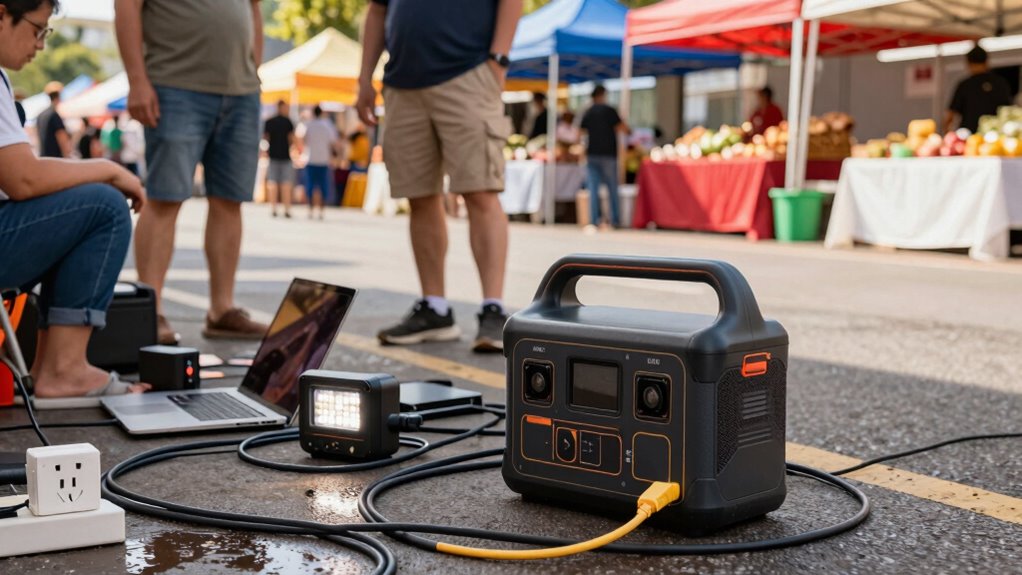
Ensuring safe and effective use of portable power requires following key practices that protect both your equipment and your safety. Always choose reliable sources of alternative energy, like well-maintained generators or batteries, to prevent surges or failures. Keep cords and connections organized to avoid tripping hazards or damage. Regularly inspect equipment for wear or damage before use. Incorporate portable power into your emergency preparedness plan by ensuring you have enough capacity for essential devices during outages. Use surge protectors and appropriate grounding to prevent electrical hazards. Stay aware of capacity limits to avoid overloads. Properly store and maintain your equipment after each use to ensure longevity and safety. Additionally, safe electrical practices are essential to prevent hazards and ensure reliable operation. Adhering to power tool safety guidelines helps minimize risks and promotes a secure working environment. Understanding generator transfer switches can significantly enhance safety during power transitions. Employing proper grounding techniques is crucial for minimizing the risk of electrical shock. Regularly check your circuit load capacity to avoid overloading circuits and causing potential hazards. Following these practices helps keep your market running smoothly and safely.
Troubleshooting Power Issues at Markets
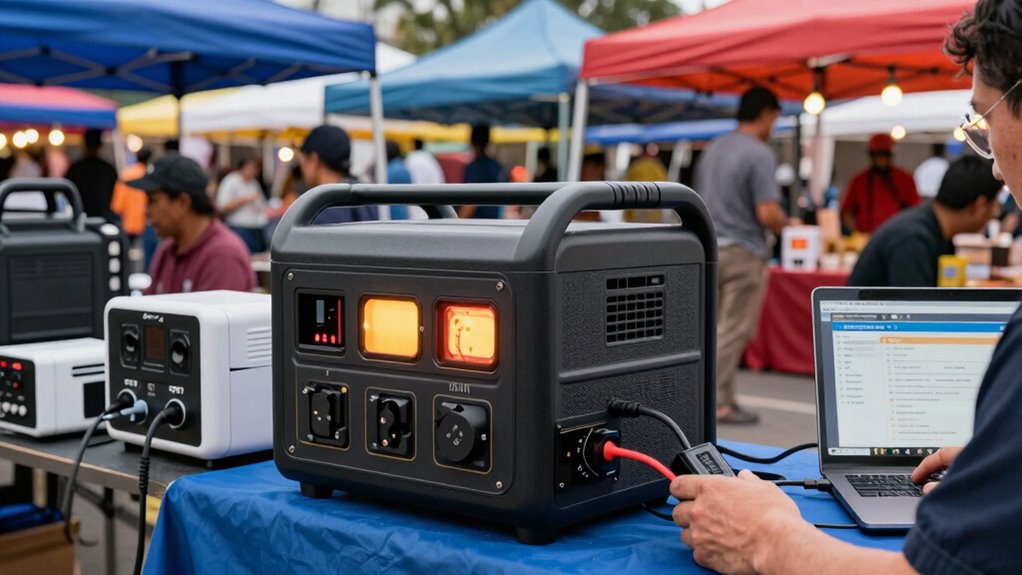
Even when you follow best practices for safe and effective portable power use, issues can still arise during market operations. If your equipment isn’t receiving consistent power, start by checking your battery maintenance; ensure batteries are fully charged and connections are secure. Poor battery health can cause voltage drops, disrupting your setup. Additionally, verify power source compatibility—using a power source that doesn’t match your device’s requirements can lead to surges or insufficient power. Always double-check the wattage and voltage ratings before connecting equipment. If problems persist, test your connections and look for damaged cables or connectors. Regular maintenance and understanding your power source’s capabilities help prevent issues, keeping your market operations smooth and your equipment reliably powered. Proper knowledge of power management can further enhance reliability and safety during your setup. Being aware of battery condition and how it affects overall performance is also crucial for uninterrupted power supply. Recognizing cloud service dependencies can help you prepare for outages and implement contingency plans. Additionally, staying informed about electrical safety practices ensures that your setup remains secure and compliant with safety standards. Incorporating testing procedures into your maintenance routine can help identify potential problems before they cause disruptions.
Frequently Asked Questions
Can I Use a Portable Generator Indoors Safely?
You shouldn’t use a portable generator indoors because it poses serious carbon monoxide risks. Always guarantee proper indoor ventilation if you run it nearby, but never inside enclosed spaces. Carbon monoxide is deadly and can build up quickly, so consider using it only outdoors in well-ventilated areas. Keep the generator far from windows and doors to prevent fumes from entering your home, ensuring your safety at all times.
How Long Can I Run a Generator Continuously?
Think of running your generator like tending a garden—if you overwater, everything suffers. You can run a generator safely for about 8-12 hours daily, but it depends on fuel efficiency and noise levels. Continuous use beyond this strains the engine, increases wear, and risks safety. To keep it running smoothly, give it regular breaks, monitor fuel, and choose a quiet model for prolonged operation.
What Maintenance Is Required for Portable Power Equipment?
You need to regularly check your portable power equipment’s battery upkeep and fuel management. Keep batteries charged and inspect for corrosion or leaks, replacing or charging as needed. For fuel, ensure it’s fresh and stored properly, and refuel the generator before it runs out. Also, clean filters and perform oil changes periodically. Proper maintenance maintains your equipment running smoothly, extends its lifespan, and prevents unexpected failures during market operations.
Are There Specific Brands Recommended for Market Use?
Think of your power choices like choosing a trusty steed—reliable and proven. For market use, stick to brands known for safety certifications like Honda, Yamaha, or Generac. These brands meet rigorous standards, ensuring safety and durability. Always check for the latest safety certifications before purchasing. Your goal is to run your market smoothly, much like a well-orchestrated symphony, and trusted brands help keep everything in harmony.
How Do Weather Conditions Affect Portable Power Safety?
Weather hazards like rain, snow, or extreme heat can impact your portable power safety by causing power fluctuation or damage. Always protect your equipment with waterproof covers and avoid using power sources during storms. Be mindful of temperature extremes, as they can reduce battery efficiency or cause overheating. Staying aware of weather conditions helps prevent accidents, keeps your power supply stable, and ensures safe operation in market environments.
Conclusion
Now that you know what devices are safe to power and how to do it properly, you’re ready to keep your market running smoothly. Remember, a little caution goes a long way in avoiding mishaps and electrical hazards. Isn’t it worth imagining a bustling market scene, all powered safely and efficiently? With the right knowledge and precautions, you can guarantee your equipment runs seamlessly, giving your customers the best experience without risking safety.