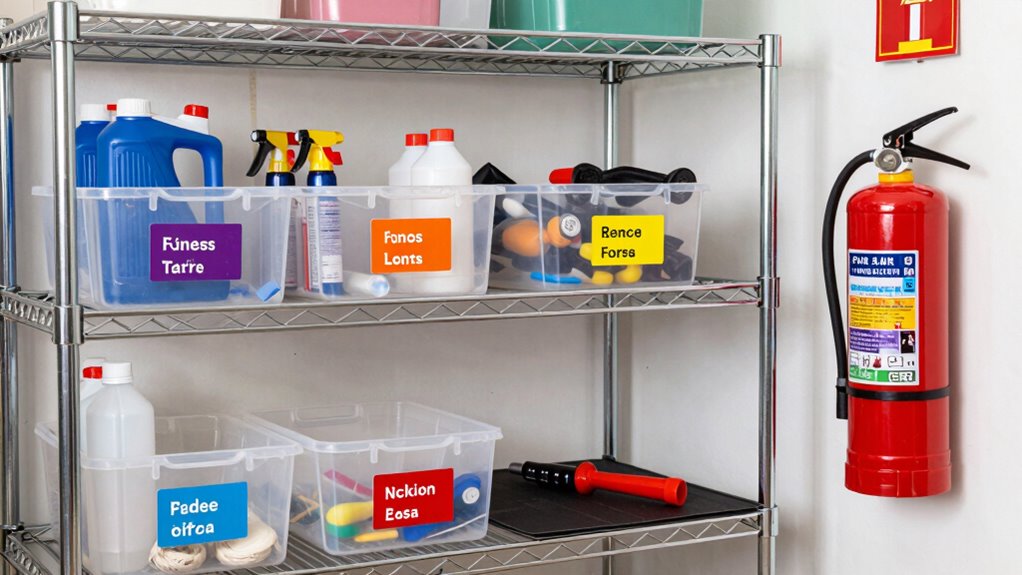

To keep your craft studio safe, store flammable solvents, sprays, and heat tools in approved, fire-resistant containers and cabinets that are well-ventilated and clearly labeled. Keep them away from heat sources and ignition points, and establish designated safety zones for their use and storage. Regularly inspect and dispose of hazardous materials properly to prevent accidents. Staying informed about hazards and safety measures helps you protect your space—if you keep exploring, you’ll learn more essential tips.
Open a free Amazon Business account
Business pricing, bulk buying and tax-exempt orders.
As an affiliate, we earn on qualifying purchases.
Key Takeaways
- Store solvents, sprays, and heat tools in approved, fire-resistant containers and cabinets with clear labels and proper sealing.
- Ensure adequate ventilation with exhaust hoods and open windows to disperse vapors and prevent vapor buildup.
- Organize storage areas with designated zones away from heat sources, using fire-resistant barriers and proper separation.
- Regularly inspect storage for leaks, damage, and deterioration; use fireproof containers and lockable cabinets for safety.
- Train staff on safe handling, proper disposal, and emergency response procedures for hazardous materials.
fire-resistant storage cabinets for flammable liquids
As an affiliate, we earn on qualifying purchases.
As an affiliate, we earn on qualifying purchases.
How Can I Store Flammable and Hazardous Materials Safely in My Craft Studio?
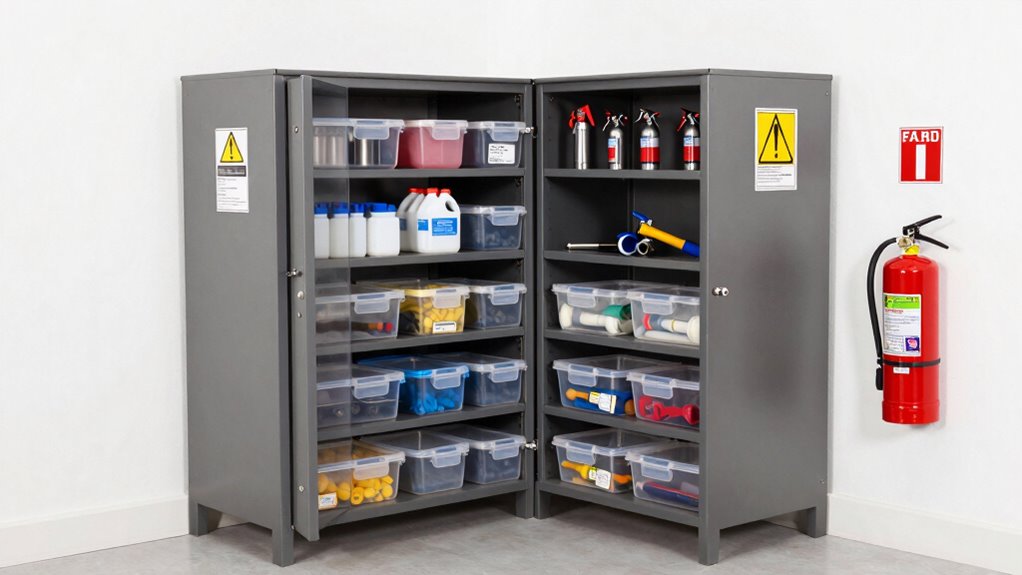
Storing flammable and hazardous materials safely is essential to prevent fires in your craft studio. Follow fire safety regulations to guarantee proper storage, such as keeping these materials in approved, airtight containers away from heat sources. Make certain to store them in well-ventilated areas, preferably in fire-resistant cabinets designed for hazardous substances. It’s also crucial to undergo hazardous material training so you understand the risks and handling procedures. Regularly inspect storage areas for leaks or deterioration, and keep materials clearly labeled. Avoid overcrowding storage spaces to reduce fire hazards. Incorporating Flexible storage solutions principles can help in designing adaptable storage options that meet your studio’s changing needs. Proper net worth management of your hazardous materials can ensure you’re maintaining a safe and compliant environment. Staying informed about grocery savings strategies and best practices can also help you manage your supplies efficiently and safely. Additionally, considering piercing aftercare guidelines can help prevent damage and ensure safe handling of materials used in your studio. By adhering to fire safety regulations and staying informed through hazardous material training, you minimize risks and create a safer environment for your creative projects.
How Do I Identify Flammable and Hazardous Materials in My Supplies?
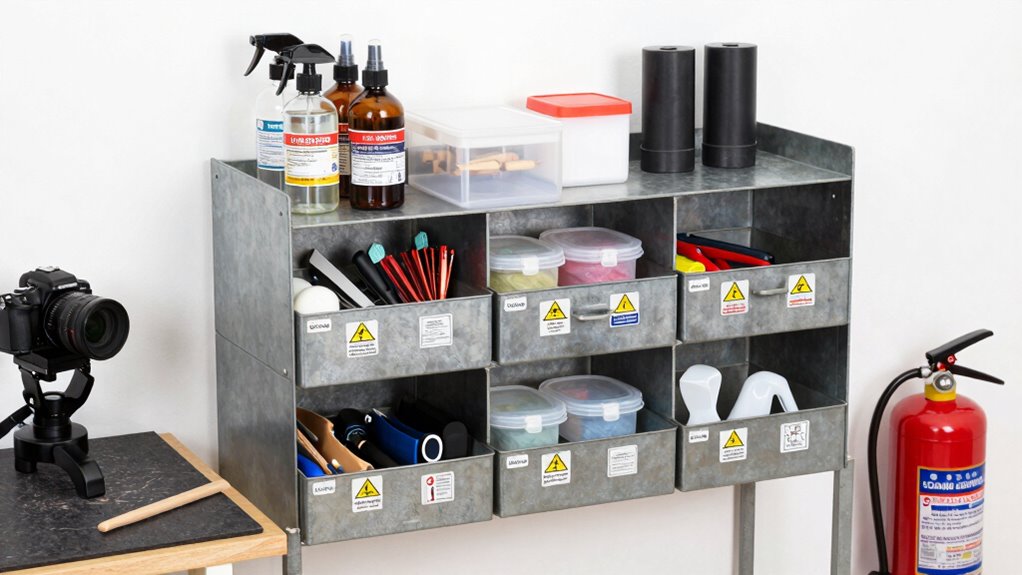
To keep your studio safe, start by checking labels on your materials for clear warnings about flammability. Understanding the information in Material Safety Data Sheets helps you identify which supplies pose hazards. Recognizing these signs guarantees you handle and store materials responsibly to prevent fires. Incorporating energy-efficient storage solutions can further enhance your safety measures and reduce fire risks. Additionally, being aware of appropriate storage practices ensures hazardous materials are kept in safe, ventilated areas away from heat sources. Proper flammable material management is essential for minimizing the risk of accidental ignition and maintaining a secure working environment. Being familiar with fire prevention techniques can also inspire you to develop a safe and creative studio atmosphere.
Recognize Flammable Labels
Recognizing flammable labels is essential for maintaining safety in your craft studio. These labels are part of safety signage that clearly indicate which materials pose fire risks. Look for symbols such as a flame icon or words like “flammable,” “danger,” or “hazardous.” Labels often include color codes, with red or orange backgrounds signaling caution. Always check containers and bottles carefully before handling or storing supplies. Properly labeled materials help you identify potential hazards quickly, reducing the risk of accidents. If a label is unclear or missing, consult the manufacturer’s instructions or Material Safety Data Sheets. Being vigilant about these safety signs ensures you handle solvents, sprays, and heat tools responsibly and keep your studio safe for everyone. Incorporating fire safety procedures into your studio practice can further minimize risks associated with these hazardous materials. Additionally, understanding hazardous material classifications can enhance your ability to respond appropriately in case of an emergency.
Understand Material Safety Data
How can you quickly determine if a material is flammable or hazardous? The key is understanding the material safety data, especially labels and safety sheets. These resources provide critical hazard identification details you need. Look for symbols, hazard statements, and precaution notes. To help, here’s a quick guide:
| Material Type | Indicator |
|---|---|
| Flammable liquids | Flame icon, “danger,” or “flammable” |
| Toxic substances | Skull and crossbones, “toxic” |
| Corrosive materials | Test tube and hand symbol, “corrosive” |
| Compressed gases | Cylinder icon, “compressed gas” |
| Reactives/Explosives | Explosion icon, “oxidizer” |
Familiarize yourself with these labels for safer hazard identification and better material safety in your studio.
What Are the Best Practices for Organizing Flammable Solvents, Sprays, and Heat Tools?

Organizing flammable solvents, sprays, and heat tools properly is essential for maintaining a safe art studio environment. Start with clear storage organization by assigning dedicated, well-ventilated shelves or cabinets for these items, keeping them away from heat sources and open flames. Always follow safety protocols by labeling containers clearly and ensuring lids are tightly sealed when not in use. Store solvents and sprays in fire-resistant containers or cabinets designed for flammable materials. Keep heat tools in designated areas away from combustible materials and never leave them unattended. Regularly inspect storage areas for leaks or damage. By maintaining proper storage organization and adhering to safety protocols, you minimize fire risks and create a safer workspace for your artistic pursuits.
Which Storage Containers and Fire-Resistant Cabinets Keep My Studio Safe?

Choosing the right fire-resistant storage options is essential for your studio’s safety. Make sure your containers are made from suitable materials and designed to contain flammable substances securely. Proper ventilation also helps reduce fire risks, so incorporate it into your storage practices. Additionally, selecting air purifiers that can filter out fumes and airborne contaminants can improve overall safety by reducing the buildup of potentially hazardous vapors in your workspace. Using fire-resistant cabinets that meet safety standards for storing flammable liquids and vapors is an effective way to contain accidental spills or leaks safely. Moreover, understanding fire safety principles ensures you can implement comprehensive precautions to protect your studio.
Fire-Resistant Storage Options
To protect your studio from fire hazards, investing in fire-resistant storage options is essential. Fire-resistant storage units and safety storage solutions help contain flammable materials and prevent fires from spreading. Look for cabinets specifically designed with fire-resistant materials, such as metal with fireproof coatings or insulation. These cabinets should have tight seals and secure locks to prevent accidental access or spills. For smaller items, consider fireproof containers made from durable, fire-resistant materials that can hold solvents and sprays safely. Properly storing hazardous materials in these fire-resistant options reduces the risk of ignition and provides peace of mind. By choosing the right fire-resistant storage, you create a safer environment and minimize potential damage from unexpected fires.
Suitable Container Materials
Selecting the right container materials is essential for keeping your studio safe from fire hazards. You need containers made from materials with proven chemical compatibility to prevent deterioration or leaks when storing solvents, sprays, or heat tools. Metal, glass, and certain plastics are ideal choices because they resist corrosion and don’t react with hazardous substances. Proper container labeling is equally important; clearly mark contents and hazard warnings to avoid accidental misuse. Using approved containers not only minimizes fire risks but also helps you stay compliant with safety regulations. Avoid generic or damaged containers, as they may fail under heat or chemical exposure. By choosing fire-resistant, compatible materials and maintaining clear labels, you considerably reduce the chance of fires and ensure a safer workspace.
Proper Ventilation Practices
Proper ventilation is essential for maintaining a safe studio environment, especially when storing flammable materials. Effective air exchange prevents the buildup of harmful vapors and reduces fire risk. You should ensure your workspace has adequate airflow management by installing exhaust fans or vents that direct fumes outside. Keep windows open when working with solvents or sprays, and consider using local exhaust hoods for specific tasks. Regularly check ventilation systems to confirm they’re functioning properly. Avoid stagnant air pockets that can concentrate vapors. Proper ventilation not only minimizes fire hazards but also safeguards your health by reducing inhalation of toxic fumes. Proper airflow plays a crucial role in reducing the risk of fire and maintaining a healthy workspace. By maintaining good airflow management, you create a safer, more controlled environment that’s less prone to accidents.
How Do I Set Up Safety Zones and Keep Flammable Materials Separated?
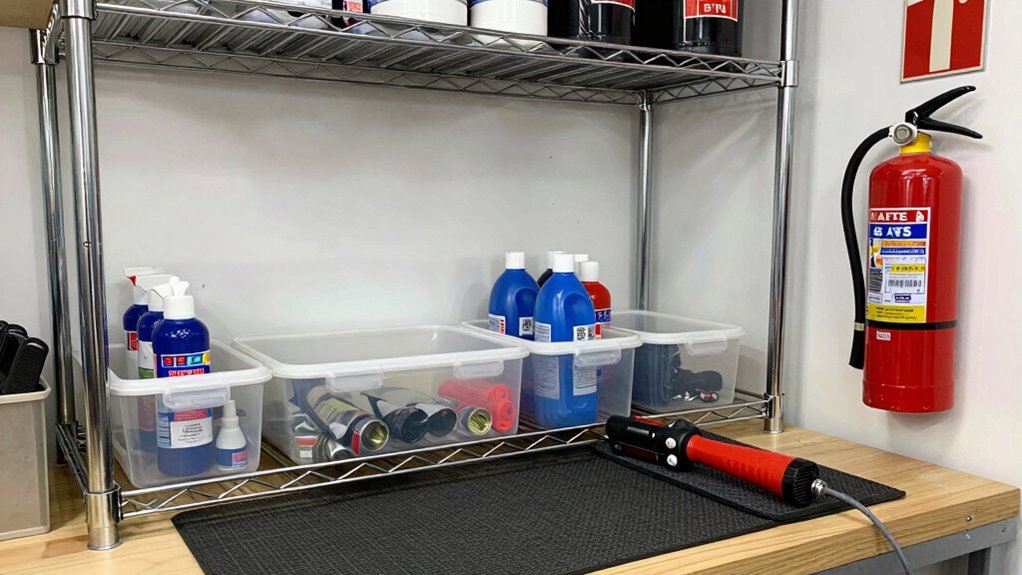
Setting up safety zones in your craft studio is essential for preventing fires and ensuring a safe working environment. Proper fire zone setup involves clearly defining areas where flammable materials are stored and used. Use safety barrier placement to keep these zones separate from heat tools and ignition sources. To effectively separate materials, consider:
Creating designated safety zones prevents fires and keeps your craft space secure.
- Creating designated storage for solvents and sprays away from heat sources
- Using fire-resistant barriers or cabinets to contain flammable items
- Establishing clear pathways and labels to prevent accidental mixing of incompatible materials
- Incorporating thermal behavior understanding to predict how heat and flammable substances may interact, enhancing your safety planning
Additionally, understanding flammability limits helps in assessing which materials are safest to store together and which require extra precautions.
Why Is Proper Ventilation Important for Fire Safety, and How Do I Maintain It?
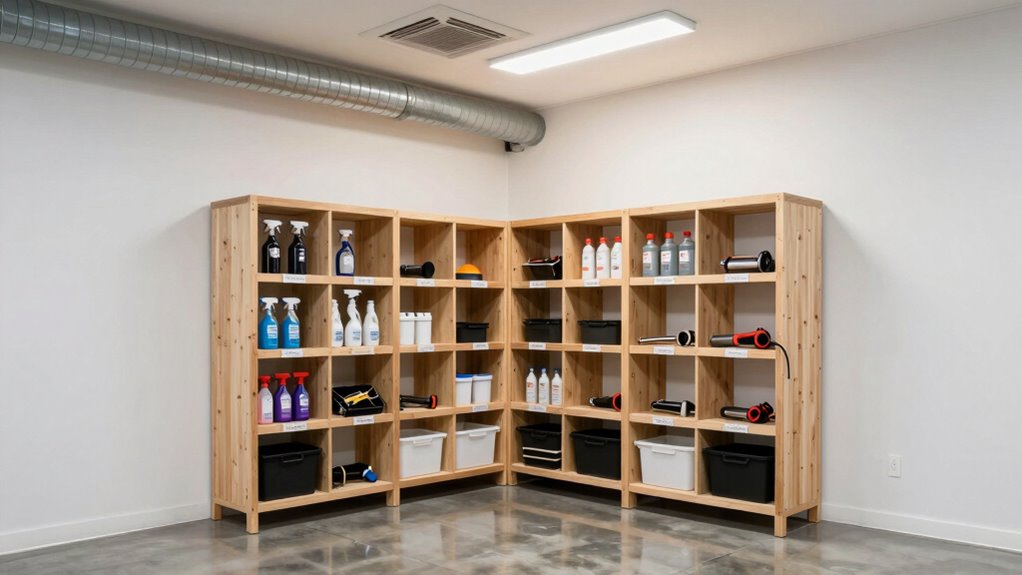
Effective ventilation is essential for fire safety because it helps disperse fumes, vapors, and heat that can accumulate during craft activities. Proper airflow management prevents dangerous buildup around flammable materials and heat sources, reducing fire risk. Installing appropriate ventilation systems ensures continuous air exchange, removing hazardous vapors from the workspace. To maintain effective airflow, keep vents unobstructed and regularly check that fans and exhaust systems function properly. Use exhaust hoods over areas where you work with solvents, sprays, or heat tools. Adequate ventilation not only minimizes fire hazards but also improves overall air quality, making your studio safer and more comfortable. Consistently managing airflow is a key step in preventing fires caused by the accumulation of combustible fumes or heat.
How Often Should I Inspect and Safely Dispose of Hazardous Materials?

How often should you inspect and safely dispose of hazardous materials? You should do this regularly—at least once every three to six months—to prevent accidents and guarantee safety. Keep an eye out for expired or degraded chemicals, which can become dangerous over time. When inspecting, always wear personal protective equipment (PPE) to protect yourself during handling. Proper disposal is vital:
Inspect hazardous materials every 3-6 months with PPE to ensure safety and proper disposal.
- Schedule routine inspections to catch leaks or deterioration early
- Follow local regulations for hazardous waste disposal
- Prepare for chemical spill response by keeping spill kits accessible
- Adhere to safety protocols to ensure comprehensive handling of hazardous materials
Regular check-ups help maintain safety standards by promptly disposing of outdated or unneeded materials, and never mix incompatible chemicals. Regular check-ups minimize fire risks, prevent chemical spills, and keep your studio safe for everyone.
What’s the Best Fire Emergency Plan for My Craft Space?

Having a clear fire emergency plan is essential to protect yourself and your studio in case of a blaze. Regular fire drills ensure you’re prepared and can react quickly when it counts. Make sure you know your emergency contacts, including fire services and nearby hospitals, and keep this information accessible. Establish escape routes and practice them with your team or family. Keep a fire extinguisher nearby and know how to use it. Create a designated safe meeting spot outside your studio where everyone can gather. Here’s a quick overview:
| Step | Action | Purpose |
|---|---|---|
| 1 | Conduct fire drills | Build confidence and readiness |
| 2 | Know emergency contacts | Ensure quick response |
| 3 | Plan escape routes | Avoid confusion during panic |
| 4 | Use fire extinguishers | Suppress small fires early |
| 5 | Meet outside | Confirm everyone’s safety |
Preparedness can make all the difference.
Frequently Asked Questions
Are There Specific Labels Required for Hazardous Craft Materials?
Yes, you need specific hazardous material labeling for your craft materials. These labels should clearly display hazard symbols, handling instructions, and safety precautions. Always keep safety data sheets handy, as they provide detailed info about hazards and proper storage. Proper labeling helps prevent accidents, ensures compliance with safety regulations, and keeps you informed about the risks associated with your solvents, sprays, and heat tools.
How Can I Prevent Accidental Spills of Flammable Liquids?
To prevent accidental spills of flammable liquids, you should implement effective spill prevention and containment measures. Always store liquids in secure, leak-proof containers and keep them on stable surfaces away from heat sources. Use secondary containment, like trays or spill pallets, to catch potential leaks. Additionally, label containers clearly and handle them carefully, ensuring lids are tightly sealed after use. Regularly inspect storage areas for leaks or damage.
What Training Is Recommended for Studio Fire Safety Awareness?
Think of fire safety awareness as your first line of defense. You should take fire safety courses and hazard awareness training to stay prepared. These programs teach you how to recognize risks, use extinguishers properly, and develop emergency plans. By investing in this knowledge, you’ll be better equipped to prevent accidents and respond swiftly if a fire sparks. Staying informed keeps your studio safe and your creativity flowing without worry.
Can I Use Household Storage for Hazardous Craft Supplies?
You shouldn’t use household storage for hazardous craft supplies, as DIY solutions may not guarantee safety standards. Fire risks increase when flammable solvents, sprays, or heat tools are stored improperly. Instead, invest in dedicated, fire-resistant storage units designed for hazardous materials. Proper storage minimizes accidents and ensures safe studio operations. Always follow safety guidelines and local regulations to protect yourself and your workspace from potential fire hazards.
How Do I Handle Small Fires Caused by Heat Tools Safely?
Imagine a tiny spark igniting a blaze—quickly, you need control. First, turn off the heat tool and unplug it. Keep a nearby fire extinguisher designed for electrical fires, such as a Class C extinguisher, ready. Use it to smother the flames, avoiding water which can worsen electrical fires. Always prioritize heat tool safety and have emergency plans, so you’re prepared to handle small fires swiftly and safely.
Conclusion
By mastering smart storage and safety practices, you turn your craft studio into a fortress against fire hazards. Think of your supplies as delicate dancers—each one needs a safe stage to perform without chaos. When you prioritize organization, ventilation, and regular inspection, you’re weaving an invisible shield that keeps danger at bay. With vigilance as your guiding star, your creative sanctuary transforms into a haven where inspiration flows freely, protected from the shadows of fire risk.
NFL season / tailgating Picks
team gear
As an affiliate, we earn on qualifying purchases.