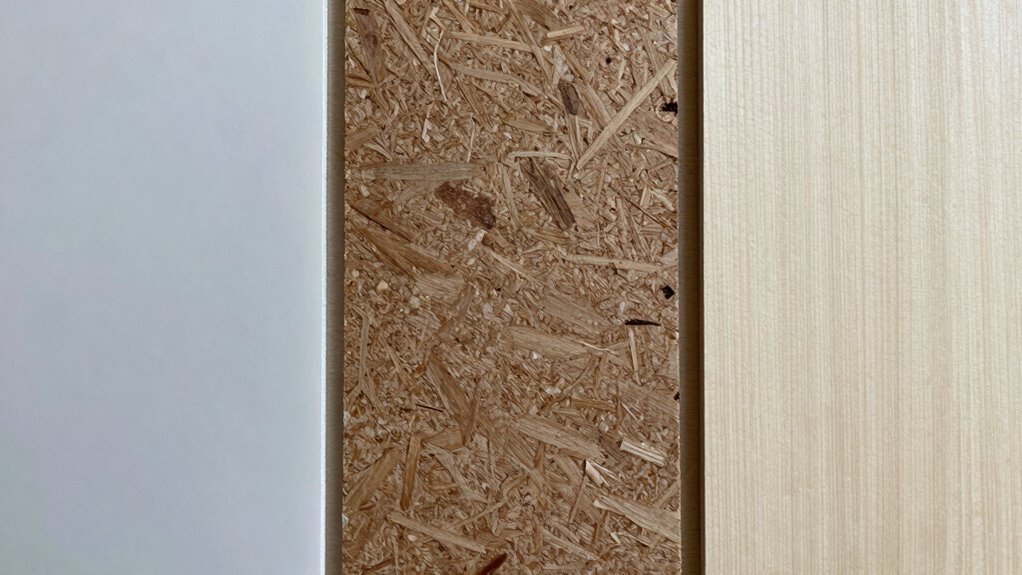

If you need a lightweight, smooth surface for mounting or prototypes, foam core is your best choice, though it’s less durable and eco-friendly. For projects requiring sturdiness and design detail, MDF offers strength and a fine surface but uses adhesives with some environmental impact. Chipboard is versatile, affordable, and eco-conscious, making it suitable for craft and furniture backing. To find the best option for your project, consider what matters most—durability, eco-friendliness, or ease of use—as you explore further.
Key Takeaways
- Foam core is lightweight and ideal for displays and prototypes but lacks durability for structural uses.
- Chipboard offers eco-friendly, versatile options suitable for craft projects and backing but is less smooth.
- MDF provides strength, stability, and detailed work capability, making it suitable for furniture and intricate designs.
- Environmental impact favors chipboard due to recycled content, while foam core is less sustainable and more plastic-based.
- Cost and application depend on project needs: foam core for lightweight displays, MDF for durability, and chipboard for eco-friendly versatility.
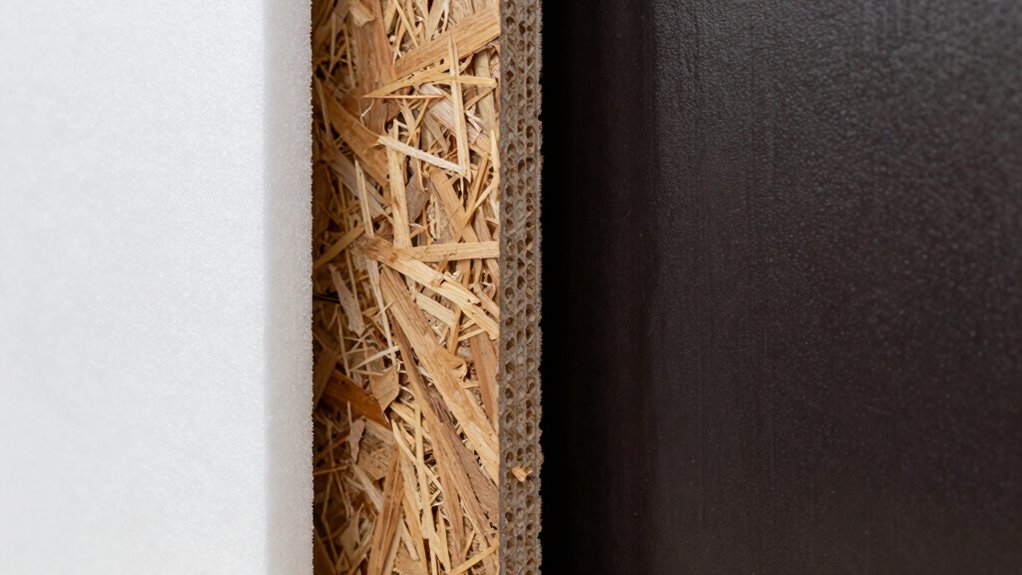
When choosing between foam core, chipboard, and MDF, understanding their differences can help you make the right decision for your project. Each material offers unique advantages and limitations, especially when it comes to creative applications and environmental impact. Foam core is lightweight and smooth, making it ideal for mounting artwork, creating prototypes, or designing display boards. Its smooth surface makes it easy to print on and paint, which is perfect for creative projects that require precision and detail. However, foam core isn’t very durable, so it’s less suited for structural or long-term uses. On the environmental impact front, foam core is often made from polystyrene or other plastics, which are not biodegradable and pose environmental concerns. If sustainability is a priority, you might want to weigh other options.
Chipboard, also known as particleboard or pressed board, is made from recycled paper and wood particles bonded with glue. It’s more eco-friendly than foam core because it utilizes recycled materials, reducing waste. Chipboard is versatile and cost-effective, making it a popular choice for craft projects, furniture backing, and packaging. While it doesn’t have the smooth surface of foam core, it can be painted or covered with fabric to suit creative applications. Its environmental impact is generally lower, especially when sourced from sustainably managed forests or recycled content. Still, it’s not as strong or moisture-resistant as MDF, so it may warp or degrade over time if exposed to moisture.
MDF, or medium-density fiberboard, is made from fine wood fibers compressed with resin. It’s denser and sturdier than chipboard, offering excellent stability and a smooth surface for painting and veneering. MDF works well in creative applications like cabinetry, furniture, or detailed craft projects. It’s also favored for its affordability and ability to be cut into intricate shapes. Environmentally, MDF’s impact is mixed. It uses adhesives and resins that can release volatile organic compounds (VOCs), which raises concerns about indoor air quality. Choosing low-VOC MDF options can mitigate some of these issues. Overall, MDF presents a balance: it’s a durable, versatile material, but its environmental considerations require careful thought, especially if you aim to reduce ecological footprint.

Mat Board Center, Pack of 10 Acid-Free Foam Boards, 11×14 inch White Foam Boards, 1/8" Thick
- Pack of 10 Foam Boards: Includes 10 white foam boards
- Size: 11×14 inches each
- Thickness: 1/8 inch thick
As an affiliate, we earn on qualifying purchases.
As an affiliate, we earn on qualifying purchases.
Frequently Asked Questions
Which Material Is Most Eco-Friendly for Crafting Projects?
You’ll find that foam core is most eco-friendly due to its higher recycling potential and lower environmental impact compared to chipboard and MDF. Foam core often contains less formaldehyde and other chemicals, making it safer for the environment. While chipboard and MDF are made from wood fibers, they typically involve more energy in production and release more pollutants. Choosing foam core helps reduce your craft project’s overall environmental footprint.
How Do Each Materials Handle Exposure to Moisture?
Coincidentally, your choice of material affects moisture resistance and water sensitivity. Foam core handles moisture poorly—it’s vulnerable to warping and damage when exposed to water. Chipboard fares slightly better but still isn’t waterproof; it tends to swell and weaken with humidity. MDF, though denser, is quite water-sensitive, prone to swelling and deterioration if it gets wet. For moisture-heavy environments, consider sealed, waterproof options instead.
Can These Materials Be Painted or Decorated Easily?
You can paint or decorate these materials easily, but surface texture plays a big role. Foam core has a smooth surface, making paint adhesion straightforward, while chipboard and MDF might require sanding first to smooth out rough textures for better results. With proper prep, you’ll find that all three accept paint well, allowing you to add decorative touches or designs. Just make sure you choose the right primer for the best surface adhesion.
Which Base Offers the Best Durability Over Time?
MDF offers the best durability over time, with a durability comparison that shows it resists warping and cracking better than foam core or chipboard. This means you’ll get improved long-term stability, especially for projects exposed to moisture or frequent handling. MDF’s dense composition makes it less prone to damage, ensuring your work stays intact longer. If durability is your priority, MDF is the superior choice for lasting results.
Are There Cost Differences Significant Enough to Influence Choice?
You’ll find that the cost comparison between foam core, chipboard, and MDF isn’t drastic but can influence your choice. Foam core tends to be more expensive due to its lightweight, smooth surface, while chipboard is more budget-friendly, especially for large projects. MDF falls in between, offering good value with moderate pricing. Price variability depends on quality and supplier, so consider your project needs and budget to make the best decision.
Conclusion
Choosing the right base is like selecting the perfect canvas for your masterpiece—you want one that supports your vision without overshadowing it. Foam core offers a light, airy feel, while chipboard and MDF provide sturdy, dependable options. Think of foam as a gentle breeze guiding your creation, and chipboard or MDF as a solid foundation beneath your feet. With the right choice, you’ll craft with confidence, knowing your project’s foundation is quietly working behind the scenes.