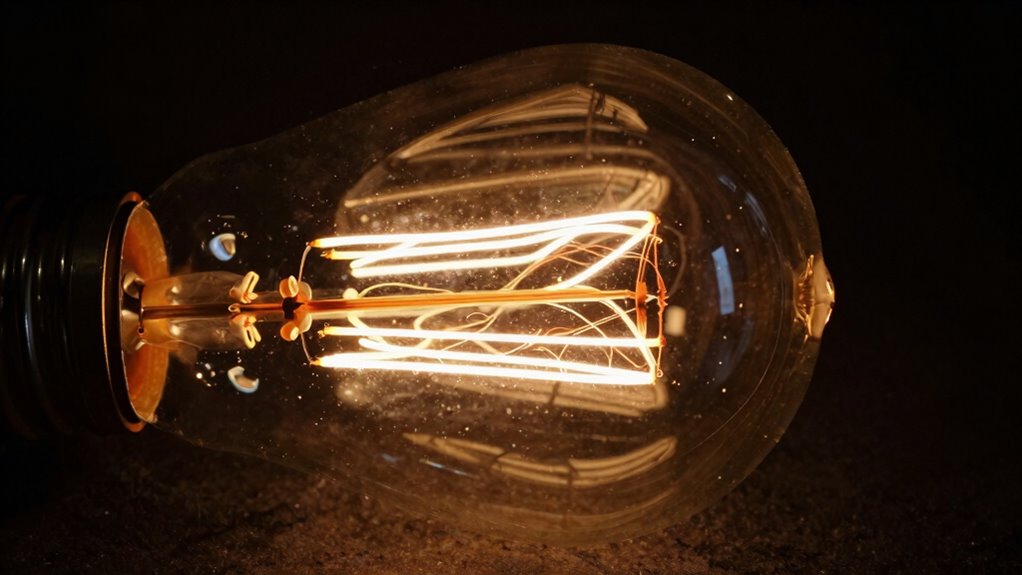

When considering filament reliability, many beginners underestimate how vital material choice and manufacturing quality are. The filament’s material must resist thermal and electrical stresses without degrading, while the manufacturing process affects its internal structure and flaw levels. Poor materials or manufacturing flaws lead to early failure, even if the filament looks fine. To truly understand what makes a filament durable, you’ll want to explore how these factors work together — the secrets behind long-lasting bulbs.
Listen free for 30 days with Audible
Thousands of audiobooks and originals — cancel anytime.
As an affiliate, we earn on qualifying purchases.
Key Takeaways
- Material compatibility directly impacts filament durability and prevents early failure.
- Manufacturing quality controls are crucial for consistent filament performance and reliability.
- Environmental factors and electrical stresses significantly influence filament lifespan.
- Proper manufacturing processes reduce internal flaws, enhancing filament longevity.
- Material stability under operating conditions is essential for reliable bulb performance over time.

Have you ever wondered what determines the lifespan and reliability of a light bulb? It’s not just about the filament’s glow or the power supply; it’s deeply rooted in the quality of the filament itself. When you start exploring how filaments work, you might overlook the importance of material compatibility and extrusion consistency. These two factors play an essential role in ensuring your bulb performs well over time. Material compatibility refers to how well the filament material interacts with the surrounding environment and the electrical current passing through it. If the material isn’t compatible with the manufacturing process or the operating conditions, it can lead to early failure or inconsistent performance. For example, some metals may oxidize quickly or deteriorate under high temperatures, shortening the filament’s lifespan. Ensuring the right material compatibility means selecting the appropriate filament material that can withstand the thermal and electrical stresses without degrading prematurely. Additionally, understanding the manufacturing process is crucial, as it directly impacts the filament’s overall quality and longevity. Proper control over manufacturing parameters can also prevent internal flaws that compromise durability. This is why meticulous quality control during production is vital for reliable filament performance. Furthermore, manufacturing controls can help minimize internal flaws and defects that might go unnoticed but significantly affect durability. When manufacturing processes are optimized, the consistency of the filament’s structure and composition is greatly enhanced, leading to improved reliability.
high quality filament for light bulbs
As an affiliate, we earn on qualifying purchases.
As an affiliate, we earn on qualifying purchases.
Frequently Asked Questions
How Often Should I Replace My 3D Printer Filament?
You should replace your filament when it’s visibly degraded, such as becoming brittle or discolored, or if you notice print quality issues. Proper filament storage in a dry, sealed container prevents moisture absorption, extending its lifespan. Also, regularly calibrate your printer to guarantee maximum extrusion. This way, you avoid unnecessary replacements and maintain consistent quality, making your prints smoother and more reliable over time.
What Are the Best Filament Types for Beginners?
You’ll find PLA is the best filament for beginners because it’s easy to print, offers plenty of filament color options, and is budget-friendly. Coincidentally, its filament price comparison shows it’s affordable compared to others like ABS or PETG. Plus, with vibrant colors and simple settings, PLA reduces frustration and helps you focus on creating. Start with PLA, and you’ll enjoy a smooth, successful 3D printing journey from the beginning.
Can Filament Quality Affect Print Accuracy?
Yes, filament quality can definitely affect print accuracy. High-quality filaments often have better filament biodegradability and consistent filament color, leading to more precise prints. When the filament is consistent, it feeds smoothly, reducing issues like warping or layer misalignment. Poor-quality filament may contain impurities or inconsistent colors, causing print defects. Investing in quality filament guarantees your prints are accurate, smooth, and durable, making your 3D printing experience more successful.
How Do Temperature Settings Influence Filament Performance?
Temperature settings directly influence filament performance by affecting flow and adhesion, which impacts print quality. If you don’t set the right temperature, you might notice filament color variations or poor layer bonding. Also, using proper filament recycling methods helps maintain consistent filament quality. Consistent temperature control guarantees your filament melts evenly, reducing issues like stringing or warping, and ultimately produces better, more precise prints.
Is It Necessary to Store Filament in a Special Way?
Yes, you should store filament properly. Proper filament storage involves moisture control to prevent it from absorbing humidity, which can cause print issues. Use airtight containers or sealed bags with desiccants to keep moisture out. This guarantees your filament stays dry, maintains quality, and reduces print failures. Investing in good filament storage is a simple step that considerably improves your 3D printing results and prolongs filament lifespan.
Conclusion
So, don’t shrug off the filament question—it’s the secret sauce that transforms your prints from meh to mind-blowing. If you ignore it, you’re basically tossing your hard-earned money into the trash fire of failed prints. Master this little detail, and you’ll reveal the true power of 3D printing. Remember, it’s not just about the filament; it’s about unleashing your inner 3D printing legend. Get it right, and watch your creations become epic masterpieces!
Fall Picks
fall essentials
As an affiliate, we earn on qualifying purchases.