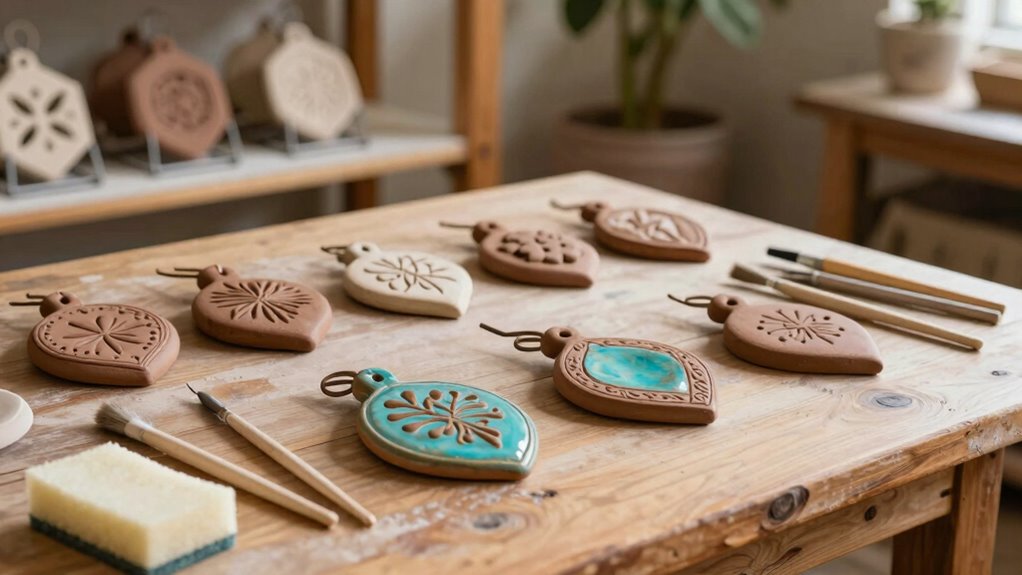

A practical pottery setup for ornament makers includes dedicated zones for hand building, glazing, and drying, with sturdy workbenches and organized storage for tools and supplies. You’ll want good lighting, ergonomic furniture, and proper ventilation to stay comfortable and safe. Keep your glaze testing and decorating supplies within reach, and set up your workspace to minimize disruptions. If you keep exploring, you’ll discover ways to refine your workspace for even better creativity and results.

Get business pricing on tools and workshop supplies
- Business-only prices and quantity discounts
- Tax-exempt purchasing
- Multiple users, one account, clear invoices
Key Takeaways
- Designate separate zones for hand building, glazing, and drying to streamline the ornament-making process.
- Ensure ample, organized storage for tools, glazes, and decorating supplies for easy access.
- Incorporate good lighting and adjustable lamps for detailed shaping, carving, and decorating.
- Use ergonomic furniture and work surfaces to maintain comfort during extended crafting sessions.
- Provide proper ventilation and safety gear to ensure a safe environment during glaze firing and handling.
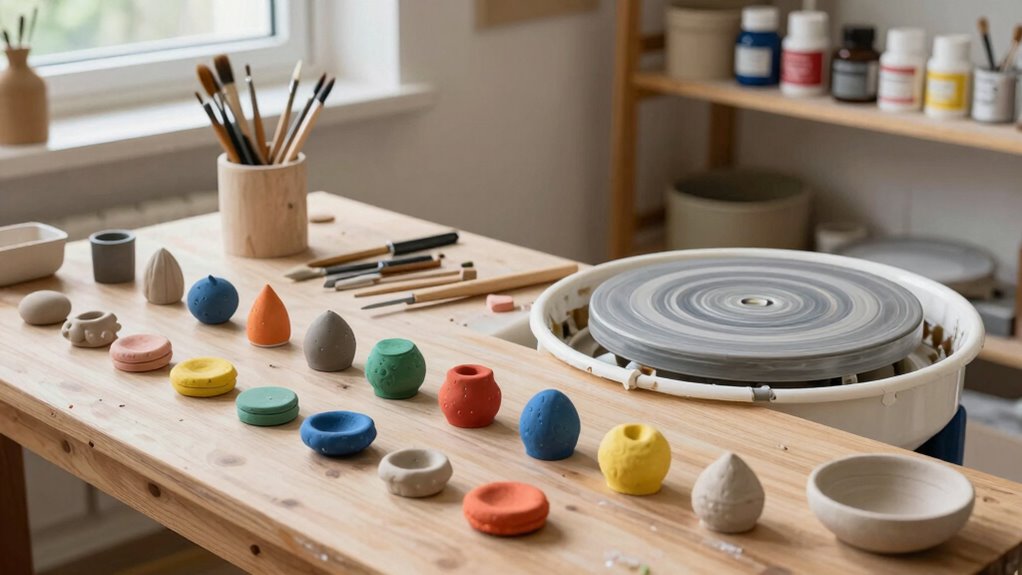
Setting up your pottery workspace for ornament making is vital to guarantee a smooth and efficient creative process. When you focus on creating ornaments, your setup should prioritize tools and surfaces that support detailed work and versatile techniques. Hand building techniques are especially useful for ornaments, as they allow you to craft unique shapes and intricate designs without relying solely on a pottery wheel. A sturdy table or workbench provides ample space for shaping, carving, and assembling your pieces. Keep a variety of modeling tools, such as sculpting knives, ribbon tools, and texture stamps, within arm’s reach to facilitate detailed work. Additionally, having a damp sponge or cloth nearby helps smooth surfaces and refine details.
A dedicated workspace with accessible tools ensures smooth, detailed ornament-making.
A well-organized workspace encourages creativity and minimizes disruptions. Set up separate areas for hand building, drying, and glazing to streamline your process. When it comes to glazing options, having a dedicated station with a variety of glazes at your fingertips allows you to experiment with different finishes and effects. You might want to keep small containers or palettes for mixing and testing glazes before applying them to your ornaments. Remember, the variety of glazing options—matte, gloss, translucent, or textured—can dramatically change the final look, so having a range of choices makes your work more dynamic and personalized. Protect your workspace with aprons or old towels to handle glaze drips and spills, and make sure there is good ventilation for safe glazes firing. Incorporating proper workspace setup can also help improve your overall efficiency and comfort during long sessions. Ensuring proper lighting conditions can further assist in achieving precise details and vibrant finishes.
Lighting is another essential aspect. Bright, natural light or adjustable lamps help you see the fine details of your handmade ornaments clearly, which is vital during both shaping and glazing phases. If you plan to add painted details or surface decorations, organize brushes, underglazes, and other decorating supplies nearby. A drying rack or shelves keep your ornaments safe as they dry, preventing accidental damage. Incorporating smart lighting options can further enhance visibility and reduce eye strain during prolonged work sessions. To optimize your workspace, consider the use of ergonomic furniture to prevent fatigue and injury over extended periods of crafting.
pottery workbench for ornament making
As an affiliate, we earn on qualifying purchases.
As an affiliate, we earn on qualifying purchases.
Frequently Asked Questions
What Safety Precautions Are Essential for Ornament Pottery Making?
You should prioritize safety by wearing protective gear like gloves and masks when working with glazing techniques to avoid fumes and skin irritation. Always guarantee proper kiln safety by keeping the area well-ventilated, following manufacturer instructions, and never leaving the kiln unattended during firing. Regularly inspect your equipment for damage, and keep a fire extinguisher nearby. These precautions help prevent accidents and ensure a safe, enjoyable ornament pottery-making experience.
How Much Space Is Needed for a Home Ornament Pottery Studio?
You’ll need at least 100 to 200 square feet to set up a comfortable home ornament pottery studio. Prioritize good studio ventilation to handle dust and fumes, and climate control to maintain a consistent temperature and humidity level. This space lets you comfortably work on your ornaments, store supplies, and guarantee safety. Keep your workspace organized, and consider a dedicated area for drying and firing your creations.
Which Tools Are Most Cost-Effective for Beginners?
Think of a basic toolkit as your “bat-girl” gadget—cost-effective and versatile. For beginners, start with simple tools like a needle tool, sponge, and trimming tools. Focus on affordable options for clay selection, such as earthenware or low-fire clay, and explore glazing techniques that don’t require expensive equipment. These essentials help you learn, experiment, and refine your craft without breaking the bank.
How Do I Organize My Workspace Efficiently?
To organize your workspace efficiently, start with a clear workspace layout that keeps your tools within easy reach. Use storage solutions like shelves, drawers, and labeled containers to keep supplies organized and accessible. Dedicate specific areas for different tasks, such as glazing or drying. Regularly declutter, so your workspace stays tidy and functional. This setup boosts your productivity and keeps your creative flow smooth and enjoyable.
What Lighting Is Best for Detailed Ornament Work?
For detailed ornament work, you want bright, natural lighting or adjustable LED lights to see colors and textures clearly. Choose lighting that minimizes glare and harsh shadows, so your color choices and texture techniques stand out. A daylight bulb or light with a high Color Rendering Index (CRI) helps you accurately judge your ornament’s details. Proper lighting makes sure you can work precisely, highlighting the beauty of your textures and vibrant colors.
Conclusion
Imagine your pottery setup as a well-tuned orchestra, each station a different instrument working in harmony. Your workspace should allow your tools to sing, your clay to dance, and your glazes to shimmer. When everything is in tune, your ornament-making process flows like a beautiful melody, turning raw materials into artistic symphonies. With the right setup, you’ll create not just ornaments, but masterpieces that resonate long after they’re made.
Fall Picks
fall essentials
As an affiliate, we earn on qualifying purchases.