
Using compression boots and recovery tools brings structure to your rest period, ensuring your muscles get targeted support to prevent fatigue and swelling. They boost circulation, accelerate healing, and reduce soreness, making your recovery more effective and less passive. Incorporating these tools into your routine helps you maintain muscle health and prevent injuries, so you stay ready for the next challenge. To learn how to make recovery work seamlessly for you, keep exploring this topic further.
Key Takeaways
- Compression boots provide targeted support, enhancing circulation and accelerating muscle recovery during structured rest periods.
- Recovery tools with cyclic pressure promote natural healing processes and reduce muscle tightness over time.
- Incorporating compression therapy into rest routines helps prevent injuries and supports long-term athletic performance.
- Regular use of recovery devices maintains healthy circulation, making passive rest more effective and less time-consuming.
- Structured recovery with compression tools minimizes downtime, ensuring athletes stay resilient and ready for future efforts.
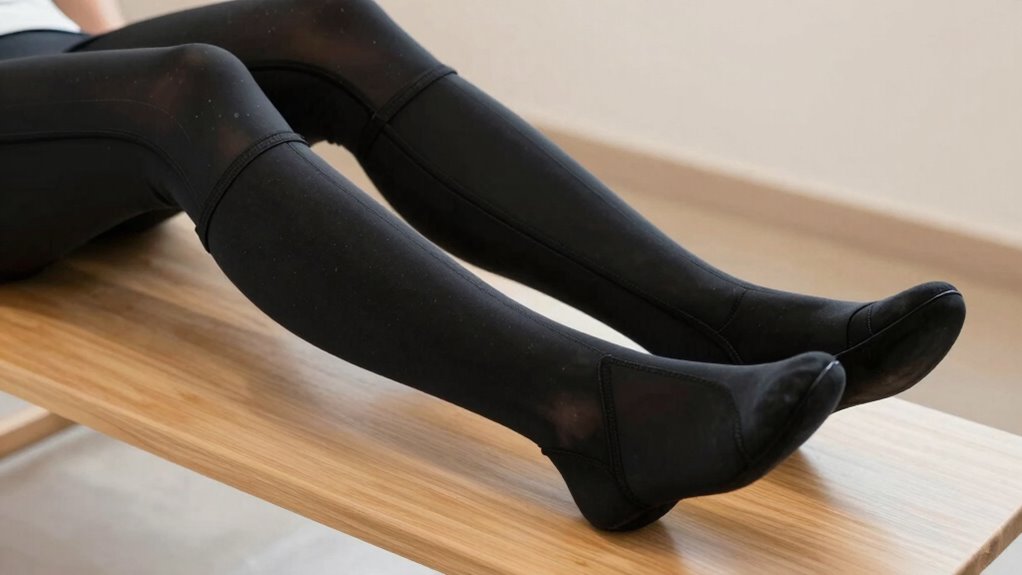
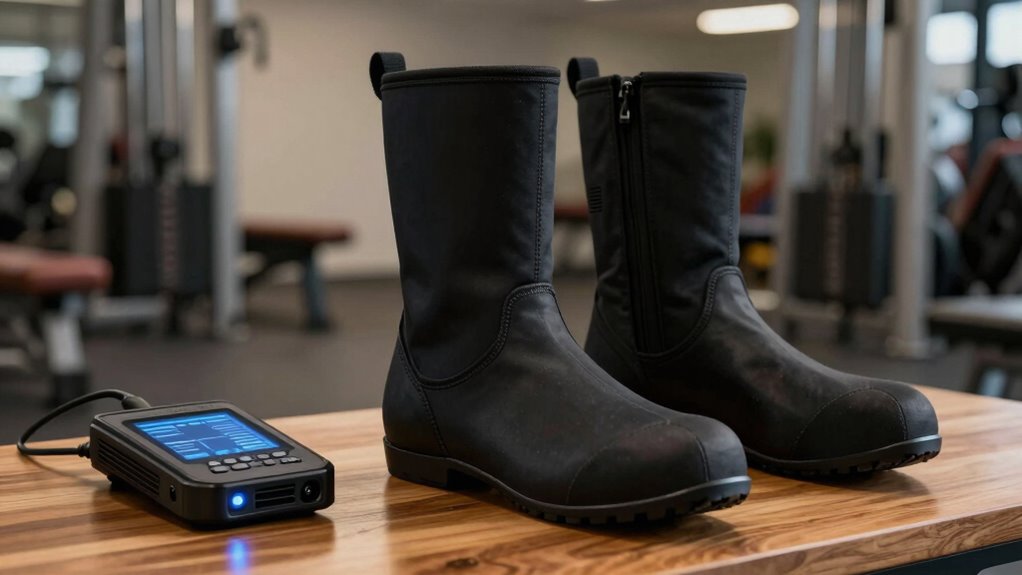
When you use compression boots, you’re providing your muscles with targeted support that helps prevent swelling and muscle fatigue. The compression applies gentle pressure, which supports muscle tissue and enhances lymphatic drainage. This muscle support not only alleviates soreness but also minimizes the risk of injury by keeping your muscles in prime condition. As a result, you feel more energized and ready for your next workout, knowing your recovery process is actively working in your favor.
Using compression boots supports muscles, reduces soreness, and prevents injuries for faster, more effective recovery.
The structured pressure cycles of these recovery tools stimulate your body’s natural healing mechanisms. This cycle encourages blood flow to areas that need it most, accelerating recovery by delivering fresh oxygen and nutrients. You’ll notice that your muscles feel less tight and more relaxed, which can lead to improved flexibility and range of motion over time. By integrating these tools into your post-exercise routine, you’re effectively giving your body the structured support it needs to repair itself more efficiently. Incorporating compression therapy into your routine can further optimize your recovery process. Additionally, understanding the importance of circulation can help you make more informed decisions about your recovery strategies.
Using compression boots isn’t just about recovery; it’s also about prevention. Regular use helps maintain healthy circulation and keeps your muscles supported during periods of intense training. This proactive approach can reduce the likelihood of overuse injuries or muscle strains, allowing you to stay consistent with your training schedule. Plus, the convenience of these tools means you can incorporate them into your routine whether you’re at home or on the go, making recovery more accessible and less time-consuming. Ensuring proper muscle support is essential for achieving long-term athletic success.
In essence, recovery tools like compression boots are more than just luxury items—they’re strategic investments in your athletic longevity. By focusing on circulation enhancement and muscle support, they help you recover smarter, not harder. When you prioritize structured recovery, you’re not only minimizing downtime but also maximizing your performance potential. This structured approach to rest transforms a passive activity into an active, integral part of your training regimen, ensuring you stay resilient, ready, and at your best.

QUINEAR Leg Recovery Compression System for Athlete Post Workout, Professional Sequential Device for Massage Therapy, Foot and Leg Recovery Boots, Improve Circulation Reduce Muscle Soreness (Medium)
- Full-leg Air Compression Massage: Inflates four chambers for circulation
- Smart Sequential Compression: Adjusts pressure based on leg size
- Customizable Intensity and Modes: 8 levels, 3 modes, adjustable timer
As an affiliate, we earn on qualifying purchases.
As an affiliate, we earn on qualifying purchases.
Frequently Asked Questions
Are Compression Boots Suitable for All Fitness Levels?
Yes, compression boots are suitable for all fitness levels. They help enhance circulation and promote muscle relaxation, making them beneficial whether you’re a beginner or an experienced athlete. You can customize the pressure and duration to match your comfort and needs. Just start with gentle settings and gradually increase as you get used to the sensation, ensuring safe and effective recovery without overexertion.
How Long Should I Wear Compression Boots During Recovery?
Think of compression boots as your secret weapon against muscle soreness and poor circulation. You should wear them for about 20 to 30 minutes per session, ensuring you don’t overdo it. This duration allows the boots to effectively improve circulation and reduce soreness without causing discomfort. Pay attention to how your body feels, and adjust accordingly, because proper recovery is about structure, not just time.
Can Compression Therapy Replace Traditional Rest Days?
Compression therapy can’t fully replace traditional rest days, but it can supplement your recovery by reducing muscle fatigue and enhancing circulation. You should still schedule complete rest days to allow your muscles to repair and rebuild. Use compression boots after workouts to support circulation and speed up recovery, but don’t rely on them alone. Combining proper rest with compression therapy helps optimize your overall recovery and athletic performance.
Are There Any Risks or Side Effects With Compression Boots?
Yes, there are some risks with compression boots, like potential skin irritation and discomfort. They improve blood circulation, but if used improperly or too long, they can cause skin redness or chafing. Always follow manufacturer instructions and consult a healthcare professional if you experience persistent irritation or swelling. Using compression boots responsibly helps enhance recovery without risking adverse side effects.
How Often Should I Use Compression Recovery Tools?
You should use compression recovery tools 2-3 times a week, like tuning a fine instrument to keep it in harmony. Just as fashion trends come and go, too frequent use can wear out their benefits. Balance your routine with mindful cost considerations, avoiding overuse that might lead to discomfort or dependency. Think of it as a stylish accessory—used wisely, it elevates your performance without overshadowing your natural rhythm.
Conclusion
Incorporating compression boots and recovery tools into your routine can truly enhance your recovery process. They provide the structured rest your muscles need to bounce back faster and perform better. But aren’t you worth investing in your recovery? When you prioritize effective recovery strategies, you’re setting yourself up for long-term success and improved performance. So, why not give these tools a try and see how they transform your post-workout routine? Your muscles will thank you.