Finding the best 3D printer for a handmade business requires balancing speed, print quality, versatility, and ease of use. The FlashForge Creator 5 Pro stands out for its high-speed multi-color capabilities, ideal for producing detailed, vibrant pieces. The ELEGOO Saturn 4 Ultra offers exceptional resin detail for jewelry and small items, while the Bambu Lab P1S provides a ready-to-use FDM option for those just starting out. These options highlight common tradeoffs: faster printers may sacrifice detail, and multi-color models often come at a higher cost. Continue reading for a detailed breakdown of the best choices for different needs and budgets.

Get business pricing on tools and workshop supplies
- Business-only prices and quantity discounts
- Tax-exempt purchasing
- Multiple users, one account, clear invoices
Complete the kit


Key Takeaways
- High-speed printing is available but often limits detail or material options.
- Multi-color capabilities significantly increase creative potential but tend to be more expensive and complex to operate.
- Large build volumes are essential for bigger projects but can add to the machine’s size and cost.
- Ease of use and reliability are critical for small businesses with limited technical support.
- Resin printers deliver finer detail, ideal for jewelry or miniatures, but require more maintenance and safety precautions.
| FlashForge Creator 5 Pro 3D Printer, 600mm/s High Speed, 4-Independent-Extruder Enclosed Multi-Color Printing, Auto-Leveling, PEI Steel Plate, 256x256x256mm |  | Best Overall for Multi-Color Batch Production | Print Speed: 600mm/s | Build Volume: 256x256x256mm | Number of Extruders: 4 | VIEW LATEST PRICE | See Our Full Breakdown |
| ELEGOO Saturn 4 Ultra 16K Resin 3D Printer |  | Best for Ultra-High-Resolution, Detailed Prototyping | Product Dimensions: 24 x 17 x 15 inches | Item Weight: 35.5 pounds | Resolution: 16K | VIEW LATEST PRICE | See Our Full Breakdown |
| Bambu Lab P1S 3D Printer, Ready-to-Use FDM 3D Printer |  | Best for Fast, Reliable FDM Printing for Beginners and Intermediate Users | Maximum Speed: 500mm/s | Setup Time: 15 minutes | Supported Filaments: PLA, PETG, TPU, PVA, PET, ABS, ASA, PAs, PCs | VIEW LATEST PRICE | See Our Full Breakdown |
| Bambu Lab P2S Combo, P2S 3D Printer & AMS 2 Pro, Multi-Color 3D Printing |  | Best for Seamless Multi-Color Multi-Material Workflow | Print Speed: 600mm/s | Setup Time: 15 minutes | Filament Drying Temperature: 65°C | VIEW LATEST PRICE | See Our Full Breakdown |
| Snapmaker U1 3D Printer, 4-Toolhead with 5s Toolchanger, Multi-Color Printing |  | Best for Versatile Multi-Tool, Multi-Color Production | Toolheads: 4 | Toolchanger Speed: 5 seconds | Build Volume: 270 x 270 x 270 mm | VIEW LATEST PRICE | See Our Full Breakdown |
| QIDI Plus5 Combo Multi-Color 3D Printer, 320×320×300mm Large Build Volume |  | Best for Large-Scale Production and Complex Multicolor Models | Build Volume: 320×320×300mm | Max Extrusion Temperature: 370°C | Chamber Temperature: 65°C | VIEW LATEST PRICE | See Our Full Breakdown |
| Bambu Lab A1 3D Printer, Ready-to-Use FDM 3D Printer for Beginners and Kids |  | Best for Beginners and Creative Small-Scale Projects | Acceleration: 10,000 mm/s² | Color Printing: Multi-color with AMS lite | Calibration: Full-auto calibration | VIEW LATEST PRICE | See Our Full Breakdown |
| FlashForge AD5X Multi-Color 3D Printer, CoreXY, 600mm/s High-Speed, Auto Leveling, 300°C Extruder, 220x220x220mm | 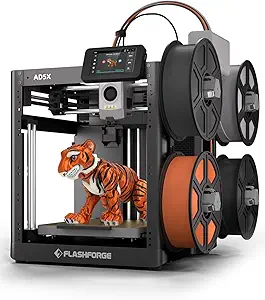 | Best for Rapid Prototyping and Multi-Color Small Parts | Build Volume: 220x220x220mm | Max Printing Speed: 600mm/s | Extruder Temperature: 300°C | VIEW LATEST PRICE | See Our Full Breakdown |
| QIDI Max4 Combo 3D Printer, 390×390×340mm Build Volume, 65℃ Heated Chamber |  | Best for Large Industrial-Grade Prototyping and Complex Parts | Build Volume: 390×390×340mm | Heated Chamber: 65℃ | Maximum Printing Speed: 800mm/s | VIEW LATEST PRICE | See Our Full Breakdown |
| FLASHFORGE Creator 5 3D Printer with 4 Toolheads and Auto Bed Leveling |  | Best for Multi-Material, Multi-Color Complex Prints with Fast Tool Changes | Toolheads: 4 | Speed: 600mm/s | Color Change Speed: 7 seconds | VIEW LATEST PRICE | See Our Full Breakdown |
| Sovol SV08 MAX CoreXY 3D Printer |  | Best for Large-Scale, Industrial-Grade Handmade Projects | Print Volume: 500×500×500mm³ | Max Speed: 700mm/s | Acceleration: 40,000 mm/s² | VIEW LATEST PRICE | See Our Full Breakdown |
| 3d printer for handmade business | Build Volume |
|---|---|
| FlashForge Creator 5 Pro 3D Pr | 256x256x256mm |
| ELEGOO Saturn 4 Ultra 16K Resi | — |
| Bambu Lab P1S 3D Printer | Not specified |
| Bambu Lab P2S Combo | — |
| Snapmaker U1 3D Printer | 270 x 270 x 270 mm |
| QIDI Plus5 Combo Multi-Color 3 | 320×320×300mm |
| Bambu Lab A1 3D Printer | — |
| FlashForge AD5X Multi-Color 3D | 220x220x220mm |
| QIDI Max4 Combo 3D Printer | 390×390×340mm |
| FLASHFORGE Creator 5 3D Printe | — |
| Sovol SV08 MAX CoreXY 3D Print | — |
More Details on Our Top Picks
FlashForge Creator 5 Pro 3D Printer, 600mm/s High Speed, 4-Independent-Extruder Enclosed Multi-Color Printing, Auto-Leveling, PEI Steel Plate, 256x256x256mm
The FlashForge Creator 5 Pro stands out for its impressive speed of 600mm/s, making it ideal for high-volume handmade production. Its four independent extruders allow simultaneous multi-color and multi-material printing—an advantage over the Bambu Lab P1S, which supports multi-material but not multi-color directly. The auto-leveling and remote management features streamline setup and ongoing operation, but this complexity demands some technical skill. The enclosed design promotes consistent print quality, but it can complicate maintenance compared to open-frame models. The higher price reflects its advanced capabilities, making it suitable for established businesses needing efficiency and versatility. Compared to the Bambu Lab P2S, this model offers more color options but at the cost of increased setup complexity and size.
Pros:- Exceptional print speed of 600mm/s accelerates production timelines
- Four independent extruders enable multi-color and multi-material printing without waste
- Automatic calibration and remote management simplify operation
- Enclosed chamber ensures consistent print conditions
Cons:- Setup can be complex and intimidating for users without technical experience
- Enclosure design limits ease of maintenance and filament swaps
- Higher cost may be prohibitive for smaller operations
Best for: Manufacturers needing rapid, multi-color batch production with minimal manual intervention.
Not ideal for: Small startups or hobbyists seeking simple, budget-friendly solutions without multi-material demands.
- Print Speed:600mm/s
- Build Volume:256x256x256mm
- Number of Extruders:4
- Nozzle Change Time:30 seconds
- Max Chamber Temperature:65°C
- Filament Compatibility:PLA, TPU, PETG, ABS, ASA, PA
Our verdict“This printer is best suited for experienced makers and small businesses prioritizing multi-color, high-speed production at scale.”
ELEGOO Saturn 4 Ultra 16K Resin 3D Printer
The ELEGOO Saturn 4 Ultra excels in producing ultra-fine, highly detailed models thanks to its 16K resolution, making it a top choice for intricate prototype work. Unlike the Bambu Lab P1S or P2S, which are geared toward speed and multi-material functions, this resin printer prioritizes surface detail and smooth finishes. Its smart tank heating and auto-leveling reduce user fuss, but its weight of 35.5 pounds means it requires a sturdy, dedicated space. The AI camera monitoring adds convenience, although environmental factors can impact AI detection accuracy. This model suits businesses that value precision and fine detail above large build volumes or multi-color options, which are limited in resin printing. It’s less suitable for high-volume production where speed and material diversity matter more.
Pros:- Ultra-high 16K resolution captures fine surface details
- Smart tank heating and auto-leveling simplify setup
- AI camera provides real-time monitoring and alerts
- Fast printing speeds up to 150 mm/h
Cons:- AI detection accuracy can be inconsistent in variable environments
- Heavy weight makes placement and relocation challenging
- Setup complexity may overwhelm beginners
Best for: Artists and small-scale makers needing detailed, high-resolution prototypes or jewelry models.
Not ideal for: High-volume production or users requiring multi-material or multi-color capabilities in a single print.
- Product Dimensions:24 x 17 x 15 inches
- Item Weight:35.5 pounds
- Resolution:16K
- Print Speed:Up to 150 mm/h
- Auto-Leveling:Yes
- AI Monitoring:Yes
Our verdict“This resin printer is ideal for detail-oriented creators focused on high-resolution prototypes rather than large-volume production.”
Bambu Lab P1S 3D Printer, Ready-to-Use FDM 3D Printer
The Bambu Lab P1S offers a straightforward, high-speed FDM experience with automatic bed leveling and a fully enclosed design, making it suitable for those new to multi-material printing. Compared to the P2S, it lacks multi-color support out of the box, but it delivers reliable multi-material printing with compatible filaments like PLA, PETG, and TPU. Its 500mm/s maximum speed boosts productivity, though the build volume details are not specified, which could be limiting for larger projects. Its quick setup—taking roughly 15 minutes—makes it attractive for small businesses eager to start production quickly. However, for users needing multi-color prints without additional modules, this model is less ideal. It’s a solid choice for those wanting speed and ease of use in an FDM platform.
Pros:- High-speed printing up to 500mm/s accelerates production
- Automatic bed leveling simplifies setup and reduces errors
- Enclosed design improves print quality and safety
- Quick 15-minute setup gets you printing fast
Cons:- Lacks multi-color support without accessory integration
- Limited build volume details may restrict larger projects
- Filament compatibility excludes reinforced or specialty filaments
Best for: Small business owners and hobbyists seeking fast, reliable FDM printing with minimal fuss.
Not ideal for: Users needing multi-color or large-volume prints without additional accessories or setups.
- Maximum Speed:500mm/s
- Setup Time:15 minutes
- Supported Filaments:PLA, PETG, TPU, PVA, PET, ABS, ASA, PAs, PCs
- Enclosure:Fully enclosed
- Build Volume:Not specified
- Auto-Leveling:Yes
Our verdict“This printer is best for users prioritizing speed, ease, and reliable multi-material FDM printing for smaller-scale production.”
Bambu Lab P2S Combo, P2S 3D Printer & AMS 2 Pro, Multi-Color 3D Printing
The Bambu Lab P2S Combo combines a high-speed, precise 3D printer with the AMS 2 Pro system, enabling effortless multi-color and multi-material printing. Its 600mm/s speed surpasses many competitors, and the built-in filament drying ensures consistent quality, especially for demanding filaments like PVA or nylon. While the P2S printer alone doesn’t support multi-color printing, pairing it with the AMS 2 Pro creates a seamless workflow that outperforms the P1S for complex multi-material projects. The setup is straightforward, but the overall price can be high, and the system’s complexity might overwhelm beginners. This combo makes sense for established makers wanting rapid, multi-material, multi-color production with minimal manual intervention.
Pros:- Exceptional print speed of 600mm/s for quick turnaround
- Automatic calibration and quick setup improve workflow
- Supports multi-color and multi-material printing with AMS 2 Pro
- Built-in filament drying and seamless filament management
Cons:- Requires the Combo system—printer alone doesn’t support multi-color
- Price may be prohibitive for small or casual users
- Features might be overly complex for absolute beginners
Best for: Producers requiring multi-color, multi-material prints with fast turnaround and reliable filament management.
Not ideal for: Hobbyists or small-scale creators who don’t need multi-material capabilities or are on a tight budget.
- Print Speed:600mm/s
- Setup Time:15 minutes
- Filament Drying Temperature:65°C
- Chamber Temperature:50°C
- Filament Compatibility:Multi-material
- Multi-Color Printing:Supported with AMS 2 Pro
Our verdict“This system is ideal for professional environments demanding rapid, multi-material, multi-color production with minimal manual handling.”
Snapmaker U1 3D Printer, 4-Toolhead with 5s Toolchanger, Multi-Color Printing
The Snapmaker U1 features a four-toolhead system with a rapid 5-second tool changer, allowing multi-material and multi-color printing with remarkable speed of up to 500mm/s. Its design supports a broad range of filaments, making it versatile for prototyping, jewelry, or artistic pieces. When compared to the Bambu Lab P1S, the U1’s tool-changing ability provides more efficient multi-material handling, though its setup can be more complex for absolute beginners. Its build volume of 270 x 270 x 270mm offers ample space for larger projects, but its higher price point reflects its multi-tool capabilities. This printer is best suited for makers who want to switch tools quickly and produce complex multi-material pieces without sacrificing speed or quality.
Pros:- Rapid 5-second automatic tool changer accelerates multi-material workflows
- High-speed printing up to 500mm/s for efficient output
- Supports a wide array of materials, including PVA, TPU, PETG, ABS
- Large build volume accommodates bigger projects
Cons:- Complex setup and calibration may challenge beginners
- Higher cost compared to basic FDM printers
- Limited to specific filament types for optimal performance
Best for: Creative makers and small businesses needing rapid multi-material, multi-color prototyping or production with automated tool changes.
Not ideal for: Beginners or budget-conscious users who prefer simple, single-tool, low-cost printers.
- Toolheads:4
- Toolchanger Speed:5 seconds
- Build Volume:270 x 270 x 270 mm
- Max Speed:500mm/s
- Compatible Materials:PLA, PVA, TPU, PETG, PCTG, ABS, ASA, PAs, PC
- Warranty:1 year
Our verdict“This model is best for experienced makers seeking rapid multi-material, multi-color printing with automation and flexibility in a compact setup.”
QIDI Plus5 Combo Multi-Color 3D Printer, 320×320×300mm Large Build Volume
The QIDI Plus5 stands out for its impressive 320×320×300mm build volume, making it ideal for large prototypes and batch manufacturing. Compared with the FlashForge AD5X, which offers faster speeds but a smaller volume, the Plus5 prioritizes size and multi-material capabilities. Its active chamber heating and multi-material support enable complex, multi-color prints with high-performance filaments like PETG and PA—an advantage for artisans needing durability and precision. However, the setup can be daunting for newcomers, and managing high temperatures requires careful handling. This model is best suited for established makers or businesses with space and technical expertise, aiming to produce large, detailed models efficiently. It’s less ideal for small-scale hobbyists or those new to 3D printing.
Pros:- Large build volume supports big models and batch production
- Supports high-temperature engineering filaments with active chamber heating
- Advanced motion system ensures stable, high-speed printing
- Multi-material and multi-color capabilities with active drying technology
Cons:- Complex setup may be intimidating for beginners
- High-temperature handling requires careful safety precautions
Best for: Businesses producing large, multi-material prototypes or batch items that demand high precision and size.
Not ideal for: Beginners or hobbyists with limited space or technical experience, due to complex setup and premium cost.
- Build Volume:320×320×300mm
- Max Extrusion Temperature:370°C
- Chamber Temperature:65°C
- Print Speed:up to 600mm/s
- Acceleration:20,000mm/s²
- Filament Compatibility:PLA, ABS, PETG, TPU, PA, PC, carbon/glass-fiber composites
Our verdict“This pick makes the most sense for established businesses needing large, precise, multi-material production capacity.”
Bambu Lab A1 3D Printer, Ready-to-Use FDM 3D Printer for Beginners and Kids
The Bambu Lab A1 offers a compelling blend of speed and ease of use, making it perfect for newcomers or families exploring 3D printing. Its automatic calibration and active flow rate compensation deliver consistently high-quality results, comparable to the more advanced QIDI Plus5 but with less complexity. The support for multi-color printing via AMS lite simplifies multi-color projects, though the need to purchase this accessory separately adds a layer of cost. Its quiet operation and quick nozzle swaps enhance user experience, especially in shared spaces. This model is ideal for hobbyists, educators, or small businesses experimenting with creative designs. It may not satisfy those needing large build volumes or industrial-grade capabilities, making it less suitable for high-volume production or complex multi-material work.
Pros:- Automatic calibration simplifies setup and ongoing maintenance
- Supports multi-color printing with optional AMS lite
- Quiet operation enhances workspace environment
- Quick nozzle swaps streamline multi-color projects
Cons:- Requires additional purchase of AMS lite for multi-color support
- Limited build volume for larger projects
Best for: Beginners, educators, and hobbyists seeking reliable, easy-to-maintain multi-color prints on a small scale.
Not ideal for: Businesses requiring large-volume or industrial-grade printing, as the build size and advanced features are limited.
- Acceleration:10,000 mm/s²
- Color Printing:Multi-color with AMS lite
- Calibration:Full-auto calibration
- Flow Rate Compensation:Active
- Noise Level:Quiet
- Nozzle:1-Clip quick swap
Our verdict“This model makes the most sense for those new to 3D printing or small creative projects with multi-color needs.”
FlashForge AD5X Multi-Color 3D Printer, CoreXY, 600mm/s High-Speed, Auto Leveling, 300°C Extruder, 220x220x220mm
The FlashForge AD5X excels in high-speed printing with a top speed of 600mm/s, ideal for quick prototyping of multi-color small parts. Its support for up to four colors simultaneously and auto-leveling streamline multi-material workflows, making it a favorite for fast-paced workshops. Compared with the QIDI Max4, which offers larger volume, the AD5X prioritizes speed and multi-color flexibility over size. Its compact footprint suits small studios but can be bulky for tight spaces. The complex setup and need for technical familiarity might challenge newcomers. This printer is best for teams needing rapid, colorful prototypes and detailed small parts, but less so for large-scale productions or extensive multi-material projects requiring large volume or high abrasive material support.
Pros:- Supports multi-color printing with up to 4 colors at once
- High-speed printing accelerates workflow
- Auto leveling and remote monitoring ease operation
- Versatile nozzle sizes for detailed and larger prints
Cons:- Setup can be complex for less experienced users
- Limited build volume for larger projects
Best for: Prototyping teams and small workshops focused on fast, multi-color, detailed parts.
Not ideal for: Users needing large build volumes or working with abrasive or high-temperature materials for large objects.
- Build Volume:220x220x220mm
- Max Printing Speed:600mm/s
- Extruder Temperature:300°C
- Nozzle Sizes:0.25mm to 0.8mm
- Auto Leveling:Yes
- Filament Compatibility:Multi-color support up to 4 colors
Our verdict“This is a strong choice for rapid, colorful prototyping but not for large or industrial-scale models.”
QIDI Max4 Combo 3D Printer, 390×390×340mm Build Volume, 65℃ Heated Chamber
The QIDI Max4 offers an expansive 390×390×340mm build volume, making it a prime option for large-scale industrial prototypes and complex parts. Its high-precision features, including closed-loop motors and anti-backlash Z-axis, provide accuracy comparable to smaller printers like the Bambu Lab A1. Compared with the FlashForge AD5X, which is faster but smaller, the Max4 emphasizes size and precision over speed. Its heavy, bulky design and complex setup mean it’s best for experienced users with ample space and technical skill. The separate purchase of the Polar Cooler system adds to the initial investment. This printer suits advanced makers or small businesses needing large, detailed, and precise parts, but less so for casual hobbyists or those with limited workspace.
Pros:- Huge build volume suitable for large, detailed prototypes
- High precision with advanced motor systems
- Supports a wide range of materials including abrasive filaments
- Smart AI camera for automatic failure detection
Cons:- Additional purchase needed for Polar Cooler system
- Very large and heavy, requiring significant space
- Complex setup not suitable for beginners
Best for: Industrial or professional makers requiring large, highly precise parts with a variety of material support.
Not ideal for: Hobbyists or small studios with limited space or less technical expertise, due to its size and setup complexity.
- Build Volume:390×390×340mm
- Heated Chamber:65℃
- Maximum Printing Speed:800mm/s
- Layer Resolution:High precision with closed-loop motors
- Hotend:40mm³/s high-flow, hardened steel nozzle
- Item Dimensions:28 x 28 x 30 inches
Our verdict“This is best for professionals or advanced makers needing large, precise industrial-grade parts with extensive material compatibility.”
FLASHFORGE Creator 5 3D Printer with 4 Toolheads and Auto Bed Leveling
The FlashForge Creator 5 combines fast multi-material, multi-color printing with four toolheads, making it highly adaptable for complex projects. Its ability to swap toolheads in just 7 seconds drastically reduces color change times compared to single-extruder models like the Bambu Lab A1. Its auto bed leveling and vibration cancellation foster high-precision results with minimal fuss. This system is particularly suited for makers who need to switch materials or colors quickly and frequently, such as in multi-material artistic or functional prototypes. However, the setup might intimidate beginners, and the somewhat limited build volume could restrict larger projects. It’s a good fit for busy workshops that need rapid, multi-material versatility, but less ideal for those requiring larger scale manufacturing or high-temperature materials like composites.
Pros:- Rapid toolhead swapping reduces color change time to 7 seconds
- Supports multi-material and multi-color printing
- Auto bed leveling and vibration cancellation improve quality
- Flexible toolhead options for different material needs
Cons:- Complex setup requiring some technical knowledge
- Limited build size for large projects
Best for: Workshops and makers focused on multi-material, multi-color projects requiring quick tool changes and high speed.
Not ideal for: Users needing extensive build volumes or working mainly with abrasive or high-temperature materials.
- Toolheads:4
- Speed:600mm/s
- Color Change Speed:7 seconds
- Supported Materials:Multi-filament, PETG, PVA, BVOH
- Auto Bed Leveling:Yes
- Vibration Cancellation:Yes
Our verdict“This is ideal for busy multi-material workflows where speed and versatility outweigh size constraints.”
Sovol SV08 MAX CoreXY 3D Printer
The Sovol SV08 MAX stands out for its enormous 500×500×500mm³ print volume, which makes it ideal for creating large, detailed handmade items that smaller printers can’t handle. Its high-speed capability of up to 700mm/s allows for rapid production, a significant advantage over more modest models like the Bambu Lab P1S, which is better suited to smaller, more detailed work. This printer’s advanced bed leveling with a contactless Eddy Current sensor ensures consistent quality across large prints, reducing the likelihood of failures. The remote monitoring feature with a HD camera adds convenience for managing multiple large projects remotely. However, the need for separate purchases for a heated chamber and nozzles increases the overall cost and complexity. Compared to the FlashForge Creator 5 Pro, which offers multi-extruder capabilities for multi-color work, the Sovol excels in sheer size and speed but sacrifices multi-material versatility. This pick makes the most sense for businesses that prioritize large, quick-turnaround projects over multi-color or multi-material complexity.Pros:- Massive 500×500×500mm³ print volume for large projects
- High-speed printing up to 700mm/s for quick turnaround
- Advanced contactless bed leveling ensures consistent quality
- Remote monitoring with HD camera enhances workflow management
Cons:- Requires separate purchase for heated chamber, adding to costs
- Additional nozzles sold separately, increasing complexity and expense
Best for: Manufacturers and artisans producing oversized, large-scale handmade items or prototypes that demand speed and capacity.
Not ideal for: Small-scale crafters or hobbyists focused on detailed multi-color designs, since the Sovol’s size and setup are overkill for smaller, intricate work.
- Print Volume:500×500×500mm³
- Max Speed:700mm/s
- Acceleration:40,000 mm/s²
- Nozzle Sizes:0.4mm, 0.6mm, 0.8mm (sold separately)
- Hotend Temperature:up to 300°C
- Camera:1280×720 HD
- Bed Leveling:Eddy Current Contactless
- Filament Compatibility:PLA, TPU, PETG, ABS, ASA, PA, PC, PLA-CF, PETG-CF, HP-PLA
Our verdict“This printer is best suited for large-scale, high-volume handmade businesses that need speed and size over multi-material versatility.”

How We Picked
The selection process focused on printers that balance performance, reliability, and affordability for small-scale handmade businesses. We prioritized models with consistent print quality, ease of setup, and multi-material or multi-color options. Durability and build quality were also key, as these printers need to withstand regular use in a commercial setting. Final rankings reflect a mix of versatility, speed, print quality, and value, ensuring options cater to different production needs and budgets.Factors to Consider When Choosing Best 3d Printer For Handmade Business
Choosing the right 3D printer for handmade business involves understanding several key factors. The ideal machine should align with your product type, production volume, and skill level. Considering your specific needs will help you avoid costly mistakes and select a model that offers the best return on investment.Print Volume and Size
Assess your typical project dimensions to determine necessary build volume. Larger printers enable bigger or multiple items per run, which can boost productivity, but also tend to be more expensive and take up more space. Small or medium-sized printers are often more manageable and cost-effective, especially if you primarily produce jewelry or small accessories.
Material Compatibility and Multi-Color Options
Consider whether your business benefits from multi-material or multi-color printing. Some printers support complex filament blends or multi-color extrusion, opening creative opportunities. However, these features often come with higher costs and increased complexity. Resin printers excel in fine detail but require handling chemicals carefully and more frequent maintenance.
Ease of Use and Maintenance
For small business owners with limited technical support, intuitive interfaces and reliable auto-leveling features matter greatly. Machines with simpler setups reduce downtime and troubleshooting. Keep in mind that some printers demand regular calibration or cleaning, which can impact productivity if not managed properly.
Speed and Reliability
Speed can be a decisive factor for fulfilling orders quickly, but it often involves tradeoffs with detail and finish quality. Look for models with high-quality components, sturdy frames, and proven durability. Reliable operation minimizes costly failures and keeps your production schedule on track.
Budget and Total Cost of Ownership
Initial purchase price is just part of the total cost. Consider ongoing expenses like filament or resin, replacement parts, and maintenance. While investing in a higher-quality machine may seem costly upfront, it can save money over time through fewer failures and better print success rates. Balance your budget with your anticipated production needs for the best long-term value.
Frequently Asked Questions
Is a resin 3D printer better for jewelry making than an FDM printer?
Resin 3D printers are generally preferred for jewelry and miniature making because they produce finer details and smoother surfaces. However, they often come with higher costs, more complex post-processing, and safety considerations related to resin handling. FDM printers can produce larger items more quickly and with less maintenance, making them suitable for prototypes or larger decorative pieces, but with less intricate detail.Can I use a multi-color 3D printer to produce complex designs for my handmade business?
Yes, multi-color 3D printers enable you to create more vibrant and detailed designs, which can appeal to customers looking for customized or intricate pieces. The main challenge lies in mastering the multi-material or multi-color extrusion process, which can be more complex and costly. For smaller-scale or creative projects, this investment often pays off by expanding your product range.What is the best 3D printer for small-scale production of home decor items?
A reliable FDM printer with a decent build volume and multi-color capabilities, like the Bambu Lab P1S or FlashForge Creator 5 Pro, makes a good choice. These models balance speed, ease of use, and versatility, making them suitable for producing a variety of home decor pieces without excessive complexity or cost. Resin printers are less ideal here due to longer post-processing times.How important is print speed for a handmade business?
Print speed can significantly impact your ability to fulfill orders quickly, especially if you produce in larger quantities. However, faster speeds usually come with tradeoffs in detail or surface finish quality. Prioritizing a balance between speed and quality is key; models like the FlashForge Creator 5 Pro excel in high-speed production without sacrificing too much detail.Should I choose a more affordable 3D printer or invest in a higher-end model?
If you’re just starting or produce small batches, a more affordable model can be sufficient and easier to manage. However, investing in a higher-end printer often yields better reliability, higher print quality, and lower long-term maintenance costs. For a business aiming to scale or produce high-quality items consistently, spending more upfront can lead to greater overall efficiency and customer satisfaction.Conclusion
For small handmade businesses just beginning, the Bambu Lab P1S offers a straightforward, reliable entry point with good quality and ease of use. If your focus is on producing detailed jewelry or miniatures, the ELEGOO Saturn 4 Ultra provides exceptional resolution at a reasonable price. The FlashForge Creator 5 Pro stands out as the best overall choice for those needing speed, multi-color options, and versatility. Budget-conscious buyers should consider the Sovol SV08 MAX, which offers solid features at a lower cost. For those looking for premium features and larger volume, the QIDI Max4 or QIDI Plus5 are excellent options. Ultimately, your decision should align with your production needs, budget, and the level of detail your products demand.
Fall Picks
fall essentials
As an affiliate, we earn on qualifying purchases.