
TL;DR

Get tools and workshop supplies delivered free — and shop member deals
- Fast, free delivery on millions of items
- Access to Prime Big Deal Days deals on October 6–7
- Prime Video, Amazon Music and more included
Large format tiles, defined as having an edge over 12 inches, are predicted to dominate kitchen backsplash designs in 2027. They offer a seamless, low-maintenance look similar to stone slabs but at a significantly lower cost. Experts note that while they mimic natural stone, they may lack the visual depth of real slabs.
The trend centers on tiles that mimic the appearance of marble, quartz, and granite while utilizing sturdy porcelain materials. A common configuration is the 18-by-36-inch tile, which aligns perfectly with standard 18-inch backsplash heights. This sizing reduces the number of seams and grout lines, creating a cleaner visual field. Designers note that the technology behind large-scale porcelain has improved significantly, allowing for realistic stone replication without the associated weight and cost.
Cost is a primary driver for this shift. Natural stone slabs can cost up to $150 per square foot, whereas large format porcelain tiles can be sourced for as little as $10 per square foot. This price differential makes the look of luxury stone accessible to a broader range of homeowners. Additionally, the ease of maintenance is cited as a key advantage, as fewer grout lines mean less scrubbing and a lower risk of staining or mold accumulation compared to traditional mosaic or subway tile layouts.
Beyond stone imitations, the category includes mirror finishes and metal-like textures. Some large format tiles feature printed patterns that simulate smaller tiles, offering a textured look without the labor-intensive installation of hundreds of individual pieces. This versatility allows the trend to extend beyond kitchens into bathrooms and flooring, where large format tiles have already gained traction as alternatives to wood and vinyl.
Cost and Maintenance Drive Adoption
The rise of large format tiles signifies a broader move toward minimalist functionality in home design. Homeowners are increasingly prioritizing low-maintenance surfaces that do not require specialized sealing or frequent deep cleaning. By reducing grout lines, these tiles minimize the areas where grease and food particles accumulate, a critical factor in kitchen hygiene. The financial aspect is equally significant; achieving a high-end aesthetic for a fraction of the cost allows for budget reallocation to other renovation projects. This trend also reflects advancements in manufacturing technology, which have enabled porcelain to replicate natural stone with greater fidelity and durability than in previous years.
large format porcelain tiles for backsplash
As an affiliate, we earn on qualifying purchases.
As an affiliate, we earn on qualifying purchases.
Evolution from Stone Slab Popularity
This development builds directly on the 2026 trend of using full stone slabs for backsplashes. While slabs remain popular, their high cost and installation complexity have limited their adoption. Large format tiles serve as a bridge, maintaining the visual continuity of slabs while mitigating the drawbacks. The transition mirrors what has already occurred in the flooring market, where large format porcelain tiles have largely replaced smaller ceramic options for many consumers. The continuity of this trend suggests a sustained consumer preference for large-scale visuals that make spaces feel more open and cohesive.
“The options available in large-scale porcelain tile have continuously been improving and increasing; minimal grout lines keep the look seamless, and the ease of maintenance is unmatched.”
— Designer Ruchi A Mohan, via Homes and Gardens
Visual Depth and Aesthetic Limitations
Despite the advantages, there are noted limitations. The continuous veining pattern found in natural stone can appear stretched or distorted when printed on large format tiles, potentially losing some of the visual depth and detail inherent to real stone. It remains to be seen whether this aesthetic compromise will affect long-term consumer satisfaction. Additionally, while the trend is predicted for 2027, actual adoption rates depend on broader economic factors and the availability of specific designs in local markets.
Market Availability and Design Integration
Manufacturers are expected to expand their offerings of large format porcelain to include more diverse patterns and finishes. Homeowners and contractors should anticipate a wider range of colorways and texture options hitting the market in the coming year. As the trend matures, installation techniques may also evolve to accommodate the weight and size of these tiles, potentially requiring different adhesive methods or support structures. The focus will likely shift from mere availability to design integration, with retailers showcasing how these tiles interact with other kitchen elements like lighting and cabinetry.
Key Questions
What defines a large format tile?
A large format tile is generally defined as having at least one edge measuring more than 12 inches in length. Common sizes include 18-by-36 inches.
Are large format tiles cheaper than stone slabs?
Yes, significantly. While stone slabs can cost up to $150 per square foot, large format porcelain tiles can start at $10 per square foot.
Do large format tiles require special installation?
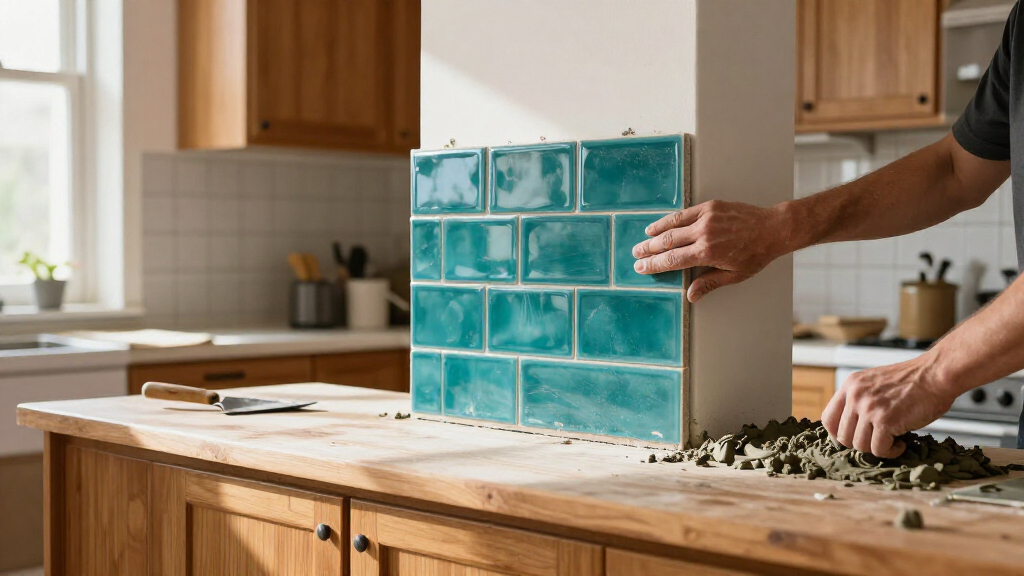
While they are lighter than stone slabs, their size requires careful handling and potentially different adhesive techniques compared to smaller tiles. Professional installation is often recommended to ensure proper adhesion and alignment.
What are the main downsides of this trend?
The primary drawback is that the veining patterns may look stretched or less detailed than natural stone. However, this is often considered a minor trade-off for the cost and maintenance benefits.
Source: rss
Fall yard work Picks
leaf blowers
As an affiliate, we earn on qualifying purchases.