TL;DR

Get business pricing on tools and workshop supplies
- Business-only prices and quantity discounts
- Tax-exempt purchasing
- Multiple users, one account, clear invoices
Hunker’s report describes 16 ways to reuse concrete blocks around the home and garden, including planters, tables, stairs, privacy walls and water features. The ideas range from simple decorative projects to construction that may require a stable foundation, waterproofing or permits; the report does not provide a tested ranking or cost estimates.
Hunker has outlined 16 ways to reuse concrete blocks in home and garden projects, ranging from planters and tables to stairs, fountains and small pools. The ideas show how a common building material can serve as furniture or decor, but some projects involve structural or water-related work that calls for careful planning and may be subject to local rules.
The roundup, titled “16 Ways To Transform Concrete Blocks Into Home & Garden Treasures,” describes blocks as durable, regularly shaped and relatively inexpensive, with reclaimed or leftover materials as possible sources. It suggests using them plain for an industrial look or changing their appearance with paint, fabric, wood or stone. The article notes that many cinder blocks are concrete blocks, while advising readers to watch for damage because block types can differ.
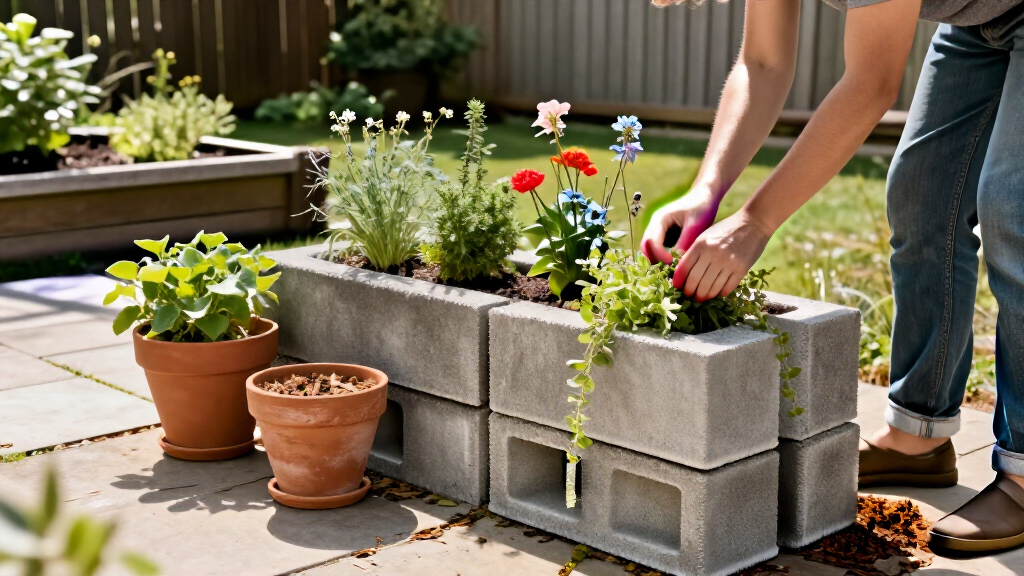
Among the simpler projects are planters, side tables, TV stands and nightstands. Openings in blocks can hold plants or provide space for shelves and storage. The source recommends placing mesh or landscape fabric in planter openings to keep soil from falling through. For tables, it stresses aligning sturdy supports and securing the top so it does not slide; larger or heavily loaded surfaces need particular attention to stability.
Other suggestions include garden art, fountains, privacy walls and stairs, as well as a pool or pond. The article describes temporary block stairs as layered rows with a solid top, and says permanent outdoor stairs need a firmer base and filled gaps. For water features, it calls for waterproofing; its pool concept also involves rebar reinforcement. These descriptions are project ideas, not engineering plans or confirmation that a particular build will meet local codes.
From Leftover Blocks to Useful Features
The list matters to homeowners and gardeners because it presents a way to reuse leftover or reclaimed material rather than treating every block as construction waste. Several ideas rely on stacking blocks and adding a top or planting medium, making them adaptable in appearance and scale. The source does not give prices, durability tests or comparisons with commercial products, so savings and performance will depend on materials and construction.
The projects also vary sharply in risk. A painted seasonal decoration is unlike a permanent stairway, pool or retaining privacy wall. Those larger builds can affect stability, drainage and water containment. Readers should treat the roundup as inspiration and seek qualified advice where the work involves structural loads, excavation or a water-holding structure.
As an affiliate, we earn on qualifying purchases.
How the Ideas Use Block Features
The report’s suggestions draw on two basic characteristics: blocks are stackable, and many have hollow cores. Those features can create a base for a tabletop, openings for shelves, or pockets for plants and decor. Their plain gray surface can be left visible for a minimal or brutalist style, covered with a wooden or stone top, or painted for a more decorative effect.
The 16 ideas named in the source include building stairs, making planters, a TV stand, a pool, a table, a privacy wall, art, a fountain and a nightstand. The provided article excerpt ends while discussing the nightstand, so it does not include descriptions of every item in the headline’s full list. It also does not identify a particular product, building standard or tested method for each project.
““Concrete blocks are generally easy to repurpose, since they have a regular shape and excellent durability.””
— Hunker
Build Requirements Vary by Project
The roundup does not state which designs have been independently tested, provide load limits or set out complete plans. It does not give cost estimates, dimensions or a materials list for most projects. The source says local rules should be checked before building a pool, but it does not identify which permits or approvals might apply in a reader’s area.
It is also unclear from the supplied excerpt how the remaining projects in the 16-item list are designed. In general, whether a particular build is safe depends on factors such as block condition, ground preparation, loads and exposure to weather. The article’s broad suggestions should not be read as a substitute for project-specific professional guidance.
Check Plans Before Building
Readers considering one of the ideas can start by checking the condition and type of their blocks, choosing a project suited to their space, and planning how the structure will be supported. For permanent stairs, walls, pools or fountains, they should verify local requirements and obtain qualified advice before work begins. Water features need a reliable waterproofing approach, while heavier furniture needs stable supports and a secured top.
Hunker’s report does not announce a follow-up project or provide a schedule for additional guidance. The practical next step is to develop a detailed plan for the chosen build, including materials, site preparation and any required approvals.
Key Questions
What projects does Hunker suggest for concrete blocks?
The supplied report describes ideas including planters, tables, a TV stand, a nightstand, garden art, stairs, privacy walls, fountains and pools. Its headline promises 16 ideas, though the provided excerpt does not describe all 16 in detail.
Can concrete blocks be used as planters?
Yes. Hunker suggests using block openings for small plants, either in individual blocks or stacked arrangements. It recommends placing mesh or landscape fabric at the bottom of the openings to hold in soil.
Are concrete-block stairs or walls suitable for permanent use?
The report distinguishes temporary arrangements from permanent outdoor stairs, for which it describes a firmer base and filled gaps. It does not provide engineered plans. Permanent structural work should be planned against local requirements and reviewed by a qualified professional.
Can blocks form a small pool or fountain?
Hunker presents both as possibilities, but says a pool needs reinforcement and a waterproof coating and that a fountain’s blocks must be waterproofed. The article advises checking local rules before starting pool construction; it does not supply complete designs or permit guidance for specific locations.
Source: rss
Fall Picks
fall essentials
As an affiliate, we earn on qualifying purchases.