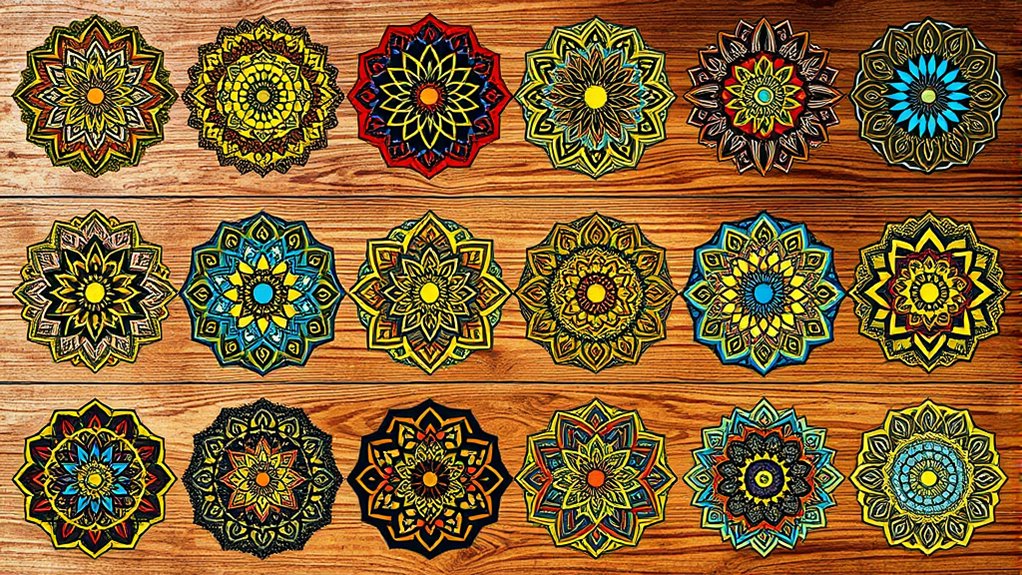

If you’re looking for creative ways to explore mandala and Zentangle crafts, you’ll find ideas that emphasize intricate patterns, layered shading, and color blending to create relaxing, mesmerizing designs. You can experiment with repetition, symmetry, and bold color combinations to develop your personal style. These crafts promote mindfulness, patience, and confidence as you progress. Keep exploring different techniques and projects, as there’s plenty more to discover to enhance your artistic journey.
Key Takeaways
- Explore various patterns and motifs to create intricate mandalas and Zentangles for a meditative drawing experience.
- Incorporate color blending techniques to add depth and vibrancy to your designs.
- Use repetitive patterns to establish harmony, rhythm, and visual interest in your craft projects.
- Experiment with layering shades and seamless color transitions to enhance artwork complexity.
- Utilize different mediums like colored pencils, markers, or watercolors to develop personal style and texture.
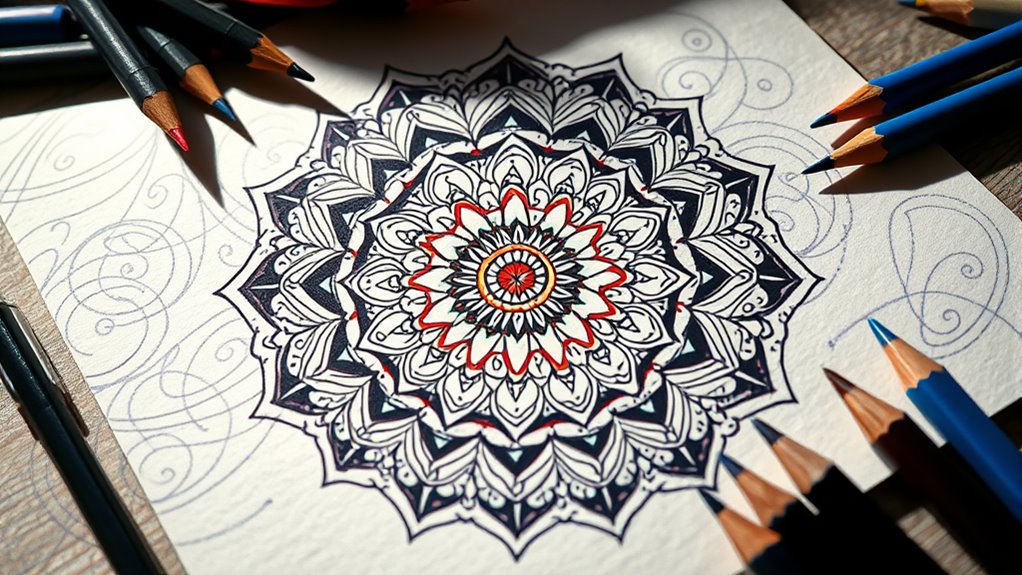
If you’re looking for creative ways to relax and express yourself, exploring mandala and Zentangle crafts is a great choice. Both art forms emphasize intricate designs and mindfulness, making them perfect for unwinding. One of the most engaging aspects of these crafts is the opportunity to experiment with color blending. As you layer different shades, you create smooth progressions that add depth and vibrancy to your designs. This technique allows you to explore various color combinations, making each piece uniquely yours. Whether you’re using colored pencils, markers, or watercolor, blending colors seamlessly can elevate your artwork and foster a sense of accomplishment.
Experiment with color blending in mandala and Zentangle crafts to add depth and vibrancy to your artwork.
Pattern repetition plays an essential role in both mandala and Zentangle art. As you draw, you’ll notice that repeating patterns not only create mesmerizing visuals but also serve as a calming rhythm. Repetition helps you focus on the process rather than the outcome, turning your drawing session into a meditative practice. You might start with simple shapes like circles or squares, then expand into more complex motifs as your confidence grows. Repeating these patterns across different sections of your design creates harmony and balance, which are fundamental elements in both crafts. Over time, you’ll develop a personal style by experimenting with various patterns and how they interact within your compositions.
When working on mandalas, you typically begin with a central point and work outward in concentric circles. This structure encourages pattern repetition, where you repeat motifs around the circle, creating symmetry and unity. As you add colors, you can play with blending techniques to make certain areas pop or recede, adding visual interest. Zentangle, on the other hand, often involves creating smaller, tangling patterns within defined sections. The repetitive nature of Zentangle patterns makes them great for quick, satisfying doodles that can be combined into larger pieces. Both approaches invite you to focus on the process of creating, rather than perfection, making them accessible and therapeutic.
Additionally, understanding the importance of local resources can provide you with inspiration and guidance, enhancing your craft experience and connecting you with like-minded creatives. Ultimately, whether you’re blending colors or repeating patterns, the key is to embrace the process. These crafts allow you to cultivate patience, improve your focus, and develop your artistic skills in a relaxed environment. As you gain experience, you’ll find yourself more confident in experimenting with new patterns and color techniques, making each project a reflection of your evolving creativity. So grab your supplies, and let the relaxing, repetitive beauty of mandala and Zentangle art inspire your next masterpiece.
Frequently Asked Questions
What Are the Origins of Mandala and Zentangle Art Forms?
You might find that mandala art originates from ancient spiritual practices across cultures like Indian, Tibetan, and Native American traditions, symbolizing unity and wholeness. Zentangle, on the other hand, emerged as a modern meditative craft, inspired by doodling and mindfulness techniques. Both forms incorporate cultural symbolism and serve as tools for spiritual expression and relaxation, connecting you to deeper traditions while encouraging creativity and personal reflection through intricate designs.
Can Beginners Easily Learn to Create Mandalas and Zentangles?
Creating mandalas and zentangles is surprisingly easy for beginners. You don’t need advanced skills—just some beginner-friendly techniques and simple design tips to get started. Think of it as a calming doodling process that lets your creativity flow naturally. With patience and practice, you’ll quickly see progress, making these art forms both enjoyable and accessible. Start simple, and soon you’ll be crafting intricate patterns with confidence.
What Materials Are Best for Starting Mandala and Zentangle Projects?
You should start with good coloring tools like fine-tip pens, colored pencils, or markers to create detailed mandalas and zentangles. Choose smooth drawing surfaces such as high-quality paper or sketchbooks that handle ink and color well. These materials allow for precise lines and vibrant colors, making your designs stand out. As you gain experience, you can experiment with different tools and surfaces to find what best suits your style.
How Can These Crafts Be Used for Relaxation or Therapy?
These crafts act as a calming river, guiding your mind to peaceful shores. By focusing on intricate patterns, you engage in mindfulness practices that quiet racing thoughts. As you draw, you naturally adopt stress relief techniques, easing anxiety and fostering relaxation. Creating mandalas and Zentangles helps you stay present, turn stress into art, and find serenity in each deliberate stroke—transforming craft into therapy for your mind and soul.
Are There Cultural Significances Attached to Mandala and Zentangle Designs?
Yes, mandala and Zentangle designs often carry deep cultural significance. You’ll find spiritual symbolism in mandalas representing unity and wholeness, while Zentangle patterns can reflect cultural heritage through traditional motifs. These designs connect you to their origins and meanings, enhancing your appreciation. By creating or studying them, you honor their cultural roots and explore their spiritual symbolism, making your craft more meaningful and enriching.
Conclusion
Now that you’ve explored these 16 mandala and Zentangle craft ideas, you’re ready to unleash your creativity. Think of each project as a journey into a colorful garden, where every stroke and pattern blooms with your unique style. Just like a garden flourishes with care, your artwork will thrive as you experiment and enjoy the process. So grab your tools and plunge in—your next beautiful creation is waiting to bloom beneath your fingertips.