With 3D printing, you can create custom cookie cutters, molds, jigs, and blanks tailored to any occasion or design. You have the flexibility to experiment with intricate patterns, modify dimensions easily, and choose food-safe materials for safe baking. These tools streamline your process, guarantee consistency, and boost creativity. Whether for hobby baking or professional work, 3D printing expands your toolkit—if you keep exploring, you’ll discover even more ways to elevate your baking game.
Key Takeaways
- 3D printing enables custom, intricate cookie cutters and molds tailored to specific themes or occasions.
- Makers can quickly prototype and refine designs for precise jigs, cutters, and blanks.
- Diverse materials like food-safe plastics ensure durability and safety for baking tools.
- Printed molds and jigs improve consistency and efficiency in shaping fondant, dough, or cookies.
- Custom tools expand creative possibilities, allowing batch production and personalized decorations.
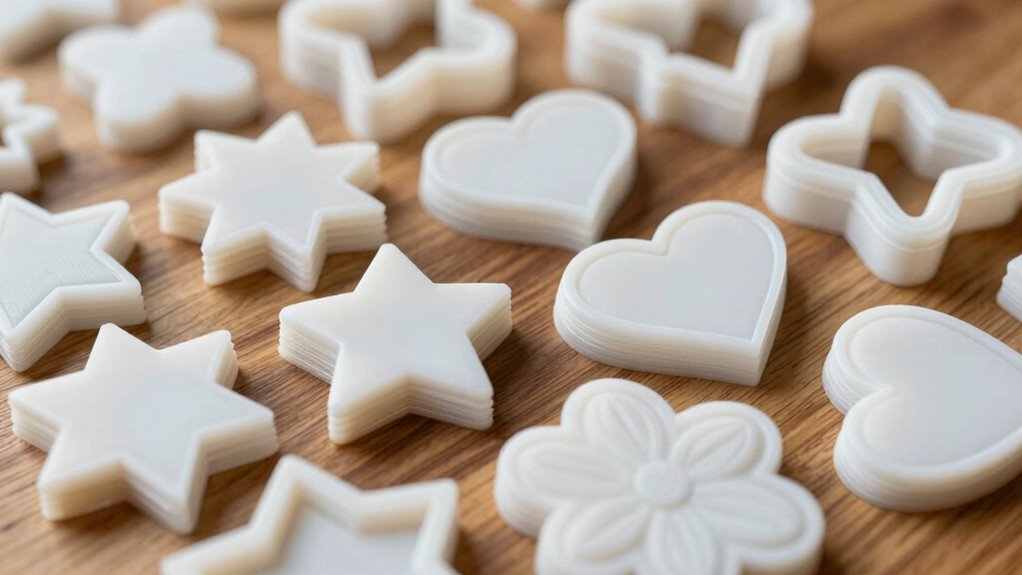
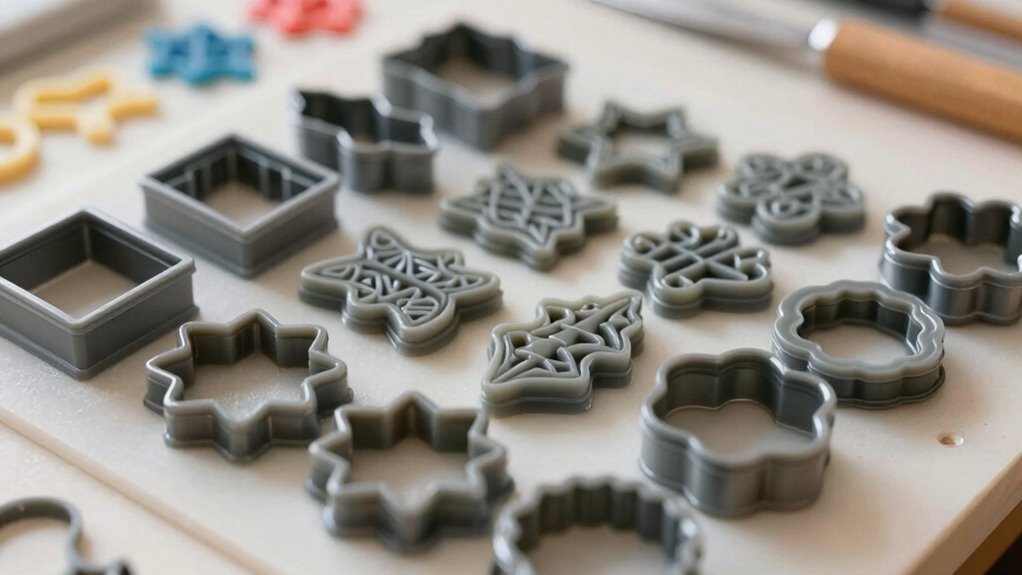
3D printing has revolutionized how we create cookie cutters, making it easier than ever to design custom shapes for any occasion. With this technology, you gain access to a wide array of customization options, allowing you to craft precisely the shapes you envision. Whether you’re making themed cookies for a birthday or unique treats for a wedding, 3D printing gives you the flexibility to bring your ideas to life. The process puts you in control, enabling you to experiment with intricate designs that traditional cutters can’t capture. You can easily modify dimensions, add detailed patterns, or create entirely new shapes without the limitations of store-bought options.
One of the key advantages of 3D printing in cookie cutter design is material selection. You’re not restricted to a single type of plastic or metal; instead, you can choose from a variety of materials suited to your needs. Food-safe plastics, like certain types of PLA or PETG, are popular because they’re durable yet safe for food contact. For more decorative molds or jigs, you might opt for more rigid or heat-resistant materials. This selection process guarantees your creations are not only visually appealing but also practical for baking and handling. You can also print in different colors or finishes, adding a personalized touch to your cookie cutters that truly stands out.
Beyond basic cutters, 3D printing opens doors to designing molds, jigs, and blanks that streamline your baking process. For instance, you can create custom molds for shaping fondant or gum paste, ensuring consistent results every time. Jigs can help in shaping dough or decorating cookies with precision, saving you time and effort. These tools can be customized to match specific themes or patterns, allowing you to produce batch after batch with uniformity. When designing blanks, you can craft raw forms that can later be finished or decorated, giving you even more creative flexibility.
Using 3D printing for cookie cutters and related tools also means you can rapidly prototype and refine your designs. Instead of waiting on mass-produced options or struggling with manual carving, you can iterate quickly, making improvements until the perfect shape is achieved. This approach empowers you to elevate your baking and decorating game, producing professional-looking results with ease. Whether you’re a hobbyist or a professional baker, 3D printing offers a smart, customizable, and versatile way to expand your culinary toolkit. Additionally, the access to a variety of materials makes it possible to tailor tools specifically for your baking needs.

Multi Dog Bone Cookie Cutter 2.5 Inch – Hand Made in the USA – Food Safe 3d Printed Plastic
- Durable Plastic Construction: Made from high-quality, food-safe plastic
- Ergonomic Design: Rolled edges for easy grip and safety
- Precise Cutting Depth: Cuts up to 0.75 inch deep
As an affiliate, we earn on qualifying purchases.
As an affiliate, we earn on qualifying purchases.
Frequently Asked Questions
What Materials Are Best for 3D Printing Cookie Cutters?
You should choose food-safe, flexible materials like certain types of PLA or PETG for 3D printing cookie cutters. These materials offer good material flexibility, making the cutters easy to use without breaking. Additionally, opt for a high print resolution to guarantee sharp edges and detailed designs. This combination ensures your cookie cutters are durable, safe, and produce clean, precise cuts every time.
How Durable Are 3D Printed Cookie Cutters Compared to Traditional Ones?
Think of 3D printed cookie cutters as the sturdy, innovative siblings of traditional metal ones. While they offer impressive customization, their durability is often a step behind metal cutters, especially over time. Material longevity varies—some plastics can last many uses, but they may eventually crack or warp. Compared to traditional metal cutters, 3D printed versions excel in versatility but may need replacing sooner if used heavily.
Can 3D Printed Molds Be Used for Hot or Cold Foods?
Yes, 3D printed molds can be used for hot or cold foods if made from food grade silicone or heat-resistant plastics. You should guarantee your mold material is safe and designed to withstand temperature changes without warping or releasing harmful substances. Always verify the manufacturer’s specifications and avoid using non-food-safe printing materials. When in doubt, test your mold with small portions first to ensure safety and performance.
What Is the Average Cost of 3D Printing Custom Cookie Cutters?
Think of your perfect cookie cutter as a tiny masterpiece waiting to be born. Custom design influences the cost analysis, with typical prices ranging from $5 to $20 per cutter, depending on complexity and material. If you’re tech-savvy, printing your own can cut costs dramatically. Otherwise, professional services charge a bit more, but you gain precise, unique shapes that make your baked creations truly special.
How Do I Ensure Food Safety With 3D Printed Kitchen Tools?
To guarantee food safety with 3D printed kitchen tools, use food grade filaments specifically designed for culinary applications. Always follow cleaning guidelines by thoroughly washing your tools with warm, soapy water after each use, and avoid harsh chemicals that could degrade the material. Regularly inspect your tools for wear or damage, and consider applying food-safe sealants to minimize bacterial buildup and maintain hygiene.
Conclusion
Just like a master chef crafts a perfect dish, your 3D printer becomes an extension of your creativity, shaping cookie cutters and molds with precision. Imagine a sculptor carving a masterpiece from marble—your 3D printer allows you to sculpt edible art effortlessly. With every design you create, you’re weaving a story of innovation and craftsmanship, turning simple ingredients into memorable treats. Embrace this tool, and watch your ideas come to life, sweetening every moment.