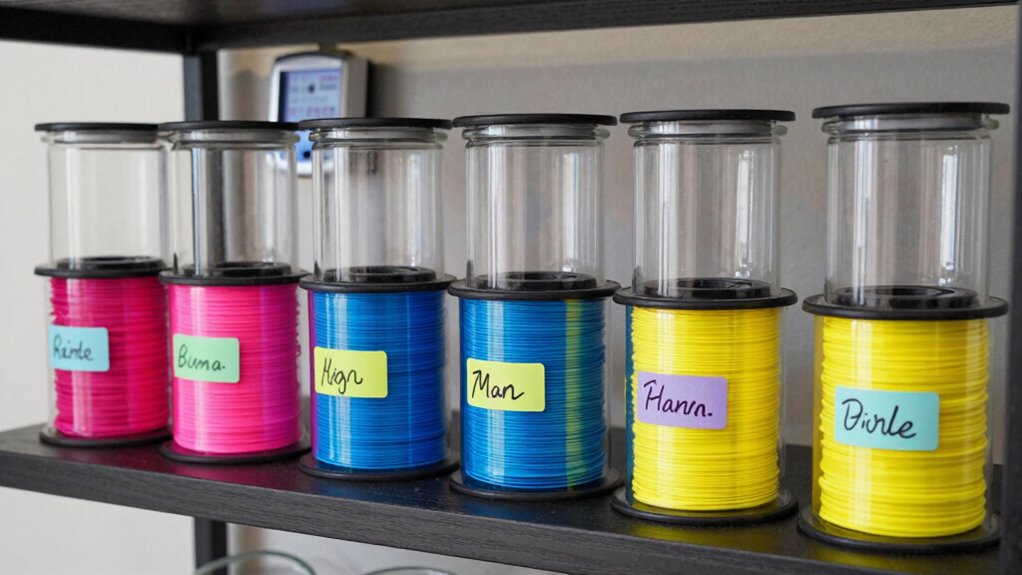

To keep filament spools dry without guesswork, store them in airtight containers with desiccants like silica gel or activated charcoal to absorb moisture. Use humidity monitors to keep track of environmental conditions, ensuring levels stay between 20-50%. Organize your supplies in a cool, dry place away from sunlight, and seal spools tightly after use. Maintaining consistent humidity and proper storage methods will protect your filament and improve print quality—learn more to optimize your setup.
Key Takeaways
- Store filament in airtight containers with silica gel or activated charcoal to prevent moisture absorption.
- Use humidity monitors or hygrometers to track storage conditions and adjust desiccants accordingly.
- Keep spools in cool, dry environments away from sunlight and fluctuating humidity sources.
- Seal spools tightly after use and utilize vacuum-sealed bags for long-term storage.
- Incorporate desiccants and maintain consistent environmental conditions to keep filaments dry without guesswork.
Why Moisture Damages Your Filament: and How Proper Storage Can Protect It
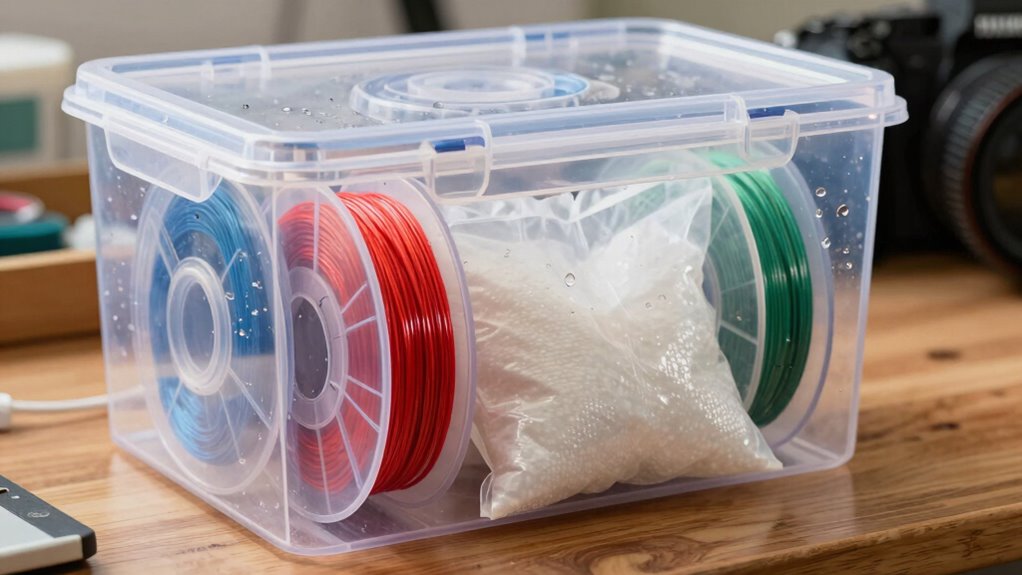
Moisture is one of the biggest threats to your filament’s quality, even if you can’t see it. When filament absorbs moisture, it causes filament degradation, leading to poor print quality and stringing. The damage isn’t always obvious at first, but it can weaken the filament’s structure over time. To prevent this, your choice of storage container matters. Using the right storage container choices helps keep moisture out and preserves filament integrity. Airtight containers with desiccants are ideal because they create a barrier against humidity. Proper storage reduces the risk of filament degradation, ensuring your prints come out clean and precise. Incorporating energy-efficient storage solutions aligns with sustainable practices and can further help reduce environmental impact. Additionally, selecting moisture-resistant containers can provide extra protection against humidity and prolong filament lifespan. Ensuring proper lighting conditions can also prevent the buildup of heat and moisture inside storage areas, further protecting your filaments. For optimal results, consider containers with humidity indicators to monitor moisture levels and act accordingly. Ignoring moisture can cost you time and filament in the long run, so choose containers that actively protect your spools from humidity.
Choosing the Best Container to Keep Filament Dry
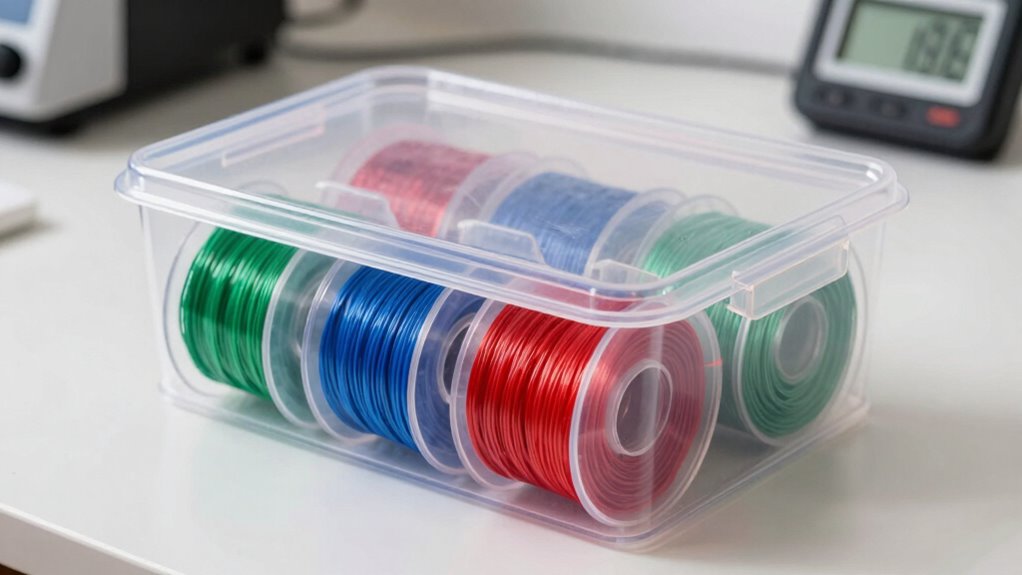
Choosing the right container is essential for keeping your filament dry and maintaining its quality. When selecting a storage container, consider both functionality and aesthetics. Clear containers allow you to quickly identify filament colors without opening them, saving you time and reducing unnecessary exposure. Opt for airtight, resealable options that prevent moisture ingress, ensuring your filament stays dry. The container’s appearance can also enhance your workspace—sleek, organized storage improves efficiency and keeps your area tidy. If you have multiple filament color choices, choose stackable or labeled containers to streamline your setup. Proper storage techniques, such as moisture control methods, help prevent moisture absorption and maintain filament quality over time. Using containers with airtight seals can significantly extend the lifespan of your filament by protecting it from humidity. Incorporating smart storage solutions that monitor humidity levels can provide an extra layer of protection and peace of mind. Additionally, selecting containers made from moisture-resistant materials helps safeguard your filament against environmental humidity and prolongs its usability. Ultimately, a well-chosen storage container protects your filament from humidity, preserves color vibrancy, and keeps your workspace visually appealing. Proper selection simplifies filament management and extends your spools’ lifespan.
Using Desiccants and Humidity Monitors for Optimal Filament Storage
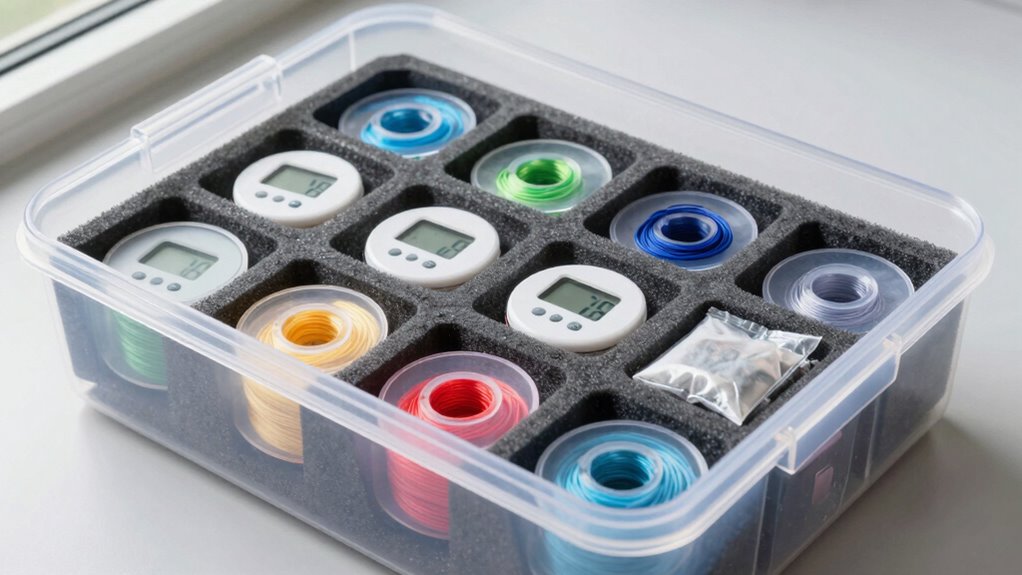
Using desiccants and humidity monitors is key to keeping your filament in top shape. You need to select effective desiccants and regularly check humidity levels to prevent moisture accumulation. Proper storage techniques guarantee your filament stays dry and ready for use. Incorporating storage solutions designed specifically for filament can further enhance protection from environmental factors. Additionally, understanding material properties can help you choose the best storage methods for different types of filament. Implementing climate control strategies can also mitigate fluctuations in humidity and temperature that affect filament quality. Moreover, selecting appropriate packaging can provide an extra layer of protection against moisture intrusion. Knowing the history of filament materials can inform better preservation techniques tailored to each filament type.
Choosing Effective Desiccants
To keep your filament in top condition, selecting the right desiccants is essential. You want options that effectively absorb moisture without adding complexity. First, silica gel is a popular choice because it’s affordable, widely available, and highly effective at drying out spools. Second, activated charcoal can help control humidity, especially in larger storage containers, by adsorbing moisture and odors. Third, consider combining silica gel with charcoal for enhanced performance, especially if you store filament long-term. Look for desiccants that are reusable or easy to replace, ensuring your spools stay dry. Always verify the desiccant’s moisture absorption capacity and compatibility with your storage environment. Proper choice of desiccants keeps your filament dry, improving print quality and prolonging spool lifespan. Understanding humidity control is key to maintaining optimal filament storage conditions.
Monitoring Humidity Levels
Maintaining essential humidity levels is crucial for preserving filament quality, and monitoring tools make this task straightforward. Using humidity monitors allows you to track moisture levels inside storage containers accurately. Regular calibration techniques ensure these devices provide precise readings, preventing false alarms or overlooked humidity spikes. Labeling your filament spools clearly helps track their storage history and humidity exposure, aiding in identifying potential issues. Incorporating vetted calibration procedures ensures consistent accuracy over time. Consistent monitoring enables you to respond quickly—adding or replacing desiccants when needed. Proper humidity control not only preserves filament integrity but also extends its usability and performance. Implementing humidity management strategies that include reliable humidity monitors with proper calibration techniques and clear filament labeling creates a controlled environment that minimizes moisture absorption. This proactive approach ensures your filament stays dry, maintains its print quality, and reduces the risk of clogs or weak prints caused by excess moisture.
Proper Storage Techniques
Proper storage techniques are essential for keeping your filament in top condition, and incorporating desiccants along with humidity monitors is the most effective way to achieve this. To protect filament color and prevent moisture damage, follow these steps:
- Choose a dedicated storage location, like a sealed container or cabinet, to keep humidity levels stable.
- Add desiccants, such as silica gel packs, to absorb excess moisture and maintain a dry environment.
- Regularly check humidity levels with a monitor to guarantee ideal conditions, adjusting desiccants as needed.
- Understanding air circulation can help prevent moisture buildup and further protect your filament from humidity-related issues. Additionally, ensuring proper ventilation in your storage area can help maintain consistent humidity levels and reduce the risk of moisture accumulation.
- Being aware of humidity control techniques is crucial for preserving filament quality over time.
- Maintaining consistent storage conditions minimizes the risk of filament degradation caused by fluctuating humidity levels.
- Implementing moisture barriers such as vacuum-sealed bags can further enhance protection against humidity fluctuations.
Storage Tips for Different Types of Filament Materials
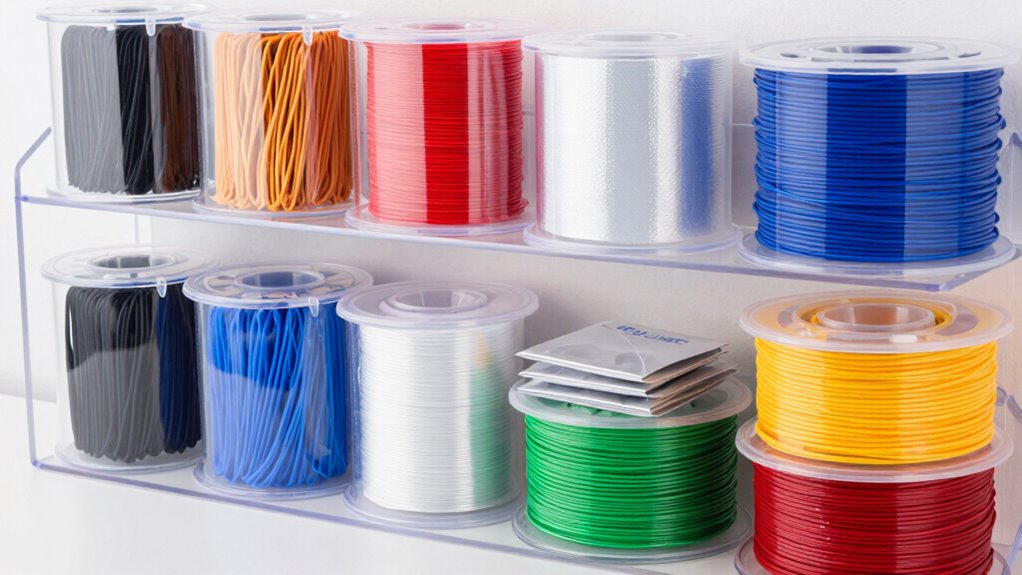
Different filament materials require specific storage methods to stay in ideal condition. For example, PLA benefits from being stored in a cool, dry place away from direct sunlight, while flexible filaments like TPU need to be kept in airtight containers to prevent moisture absorption. To keep your spools organized, use filament shelf organization strategies that group similar materials together. Color coding techniques can also help you quickly identify filament types and brands, reducing confusion during printing. Storing materials properly minimizes moisture exposure and maintains print quality. Be sure to label each spool with its material type and recommended storage conditions. Adjust your storage setup based on filament characteristics, ensuring each type stays dry, accessible, and easy to find when you need it most. Proper storage not only preserves filament quality but also supports compliance with regulatory requirements, which is essential for maintaining operational resilience and avoiding costly issues. Additionally, incorporating humidity control measures can further protect sensitive filaments from moisture damage and extend their usability. Using desiccant packs inside storage containers can also significantly reduce moisture levels and keep filaments in optimal condition, especially for hygroscopic materials.
How to Measure and Maintain the Right Humidity Levels
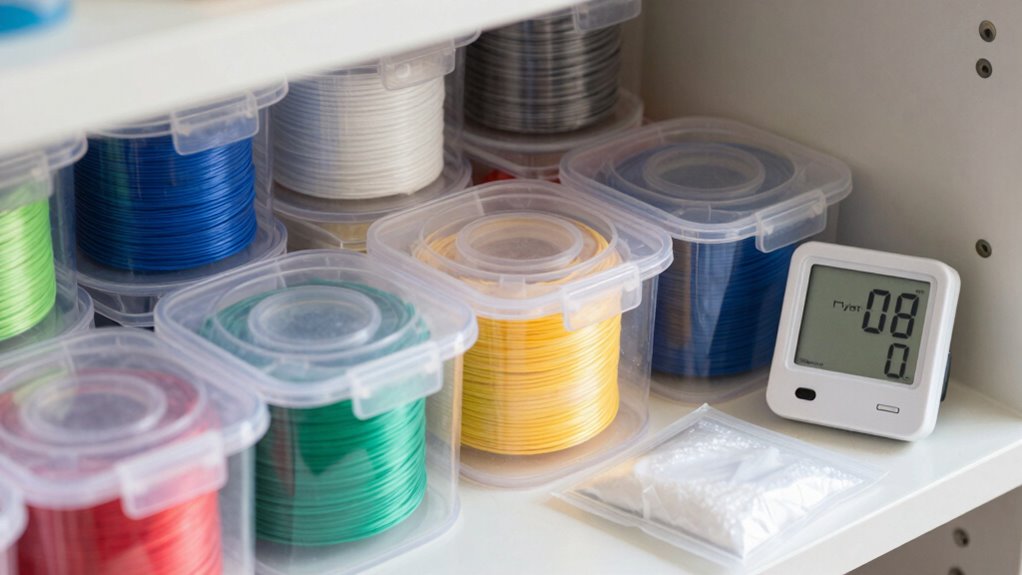
To keep your filament in top shape, you need to monitor humidity levels carefully. Using a hygrometer helps you stay within the ideal range, usually between 20-50%, depending on the material. Consistently maintaining these conditions ensures your filament stays dry and ready for quality prints. Proper storage environments can prevent moisture absorption, which can negatively affect print quality and filament lifespan sleep environment.
Optimal Humidity Range
Maintaining the right humidity level is essential for preserving filament quality, as fluctuations can cause warping, brittleness, or moisture absorption. The ideal humidity range for filament storage is between 20% and 50%. Staying within this range helps extend filament lifespan and ensures a stable storage environment. To achieve this, consider these steps:
- Use a hygrometer to monitor humidity levels regularly.
- Keep spools in sealed containers with desiccants.
- Avoid storing filament in humid areas like basements or bathrooms.
Using Hygrometers Effectively
Using hygrometers effectively is key to guaranteeing your filament stays in ideal condition. Start by choosing a reliable digital hygrometer that offers accurate readings. Regular sensor calibration is essential; check the device against a known humidity standard periodically to maintain precision. Proper calibration prevents false readings that could lead to moisture damage. Place the hygrometer in the storage area, ensuring it’s not near vents or direct moisture sources, to get an accurate measurement of ambient humidity. Record readings daily to monitor fluctuations. If you notice humidity levels creep outside your desired range, adjust your storage environment accordingly. Consistent, accurate measurements allow you to take timely action, preventing filament degradation caused by excess moisture. Mastering these steps ensures your filament remains dry and ready for quality 3D printing.
Maintaining Consistent Conditions
Keeping your filament at a consistent humidity level is crucial for its longevity and print quality. To do this effectively, monitor your storage location regularly with a reliable hygrometer. Adjust humidity levels based on filament color, as some colors are more sensitive to moisture. Here are three steps to maintain proper conditions:
- Check humidity daily to catch fluctuations early.
- Use desiccants or dehumidifiers within your storage area to keep moisture at ideal levels.
- Seal spools tightly after use, especially if stored in a less controlled environment, to prevent humidity from affecting the filament.
Troubleshooting Moisture-Related Printing Problems and How to Prevent Them
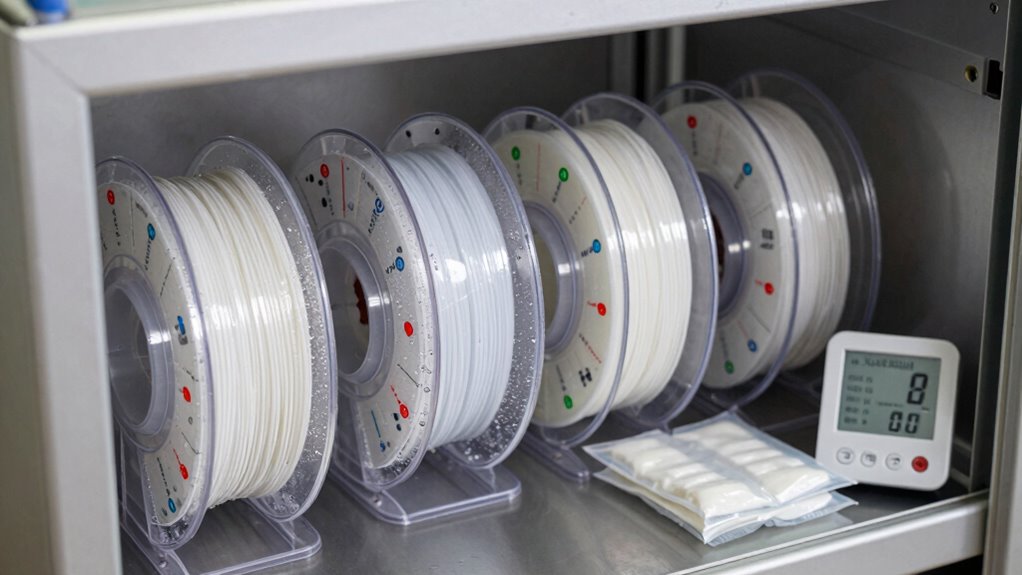
Moisture in filament can cause a range of printing issues, from poor layer adhesion to surface defects. When filament absorbs moisture, it can create bubbles and inconsistent extrusion, leading to weak prints. This often results in poor print bed adhesion, causing parts to detach or warp. You might also notice color inconsistencies or streaks across your print, signaling moisture contamination. To troubleshoot, check if your filament feels damp or produces hissing sounds during extrusion. To prevent these problems, always store filament in airtight containers with desiccants, and dry filament if needed before printing. Maintaining a dry environment reduces moisture absorption, ensuring smoother extrusion, better layer adhesion, and consistent filament color, ultimately improving print quality and reducing failed prints.
Frequently Asked Questions
Can Temperature Fluctuations Affect Filament Moisture Levels?
Yes, temperature fluctuations can affect filament moisture levels. When temperatures change, humidity control becomes essential in your storage environment. Higher temperatures can cause moisture to evaporate, but if the environment cools quickly, condensation might occur, increasing humidity and moisture in the filament. To keep spools dry, maintain a stable temperature and humidity control, storing your filament in a sealed, dry environment to prevent moisture absorption and preserve print quality.
Are There DIY Solutions for Creating Effective Filament Storage Containers?
Ever thought you could make your own filament storage solutions? DIY containers and homemade solutions are effective and budget-friendly options. You can repurpose airtight containers, jars, or even build custom boxes with moisture-proof seals. Why buy expensive storage when you can craft personalized, dry storage that keeps your filament safe? With a few simple materials, you’ll create a reliable, moisture-resistant environment for your spools, ensuring consistent 3D printing quality.
How Often Should Desiccants Be Replaced or Recharged?
You should replace or recharge desiccants when their moisture indicator shows they’re saturation, usually every 1-3 months depending on humidity levels. Desiccant lifespan varies, but if you notice the indicator turning pink or gray, it’s a sign to refresh them. Recharging involves drying them out in an oven at a low temperature, ensuring your filament stays dry and free from moisture-related issues.
What Signs Indicate Filament Has Absorbed Too Much Moisture?
You’ll notice moisture detection signs like bubbling, popping sounds, or uneven extrusion when your filament has absorbed too much moisture. Look for filament deterioration, such as cracking or brittleness, which indicates it’s been compromised. These issues cause poor print quality and can clog your nozzle. Regularly check your filament’s condition, and be alert to these signs to prevent moisture-related printing problems.
Is Vacuum Sealing an Effective Method for Long-Term Filament Storage?
Vacuum sealing is highly effective for long-term filament storage because it removes moisture and prevents humidity from damaging your spools. The vacuum benefits include maintaining filament quality and reducing the risk of filament degradation. While sealing challenges like ensuring an airtight seal exist, investing in quality vacuum bags and pumps makes the process straightforward. This method keeps your filament dry, ensuring ideal printing results over time.
Conclusion
Now that you know the secrets to keeping your filament dry, imagine opening your storage container after weeks, only to find perfectly pristine spools ready for flawless prints. No warping, no stringing—just smooth, professional results. The right storage methods and humidity control are your hidden weapons against moisture damage. So, what’s stopping you from transforming your 3D printing experience and release your filament’s true potential? The key is within your grasp—are you ready to unlock it?