
When fixing craft mistakes like glue, paint, or resin drips, stay calm and assess your options. Use gentle methods such as rubbing alcohol or vinegar for glue, a craft knife for paint smudges, and heating tools to soften resin before scraping. Always test solvents first and wear safety gear. With patience and proper techniques, you can correct mistakes without damaging your project—discover more tips to perfect your craft corrections.

Get business pricing on tools and workshop supplies
- Business-only prices and quantity discounts
- Tax-exempt purchasing
- Multiple users, one account, clear invoices
Key Takeaways
- Identify the type of stain or residue to choose the safest and most effective removal method.
- Use gentle solvents like rubbing alcohol or specialized removers on delicate surfaces, testing first for damage.
- For paint drips, carefully scrape with a craft knife or sand lightly, ensuring minimal surface damage.
- Softening resin with heat and then scraping or using citrus-based solvents can effectively remove it.
- Always follow safety precautions, including ventilation and protective gear, to prevent accidents during cleanup.

Making mistakes is a natural part of crafting, but how you fix them can make all the difference. When you accidentally get glue, paint, or resin drips where they shouldn’t be, the first step is to stay calm and assess the situation. Removing unwanted residue quickly is key to maintaining your project’s quality. Sometimes, the best solution involves exploring product alternatives to find the most effective method for your specific material. For instance, if a glue drip is stubborn, you might try using a different solvent or remover designed for that adhesive type. Always remember to check the safety precautions associated with these products—wear gloves, work in a well-ventilated area, and follow the manufacturer’s instructions to avoid any health hazards.
Stay calm, assess the situation, and explore product alternatives for safe, effective mistake correction.
For glue removal, options range from commercial adhesive removers to household items like rubbing alcohol or vinegar, depending on the glue type. For example, acetone-based removers work well on super glue, but they can damage certain plastics or finishes. In such cases, product alternatives like specialized glue removers formulated for delicate surfaces are safer choices. Before applying any solvent, test it on a small, inconspicuous area to ensure it won’t harm your project. Keep in mind that patience is essential; sometimes, softening the glue with a bit of warm water or oil can make removal easier without risking damage.
When it comes to paint drips, a precision approach helps. Use a craft knife or a fine sanding pad to carefully scrape or sand away the excess without gouging your work. For minor paint smudges, a damp cloth might suffice, but for dried paint, you may need a paint remover or thinner. Always read the label for safety precautions—many paint removers contain harsh chemicals, so proper ventilation and protective gear are indispensable. If you’re concerned about health or environmental impact, consider eco-friendly or natural paint removers as product alternatives. These options often have fewer fumes and are safer to handle, making your cleanup both effective and safer for your surroundings.
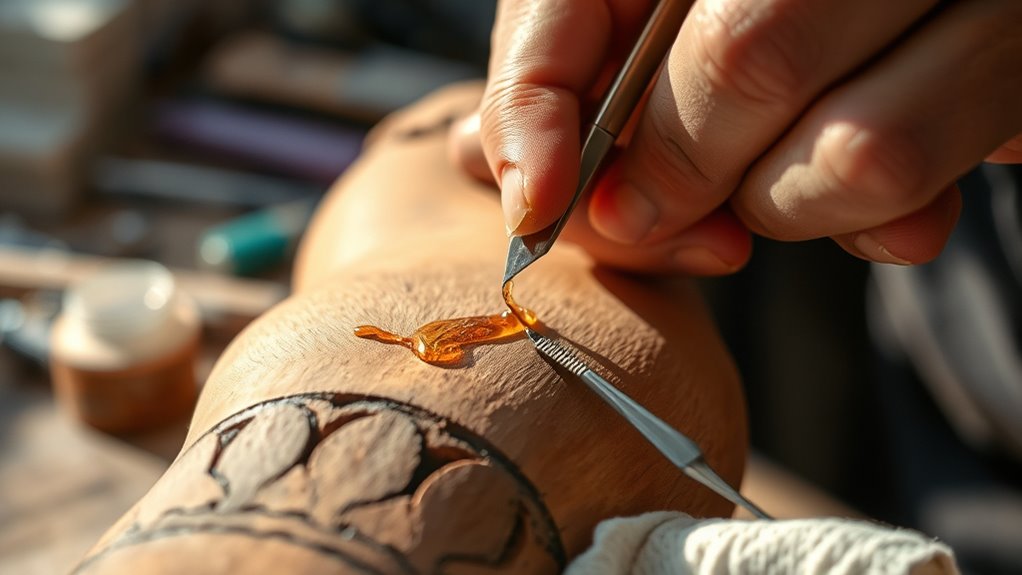
Resin drips can be particularly tricky because of their hardness once cured. To remove resin, gently heat it with a heat gun or hairdryer to soften it, then carefully scrape it off with a plastic scraper. Solvents like isopropyl alcohol or commercial resin removers can help dissolve residual hardened resin. Always check safety precautions before applying these products—use gloves and work in a well-ventilated space, as fumes can be harmful. If you’re concerned about safety or environmental impact, natural or less toxic product alternatives are available, such as citrus-based removers or DIY solutions. Additionally, wax removers can sometimes be employed to assist in softening certain residues. Whichever method you choose, patience and precision are indispensable to avoid damaging your craft.
In every case, your goal is to fix mistakes efficiently while prioritizing safety. Using product alternatives suited for your materials and following safety precautions ensures that your craft remains intact and your workspace stays safe. With careful handling, you can turn a mistake into an opportunity to learn and improve your skills, producing a finished piece you’re proud of.
As an affiliate, we earn on qualifying purchases.
Frequently Asked Questions
How Can I Prevent Glue From Dripping During Application?
To prevent glue from dripping during application, you should focus on precise glue application and drip prevention techniques. Use a fine-tipped applicator or a toothpick for better control, and apply small amounts at a time. Keep the bottle or tube upright and steady, and work slowly to avoid excess glue. If drips occur, wipe them away quickly with a damp cloth before they dry, ensuring a clean, professional finish.
What Tools Are Best for Removing Dried Paint Without Damaging the Surface?
Removing dried paint is like peeling a delicate layer from an onion—you need the right tools. Use a plastic scraper or putty knife to gently lift the paint without scratching the surface. For stubborn spots, apply a paint remover or use fine-grit sandpaper, but always shield the surface with painter’s tape or a mask. This guarantees effective paint removal while maintaining surface protection.
Are There Eco-Friendly Options for Dissolving Resin Drips?
Yes, there are eco-friendly options for dissolving resin drips. You can use biodegradable solvents or natural resin removers that are gentle on the environment and safe for your workspace. These products typically contain plant-based ingredients that effectively break down resin without harsh chemicals. Always test a small area first, and follow the manufacturer’s instructions to avoid damaging your craft surface while keeping your project eco-friendly.
Can Heat Be Used Safely to Soften Hardened Glue?
Yes, you can use heat safely to soften hardened glue, but you must prioritize heat safety. Apply gentle heat with a heat gun or warm water, keeping the tool or liquid at a safe distance to avoid burns or damage. Be patient and monitor the process closely, ensuring you don’t overheat or scorch the glue. Proper heat application makes glue softening easier without risking harm or craft damage.
How Do I Fix Smudges or Streaks Caused by Resin Spills?
To fix smudges or streaks caused by resin spills, start with resin cleanup by gently wiping the area with a soft cloth dampened with isopropyl alcohol. For streak correction, use a clean, dry cloth to buff the surface in gentle circular motions. If streaks persist, apply a small amount of mineral spirits or acetone carefully, then buff again. Always test on a small area first to prevent damage.
Conclusion
No matter how tricky your craft mistakes seem, remember that with patience and the right techniques, you can turn any disaster into a masterpiece. Removing glue, paint, or resin drips is just a small bump in your creative journey—like a tiny scratch on a diamond that only makes it sparkle brighter. Keep calm, stay persistent, and don’t be afraid to fix what’s wrong. Your craft’s perfect finish is just a few careful steps away from brilliance!
Fall yard work Picks
leaf blowers
As an affiliate, we earn on qualifying purchases.