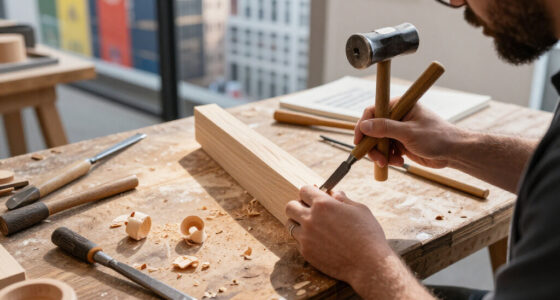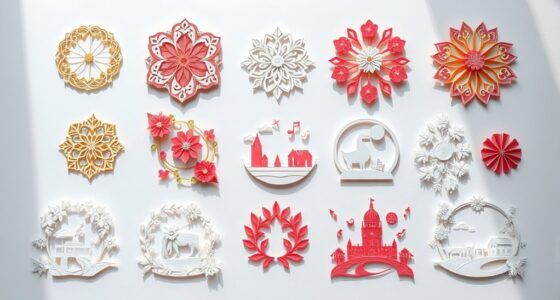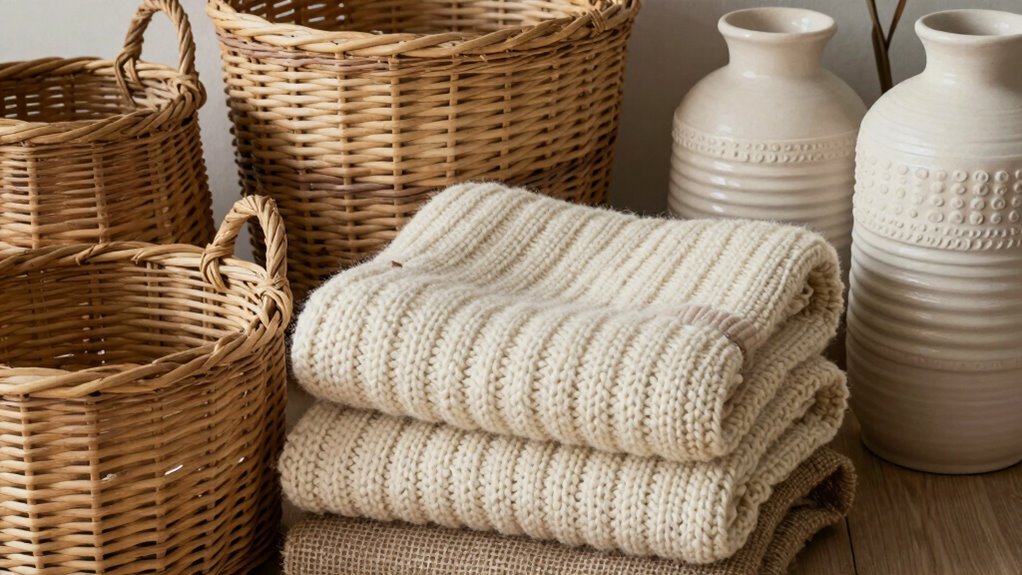

To add texture to a room without introducing additional color, focus on crafts like textured wall panels, woven baskets, and fabric wall hangings made from natural fibers like jute or linen. Incorporate plush fabrics such as velvet or boucle for cushions and throws, and layer different textured rugs and window treatments. You can also create tactile sculptures or embossed wall art that bring depth without color. Keep exploring to discover more ways to craft a cozy, elegant space with subtle textures.
Key Takeaways
- Incorporate tactile sculptures, textured ceramics, and wall panels with ridges or waves to create visual and tactile interest in neutral tones.
- Use natural materials like woven seagrass, jute, wicker, and reclaimed wood to add organic texture without introducing color.
- Add layered textured rugs and window treatments, such as linen or silk drapes, to enhance tactile depth subtly.
- Utilize plush fabrics like velvet, boucle, or chenille for cushions, throws, and upholstery to create soft, tactile focal points.
- Incorporate textured accents such as embossed wallpapers, metal sculptures, and woven lighting to enrich room texture while maintaining a neutral palette.
As an affiliate, we earn on qualifying purchases.
Why Neutral Textural Decor Creates Cozy, Elegant Spaces
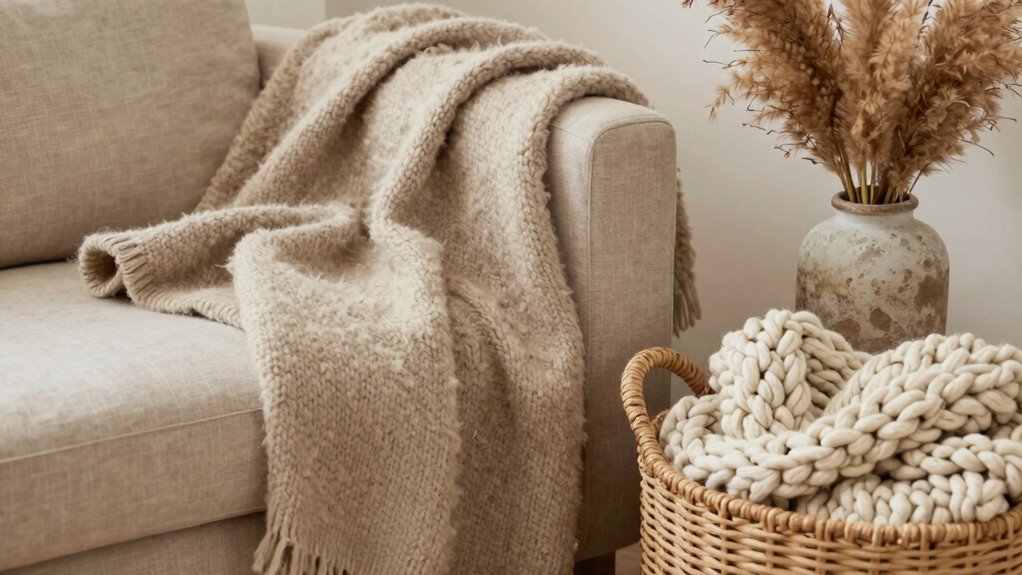
Neutral textures naturally create a warm and inviting atmosphere because they focus on the tactile quality of materials rather than bold colors. When you use neutral textures, you can emphasize subtle color contrast and intricate details through patterns and surface variation. Bold patterns, when kept in neutral tones, add visual interest without overwhelming the space. This balance keeps your room feeling cozy and sophisticated. Textured fabrics, woven materials, and natural fibers add depth and dimension, making the space feel layered and thoughtfully curated. By avoiding bright colors, you allow the textures themselves to shine, creating an elegant yet comfortable environment. Incorporating surface variation enhances the tactile experience and adds visual richness to your decor. Additionally, natural fibers contribute to a more sustainable and eco-friendly interior, aligning with principles of biodiversity and conservation. Using eco-friendly materials also supports environmentally conscious choices, further enriching the sustainable aspect of your decor. This approach invites touch and feels warm, making your space both stylish and welcoming. Incorporating textural contrast can further elevate the ambiance by highlighting the unique qualities of each material.
Types of Tactile Elements That Remain Neutral in Color
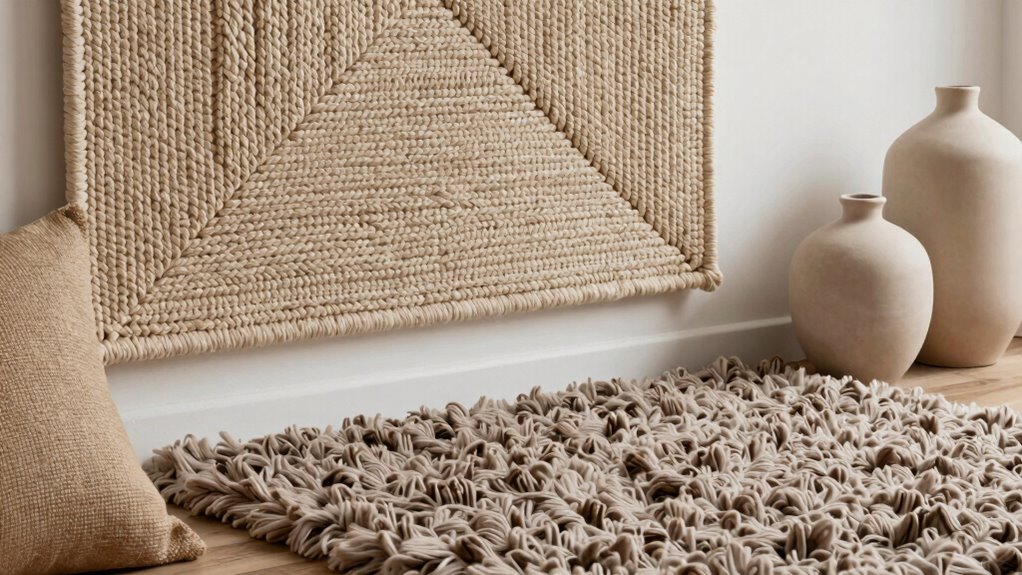
Tactile elements that stay neutral in color offer a subtle way to add texture and depth to your space without overwhelming the visual calm. You can incorporate various neutral tactile pieces to enhance your room’s feel.
- Tactile sculptures—these add visual and tactile interest while blending seamlessly into neutral palettes, offering a sophisticated touch. Incorporating textural variety through sculptures can elevate the overall design without disrupting the serene aesthetic.
- Neutral tactile panels—wall-mounted or freestanding, these panels introduce texture through patterns like ridges or waves, maintaining a calm aesthetic.
- Textured ceramics or stoneware—these provide a natural, earthy feel, adding dimension without introducing color, perfect for a minimalist or modern look.
Additionally, space-saving solutions like compact wall-mounted or multi-functional pieces can further enhance tactile diversity without cluttering small kitchens. These elements create a layered, inviting environment while keeping the overall color scheme serene.
How Plush Fabrics Add Comfort and Texture
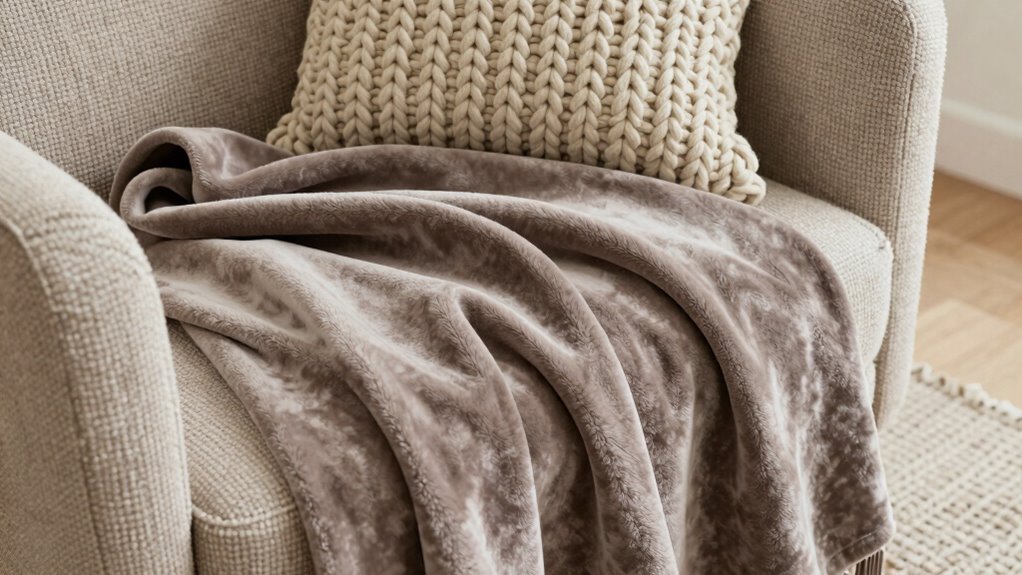
Plush fabrics instantly elevate the comfort of a room while adding rich texture that invites you to touch and relax. Their soft, dense fibers create a sense of warmth and coziness, making your space feel more inviting. You’ll notice how plush fabrics, like velvet or velour, provide tactile comfort with every touch, encouraging you to linger and enjoy the ambiance. These fabrics also absorb sound, reducing noise and enhancing serenity in the room. Incorporating plush fabrics into cushions, throws, or upholstered furniture adds depth without overwhelming the space with color. Their tactile comfort makes your environment more soothing, perfect for winding down or creating a welcoming atmosphere for guests. Using plush fabrics is an easy way to introduce home improvement ideas that emphasize texture and comfort. Plush fabrics turn a simple room into a cozy sanctuary of texture and comfort, especially when combined with other textural elements that complement their softness. Additionally, their ability to absorb sound enhances the overall acoustic quality of your media or living space, creating a more immersive experience. Incorporating plush fabrics can also help improve the acoustic environment, making conversations clearer and reducing background noise. This thoughtful integration aligns with principles of systems thinking, ensuring that comfort, acoustic performance, and aesthetics work together harmoniously.
Using Woven Materials for Visual and Tactile Depth
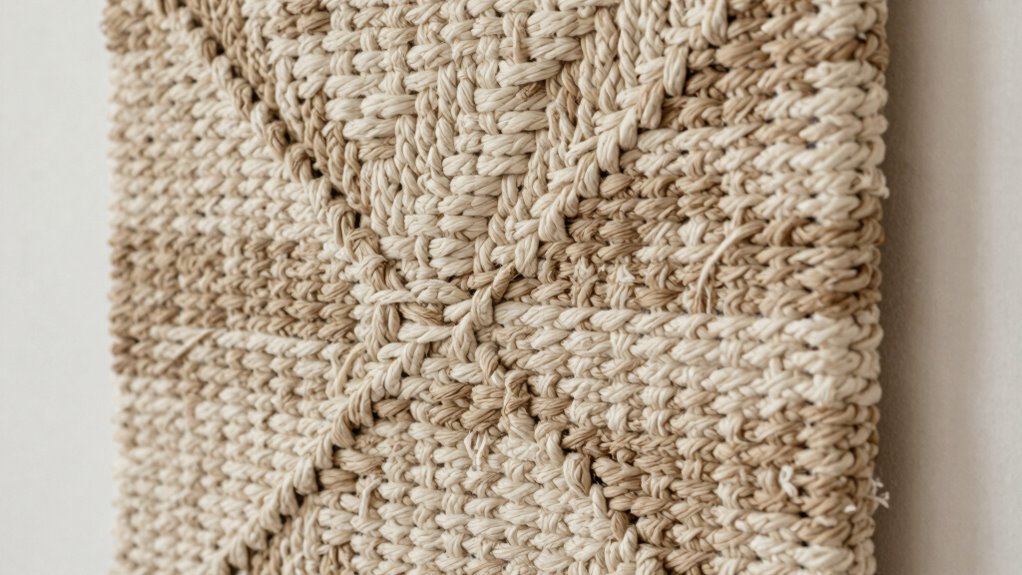
Woven materials bring a natural, artisanal quality to a room, adding both visual interest and tactile richness. They create depth without introducing color, emphasizing texture through woven art and textile sustainability. To incorporate these elements:
Woven materials add natural texture and artisanal charm, enhancing depth and promoting sustainable, tactile design.
- Use seagrass or jute rugs for earthy textures that are eco-friendly and durable.
- Hang woven wall hangings or baskets to add tactile layers and visual intrigue.
- Incorporate woven throw pillows or cushions made from sustainable fibers for subtle, textured accents.
- Highlight regional craftsmanship by choosing locally made woven items that celebrate regional culture.
These choices enrich your space with natural patterns and tactile depth, blending artistry with eco-consciousness. Woven materials not only enhance the room’s texture but also promote textile sustainability, making your decor both stylish and responsible. Incorporating woven craftsmanship can further elevate the unique character of your decor and support local artisans.
Designing Intricate Patterns for Neutral, Textured Walls and Fabrics

Even when sticking to a neutral color palette, you can create visual interest by designing intricate patterns on walls and fabrics. Use textural symbolism to evoke meaning and depth, making the space feel more layered. Incorporate cultural patterns—such as geometric motifs or delicate embroidery—to add subtle complexity without introducing color. These patterns can be carved into textured wallpaper, embossed onto fabric, or woven into textiles, creating tactile appeal and visual sophistication. Focus on contrast in texture and pattern to emphasize the design without relying on hue. The key is balancing intricate details with simplicity, ensuring the patterns enhance the overall aesthetic without overwhelming the calm, neutral tone. Integrating tactile appeal into your decor not only enriches the sensory experience but also elevates the overall ambiance of the room. This approach transforms plain surfaces into compelling focal points filled with depth and cultural resonance.
How to Make Fabric Wall Hangings for a Soft Focal Point
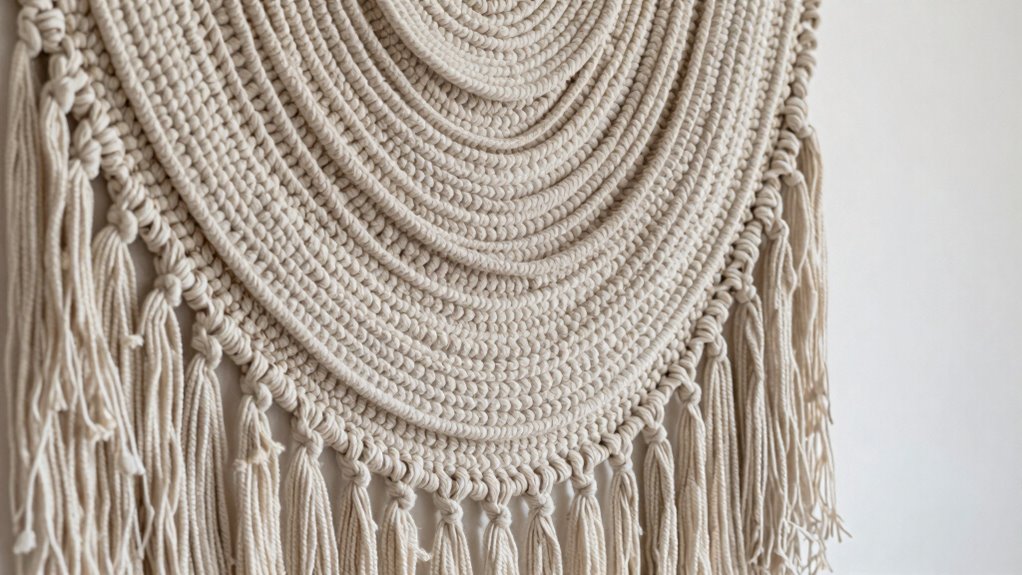
Choosing the right fabric is key to creating a soft, textured focal point for your wall hanging. Next, you’ll want to craft a sturdy hanging structure that complements your fabric choice. Additionally, consider using appropriate tools to ensure clean cuts and secure fastenings, which can make the assembly process smoother. Keep in mind that proper technique can significantly improve the overall look and durability of your wall hanging. Practicing fabric handling techniques can also help prevent fraying and ensure a polished finish. Finally, arrange your piece thoughtfully to achieve a balanced look that enhances your room’s overall aesthetic.
Choosing Fabric Types
Selecting the right fabric types is essential for creating a fabric wall hanging that adds texture without overwhelming your space. You want fabrics that balance durability with textile sustainability, guaranteeing your piece lasts and remains eco-friendly.
Consider these options:
- Linen – Known for its natural texture, linen is durable and sustainable, offering a crisp, clean look with subtle texture.
- Wool – Adds rich, tactile softness, and is highly durable, making it ideal for a cozy, textured focal point.
- Hemp – An eco-friendly choice, hemp provides a coarse texture with excellent fabric durability and sustainability benefits. Incorporating small wood stoves in your space can also enhance the cozy, inviting atmosphere that complements textured fabric displays.
- Using natural fibers can further enhance the eco-conscious aspect of your wall hanging, ensuring it aligns with sustainable design principles. Opting for renewable materials can also boost the environmental benefits of your decor. Additionally, choosing biodegradable fabrics can help reduce environmental impact over time.
Choosing these fabrics guarantees your wall hanging is both visually interesting and environmentally conscious, creating a soft, textured feature that stands the test of time. Incorporating airless paint sprayers can also help achieve a smooth, even backdrop that complements your textured fabric display.
Crafting Hanging Structures
Creating a fabric wall hanging involves assembling your chosen textiles into a cohesive, textured display that serves as a soft focal point in your room. This hanging art can be as simple or elaborate as you like, using different lengths, textures, and patterns to add depth. To craft ceiling installations, suspend your fabric arrangement from hooks or rods securely anchored above. Play with layering fabrics for dimension or incorporate different weights to create movement. You can hang multiple pieces for a gallery effect or a single large piece for a bold statement. Whether placed on a wall or hanging from the ceiling, these structures add tactile interest without overwhelming your space with color, making them perfect for softening and enriching your room’s texture. Incorporating smart appliances like air purifiers or robot vacuums can further enhance the comfort and cleanliness of your space. Additionally, considering tools and safety tips can help ensure your crafting process is both enjoyable and secure.
Arranging for Balance
To achieve a balanced look with your fabric wall hanging, it’s essential to contemplate how the piece interacts with the surrounding space. Think about how color psychology influences the room’s mood and how lighting effects can enhance or soften the texture. Proper arrangement guarantees your soft focal point feels intentional and harmonious.
Consider these tips:
- Position your fabric hanging at eye level or slightly above to create visual balance and draw attention.
- Use lighting strategically—warm lights can emphasize texture, while softer lighting promotes calmness.
- Balance the hanging with other textured elements or neutral decor around it to avoid visual overload and maintain harmony.
Creating Textured Throw Pillows in Neutral Tones
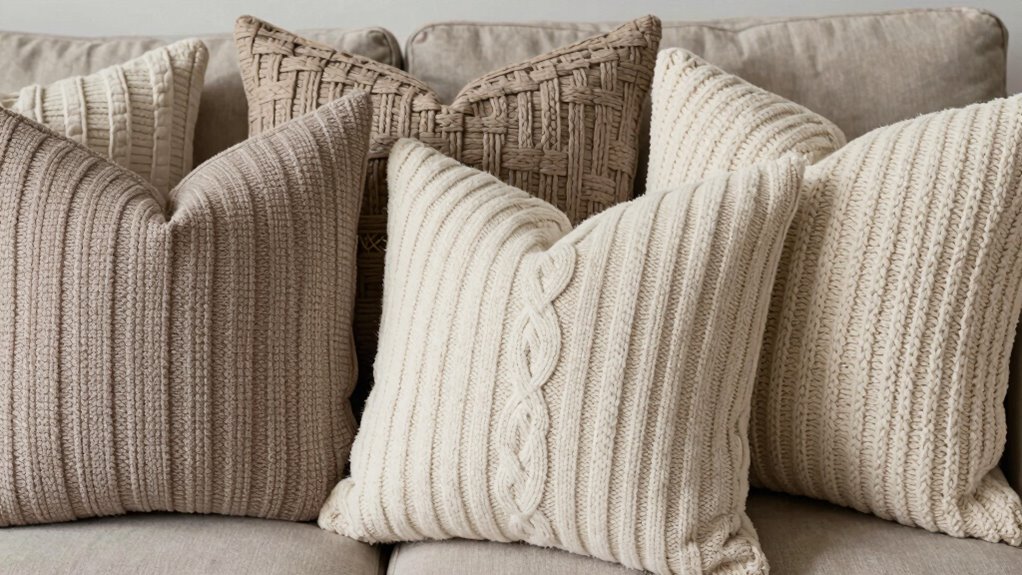
To create textured throw pillows in neutral tones, start by choosing fabrics with interesting textures like chenille, boucle, or woven materials. Incorporate shades like beige, gray, or cream to keep the look cohesive and calming. Mixing different patterns and textures within these neutral hues adds depth and visual interest without overwhelming the space.
Choosing Textured Fabrics
- Bouclé fabric – Its looped yarns add a cozy, tactile feel.
- Woven jute or sisal – These natural fibers provide a rougher, earthy texture.
- Velvet or chenille – Their plush surfaces introduce softness and subtle shine.
Incorporating Neutral Shades
Neutral shades offer a versatile foundation for textured throw pillows that subtly enhance a room’s depth and interest. By choosing cushions in beige, taupe, or gray, you create a calming atmosphere that complements minimalist lighting and artistic sculptures. These tones allow you to explore various textures—knitted, embroidered, or woven—without overwhelming the space. Incorporate different materials to add tactile layers, such as linen, velvet, or boucle. Use the table below to guide your selections:
| Texture Type | Suitable Neutral Shades |
|---|---|
| Knitted/Woven | Soft gray, warm taupe |
| Embroidered | Cream, sand |
| Velvet | Charcoal, stone |
| Boucle | Light beige, greige |
This approach guarantees your décor remains sophisticated yet inviting.
Mixing Patterns and Textures
- Combine different textures like linen, velvet, and knit for tactile variety.
- Pair subtle patterns such as stripes or geometric shapes with solid or subtly textured pillows to avoid visual overload.
- Mix large-scale patterns with smaller, more intricate ones to balance the overall look.
This approach enhances your room’s depth without introducing color, allowing your neutral palette to shine through with layered interest. Keep pattern coordination in mind for a harmonious, textured aesthetic.
Layering Rugs for Comfort and Visual Interest
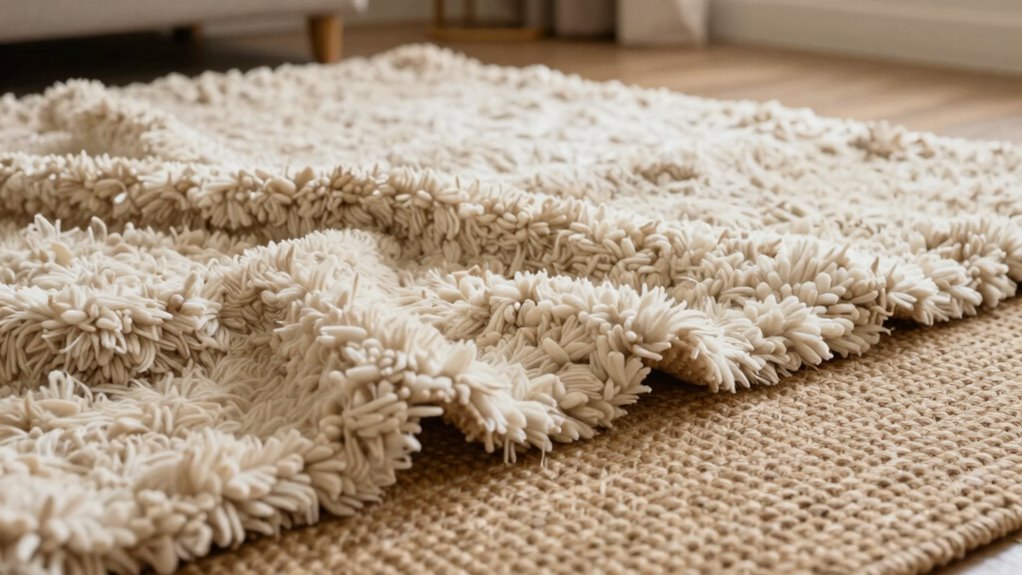
Layering rugs is a simple yet effective way to add both comfort and visual interest to a room. By combining different textures and sizes, you create a cozy feel that invites relaxation. For example, in a kitchen, layered rugs can enhance kitchen storage by defining specific zones, making the space feel more organized. Outside, layering outdoor decor rugs adds depth while protecting surfaces from weather. When selecting rugs, choose varied textures—jute, wool, or sisal—to create contrast without introducing color. Overlapping rugs of different shapes and heights also break up the space and add tactile richness. This technique helps you craft a layered, inviting environment that emphasizes texture without relying on color, making your room feel more dynamic and comfortable.
Subtle Window Treatments to Add Texture Without Color
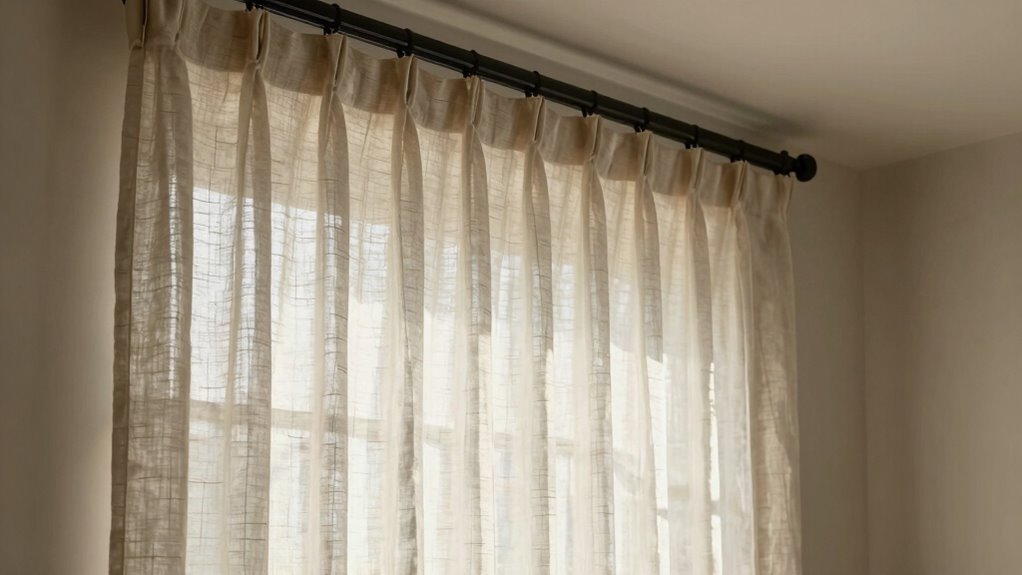
If you want to add subtle texture to your windows without introducing color, choosing the right window treatments can make a significant difference. Opt for treatments that create texture contrast while maintaining a neutral palette. Here are three options:
- Linen or Silk Drapes: These fabrics add a soft, tactile dimension to your windows, providing gentle texture contrast without color.
- Textured Blinds: Wooden or bamboo blinds introduce natural grain and depth, enhancing the visual interest of your window area.
- Layered Curtains: Combining sheer and heavier fabrics adds subtle layers and tactile variation, creating a refined look with understated texture.
These window treatments bring tactile richness and depth, elevating your space’s subtle textural appeal without overwhelming your color scheme.
Bringing Natural Materials Like Rattan and Jute Into Your Decor

Natural materials like rattan and jute instantly add organic texture to your decor, creating a warm and inviting atmosphere. You can incorporate these materials into seasonal decor by using woven baskets, trays, or poufs that bring earthy warmth indoors. For outdoor accents, rattan chairs or jute rugs add a tactile layer without overwhelming with color. These natural textures blend seamlessly with greenery and neutral tones, enhancing the overall coziness of your space. When choosing pieces, focus on lightweight, durable items that can withstand outdoor conditions. Rattan and jute are versatile, so you can easily swap or layer them throughout the year to keep your decor fresh and tactile, all while maintaining a subtle, natural aesthetic.
Adding Textured Wall Art for a Tactile Look
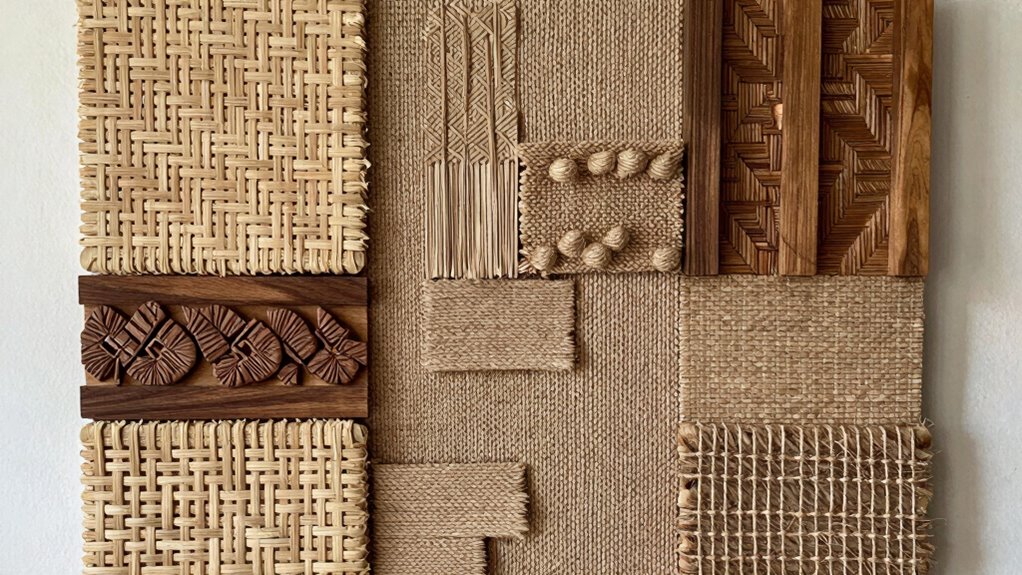
Adding textured wall art instantly elevates your space by introducing a tactile element that draws the eye and invites touch. You can achieve this with various art forms, like textural sculptures or tactile wallpapers, that add depth without adding color. To get started:
Textured wall art adds tactile depth and sophistication, transforming your space with subtle, engaging details.
- Use textural sculptures—metal, clay, or woven pieces—that create a three-dimensional effect.
- Opt for tactile wallpapers with embossed patterns or fabric textures to add variety and interest.
- Hang mixed-media art combining different textures for an engaging focal point.
These options bring a sense of depth and dimension while keeping the color palette neutral, allowing your textures to shine. Incorporating textured wall art invites curiosity and adds a layer of sophistication to your decor.
Installing 3D Wall Panels for Depth and Dimension
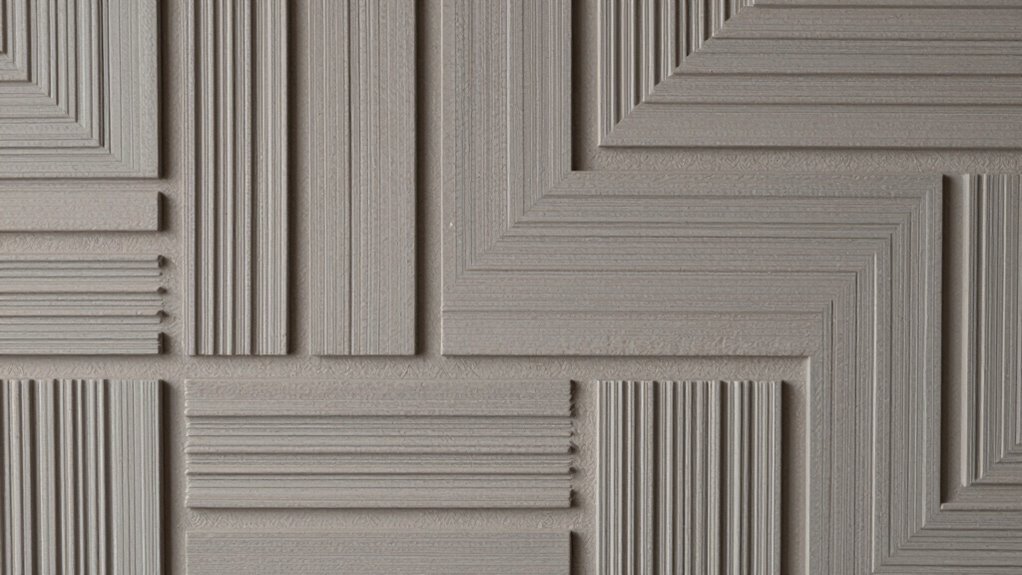
Installing 3D wall panels is an effective way to create instant depth and visual interest in a room. These panels add texture that enhances the overall design without introducing new colors, making them perfect for maintaining a neutral palette. To maximize their impact, consider color contrast by pairing panels with furniture in darker or lighter shades, which helps the panels stand out. Proper furniture placement also plays a vital role; position pieces to draw the eye toward the textured wall, emphasizing its dimension. Keep other decor minimal to avoid clutter and let the panels be the focal point. With careful planning, you’ll create a dynamic and sophisticated space that feels both inviting and visually engaging.
Using Textured Candles and Decor Accents
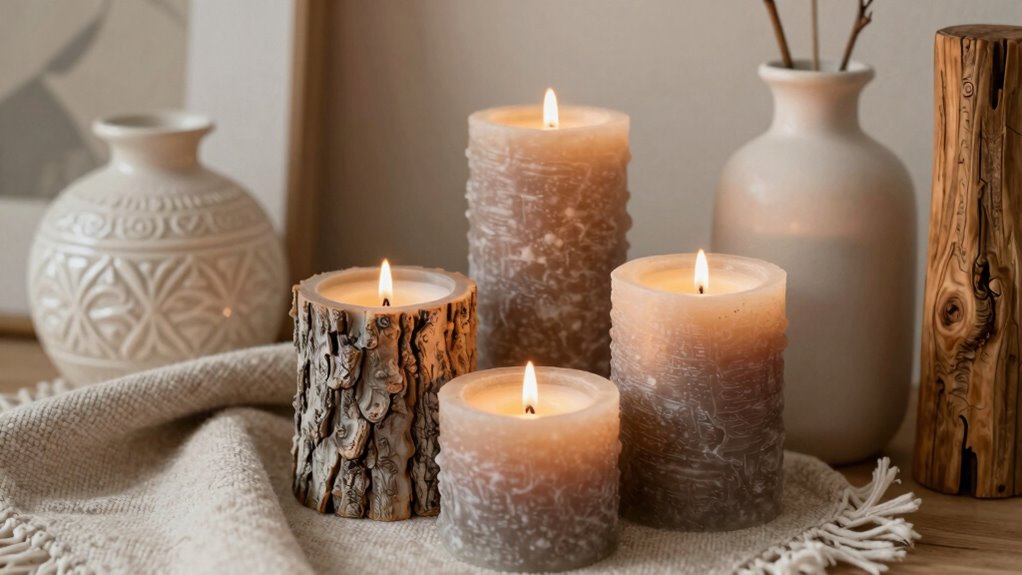
Textured candles and decor accents can instantly add tactile interest to your space. Mixing varied candle textures creates visual intrigue, while complementary accents enhance the overall look. Together, they subtly elevate your room’s depth without introducing new colors.
Varied Candle Textures
Have you ever noticed how the right candles can subtly elevate a room’s texture? Varied candle textures add depth without introducing new colors, making your space feel richer. You can choose candles with rough, matte, or glossy finishes to create visual interest. To enhance this effect, place textured candles in ceramic vases for a contrasting tactile experience. Incorporate metallic sculptures nearby to reflect light and add a sleek touch. For a layered look, try grouping candles of different heights and textures on a tray or mantel. This approach creates a dynamic, tactile focal point that complements your existing decor. Remember, the key is mixing textures deliberately to keep the space engaging without overwhelming it.
Complementary Decor Accents
To create a cohesive look, pair textured candles with other decor accents that share similar tactile qualities. Vintage ceramics with rough or matte finishes complement the rustic feel of textured candles, adding visual interest without overwhelming the space. Incorporate metallic finishes, such as brushed gold or matte black, to add a touch of sophistication and contrast. These accents can be displayed on shelves, mantels, or side tables, enhancing the room’s layered texture. The key is to choose pieces that echo the tactile qualities of your candles, creating harmony and depth. Avoid overly shiny or sleek objects that clash with the textured theme. By carefully selecting vintage ceramics and metallic accents, you highlight the room’s tactile richness without introducing color, making your decor feel thoughtfully curated.
Styling Shelves With Mixed Materials for Tactile Layers
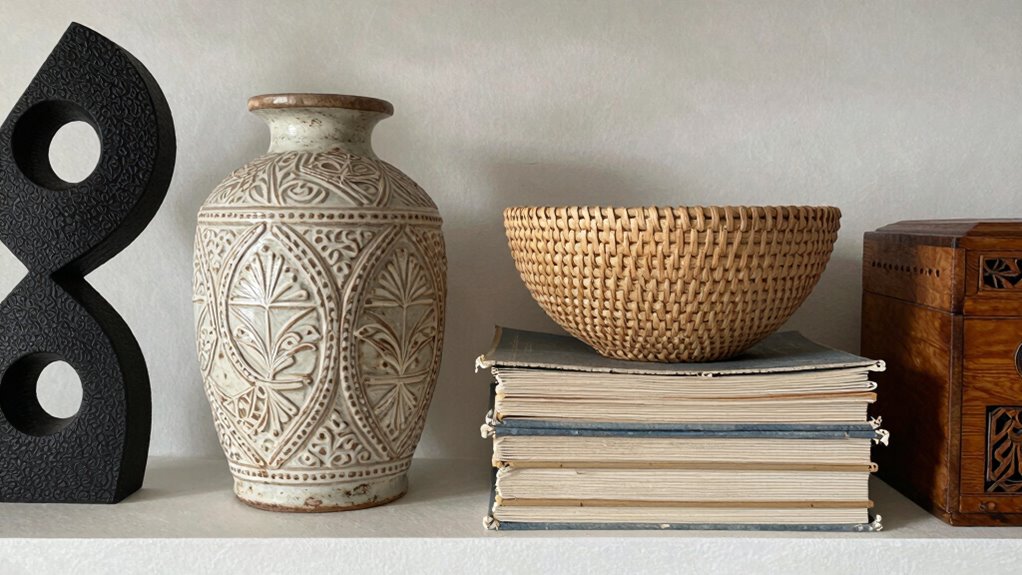
Mixing different materials on your shelves instantly adds tactile interest and depth to a room without relying on color. You can create a layered look by combining textured ceramics, metallic finishes, and natural elements.
- Place textured ceramics with varied surfaces to add visual and tactile variety.
- Incorporate metallic finishes, like brushed gold or matte silver, to add sleek contrast.
- Balance these with natural materials, such as wood or woven baskets, for warmth and texture.
This mix enhances the tactile experience and makes your shelves feel more dynamic. The textured ceramics add organic depth, while metallic finishes bring a modern shine. Keep the arrangement balanced, so each material complements the others, creating a rich, layered display that invites touch and visual intrigue.
Easy DIY Ideas for Neutral, Textured Room Accents
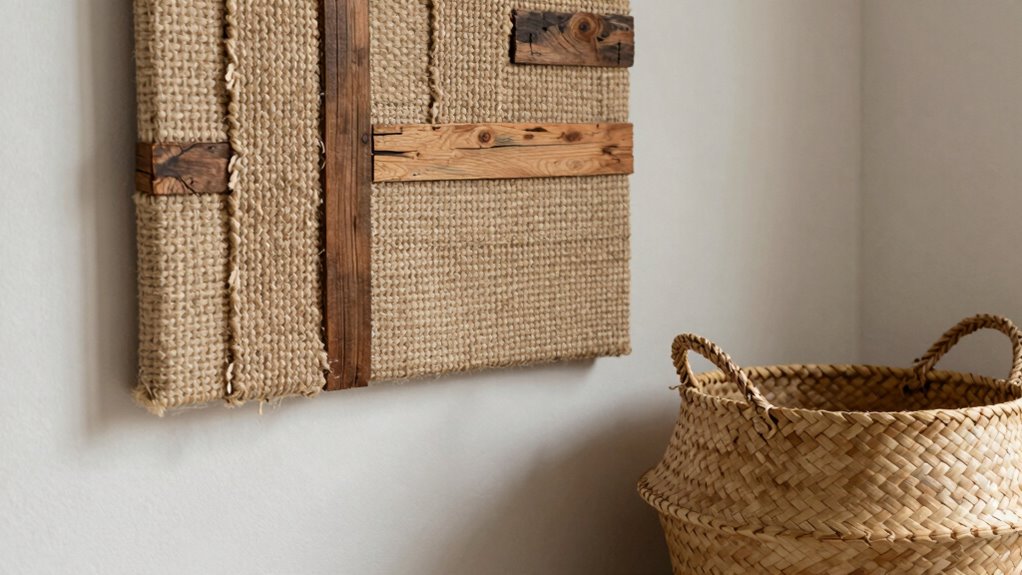
Building on the idea of adding tactile layers with varied materials, creating textured accents doesn’t have to involve complex or expensive projects. You can incorporate vintage finds like textured vases or woven baskets for subtle depth. Statement lighting, such as a textured pendant or lampshade, instantly adds dimension without color. DIY ideas include layering neutral throws with different weaves or creating wall art with natural fibers like jute or linen. These simple touches enhance your space’s tactile appeal while keeping a neutral palette.
| DIY Idea | Material/Tip |
|---|---|
| Vintage vase arrangements | Textured ceramic or glass |
| Statement lighting fixtures | Woven or embossed shades |
| Layered throw blankets | Different weaves and textures |
| Natural fiber wall art | Jute, linen, or hemp |
Combining Different Textures for a Harmonious Look
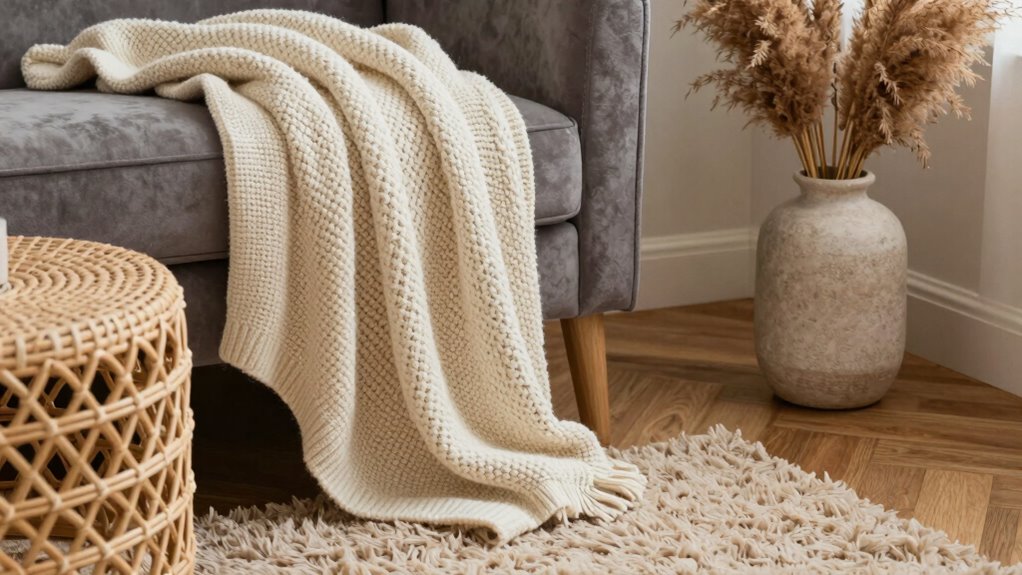
To create a harmonious look, you need to balance different textures so they complement rather than compete. Mixing materials like wood, fabric, and metal can add interest without overwhelming the space. Focus on how each texture interacts to achieve a cohesive and inviting room.
Balancing Textures Effectively
Achieving a harmonious look involves more than just choosing different textures; it’s about balancing them thoughtfully. You want your space to feel cohesive, not chaotic. To do this, consider these tips:
- Use a focal point with bold accent pieces to anchor the room, then balance with softer seasonal decor around it.
- Mix rough and smooth textures evenly, so no one element overwhelms the space.
- Distribute textures across the room, ensuring visual weight is balanced from one side to the other, creating unity and flow.
Mixing Materials Harmoniously
Combining different textures in a room can create a rich, layered look that feels both inviting and balanced. To achieve this, focus on textural contrast, pairing smooth surfaces with rougher ones, like a polished wood table with a woven rug. Material layering adds depth without overpowering the space, so mix soft textiles with harder elements such as metal or glass. Keep the balance by varying scale and placement, ensuring no single texture dominates. When done harmoniously, these combinations highlight each material’s unique qualities while maintaining visual cohesion. Use natural fibers, matte finishes, and subtle patterns to create subtle, sophisticated texture. Ultimately, thoughtful mixing of materials elevates your decor, making the room feel thoughtfully curated and effortlessly stylish.
How to Maintain and Clean Textured Decor Items

Maintaining and cleaning textured decor items might seem intimidating, but with the right approach, it becomes a straightforward task. First, use a soft brush or a microfiber cloth to gently remove dust and dirt, especially for intricate surfaces. Second, avoid harsh cleaners; instead, opt for mild soap and water, ensuring you don’t damage delicate textures. If your textured decor involves tech gadgets, keep them free of dust using compressed air or gentle wipes. For items like planters or natural materials, incorporate gardening tips like pruning or watering carefully to preserve their look. Finally, regularly inspect your decor to catch dust buildup early, making cleaning easier. Staying consistent keeps your textured pieces looking fresh, and you’ll enjoy their tactile appeal longer.
Budget-Friendly Ways to Add Texture Without Color

Adding texture on a budget is easier than you think. Incorporate textured fabrics like throws or cushions, or use natural materials such as wood or rattan to create depth. These simple swaps can make your space feel richer without spending a lot.
Incorporate Textured Fabrics
Textured fabrics are a simple and affordable way to bring depth into a room without introducing any new colors. They add tactile interest and warmth, making your space feel more inviting. You can incorporate various textures through:
- Throw pillows and blankets with chunky knits or woven patterns, adding cozy layers without color change.
- Upholstered furniture in textured fabrics like boucle or velvet, creating visual richness through surface variation.
- Curtains or drapes made from textured textiles, which can complement textured ceramics or embossed wallpapers for a cohesive look.
These fabrics work well with textured ceramics and embossed wallpapers, enhancing the room’s tactile appeal while keeping the color palette neutral. It’s a budget-friendly way to elevate your space without overwhelming it.
Use Natural Materials
Natural materials are an affordable and effective way to introduce texture into your space without adding color. They support a minimalist approach and often come from sustainable sourcing, making them eco-friendly choices. Incorporate materials like wicker, jute, and reclaimed wood to add visual interest and tactile appeal. These textures blend seamlessly into modern or rustic decor, creating warmth without overwhelming your palette. Below is a table illustrating some budget-friendly options:
| Material | Source | Texture Effect |
|---|---|---|
| Wicker | Recycled or sustainable wicker | Adds a woven, tactile feel |
| Jute | Fair-trade farms | Offers a rough, natural texture |
| Reclaimed Wood | Salvaged wood from old structures | Introduces a rugged, layered look |
| Cork | Sustainable cork plantations | Soft, spongy surface |
| Hemp | Organic farming practices | Smooth, resilient texture |
These choices enhance your decor subtly and sustainably.
Tips for Balancing Multiple Textural Elements in a Room
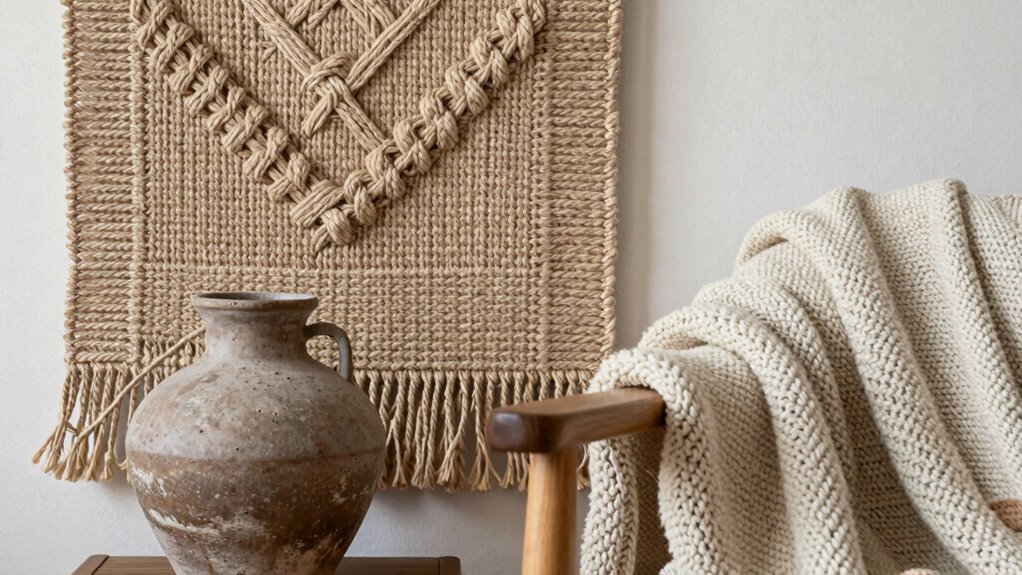
Balancing multiple textural elements in a room can seem intimidating, but with a strategic approach, you can create a harmonious and inviting space. Focus on achieving textural contrast to prevent the room from feeling flat, and guarantee color coordination to keep everything cohesive.
Here are three tips:
- Vary the scale and type of textures—combine smooth wood with rough woven fabrics to add depth.
- Use neutral tones to unify diverse textures, making contrast feel intentional rather than chaotic.
- Limit the number of prominent textures to avoid visual clutter, allowing each element to stand out without overwhelming the space.
Final Tips for Creating a Tactile, Color-Neutral Sanctuary

Creating a tactile, color-neutral sanctuary involves thoughtful choices that emphasize comfort and sensory richness without relying on bold hues. To enhance this space, focus on subtle color contrast through varying textures—smooth against rough, soft against coarse—to create visual interest. Lighting effects play an essential role; soft, layered lighting highlights textures and adds warmth, making the room feel inviting. Use diffused light to soften shadows and accentuate tactile elements, while strategic placement of lamps or candles can add depth without introducing color. Keep the palette neutral, but don’t shy away from combining different textures and lighting techniques. This balance creates a soothing environment where tactile elements truly stand out, fostering a calming, sensory-friendly space that’s both refined and comfortable.
Frequently Asked Questions
How Can I Incorporate Texture Without Overwhelming My Neutral Color Palette?
You can incorporate texture without overwhelming your neutral palette by layering textiles like throw blankets and cushions, which add depth and coziness. Incorporate natural elements such as wooden accents or woven baskets to bring subtle texture. These choices enhance your space’s tactile interest while maintaining a calm, neutral look. Keep the textures varied but understated to guarantee your room remains inviting without feeling busy or cluttered.
What Are the Best Low-Maintenance Textured Decor Options?
Looking for low-maintenance textured decor options? Why not consider textured wall panels or woven storage baskets? These choices add depth and tactile interest without demanding much upkeep. Wall panels are easy to clean and maintain, while woven baskets are durable and versatile for storage. Both bring subtle texture to your space, blending seamlessly into a neutral palette. Are you ready to enhance your room’s feel with minimal effort?
How Do I Choose the Right Textures for Small Rooms?
To choose the right textures for small rooms, focus on creating visual depth with textural contrasts and material diversity. You should select lightweight, tactile materials like woven baskets or textured wall panels that add dimension without overwhelming the space. Incorporate soft fabrics and natural textures to keep the room feeling cozy. Balance bold textures with simpler elements, ensuring the textures enhance rather than clutter the room’s sense of openness.
Can Textured Decor Be Layered Effectively in Minimalist Designs?
Yes, textured decor can be layered effectively in minimalist designs by mastering layering techniques and embracing texture contrast. You should start with sleek, simple pieces and add varied textures like woven baskets or textured wall panels. Use contrasting textures to create depth without overwhelming the space. Keep the color palette neutral, letting the textures speak for themselves, and balance the layers carefully to maintain the minimalist aesthetic while adding tactile interest.
What Accessories Help Enhance Texture Subtly in Neutral Spaces?
To subtly enhance texture in neutral spaces, you can incorporate textured wall accents like woven panels or wood slices, which add depth without overwhelming. Tactile fabric accessories such as plush throw pillows, soft blankets, or velvet cushions also bring a gentle touch of texture. These elements create visual interest and cozy layers while maintaining a minimalist aesthetic, allowing the room’s serenity to remain intact.
Conclusion
By weaving these neutral textures into your space, you create a sanctuary that’s as inviting as a warm embrace. Think of it as a symphony of tactile harmony—each element adding depth without stealing the spotlight with color. With a balanced touch, your room becomes a cozy, elegant retreat where every surface tells a quiet story. Embrace the subtle power of texture, and watch your space transform into a tactile masterpiece that feels both timeless and uniquely yours.