Mastering essential hand stitches like running, backstitch, whip, and blanket stitches is key to creating strong, neat, and professional-looking projects. Each stitch serves a specific purpose, from temporary sewing to decorative edging and durable seams. Using the right tools and techniques makes a big difference in your results. If you keep exploring, you’ll discover how these foundational stitches can elevate your sewing skills and help you finish your projects with confidence.
Key Takeaways
- Running stitch is the most basic, used for temporary or guiding stitches, involving even in-and-out passes.
- Backstitch creates strong, durable seams by sewing backward and forward to lock stitches securely.
- Whip stitch is ideal for finishing edges or joining fabric along the edge with diagonal stitches.
- Blanket stitch decoratively prevents fraying while providing a neat, scalloped border for quilts and appliqué.
- Using quality tools, maintaining consistent tension and spacing, enhances the appearance and durability of these stitches.
Have you ever wondered which hand stitches are essential for your sewing projects? Mastering a few key stitching techniques can greatly improve your sewing skills and the quality of your finished items. The right sewing tools, such as needles, thread, and thimbles, make practicing these stitches easier and more precise. These foundational stitches—running, backstitch, whip, and blanket—are versatile, simple to learn, and crucial for various sewing tasks.
Starting with the running stitch, this is arguably the most basic and widely used stitch in hand sewing. It involves passing the needle in and out of the fabric at regular intervals, creating a straight, even line. The running stitch is perfect for basting or temporary stitches, and it also provides a foundation for more complex stitches. To perform this stitch effectively, you need a sharp sewing needle suited for your fabric type and a steady hand. The technique requires maintaining consistent spacing between stitches, which helps achieve a neat appearance. It’s a fundamental stitch that all sewers should learn early on, as it’s quick, simple, and effective for holding fabric pieces together before permanent sewing.
The running stitch is a fundamental, quick, and easy technique for temporary or base sewing.
Next, the backstitch is indispensable for creating strong, durable seams. Unlike the running stitch, the backstitch involves sewing backward and forward along the line, locking stitches together for maximum strength. It’s ideal for seams that require extra durability, such as garment construction or repair work. Using quality sewing tools, like a sharp needle and smooth thread, allows for cleaner stitches and easier handling of thicker fabrics. The backstitch is slightly more complex than the running stitch but still accessible for beginners willing to practice. Once mastered, you’ll find it essential for projects needing a sturdy, secure seam that won’t easily come apart.
The whip stitch is a handy technique for finishing raw edges or joining two pieces of fabric along the edge. It involves passing the needle over the edge repeatedly, creating a series of diagonal stitches. This stitch is excellent for hemming, appliqué, or closing up small openings. Its simplicity means you don’t need elaborate stitching techniques, just patience and consistent tension. Using the right sewing tools, like a fine needle and matching thread, makes the whip stitch smooth and less bulky. It’s especially useful when you want a quick, neat finish without requiring a sewing machine.
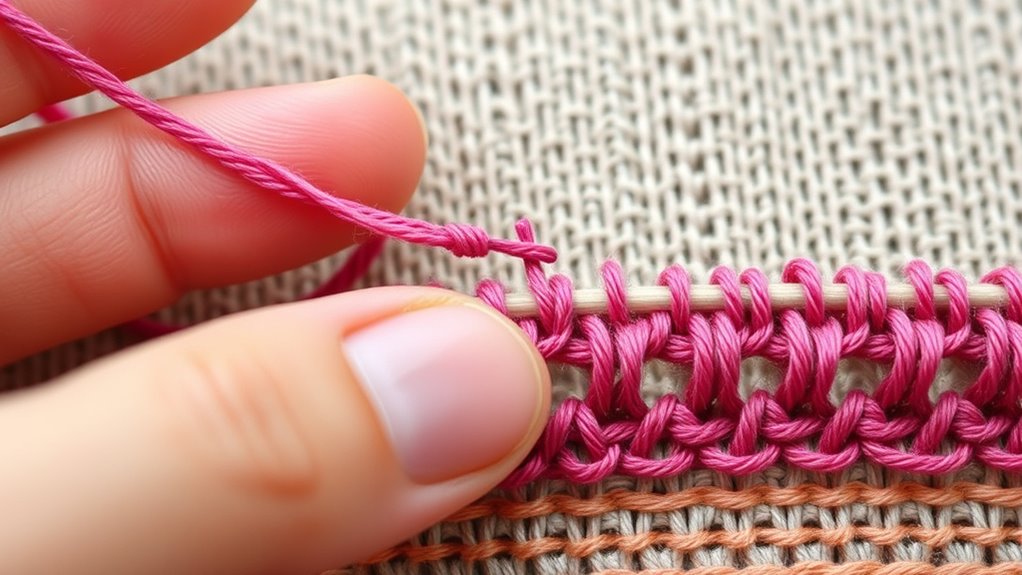
Finally, the blanket stitch is both decorative and functional. It encircles the edges of a fabric to prevent fraying while adding a decorative border. To perform it, you pass the needle through the edge and then loop it over, creating a uniform, scalloped effect. This stitch is perfect for finishing quilts, applique projects, or decorative crafts. With the proper sewing tools, such as a size-appropriate needle and contrasting thread for visual effect, you can achieve a professional-looking finish. Once you’ve practiced these stitches, you’ll find that they form the backbone of many hand sewing projects, enabling you to sew with confidence and precision.
Frequently Asked Questions
Which Stitch Is Best for Embroidery Projects?
For embroidery projects, the best stitch depends on your design. If you want clean, precise lines, backstitch works well. For decorative stitches, whip stitch adds texture, while blanket stitch creates a bold border. Running stitch is great for outlining or filling in. Choose the stitch that matches your embroidery techniques and desired decorative effect to bring your project to life. Experimenting helps you find what works best for your creative vision.
How Do I Choose the Right Needle Size?
To select the right needle size, consider your thread thickness and the fabric you’re working with. Use a smaller needle gauge (like 9 or 10) for thicker threads or heavier fabrics, and a larger gauge (like 12 or 14) for finer threads and lighter fabrics. Matching your needle gauge to your thread guarantees smooth stitching without damage, giving you cleaner, more professional results.
Can I Combine Different Stitches in One Project?
Yes, you can definitely combine different stitches in one project to enhance stitching versatility and create unique textures. Mixing stitches like running, backstitch, whip, and blanket allows you to achieve various effects and add visual interest. Experiment with creative combinations to suit your design. Just make certain you use appropriate needles and thread tension for each stitch type, and practice transitions between stitches for smooth, professional-looking results.
What Fabric Types Are Suitable for Hand Stitching?
Imagine you’re back in the days of fine embroidery—certain fabrics still shine today. Cotton, linen, and silk are perfect for hand stitching because their fabric texture allows for easy needle movement and secure stitches. These materials also provide good stitch durability, ensuring your work stays intact over time. Avoid thick or stretchy fabrics, which can be tricky to sew by hand. Stick with these classics for smooth, lasting results.
How Do I Fix Common Stitching Mistakes?
To fix common stitching mistakes, you should carefully remove the faulty stitches with a seam ripper, then resew them, ensuring your sewing machine is well-maintained for smooth stitching. Proper fabric preparation techniques, like stabilizing or pressing fabric beforehand, help prevent errors. Take your time to align stitches correctly, and if needed, adjust tension settings on your machine. With patience and proper prep, your hand stitching will be neat and precise.
Conclusion
Mastering these stitches is like holding a key to endless creation. Each one open doors to new possibilities, allowing your skills to flourish like a blooming garden. With every stitch, you weave your story, turning simple threads into lasting bonds. Think of these techniques as the foundation of your craftsmanship—solid and reliable. Embrace them, and you’ll find your confidence growing, your projects thriving, and your passion shining through, like a guiding light in your creative journey.