TL;DR
A Hunker “We Tried It” test found that a solution made with pre-1982 pennies, white vinegar and hydrogen peroxide changes the color of wood. The effect was stronger on tannin-rich oak and cherry than on maple, and the treatment is technically a chemical reaction rather than a conventional stain.
A Hunker woodworking test found that a homemade solution of pre-1982 pennies, white vinegar and hydrogen peroxide can change the color of wood, with a stronger effect on oak and cherry than on maple. The result offers a low-cost coloring method for some projects, but the test author says the treatment is not technically a conventional wood stain.

Get business pricing on tools and workshop supplies
- Business-only prices and quantity discounts
- Tax-exempt purchasing
- Multiple users, one account, clear invoices
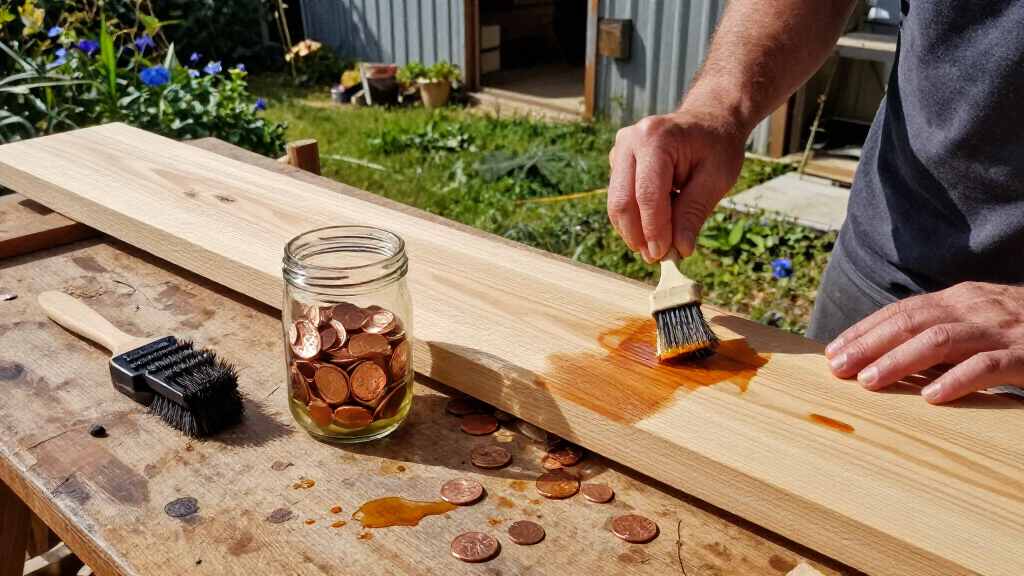
For the test, Hunker’s woodworking contributor put pre-1982 pennies in a glass jar, covered them with white vinegar plus about an inch of extra liquid, and let them soak for roughly an hour. He then added a couple of tablespoons of hydrogen peroxide and left the mixture for three days to react. The article says older pennies are needed because they have enough copper for the method to work properly.
The prepared solution was applied to previously sanded samples of oak, cherry and maple. The contributor flooded each surface, left the liquid for about 10 minutes, wiped off the excess and let the wood dry. After drying, he wiped the samples with a water-dampened cloth to remove vinegar residue that might affect a later film finish.
The reported color change was more pronounced on the tannin-rich woods, oak and cherry. Maple also reacted, but less intensely. The contributor said he liked the results on oak and cherry but not on maple, while noting that whether a particular color looks good is a matter of preference. The test did not provide measured color values or a controlled comparison with commercial stains.
Can pennies color wood? The test results
A Hunker test found that a solution made with older pennies, vinegar and hydrogen peroxide changed wood color. Results varied by species, so test a sample before treating a project.
Results depend on the wood
The color change was stronger on tannin-rich oak and cherry than on maple.
Oak and cherry
The contributor liked the results on these tannin-rich woods.
Maple
Maple reacted less intensely, and the contributor did not like its result.
How the mixture is prepared
The reported test used pre-1982 pennies, white vinegar and hydrogen peroxide.
Cover them with white vinegar and leave for roughly an hour.
Add a couple of tablespoons of hydrogen peroxide and let the mixture react for three days.
Apply to sanded wood, leave for about 10 minutes, wipe off excess and let dry.
Reaction, not conventional stain
The contributor describes the color change as a chemical reaction with tannins in the wood.
- Reacts with wood tannins
- Results vary by species
- Generally contains pigment in oil- or water-based liquid
- Much of the pigment stays near the surface
Results Depend on the Wood
The test suggests this method may be useful to woodworkers who want to change the color of a project without buying a conventional stain, particularly when working with tannin-rich hardwoods. Its variable performance is also a practical warning: the same mixture can produce visibly different results on different species, so a sample offcut is a sensible place to test before treating a finished piece.
The distinction between a stain and this treatment matters when planning the finish. The article explains that conventional stains generally contain pigment suspended in oil- or water-based liquid, with much of the pigment remaining near the wood’s surface. The penny mixture instead reacts with tannins in the wood to create a color change. Calling it a “stain” is common shorthand, but the process and its results are different.
For a home project, that means the method is not a guaranteed route to a uniform shade. The test offers a reported result on three wood types, not proof that it will perform consistently across lumber from different sources, preparations or finishes.
Popular right now

Hisense 43-Inch R6 Series 4K UHD Smart Roku TV (43R6G)

Shark Pet Cordless Stick Vacuum, 40-Minute Runtime, Lightweight, IX141

Ninja Air Fryer XL, 6.5 Qt, 6-in-1, MaxCrisp, Dark Grey (AF181)
As an affiliate, we earn on qualifying purchases.
How the Penny Mixture Works
The test author, a professional woodworker with more than 40 years of experience, compared the idea with a familiar workshop technique: soaking steel wool or nails in vinegar to make a wood-coloring solution. He said the penny method was new to him. In his account, vinegar’s acidity and copper from the pennies combine in a reaction aided by hydrogen peroxide; the resulting solution then reacts with tannins in the wood.
Wood species matter because tannin content varies. The article identifies red and white oak, cherry and mahogany as commonly used hardwoods with higher tannin levels, which can produce a stronger response. Maple, used in the test as a lower-tannin example, showed a milder change. The article also says copper piping may work better, but provides no test results for that alternative; that statement should be treated as an unverified suggestion rather than a demonstrated finding.
After the treatment dried, the contributor used a fine synthetic abrasive pad to smooth fibers raised by the liquid. He recommended applying a topcoat and said he prefers beginning with a shellac sealer. He also advises wiping the wood with water after the solution dries to remove leftover vinegar before applying a film finish.
““Spoiler alert: yes it does!””
— Hunker woodworking contributor
Limits of the Test Results
The available account does not specify the exact penny count, the precise concentration of hydrogen peroxide, or measured color differences among the samples. It also does not report repeated trials, long-term color stability, or results on other lumber. The findings are therefore a practical workshop test, not a controlled study establishing how reliably the method works.
The contributor says the pennies should be from before 1982, but does not test newer coins for comparison. The suggested use of copper piping is also not backed by reported results in the article. Readers cannot tell from the test alone how much the wood’s sanding, tannin variation, solution strength or application conditions affect the final appearance.
The article describes a water wipe to remove vinegar residue and recommends a topcoat, but does not identify a single finish as suitable for every project. It also does not report whether the color changes over time or how it holds up to wear, sunlight or moisture. Those questions remain open.
Test a Sample Before Finishing
The next step for anyone considering the method is to try it on a scrap piece of the same wood, using the same sanding and finishing plan intended for the project. That can show whether the species reacts strongly enough and whether the resulting shade is acceptable before the treatment is applied to a larger surface.
Based on the reported test, oak and cherry are stronger candidates than maple, but the outcome may vary between boards. The mixture should be allowed to react for the reported three days, and the treated wood should dry before the vinegar residue is wiped away and a finish is applied. The article does not provide a standardized recipe or long-term performance data, so the result should be judged on the sample rather than assumed.
Hunker’s test does not announce a follow-up study or additional trials. Any broader conclusions about durability, repeatability or how copper piping compares with pennies would require further testing.
Source: rss
Key Questions
Can pennies really change the color of wood?
In Hunker’s test, a solution made with pre-1982 pennies, vinegar and hydrogen peroxide changed the color of oak, cherry and maple. The effect was stronger on oak and cherry than on maple.
Why does the method call for pre-1982 pennies?
The article says pennies made before 1982 have enough copper content for the method to work properly. It does not report a side-by-side test with newer coins.
Which wood showed the strongest results?
The contributor reported a stronger color change on oak and cherry, which contain more tannins than maple. The test also identifies mahogany as a tannin-rich wood, but does not report testing it.
Is the penny mixture a conventional wood stain?
Not technically, according to the contributor. He describes it as a chemical reaction with tannins in the wood, rather than pigment sitting mostly near the surface as in many conventional stains.
Should the mixture be tested before use on a project?
Yes. The reported results varied by wood species, and the article does not establish how consistently the method works across different boards. Testing a scrap piece can help show the color before treating the finished project.
Source: hunker.com