TL;DR

Get business pricing on tools and workshop supplies
- Business-only prices and quantity discounts
- Tax-exempt purchasing
- Multiple users, one account, clear invoices
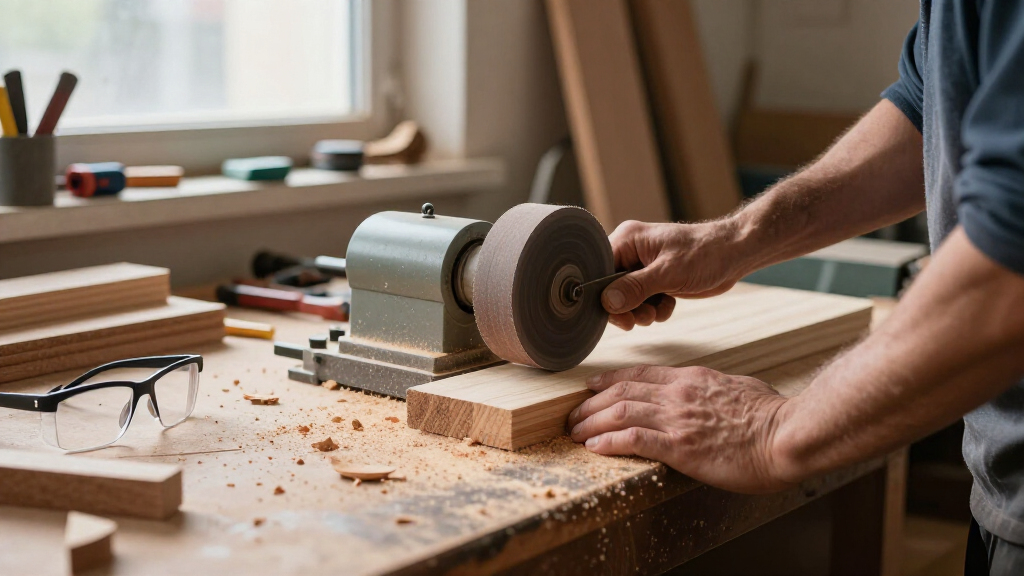
A Hunker report says a standard bench grinder is not well suited to sanding wood with its regular grinding wheel: the work support is small, the wheel is narrow and sawdust can clog it. The report describes flap wheels and belt-sander conversion attachments as alternatives, while warning that sanding wood on a grinder requires careful setup and safety precautions.
A Hunker report says a bench grinder can be adapted for sanding wood, but using its standard grinding wheel is a poor fit because the wheel is narrow, the work rest is small and sawdust may clog the abrasive. The report describes fitting a flap wheel or converting the grinder to a belt sander, options that change how the tool contacts and supports the wood.
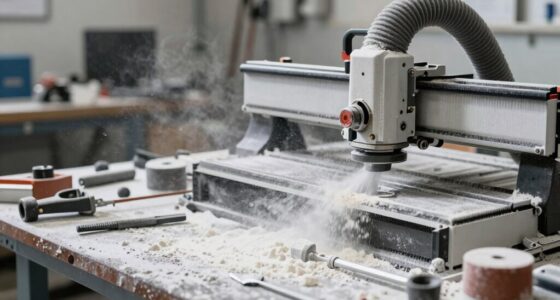
The main concern with sanding wood directly on a regular grinding wheel is the way the grinder is designed. Its small work table may not support a larger piece, while the wheel’s narrow edge concentrates friction in a small area instead of spreading the sanding action across a broader surface. Hunker also warns that sawdust can clog the wheel. Because sawdust is combustible, the report says frictional heat can create an ignition risk.
One option described is replacing the grinding wheel with a flap wheel. Hunker says woodworkers also use these wheels with drills and angle grinders for aggressive sanding and work in tight spaces. The report distinguishes a flap wheel from a flap disc: a disc has shorter flaps and, according to the article, tends to leave deeper scratches. It recommends running a bench grinder at its lowest possible speed when using a flap wheel on wood.
A second option is a belt-sander conversion attachment. The report describes a KFMK attachment that replaces a grinding wheel and provides a two-inch sanding belt and sanding disc; the belt is intended for flat surfaces, while the disc can be used for shaping, smoothing and rounding. Hunker also recounts a low-cost homemade setup by YouTuber Mark Susak, who used plywood discs, hook-and-loop material and a separate wooden work table. That example is not the same as a tested safety certification or a general recommendation for all grinders.
Choosing a Safer Sanding Setup
The practical issue is not simply whether an abrasive can remove wood; it is whether the tool can hold the work securely and manage dust, heat and contact. A grinder’s small rest and narrow wheel can make it difficult to control larger pieces, while a clogged abrasive may change how it cuts. The report’s alternatives matter because they provide a broader sanding surface or a different contact method, but they do not remove the need for careful setup.
For readers deciding whether to repurpose equipment, the distinction between a standard wheel and a purpose-built attachment is important. A belt or flap wheel may make some sanding tasks possible, but the report does not establish that every grinder, attachment or workpiece combination is safe. Tool compatibility, speed and stable support remain practical concerns.
bench grinder flap wheel for wood sanding
As an affiliate, we earn on qualifying purchases.
As an affiliate, we earn on qualifying purchases.
From Grinding Wheel to Sander
Bench grinders are typically used to grind or shape hard materials, and the report says standard models run at around 3,500 revolutions per minute. It contrasts that with variable- or low-speed models that can run at about 1,725 rpm, describing the slower speed as safer for sanding wood. These figures are approximate examples from the report, not specifications for every model.
The article presents two ways to adapt the machine rather than treating the regular grinding wheel as a wood-sanding accessory. Commercial conversion kits replace a wheel with a belt-and-disc arrangement; the cited kit models accept two-inch belts and fit certain grinders ranging from six to 10 inches, depending on the model. The homemade approach described uses parts sized for the particular grinder. The report does not provide a universal design that would fit every machine.
“The work “table” — the surface that supports work while grinding — is too small to support large pieces of wood.”
— Hunker report
Limits of the Report’s Advice
The supplied report does not identify its publication date, document independent testing of the attachments, or give a complete risk assessment for each setup. It also does not say that every bench grinder can accept the cited conversion kits; compatibility depends on the grinder and the specific model. The report’s approximate speed figures should not be treated as specifications for an individual tool.
It is also unclear from the material how the homemade plywood-disc conversion performs over extended use or under different loads. The source describes the project but does not establish that it meets a manufacturer’s requirements or applicable safety standards. Readers should check the grinder and attachment instructions rather than assuming that a described modification is suitable for their equipment.
Check the Grinder and Attachment
Before using a grinder for wood, readers should check the tool manufacturer’s instructions and confirm that any attachment is compatible with the grinder’s size, speed and mounting arrangement. Follow the attachment maker’s setup guidance, secure the work on a stable support and use eye protection. Keep gloves and loose clothing away from rotating parts, as the report advises.
The supplied material does not announce a product recall, new standard or later safety finding. Its practical conclusion is limited: a bench grinder can be adapted for some wood-sanding tasks, but the standard grinding wheel has design and dust-related drawbacks, and the safety of a particular setup depends on its equipment and use.
Key Questions
Can a standard bench-grinder wheel sand wood?
The Hunker report says it is a poor choice. The wheel is narrow, the work rest may be too small for larger pieces, and sawdust can clog the abrasive.
What attachments can be used to sand wood on a bench grinder?
The report describes a flap wheel and a belt-sander conversion attachment. Check the manufacturer’s instructions and grinder compatibility before installing either.
What speed does the report recommend?
For a flap wheel, the report recommends using the grinder’s lowest possible speed. It gives about 3,500 rpm for standard grinders and about 1,725 rpm for variable- or low-speed models as approximate examples, not universal specifications.
What safety precautions does the article mention?
Hunker advises wearing eye protection and avoiding gloves or loose clothing that could catch in rotating parts. It also flags combustible sawdust and friction as concerns when using a regular wheel on wood.
Source: rss
Halloween Picks
halloween
As an affiliate, we earn on qualifying purchases.