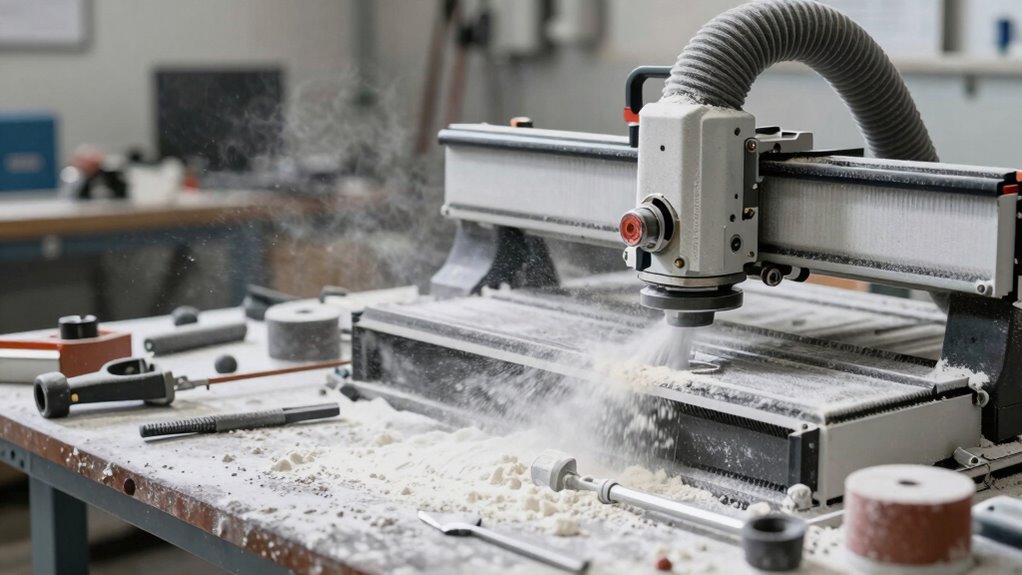

The biggest mistake in CNC dust collection is poorly sealed duct connections, which let fine dust escape before reaching the filter, leaving your shop covered in powder. Properly sealing all duct joints and ensuring airtight connections is essential to keep dust contained. Good venting, correct duct positioning, and regular system checks help improve airflow and filtration. Keep reading to learn how to fix your dust system and maintain a cleaner workspace effectively.

Get business pricing on tools and workshop supplies
- Business-only prices and quantity discounts
- Tax-exempt purchasing
- Multiple users, one account, clear invoices
Key Takeaways
- Neglecting proper duct sealing allows fine dust to bypass filters and settle everywhere.
- Using loose or unsealed duct connections causes dust leaks and reduces system efficiency.
- Inadequate duct routing and long, complex paths decrease airflow and increase dust settling.
- Choosing an undersized collector or placing it far from the dust source limits suction power.
- Failing to regularly maintain filters and inspect duct seals leads to fine dust buildup and system failure.
CNC dust collection duct sealing kit
As an affiliate, we earn on qualifying purchases.
As an affiliate, we earn on qualifying purchases.
The Common Mistake That Leaves Fine Dust Everywhere
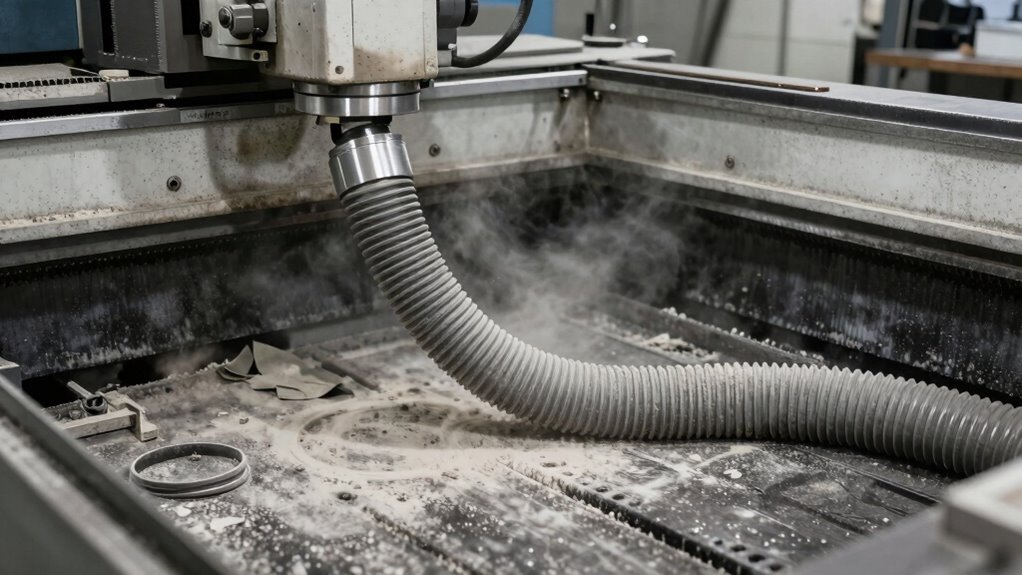
One of the most common mistakes in CNC dust collection is neglecting to properly seal the system’s connections. Poor duct sealing allows fine dust to escape before reaching the filter, causing dust to settle everywhere. Regular filter maintenance is essential to keep dust from bypassing the filtration system, but if duct connections are loose or unsealed, dust can bypass the filter entirely. This results in fine particles being released into your workspace, creating a mess and potential health hazards. Ensuring airtight duct sealing minimizes dust leaks and enhances the efficiency of your dust collection system. Additionally, proper setup of your dust collection system is crucial for optimal performance. Proper system design helps ensure that airflow is maximized and dust is effectively captured from all sources. Paying attention to airflow dynamics during setup can prevent dead zones where dust might escape, and considering dust extraction efficiency during installation can improve overall system performance. Incorporating airtight connections into your setup is essential for preventing leaks. Don’t overlook this step—proper sealing and routine filter maintenance work together to keep your workspace cleaner and safer, reducing the spread of fine dust particles.
Why Proper Venting and Ducting Are Essential for Dust Control
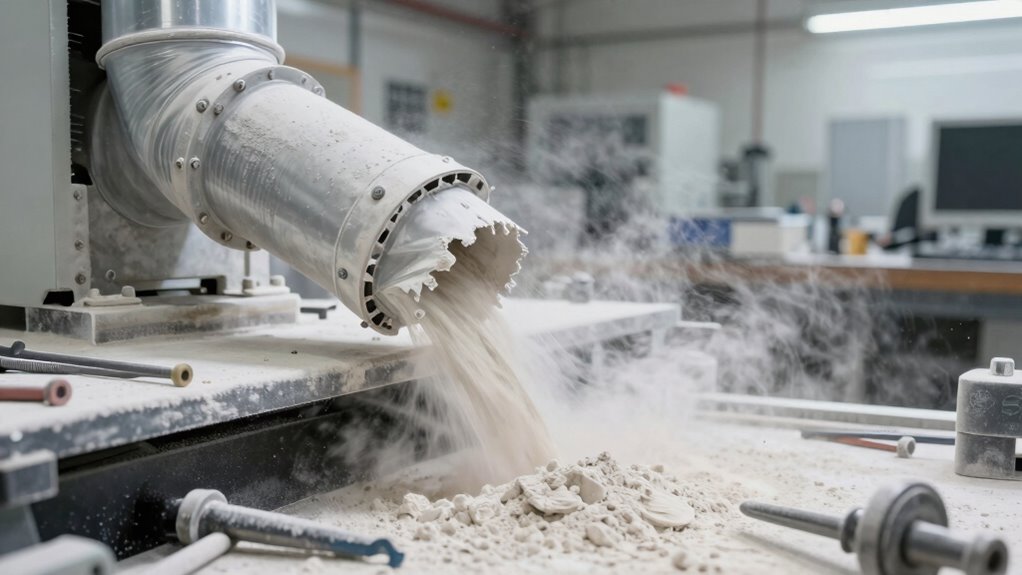
Proper venting and ducting are essential for effective dust control because they direct dust away from your workspace and guarantee it reaches the collection system efficiently. Without proper airflow enhancement, dust can settle and create fine layers everywhere. Ensuring duct sealing prevents leaks that reduce suction power and allow dust to escape into your workspace. Good ducting minimizes airflow resistance and maintains consistent suction across your system. Properly designed duct routes reduce bends and restrictions, keeping dust moving smoothly. Additionally, understanding airflow management principles can help optimize your dust collection efficiency and prevent buildup issues. Implementing airflow optimization techniques can further enhance system performance and extend the lifespan of your equipment, especially when considering the contrast ratio of your system, which affects how well dust and particles are visually detected and managed. Proper planning of duct layout can also significantly improve overall dust control effectiveness and ensure safer working conditions.
How to Choose and Position Your Dust Collector for Best Results

Choosing the right dust collector and positioning it correctly are essential steps to guarantee effective dust control in your workspace. To maximize airflow optimization, select a collector with sufficient CFM for your CNC machine’s size and dust output. Position the collector close to the source, ideally below or beside the dust generation point, to minimize duct length and resistance. Use durable duct material, like metal or rigid PVC, to maintain airflow and reduce static buildup. Ensure the intake is unobstructed and properly sealed to prevent leaks that diminish efficiency. Proper placement reduces dust dispersion and improves suction, making your system more effective. Additionally, understanding sound vibrations and how they influence airflow can help optimize your setup for better performance. Recognizing airflow dynamics can further enhance your dust collection efficiency. Incorporating preventive maintenance ensures your system continues to operate at peak performance, reducing downtime and increasing safety. Regularly inspecting the ductwork and connections helps prevent airflow restrictions that can decrease the system’s effectiveness. Remember, a well-chosen and correctly positioned dust collector keeps your workspace cleaner, safer, and healthier.
How to Spot Signs Your Dust System Isn’t Working Properly
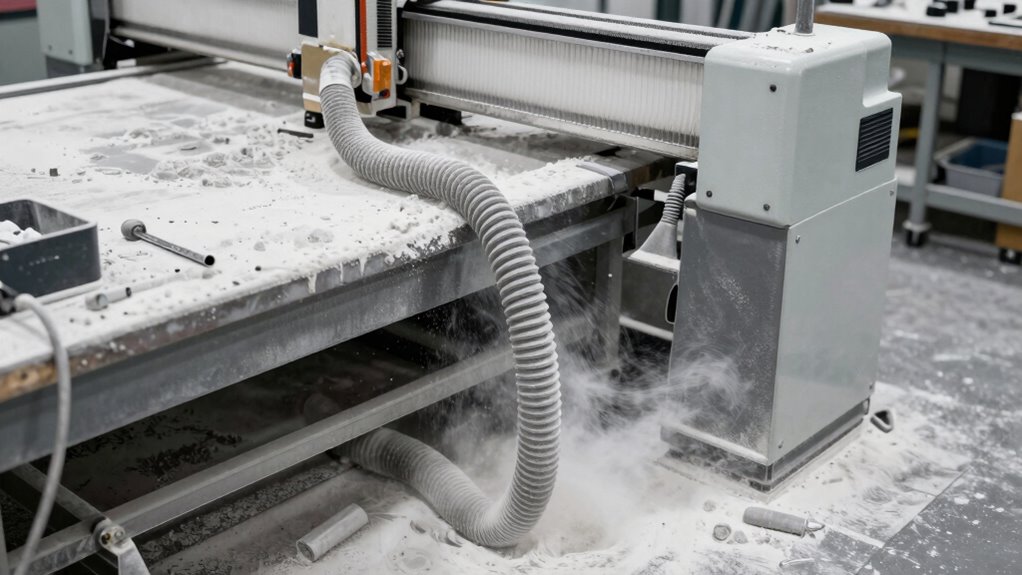
If your dust collection system isn’t working properly, you’ll notice certain signs that indicate it’s time for troubleshooting. Poor airflow can lead to increased dust settling on surfaces, reducing air quality and creating safety hazards. You might also observe a persistent fine dust layer accumulating, despite your efforts to clean regularly. Additionally, strange noises or unusual vibrations from the system can signal blockages or mechanical issues.
Signs of a malfunctioning dust collection system include poor airflow, increased dust settling, strange noises, and vibrations.
- Reduced suction power, making it harder to capture dust effectively
- Excess dust around the collection points or in the shop environment
- Unpleasant odors or increased airborne particles affecting air quality
Recognizing these signs early helps prevent compromised air quality and potential safety hazards, ensuring your dust system functions efficiently and keeps your workspace safe.
How to Fix Your Dust Collection System and Keep Your Shop Clean

When your dust collection system isn’t performing effectively, quick action can restore its efficiency and keep your shop clean. Start by optimizing airflow; check for blockages, leaks, or disconnected hoses that hinder dust pickup. Ensuring the system has proper duct sizing and minimal bends helps maintain strong airflow. Next, focus on filter maintenance—clean or replace filters regularly to prevent clogging and reduce dust escape. A well-maintained filter guarantees dust is captured efficiently, preventing fine particles from spreading. Additionally, inspect blast gates and seals to ensure they’re functioning correctly and directing airflow where needed. Regularly maintaining your system and Understanding airflow dynamics can help you identify subtle issues affecting your system’s performance. Proper duct layout and airflow optimization are crucial for effective dust collection, saving you time and effort during cleanup. Ultimately, paying attention to system design details can prevent many common setup mistakes and improve overall performance. Being aware of Free Floating principles can also help in troubleshooting and enhancing system efficiency. To further boost your system’s effectiveness, consider evaluating the dust collection capacity to match your shop’s specific needs.
Frequently Asked Questions
What Are the Best Maintenance Practices to Ensure Dust Collector Efficiency?
To guarantee your dust collector stays efficient, regularly perform filter maintenance by checking and replacing filters as needed. Keep an eye on system troubleshooting signs like decreased suction or unusual noises, which indicate potential issues. Clear out dust buildup in the ductwork and collection bin frequently. Proper maintenance prevents fine powder from covering everything, maintains ideal airflow, and prolongs your system’s lifespan. Staying proactive keeps your workspace clean and safe.
How Can I Reduce Noise From My Dust Collection System?
Think of your dust collector like a noisy neighbor—soundproofing can make a huge difference. To reduce noise, install soundproofing materials like acoustic foam or mats around the machine. Regularly check and tighten loose panels, and consider adding flexible hoses to dampen vibrations. These steps cut down on noise from airflow and vibrations, making your workspace more comfortable and safer without sacrificing efficiency.
Are There Specific Filters Recommended for Fine Dust?
You should use HEPA filters designed for fine dust to effectively trap tiny particles and improve air quality. For added odor control, incorporate activated carbon filters alongside HEPA filters. These filters work together to capture airborne dust and neutralize odors, making your workspace safer and more comfortable. Make sure to select filters compatible with your system’s size and airflow, and replace them regularly to maintain ideal filtration performance.
How Often Should I Clean or Replace Dust Collector Filters?
Think of your filters like a coffee filter—if you don’t clean or replace it regularly, your brew gets bitter. For ideal dust collection, follow a consistent cleaning schedule and replace filters when airflow decreases or they appear clogged. Typically, you should clean filters every 1-2 months and replace them every 6-12 months, depending on usage. Regular maintenance keeps your system running smoothly and prevents fine dust buildup.
Can Portable Dust Collectors Be as Effective as Fixed Systems?
Portable dust collectors can be just as effective as fixed systems if they offer good portable efficiency and a solid mobile setup. They allow you to target specific areas, reducing dust in localized spots. However, their overall effectiveness depends on proper maintenance, filter quality, and ensuring they’re correctly positioned. With the right features, a portable dust collector can efficiently handle your dust collection needs without sacrificing performance.
Conclusion
Think of your dust collection system as a loyal garden hose. If you kink or misplace it, the water, or in this case, dust, splatters everywhere, covering your workspace in fine powder. By setting it up correctly and keeping an eye on its flow, you guarantee your shop stays spotless, like a well-watered garden. With proper care, your dust system will keep your workspace clear, allowing your craftsmanship to flourish without the mess.
Fall Picks
fall essentials
As an affiliate, we earn on qualifying purchases.