
In candle making, choosing the right wick, wax type, and fragrance load is essential for a safe, even burn and great scent throw. Your wick size affects melt pool, flame size, and scent diffusion, so it must match your wax and container. Different waxes like soy, beeswax, or paraffin burn differently, and fragrance load impacts aroma release. Testing various combinations helps you perfect your craft—stay tuned to discover how to optimize each element for beautiful, fragrant candles.
Key Takeaways
- Selecting the right wick size depends on wax type, container diameter, and fragrance load for optimal burn and scent throw.
- Different waxes (soy, beeswax, paraffin) burn uniquely, influencing wick choice for a clean, steady flame.
- Proper wick material (cotton or wood) affects heat distribution, fragrance release, and overall candle safety.
- Fragrance load impacts wick size; higher scent loads may require larger wicks for proper evaporation and aroma dispersion.
- Testing various wick sizes and documenting results helps optimize burn quality, fragrance throw, and candle performance.

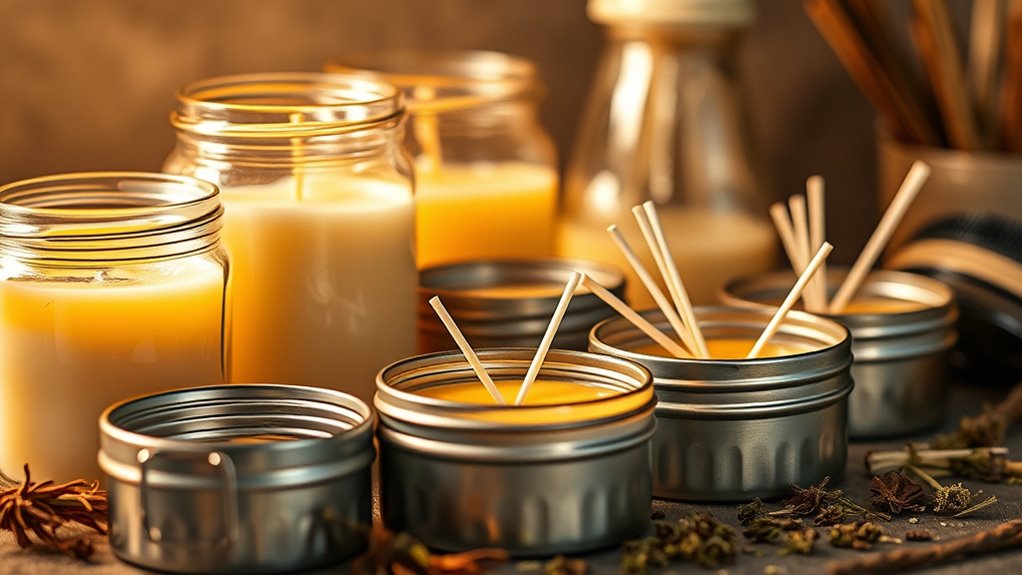
Candle making is both an art and a science, requiring a clear understanding of the materials and chemical processes involved. One of the most critical decisions you’ll make is choosing the right wick. Wick selection directly impacts how your candle burns, influencing flame size, melt pool, and overall safety. For example, a wick that’s too small might cause the candle to tunnel, wasting wax and preventing proper fragrance release. Conversely, an oversized wick can produce a large, flickering flame, leading to uneven burning or sooting. To find the best fit, consider the type of wax you’re using, the diameter of your container, and the desired burn characteristics. Testing different wick sizes helps you maximize a clean, steady burn that minimizes wax consumption and reduces waste. Proper wick selection also plays a significant role in fragrance enhancement. A well-chosen wick ensures even heat distribution across the wax surface, promoting efficient fragrance evaporation. If the wick is too small, heat may be insufficient to release the scent fully, resulting in a muted aroma. An oversized wick, on the other hand, can cause rapid melting, which may lead to fragrance loss and increased sooting. When aiming for fragrance enhancement, it’s crucial to match your wick not only to the wax and container but also to the fragrance load. A balanced wick will help you achieve a strong, consistent scent throw both during burning and when the candle is unlit. The wick’s material also matters—cotton wicks tend to burn cleaner, while wood wicks add a crackling effect and can boost fragrance dispersion due to their larger size and combustion characteristics. Additionally, the type of wax influences wick choice; soy, beeswax, or paraffin each burn differently, necessitating specific wick sizes for ideal performance. As you experiment, keep notes on how different wick choices impact fragrance strength, burn time, and overall appearance. Remember, fragrance enhancement isn’t just about adding more scent oils; it’s about creating a balanced burn that releases aroma efficiently without sacrificing safety or quality. Proper wick choice can dramatically improve your candle’s scent throw and visual appeal, giving you better control over the final product. Ultimately, understanding the interplay between wick choice and fragrance enhancement allows you to craft candles that burn beautifully, smell inviting, and meet your personal standards or customer expectations. By paying close attention to these details, you’ll turn simple wax and fragrance into a truly engaging sensory experience.

SAEUYVB Candle Making Kit with Wax Melter, Candle Making Kit for Adults – DIY Starter Soy Candle Making Kit/Supplies-Perfect as Home Decoration
- Complete Candle Making Supplies: Includes wax, wicks, dyes, and more
- Ideal for Beginners: Detailed, easy-to-follow instructions included
- Premium Soy Wax: All-natural, clean-burning soybean wax
As an affiliate, we earn on qualifying purchases.
As an affiliate, we earn on qualifying purchases.
Frequently Asked Questions
How Do I Choose the Right Wick for My Candle Size?
To choose the right wick for your candle size, start by considering the wick sizing that matches your candle’s diameter. A wick that’s too small won’t burn evenly, while one that’s too large might cause excessive flickering or tunneling. Measure your candle’s diameter accurately, then select a wick designed for that size. Testing different wicks guarantees you find the perfect balance for a clean, steady burn.
What Are the Environmental Impacts of Different Wax Types?
Different wax types impact the environment through biodegradability concerns and sourcing practices. Soy wax, for example, is biodegradable and comes from sustainable sources, making it eco-friendly. Paraffin wax, derived from petroleum, poses higher environmental risks due to non-biodegradability and pollution. Beeswax is natural and biodegradable but may have sustainability concerns depending on how it’s sourced. Choose waxes that prioritize sustainable sourcing to reduce your environmental footprint.
How Does Fragrance Load Affect Candle Burn Quality?
You’ll find that increasing fragrance load enhances scent throw, but it can also impact burn quality. Studies show that fragrance saturation beyond 10% can cause uneven burning or soot. When you add too much fragrance, the candle might tunnel or burn unevenly, reducing overall burn time. To maintain a good burn quality while maximizing scent, keep fragrance load within recommended levels, ensuring a steady, clean burn with ideal scent diffusion.
Can I Mix Various Wax Types in One Candle?
Yes, you can mix various wax types in one candle, but you need to take into account wax blending and wax compatibility. Make certain the waxes you choose have similar melting points and properties to prevent issues like uneven burning or cracking. Test small batches first to see how they blend, and always use compatible waxes to achieve a smooth, consistent finish and ideal burn quality.
What Safety Precautions Should I Take During Candle Making?
Think of candle making like walking a tightrope—you need safety precautions to stay balanced. Always wear safety equipment like gloves and goggles, as hot wax and flames pose fire hazards. Keep a fire extinguisher nearby, work in a well-ventilated area, and never leave melting wax unattended. Taking these steps guarantees you avoid accidents and keep your creative process safe and enjoyable.
Conclusion
As you light your candle, remember it’s more than just a glow—it’s a symbol of warmth, hope, and transformation. Each wick you craft, each wax you choose, and every drop of fragrance reflects your dedication and creativity. Let the flickering flame remind you that even in darkness, your efforts shine brightly, guiding others toward comfort and calm. Embrace the science behind your art, and let your candle be a beacon of your passion.