Chamber vacuum sealers work by placing whole bags inside a sealed chamber, removing air for a tight, airtight seal ideal for bulk or bulky items, and offering long-term preservation. They’re perfect if you package large quantities often or want maximum freshness. However, for occasional or small-scale use, they can be too expensive and complex. To see if this tool suits your needs and when it might be overkill, explore the details ahead.
Key Takeaways
- Chamber vacuum sealers excel at preserving large quantities and bulky items for long-term storage with airtight, professional seals.
- They are ideal for commercial use, sous vide cooking, and sealing sensitive or delicate products that require thorough vacuuming.
- Overkill for occasional or small-scale sealing needs, as they involve higher costs and complexity compared to manual or handheld sealers.
- Their faster sealing speeds and ability to handle various bag sizes make them suitable for high-volume or frequent use.
- For infrequent or hobbyist users, simpler vacuum sealers are more cost-effective and practical than chamber models.
What Is a Chamber Vacuum Sealer and How Does It Work?
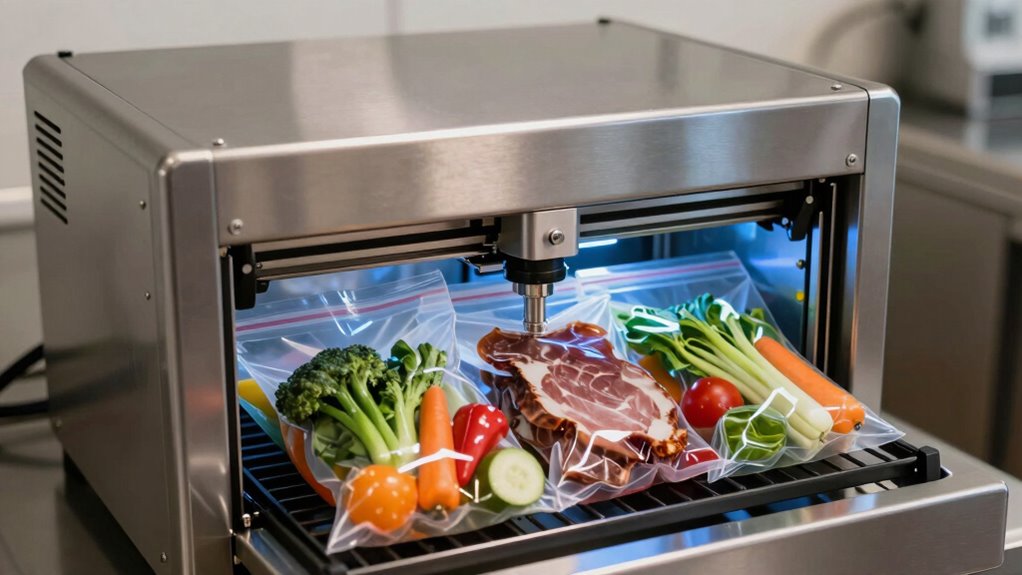
Have you ever wondered how chamber vacuum sealers achieve such tight and professional seals? It all comes down to advanced vacuum technology and unique sealing mechanisms. Unlike standard sealers, chamber models place the entire bag inside a sealed chamber. When activated, the machine removes air from the chamber itself, creating a controlled environment that guarantees thorough vacuuming. This process allows for consistent removal of air, even from delicate items. The sealing mechanisms then use high-quality heat seals to close the bag securely. Because the entire chamber is evacuated, the risk of leaks or weak seals drops markedly. This combination of vacuum technology and precise sealing mechanisms results in a strong, airtight seal that preserves food and extends its shelf life efficiently. These innovative European cloud servers exemplify how advanced technology can enhance efficiency and reliability in various applications. Moreover, the precise control of the vacuum environment helps prevent air ingress, ensuring long-lasting freshness and quality. Additionally, the controlled environment minimizes the risk of contamination, making chamber vacuum sealers ideal for both food preservation and other sensitive materials. Incorporating smart automation features can further optimize sealing processes and ensure consistent results. Furthermore, understanding the regulatory standards for food safety can help users select the most compliant and reliable chamber vacuum sealers for their needs.
When Is a Chamber Vacuum Sealer the Right Choice?

If you need to preserve large quantities of food or bulky items, a chamber vacuum sealer might be your best option. Consider your food preservation needs and whether your items are big or numerous, as these factors influence the right choice. When quality and efficiency matter for your packaging, a chamber sealer can be a smart investment. Additionally, understanding the cost‑of‑ownership can help determine if a chamber sealer is a worthwhile investment for your needs. For those interested in floating on water as a recreational or therapeutic activity, certain vacuum sealing techniques can also help in preserving aquatic equipment and accessories, ensuring they stay protected during storage. Incorporating outdoor storage solutions can further extend the lifespan of your sealed items, especially in outdoor environments. Proper auditory processing strategies can also be considered when selecting sealing methods for sensitive equipment, helping to prevent damage from environmental noise or vibrations. In some cases, selecting the right sealing method may also depend on the specific material compatibility to ensure optimal results without damaging your items.
Food Preservation Needs
When you need to preserve large quantities of food for an extended period, a chamber vacuum sealer can be the ideal choice. It excels when maintaining perfect air circulation around your food, preventing spoilage and freezer burn. This machine’s design allows you to package multiple items at once using specialized packaging materials that create a strong, airtight seal. Unlike handheld vacuum sealers, chamber models ensure consistent removal of air from the entire package, which is essential for long-term storage. If you’re preserving bulk quantities like meats, cheeses, or leftovers, this method helps keep your food fresh and safe longer. The ability to use specific packaging materials also means you can choose options suited for your storage conditions, maximizing the lifespan of your food. Additionally, chamber vacuum sealers often provide a higher level of food preservation performance compared to other sealing methods.
Item Size and Quantity
Are you dealing with large or bulky food items that need to be stored efficiently? A chamber vacuum sealer is ideal when quantity or size demands precise portion control and better storage organization. It handles bigger cuts of meat, whole roasts, or large batches, sealing them in a single bag without crushing delicate items. Consider these factors:
- Multiple items in one seal streamline meal prep and portion control
- Larger bags reduce the need for multiple smaller packages
- Consistent sealing guarantees long-term storage and prevents freezer burn
If you regularly freeze large quantities or want to optimize space, a chamber vacuum sealer provides a clean, professional finish. It’s perfect when item size and quantity are your main concerns, saving you time and keeping your food organized.
What Are the Main Benefits of Using a Chamber Vacuum Sealer?

Using a chamber vacuum sealer helps keep your food fresher for longer, saving you money and reducing waste. It also improves preservation quality, ensuring your food retains its flavor and nutrients. Plus, it minimizes freezer burn, so your stored items stay in top condition. Additionally, some models incorporate sustainability practices, making them an environmentally friendly choice for food storage. This technology is favored by those who prioritize food preservation techniques to maintain quality over time. Implementing creative storytelling in your food branding can also enhance customer loyalty by emphasizing your commitment to freshness and sustainability. By choosing a system that emphasizes efficient food storage, you can further optimize your kitchen’s organization and reduce clutter. Incorporating energy-efficient features can also help reduce the environmental impact of your food preservation efforts.
Extended Food Freshness
Have you ever wondered how to keep your food fresh for longer? Using a chamber vacuum sealer extends food freshness by removing more air than traditional methods, which slows down food spoilage. This results in longer storage periods and preserves flavor, texture, and nutritional value. The vacuum packaging process minimizes oxidation and prevents bacteria growth, key factors in reducing food waste. Additionally, electric power generation with bike generators can be an innovative way to support sustainable energy efforts during food storage activities in off-grid situations, highlighting the importance of tailoring methods to specific food types for optimal results. Implementing proper storage techniques can further enhance your ability to keep food fresh and minimize waste over time, especially when combined with technological integration, which streamlines preservation processes and improves overall efficiency.
Enhanced Preservation Quality
A chamber vacuum sealer markedly enhances preservation quality by providing a more thorough and uniform removal of air from packaging. This tight seal prevents oxygen exposure, which slows down spoilage and preserves flavor, texture, and nutrients. Because the vacuum environment is more consistent, it’s ideal for marinade infusion, allowing flavors to penetrate meat or vegetables more effectively. Additionally, it’s perfect for sous vide preparation, as the airtight seal ensures precise temperature control and even cooking. The consistent vacuum also minimizes the risk of leaks, reducing contamination and freezer burn over time. Overall, using a chamber vacuum sealer elevates your food preservation, making your stored foods last longer, taste better, and retain their quality, especially when preparing dishes that benefit from enhanced infusion or sous vide techniques.
Reduced Freezer Burn
Ever wonder why freezer burn happens and how to prevent it? Freezer burn occurs when moisture escapes from your food, leading to dehydration and quality loss. Using a chamber vacuum sealer helps considerably reduce this issue by providing better moisture control and sealing meat, fruits, or vegetables more tightly. This results in an extended shelf life and fresher taste.
Key benefits include:
- Better moisture retention, preventing dehydration
- Extended shelf life, reducing food waste
- Consistent, airtight seals that block air exposure
Do I Really Need a Chamber Vacuum Sealer, or Will a Standard One Do?

Deciding between a chamber vacuum sealer and a standard one depends on your specific needs and the types of sealing tasks you perform. If you primarily vacuum seal smaller quantities or use different vacuum bag types, a standard sealer might suffice. However, if you frequently package larger batches or need faster sealing speed, a chamber model could be worth the investment. Chamber sealers often provide better vacuum quality and can handle a wider range of vacuum bag types. They also tend to offer more consistent results, especially for commercial or heavy-duty use. Consider how often you’ll seal, the sizes of your packages, and whether speed or versatility is a priority. This will help you decide whether a standard vacuum sealer meets your needs or if a chamber unit is the better choice.
How Do Cost, Complexity, and Performance Compare?

When comparing cost, complexity, and performance, it’s clear that chamber vacuum sealers generally come with a higher price tag and more intricate operation than standard models. The cost comparison shows that chamber sealers are an investment, but they offer superior sealing quality and efficiency for large-scale or professional use. Their complexity levels involve additional setup and maintenance, which may require more technical knowledge. You might notice:
- Higher initial purchase price and ongoing maintenance costs
- More advanced features that demand familiarity and training
- Increased production speed and sealing consistency
- Vetted – Security Zone Info systems that can be integrated with other security measures for comprehensive protection
While the performance benefits are significant for certain applications, the added complexity and cost may outweigh the advantages for casual or home use. Carefully evaluating cost-benefit analysis can help determine if a chamber vacuum sealer aligns with your specific needs. Consider your needs carefully before opting for a chamber vacuum sealer.
Common Situations Where Buying a Chamber Vacuum Sealer Might Be Overkill

Although chamber vacuum sealers excel in large-scale or professional environments, they can be overkill for many typical home or casual users. If you only need to seal small quantities of food occasionally, a standard handheld or external vacuum sealer will usually suffice. These models are more affordable and easier to operate, making them suitable for everyday use. Chamber vacuum sealers are primarily designed for industrial applications or commercial equipment settings, where high volume and precision sealing are critical. If your sealing needs are infrequent or limited to small batches, investing in a chamber model might be unnecessary and cost-prohibitive. For most home kitchens, simpler vacuum sealers provide all the functionality you need without the complexity or expense of commercial equipment. Additionally, understanding when high-pressure sealing is necessary can help you decide if a chamber sealer is justified for your specific needs. Recognizing the cost-effectiveness of different models can also guide your purchasing decision based on your usage level. Furthermore, considering the long-term durability of the equipment can ensure you choose a model that withstands frequent use without frequent repairs. Being aware of the maintenance requirements can help prolong the lifespan of your vacuum sealer and prevent unexpected costs.
How to Decide If a Chamber Vacuum Sealer Is Worth It for You

To determine if a chamber vacuum sealer is right for you, evaluate how often and how much you need to seal. If you regularly process large quantities or require airtight seals for sensitive items, a chamber sealer can streamline your workflow. Consider your needs beyond food preservation—such as storing materials for marriage counseling or digital marketing samples. Ask yourself:
- Do I need to seal items in bulk frequently?
- Will the investment improve efficiency or quality for my business or personal use?
- Are there specific sealing requirements that a regular vacuum sealer can’t meet?
If your sealing demands are sporadic or limited, overkill might be the case. However, if you value precision, durability, or large batch processing, a chamber vacuum sealer could be well worth it.
Troubleshooting: When Chamber Sealing Isn’t Necessary or Fails to Add Value

Chamber sealing isn’t always the best choice, especially if your sealing needs are infrequent or simple. If you’re a hobbyist or prefer manual operation, a chamber sealer might be overkill. It can fail to add value when the volume of sealing tasks is low or when you need quick, straightforward solutions. For example, manual operation allows you to control each seal precisely but may slow down occasional use.
| Situation | Recommended Approach | Why |
|---|---|---|
| Infrequent sealing needs | Use handheld or external vacuum sealers | Less expensive, simpler |
| Small quantities | Manual operation | Quick, convenient |
| Hobbyist use | Basic vacuum system | Sufficient, cost-effective |
| Large volume or frequent use | Chamber sealer | Overkill for occasional use |
Tips for Choosing the Best Vacuum Sealing Solution for Your Budget and Goals

Choosing the right vacuum sealing solution depends on balancing your budget with your specific goals. Consider how much vacuum strength you need; higher vacuum strength ensures better air removal, which is essential for longer storage. Sealing speed also matters—faster sealing can save time during frequent use, but may come at a higher cost. To make an informed choice, evaluate these factors:
- The durability and reliability of the machine’s vacuum pump
- The compatibility of sealing settings with different bag types and sizes
- Your anticipated volume of sealing, balancing speed against cost
Frequently Asked Questions
Can Chamber Vacuum Sealers Be Used for Liquids and Wet Foods?
Yes, you can use chamber vacuum sealers for liquids and wet foods. They excel at liquid sealing because the chamber design prevents liquids from being sucked into the machine. When sealing wet food, this method guarantees a tight, leak-proof seal without mess or waste. Just make sure to pre-freeze liquids or use special bags designed for liquids to get the best results and avoid spills during the process.
How Much Space Does a Chamber Vacuum Sealer Typically Require?
Think of your kitchen countertop as a cozy nook for your chamber vacuum sealer; it typically needs about the size of a small microwave—roughly 18-24 inches wide and 10-15 inches deep. If space is tight, you can store it in your storage closet when not in use. It’s compact enough to fit comfortably, but you’ll want to make certain there’s enough room for easy access and operation.
Are Chamber Vacuum Sealers Suitable for Commercial or Industrial Use?
Yes, chamber vacuum sealers are suitable for commercial and industrial use. You benefit from their commercial durability and industrial capacity, making them ideal for high-volume food packaging and other demanding tasks. These sealers handle large quantities efficiently, maintaining consistent performance over time. If you need reliable, heavy-duty sealing, a chamber vacuum sealer is a smart choice for your business needs.
What Maintenance Is Needed for a Chamber Vacuum Sealer?
You need to regularly perform sealer cleaning and sealing chamber maintenance to keep your chamber vacuum sealer in top shape. Wipe down the exterior and clean the sealing strip to prevent residue buildup. Periodically, check the vacuum pump oil and replace it if needed. Make sure the sealing chamber is free of debris and leaks to guarantee peak performance. Routine maintenance extends the lifespan of your sealer and maintains its efficiency.
How Long Do Chamber Vacuum Seals Typically Last Compared to Standard Seals?
Chamber vacuum seals usually last longer than standard seals because of their seal durability and robust construction. You can expect a chamber sealer’s sealing lifespan to be several years with proper maintenance, often outlasting regular vacuum bags. Standard seals may need replacement sooner, typically within a year or two, especially with frequent use. Investing in quality chamber sealers ensures you get a more durable, longer-lasting seal, saving you money over time.
Conclusion
Ultimately, choosing between a chamber vacuum sealer and a standard one hinges on your needs. While a chamber sealer offers precision and efficiency for serious preservation, it might be overkill if you only seal occasional leftovers. Think about your goals—whether saving money or optimizing convenience—and weigh that against the complexity and cost. Sometimes, simplicity reigns, but if high performance matters, investing in a chamber sealer can transform your food storage, making the extra effort worthwhile.