
To make your craft fair setup easier, focus on quality lighting and signage equipment. Use portable LED lights to highlight your products and create a welcoming atmosphere. Incorporate clear, eye-catching signs with bold fonts and high-contrast colors to attract visitors and guide them smoothly. Proper power sources guarantee your lights and displays stay functional. Combining these elements boosts your booth’s appeal and makes your event more successful — keep exploring to learn more tips.
Key Takeaways
- Use portable LED lighting with adjustable brightness to highlight products and create an inviting ambiance.
- Incorporate reliable power sources to ensure continuous lighting and equipment operation throughout the event.
- Utilize high-visibility signage with clear fonts and branding to attract visitors and convey essential information.
- Strategically position lighting and signs to enhance product visibility and guide visitors smoothly through the booth.
- Plan the overall setup to combine lighting and signage cohesively, boosting booth attractiveness and visitor engagement.
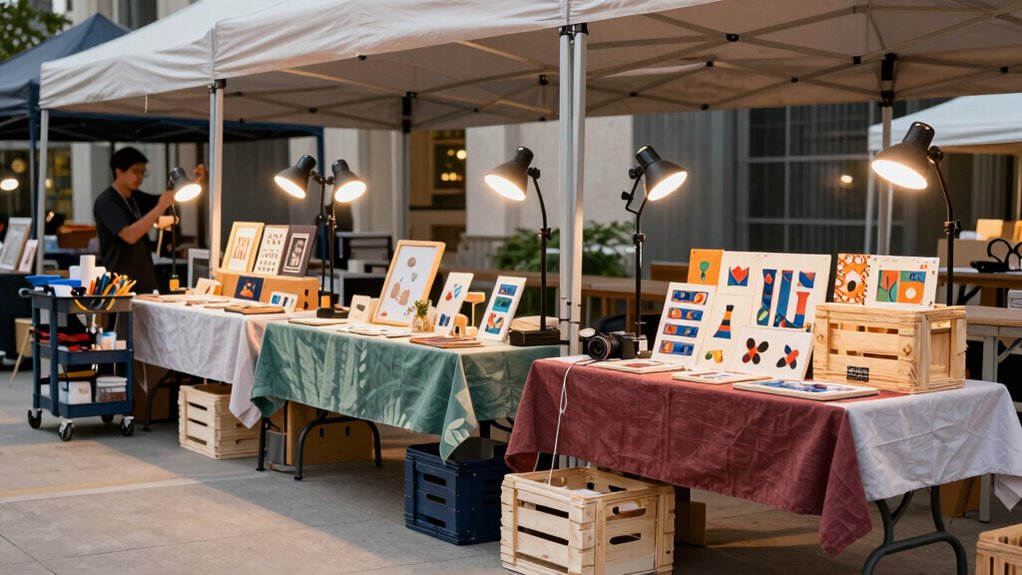
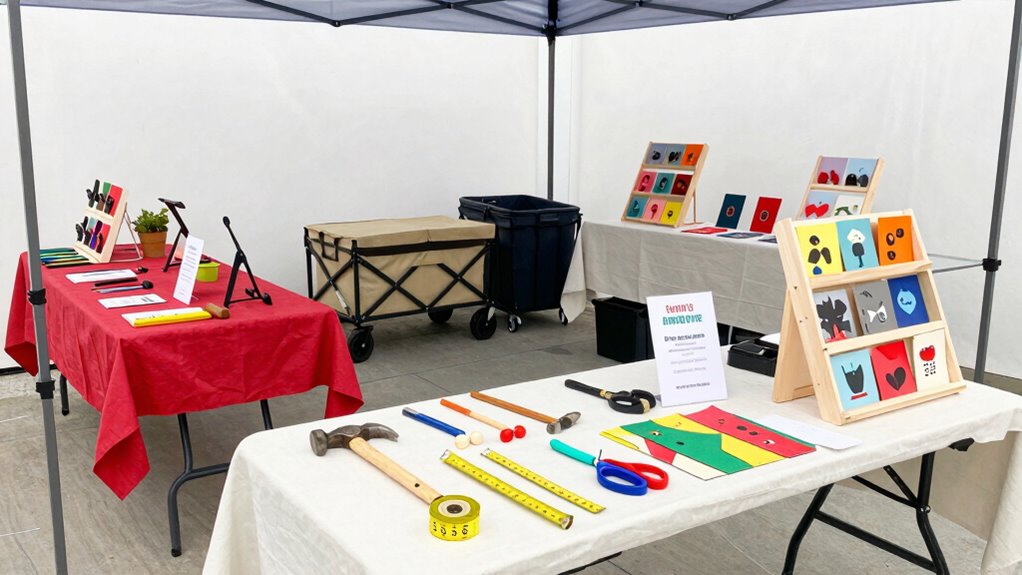
Preparing for a craft fair requires careful planning to guarantee everything runs smoothly on the day of the event. One of the first aspects you should focus on is creating effective lighting arrangements. Good lighting not only highlights your products but also makes your booth inviting and professional. Think about the type of lighting that best suits your setup—bright, focused lights can accentuate details on your crafts, while softer, ambient lighting creates a warm atmosphere. Portable LED lights are a popular choice because they’re energy-efficient, easy to set up, and versatile. Position your lights strategically so that no area is left in shadows, especially where customers will be inspecting your items closely. Proper lighting also helps you avoid glare or harsh shadows that can make browsing uncomfortable. It’s worth testing your lighting before the event to guarantee everything is well-illuminated and visually appealing. Additionally, considering lighting placement can significantly impact how attractive your booth looks from different angles and distances. Ensuring your lighting setup is flexible and adaptable can help you quickly make adjustments as needed during the event. Using the right lighting equipment is essential for creating a professional display that attracts attention and enhances your products’ visibility. Incorporating appropriate power sources is also crucial to keep your lighting functioning smoothly throughout the event.
Alongside lighting, effective signage strategies are essential to attract visitors and communicate your brand clearly. Your signage should be visible from a distance, guiding foot traffic directly to your booth. Use bold, legible fonts and high-contrast colors so that your signs stand out even in busy or poorly lit areas. Incorporate clear pricing, product descriptions, and any special promotions you’re running. Consider using signs that are portable and easy to reposition if needed, like foam board displays or retractable banners. These can be customized with your logo or artwork, reinforcing your brand identity. Also, don’t forget to include directional signs leading visitors from main pathways to your booth, especially if the fair layout is complex. Strategically placed signage not only draws attention but also reduces confusion, making the shopping experience smoother for potential customers. Paying attention to conservation practices can also demonstrate your commitment to sustainability, which may resonate well with environmentally conscious visitors. Well-designed signage combined with effective lighting can create a cohesive and inviting atmosphere that encourages visitors to linger and explore.
Both lighting arrangements and signage strategies work together to create a cohesive and attractive booth that draws people in and keeps them engaged. When you plan these elements thoughtfully, you’re setting the stage for a successful event. You’ll find that visitors are more likely to stop, linger, and purchase when your display is well-lit and clearly labeled. Remember, the goal is to make your booth stand out in a sea of vendors, and these equipment choices are some of the most effective ways to do that. With proper preparation, you’ll be ready to create an inviting space that showcases your crafts beautifully, making the entire experience enjoyable for you and your customers alike.
portable LED craft fair lighting
As an affiliate, we earn on qualifying purchases.
As an affiliate, we earn on qualifying purchases.
Frequently Asked Questions
How Early Should I Arrive to Set up My Booth?
You should aim to arrive at least one to two hours before the event starts. This timing strategy gives you ample time for early arrival benefits like unloading your equipment, setting up your booth, and addressing any unexpected issues. Arriving early guarantees you’re well-prepared and stress-free, allowing you to create an inviting space that draws in visitors. It also helps you stand out among vendors who might arrive later.
What Permits or Licenses Are Required for a Craft Fair?
You need to obtain any necessary booth permits from the event organizers and check local regulations for vendor insurance requirements. These permits ensure your booth complies with safety and zoning rules, while vendor insurance protects against liability or damages. Contact the fair organizers beforehand to confirm specific permit and insurance requirements, and make sure you have all documentation ready. This preparation helps your setup go smoothly and avoids potential legal issues.
How Do I Optimize Space for Large or Bulky Items?
Imagine trying to fit a giraffe into a shoebox—that’s what space optimization for bulky items feels like. To master it, use vertical display techniques like tiered shelves or wall-mounted racks to free up floor space. Arrange large items strategically, leaving walkways clear for shoppers. Employ multi-purpose displays to maximize space, and consider collapsible or modular setups that adapt as your needs grow.
What Are the Best Methods for Transporting Fragile Goods?
To transport fragile goods safely, use proper packaging tips like bubble wrap, foam peanuts, or tissue paper to cushion items. Handle techniques matter too—always lift with care, supporting the base, and avoid sudden movements. Use sturdy boxes and label them clearly as fragile. Securing items inside the vehicle prevents shifting during transit. With these methods, your delicate items arrive intact and ready for display.
How Can I Ensure My Setup Is Weather-Resistant?
Imagine your setup facing sudden rain; you can’t control the weather, but you can control your protection. Use weatherproofing materials like waterproof covers, tarps, and sealants to shield your displays. Incorporate rain protection strategies such as elevated tables and sandbags to prevent water damage. By proactively weatherproofing your booth, you guarantee your crafts stay dry and appealing, regardless of unexpected weather changes.
Conclusion
With the right equipment, you’ll set up faster, organize better, and showcase your crafts more confidently. You’ll avoid last-minute stress, save valuable time, and create a welcoming atmosphere. You’ll attract more visitors, make a great impression, and enjoy the event more. When you prioritize the essentials, you streamline your setup, enhance your presentation, and turn your craft fair experience into a success. So, prepare wisely, plan thoroughly, and let your creativity shine!