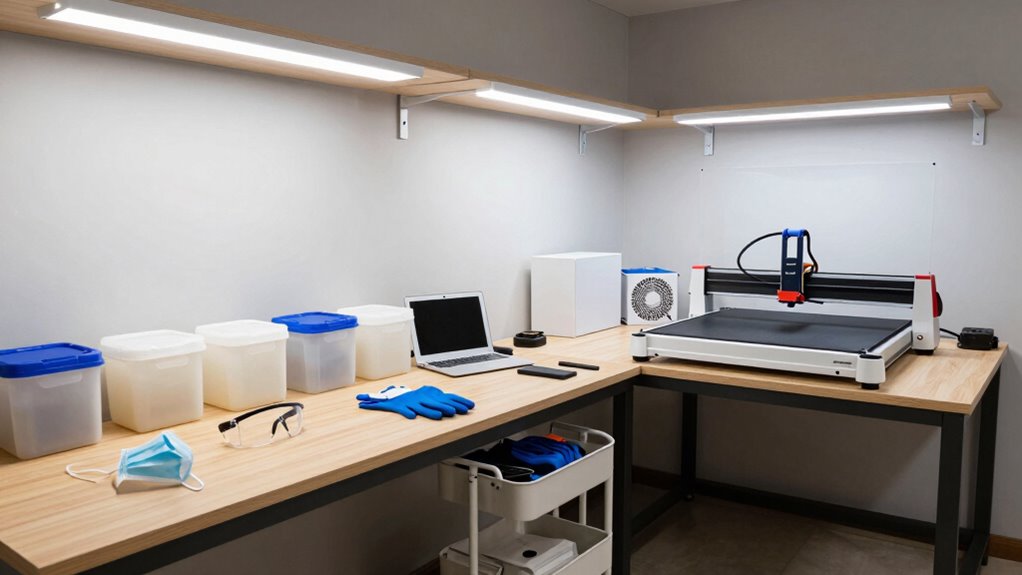

To create a safer resin, paint, or laser workspace at home, make certain you wear appropriate PPE like gloves, masks, and goggles to protect against chemicals and debris. Improve ventilation using exhaust fans, air purifiers, or local exhaust hoods to remove airborne toxins. Keep your space organized and clean to prevent accidents, and follow safety protocols based on manufacturer guidelines and safety data sheets. For more tips on enhancing workspace safety, keep exploring effective safety strategies.
Open a free Amazon Business account
Business pricing, bulk buying and tax-exempt orders.
As an affiliate, we earn on qualifying purchases.
Key Takeaways
- Use appropriate PPE like gloves, masks, and safety goggles during resin, paint, or laser work.
- Ensure proper ventilation with exhaust fans and air purifiers to remove airborne fumes and particles.
- Regularly maintain and monitor ventilation systems and air quality for consistent safety.
- Keep the workspace organized and clean to prevent spills, accidents, and buildup of hazardous residues.
- Display safety signage, follow manufacturer guidelines, and familiarize yourself with emergency procedures.

Have you ever considered how your home workspace might pose safety risks? Working with resin, paint, or laser tools involves hazards that can impact your health if you’re not careful. To create a safer environment, you need to focus on essential safety measures like personal protective equipment and proper ventilation systems. These are your first lines of defense against harmful fumes, dust, and accidental injuries. Personal protective equipment, such as gloves, masks, and eye protection, should always be part of your routine. Gloves keep your skin safe from chemical burns or irritation, while masks filter out toxic fumes and airborne particles. Safety goggles protect your eyes from splashes or debris, especially when working with laser equipment or handling paints. Investing in reliable protective gear ensures you’re shielding yourself from long-term health issues caused by exposure to hazardous substances.
Equally important is the implementation of effective ventilation systems. When working with resins and paints, fumes can become overwhelming and pose serious health risks if not properly managed. Installing a good ventilation setup—such as exhaust fans, air purifiers, or local exhaust hoods—helps remove airborne toxins from your workspace. This not only improves air quality but also reduces the chance of accidental inhalation of harmful chemicals. Make sure your workspace is well-ventilated, especially when dealing with volatile solvents or spray paints. If your space is small or enclosed, consider portable air purifiers equipped with HEPA filters to continuously clean the air. Proper ventilation also keeps your workspace more comfortable by reducing heat and humidity, which can affect your work quality and safety. Additionally, understanding the importance of air quality can help you better maintain a safe environment. Regular maintenance of your ventilation equipment and checking for airborne contaminants can further enhance your safety measures. Maintaining proper airflow helps reduce chemical exposure and supports a healthier workspace.
In addition to PPE and ventilation, maintain good housekeeping practices. Keep your work area tidy, with tools and materials stored properly to prevent trips or accidental spills. Regularly clean surfaces to remove dust or chemical residues that can become airborne or cause skin irritation. When working with laser equipment, ensure that your workspace has appropriate safety signage and that you follow manufacturer guidelines for safe operation. Proper training is also vital; familiarize yourself with the safety data sheets for all materials you use and understand emergency procedures in case of accidental exposure or fire. Incorporating safety protocols into your routine can significantly lower the risk of accidents and health hazards.
As an affiliate, we earn on qualifying purchases.
Frequently Asked Questions
How Often Should I Replace My Protective Gear?
You should replace your protective gear based on your protective gear maintenance routine and the replacement schedule recommended by the manufacturer. Generally, inspect gear like masks, gloves, and goggles regularly for signs of wear or damage. Replace them immediately if they show cracks, tears, or decreased effectiveness. For most gear, aim to replace it every 6 to 12 months, or sooner if it’s been heavily used or compromised, to guarantee maximum safety.
What Are the Signs of Hazardous Fumes?
You might think hazardous fumes are obvious, but sometimes they aren’t. Look out for hazard indicators like a strong chemical smell, eye or throat irritation, dizziness, or difficulty breathing. Fume detection devices can alert you early, preventing exposure. If you notice these signs, it’s time to improve ventilation or wear proper protective gear. Stay vigilant—fumes can pose serious health risks even if they seem subtle at first.
Can I Use Household Items for Ventilation?
You can use household fans and natural ventilation to improve airflow in your workspace. Position household fans to direct fumes away from your work area, and open windows or doors to increase natural ventilation. This helps reduce fume buildup and keeps air fresh. Remember, though, these methods might not be enough for hazardous fumes. Always consider using dedicated exhaust systems or air purifiers for better safety, especially with stronger chemicals.
Are There Eco-Friendly Alternatives to Traditional Resins?
You might find it surprising, but eco-friendly resins and sustainable alternatives are gaining popularity. Instead of traditional options, you can opt for plant-based or bio-resins, which reduce harmful emissions and environmental impact. These alternatives often come from renewable resources and are less toxic. By choosing eco-friendly resins, you not only protect your health but also contribute to a greener planet, turning your workspace into a more sustainable and responsible environment.
How Do I Safely Dispose of Leftover Materials?
You should first contain any spills using absorbent materials and wear protective gear. For leftover chemicals, consider chemical recycling options if available, as it safely breaks down resins and paints for reuse. Dispose of residues according to local hazardous waste regulations. Proper spill cleanup guarantees safety, while chemical recycling reduces waste, making your workspace environmentally friendly. Always consult your local waste management guidelines for the safest disposal methods.
Conclusion
By taking these simple steps, you turn your workspace into a fortress of safety, where creativity can flourish without fear. Think of your space as a garden—tend to it carefully, protect it with barriers and proper ventilation, and watch your projects grow strong and vibrant. When you prioritize safety, you craft not just better art, but a haven where your passion can thrive, free from hazards, like a song that flows smoothly through every note.
Flea & tick season Picks
flea and tick prevention
As an affiliate, we earn on qualifying purchases.