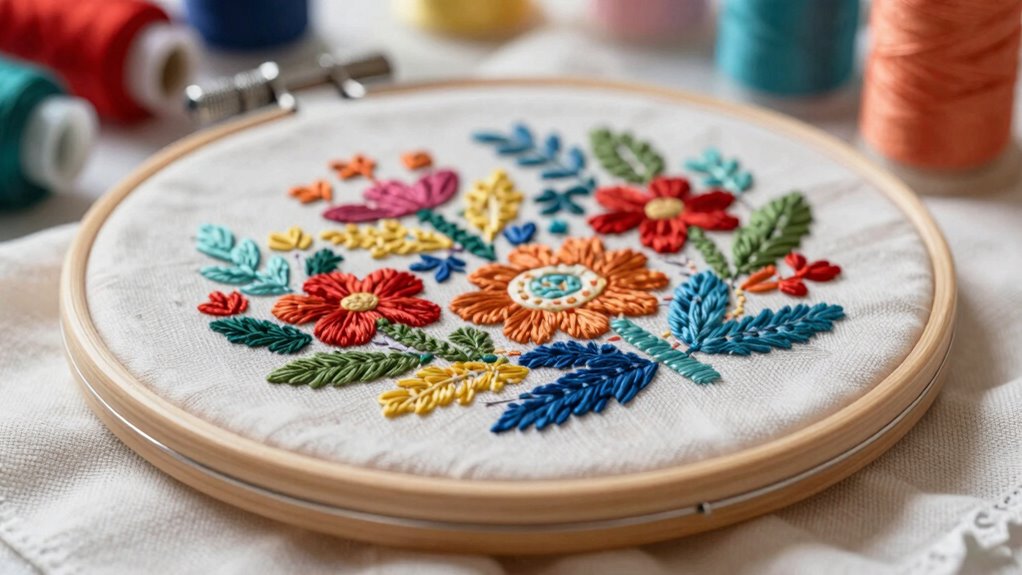

Choosing the right hoop size dramatically affects your embroidery workflow by enhancing precision, stability, and efficiency. A smaller hoop allows for intricate, detailed work with better control, while a larger one speeds up bigger projects and reduces rehooping. Proper hoop size prevents fabric distortion, guarantees consistent stitch quality, and supports ideal tension. Getting this right means smoother projects and professional results. Keep exploring to discover how selecting the perfect hoop size can transform your embroidery process completely.

Get business pricing on tools and workshop supplies
- Business-only prices and quantity discounts
- Tax-exempt purchasing
- Multiple users, one account, clear invoices
Key Takeaways
- Hoop size directly affects the level of detail and precision achievable in embroidery designs.
- Larger hoops reduce rehooping, saving time on bigger projects and improving workflow efficiency.
- Proper hoop size maintains fabric stability, ensuring consistent stitch quality and preventing distortion.
- Using the correct hoop size minimizes design misalignment and preserves embroidery accuracy.
- Hoop size influences stitch uniformity and tension, leading to a more professional and polished finished product.
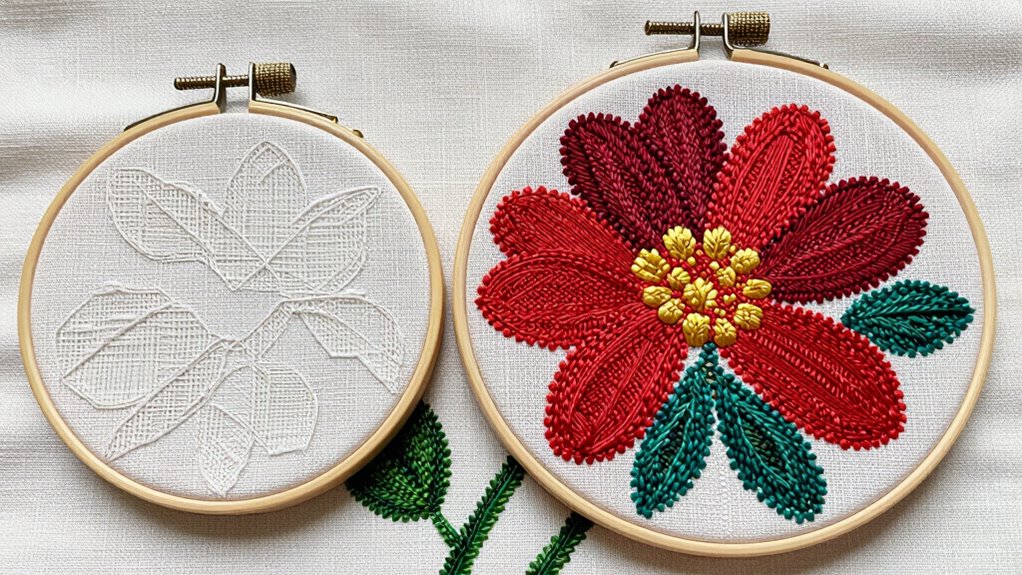
Choosing the right hoop size also affects your overall efficiency. Smaller hoops are ideal for detailed, intricate designs, as they allow for more precise placement and control. Larger hoops are better suited for bigger projects, offering a broader working area and reducing the need to re-hoop multiple times. When you use the appropriate size for your project, you save time and avoid unnecessary rehooping, which can distort fabric or misalign your design. Proper hoop selection minimizes the risk of fabric distortion and ensures your stitches are consistently neat and accurate across your entire project. Additionally, selecting the correct hoop size supports fabric stability, which is essential for maintaining design accuracy and stitch quality throughout the process. A well-chosen hoop enhances overall embroidery quality, leading to more professional-looking results. Choosing the correct hoop size also helps prevent fabric distortion that can compromise your design. Using the right hoop can also improve stitch consistency, ensuring that your embroidery remains uniform and precise. Understanding the importance of hoop tension can further optimize your embroidery results and prevent issues like puckering or loose stitches.
embroidery hoop sizes for detailed designs
As an affiliate, we earn on qualifying purchases.
As an affiliate, we earn on qualifying purchases.
Frequently Asked Questions
How Do I Choose the Best Hoop Size for Complex Designs?
When choosing the best hoop size for complex designs, you should prioritize the design complexity and hoop material. Larger hoops support intricate details, reducing the need for multiple hoopings, while a sturdy hoop material guarantees stability during detailed stitching. Opt for a hoop that comfortably fits your design without excess movement. This helps maintain precision, especially with complex patterns, ensuring your embroidery turns out clean and professional.
Can Changing Hoop Size Affect Embroidery Thread Tension?
Oh, the grand illusion that changing hoop size magically alters thread tension—fascinating! In reality, a larger hoop can enhance stability, reducing fabric shifting, which helps maintain consistent thread tension. Conversely, a smaller hoop might cause uneven tension due to instability. So, yes, hoop size indirectly influences thread tension by affecting hoop stability, but don’t expect it to be the sole fix for tension issues. It’s all about balance!
Are Larger Hoops Suitable for All Fabric Types?
Larger hoops aren’t suitable for all fabric types because they can cause fabric stretch and reduce hoop stability. When working with delicate or stretchy fabrics, a smaller hoop offers better control and minimizes distortion. For sturdier fabrics, larger hoops can be beneficial, but you must guarantee the hoop maintains stability and doesn’t cause fabric puckering. Always consider fabric stretch and hoop stability to choose the right size for your project.
Does Hoop Size Impact the Embroidery Machine’s Speed?
Ever wonder if hoop size impacts your embroidery machine’s speed? It does, but mainly through the hoop material and weight. Larger hoops often require more time to set up and stabilize, which can slow down your workflow. Heavier hoops, regardless of size, might strain the machine, leading to slower speeds or even mechanical issues. Smaller, lightweight hoops typically allow for quicker, smoother embroidery sessions.
How Does Hoop Size Influence Design Alignment Accuracy?
A larger hoop improves design alignment accuracy because it offers better fabric stability, reducing shifting during embroidery. Proper hoop tension keeps the fabric taut, preventing puckering or movement that can distort your design. When you choose the right hoop size, you guarantee your fabric stays steady and tension remains consistent, resulting in crisper, more precise embroidery. This combination helps you achieve professional-looking results with fewer errors and rework.
Conclusion
Choosing the right hoop size might seem like a small detail, but it’s the foundation that shapes your entire embroidery workflow. Just like a sturdy frame supports a masterpiece, the correct hoop guarantees precision and efficiency. While the hoop’s size might appear minor compared to design complexity, it’s often the subtle difference between a perfect stitch and a frustrating redo. Remember, in embroidery, sometimes the smallest change makes the biggest impact.
Halloween Picks
halloween
As an affiliate, we earn on qualifying purchases.