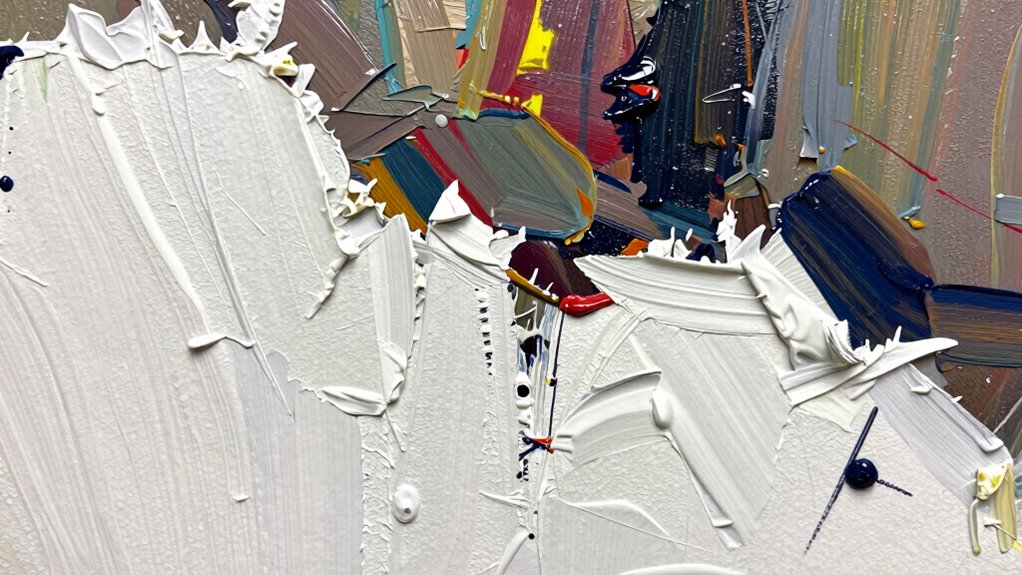

Your painted edges look messy up close because of inconsistent brush strokes, rushed tape removal, or uneven paint application. If you don’t use controlled, deliberate strokes and maintain steady pressure, the lines can become jagged or blurry. Rushing to peel off tape too soon often causes smudges and misalignment. Paying attention to technique and patience makes a big difference. Keep going to discover simple tips that can help you achieve clean, sharp edges every time.

Get business pricing on tools and workshop supplies
- Business-only prices and quantity discounts
- Tax-exempt purchasing
- Multiple users, one account, clear invoices
Key Takeaways
- Inconsistent brush strokes create uneven or blurry lines upon close inspection.
- Rushing tape application or improper pressing causes seepage and jagged edges.
- Using too much or uneven paint on the brush leads to smudges and messy edges.
- Lack of control or steady hand results in jagged or uneven painted lines.
- Not waiting for the base coat to dry before tape removal causes smudging and blurring.

When you examine painted edges up close, it’s easy to notice imperfections that make them look messy. These flaws often come down to the way you handle your brush techniques and edge tape application. If your lines appear uneven or blurry, it might be because your brush strokes aren’t consistent or because the tape wasn’t applied properly. Small missteps in either area can result in jagged or smudged edges that stand out when viewed closely.
First, let’s talk about brush techniques. Achieving sharp, clean edges requires more than just dipping your brush in paint and dragging it along the wall. You need to use controlled, deliberate strokes. Light pressure helps prevent excess paint buildup, which can cause bleeding or drips. Also, using the side of a flat brush can give you more control over the line, especially when painting around edges. It’s crucial to maintain a steady hand and work in smooth, continuous motions, rather than stopping and starting. If your brush is too wet or too dry, it can create uneven lines. Practice makes perfect—you might need to experiment with different brush sizes or angles to find what works best for you. Additionally, proper brush control is essential for achieving those crisp lines. Improving your technique can make a significant difference in the final appearance. Paying attention to paint consistency can also help prevent uneven edges and smudges.
Use controlled, steady strokes and a properly loaded brush for sharp, clean edges.
Edge tape application plays a significant role in how neat your painted edges look up close. When you stick the tape, press it down firmly along the entire length to prevent paint from seeping underneath. Any gaps or loose corners can lead to smudges and uneven lines once you peel the tape away. Wait for the paint underneath to dry slightly before removing the tape, especially if you’re working with multiple coats. This prevents smudging and ensures crisp, clean lines. When applying the tape, ensure it’s straight and flush against the surface. Rushing this step can cause misalignments that become obvious at close inspection.
In the end, messy-looking painted edges often stem from a combination of poor brush techniques and improper tape application. Improving your skills in these areas takes patience and practice, but the payoff is worth it. When you focus on using controlled strokes and applying tape carefully, your edges will look sharp and professional—even up close. Remember, first impressions matter, and neat edges can elevate the entire look of your project. With attention to detail and a bit of patience, you’ll be surprised how much of a difference these small adjustments can make.
angled paintbrush for clean edges
As an affiliate, we earn on qualifying purchases.
As an affiliate, we earn on qualifying purchases.
Frequently Asked Questions
How Can I Prevent Paint From Bleeding Over the Edges?
To prevent edge bleeding and paint smudges, use painter’s tape along the edges before painting. Apply it smoothly to create a clean barrier, and press down firmly to prevent leaks. When painting, use a small, angled brush for precise edge work, and avoid overloading it with paint. Carefully remove the tape while the paint is still slightly wet, which helps keep your edges crisp and clean.
What Tools Are Best for Achieving Clean Painted Edges?
To achieve clean painted edges, you should use painter’s tape and a high-quality angled brush. Employ brush techniques like gentle, controlled strokes and keep a steady hand to prevent bleed. Before painting, prep the edges by cleaning and taping them carefully. This combination helps you get crisp lines, minimizes mess, and makes your work look professional. Remember, good edge prep and precise brush techniques are key for perfect results.
Does the Type of Paint Affect Edge Neatness?
Think of paint like a river—its flow depends on its current. The type of paint definitely affects your edge neatness. Thicker, latex paints tend to be more forgiving, while thinner or oil-based paints can be trickier. Using proper brush techniques and ensuring the right paint consistency help control this flow, allowing you to achieve sharp edges. Adjusting your approach based on the paint type makes all the difference in a clean finish.
How Long Should I Wait Before Touching up Painted Edges?
You should wait at least 24 hours before touching up painted edges, giving the paint enough time to dry completely. Proper brush maintenance helps achieve smooth edges initially, but patience is key for touch-ups. Rushing can smudge or ruin your work. Always check the drying time on your paint can, and avoid touching the edges until they’re fully dry, ensuring a clean, professional finish.
Can Taping Techniques Improve Edge Precision?
Yes, taping techniques can considerably improve edge precision. Use edge masking tape carefully along the surface, pressing it down firmly to prevent paint bleed. When you’re done painting, wait until the paint is slightly dry but not fully cured, then remove the tape for clean, sharp edges. Proper taping and timely removal of tape after painting help achieve professional-looking results and prevent messy, uneven edges.
Conclusion
So, next time your painted edges seem wild and unruly up close, remember—they’re like a forest of tiny trees, each branch a brushstroke. From afar, it’s a masterpiece, but up close, it’s a jungle of detail. Embrace the chaos, knowing that perfection isn’t the goal—rather, it’s the beauty of the imperfect, wild edges that give your work character. Let your messy edges breathe life into your masterpiece, turning chaos into charm.
Fall yard work Picks
leaf blowers
As an affiliate, we earn on qualifying purchases.