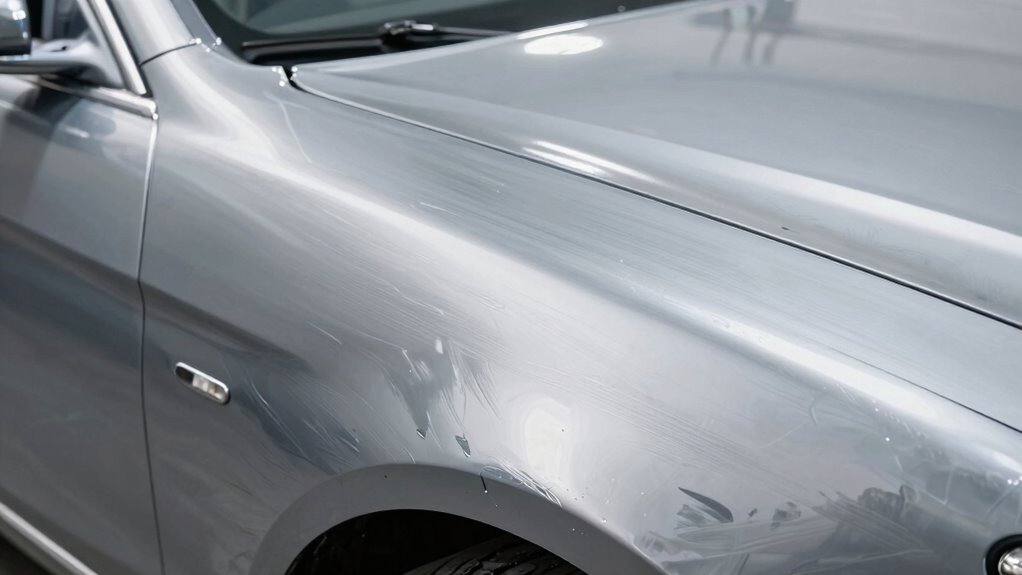

If your metallic paint looks streaky, it’s usually caused by uneven application, over-brushing, or environmental factors like high humidity or inconsistent drying. To fix it quickly, keep your strokes smooth and consistent, and avoid stopping mid-way. Lightly sanding the uneven areas and applying a thin, even coat can help improve the finish. For more tips on flawless results and fixing streaks easily, keep exploring how to get the perfect metallic look.

Get business pricing on tools and workshop supplies
- Business-only prices and quantity discounts
- Tax-exempt purchasing
- Multiple users, one account, clear invoices
Key Takeaways
- Uneven application or over-brushing disrupts reflective particles, causing streaks. Use smooth, even strokes for a uniform finish.
- Rapid drying from heat, sunlight, or drafts prevents blending, leading to streaks; control environmental conditions during application.
- Applying thick coats or stopping mid-stroke creates visible lines; use thin, consistent coats and maintain a wet edge.
- Lightly sanding between coats or over streaks can smooth uneven areas and improve reflectivity.
- Properly loaded brushes and high-quality metallic paints ensure a smoother, more even metallic finish.
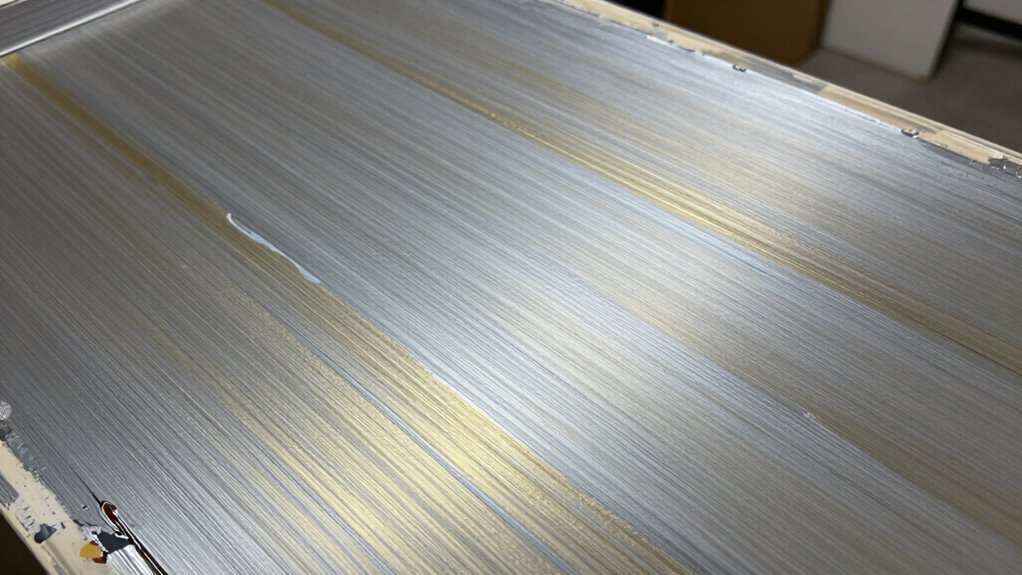
If your metallic paint appears streaky, it’s often due to uneven application or improper technique. Metallic paints are tricky because they rely on reflective particles that need a smooth, uniform layer to shine properly. When applying, your brush techniques play a crucial role. You want to use long, even strokes, maintaining a consistent pressure to avoid creating streaks or lap marks. It’s best to keep a wet edge—meaning you work quickly enough to blend each stroke into the next before it dries. Dabbing or over-brushing can disturb the metallic particles, causing uneven distribution and streaks. If you notice streaks forming, stop and lightly blend the area with a clean, damp brush to even out the finish before it dries completely. Ensuring proper application techniques can significantly improve the final look of metallic paint. Drying conditions also have a significant impact on how your metallic paint looks once it’s dried. Too much heat or direct sunlight accelerates drying, making it harder to blend and increasing the chance of streaks. Conversely, if it’s too humid or damp, the paint might not dry evenly, leading to a patchy, streaky appearance. To get the best results, work in a controlled environment with moderate temperature and low humidity. Keep the room well-ventilated but avoid drafts, which can cause rapid or uneven drying. If you’re in a hurry, using a fan or heater set at a gentle, steady rate can help speed up drying without compromising the finish. Also, choosing high-quality paint supplies designed for metallic finishes can make a noticeable difference in application and final appearance.
Another key factor is the amount of paint you apply. Thin, even coats are your best bet. Thick coats tend to drip, sag, or dry unevenly, increasing streaks. Use a quality brush designed for metallic or enamel paints, and always load your brush properly—dip just enough to cover the bristles without excess pooling. When painting, try to keep a consistent motion and avoid stopping mid-stroke, which can leave visible lines. If streaks do develop, don’t rush to fix them immediately. Allow the paint to dry thoroughly, then lightly sand the area with fine-grit paper to smooth out imperfections. Applying a second coat with proper brush techniques and ideal drying conditions will help you achieve a flawless, reflective finish.
high-quality metallic paint for furniture
As an affiliate, we earn on qualifying purchases.
As an affiliate, we earn on qualifying purchases.
Frequently Asked Questions
Can Metallic Paint Be Mixed With Regular Paint?
Yes, you can mix metallic paint with regular paint, but be cautious. Mixing helps with color blending and can improve finish enhancement, giving you a unique shade. However, guarantee the paints are compatible in type and base to avoid uneven texture or streakiness. Test your mixture first on a small area, then proceed. This way, you achieve a smooth, consistent finish that highlights the metallic effect beautifully.
Does Environmental Humidity Affect Metallic Paint Application?
Imagine painting on a foggy morning—humidity impact on metallic paint is real. High environmental humidity causes moisture to settle on your surface, making the paint dry unevenly and streaky. When humidity levels fluctuate, it disrupts the paint’s smooth application. To get the best results, paint in dry, controlled conditions, and avoid environmental factors like rain or high humidity, which can compromise your finish and leave it looking streaky.
What Type of Brush Is Best for Metallic Paint?
You should use a high-quality, soft-bristled brush for metallic paint. A good brush guarantees smooth application, helping to maintain consistent paint flow and prevent streaks. Opt for a brush with fine, natural or synthetic bristles designed for smooth finishes. Proper brush quality and maintaining paint consistency are key—dipping the brush lightly and avoiding overloading it helps achieve an even, streak-free metallic finish.
How Long Should Metallic Paint Dry Before Applying a Second Coat?
You should wait about 2 to 4 hours for metallic paint to dry before applying a second coat. This guarantees the metallic sheen develops properly and promotes good paint adhesion. Rushing this step can result in streaks or uneven coverage, diminishing the reflective quality. Patience allows the paint to set, providing a smoother, more professional finish. Check the manufacturer’s instructions for specific drying times, as they can vary.
Is It Necessary to Prime the Surface Before Metallic Painting?
Yes, priming the surface is necessary before metallic painting. Proper surface preparation guarantees your primer is compatible with the metallic paint, leading to smoother application and a more even finish. Primers help create a uniform base, enhance paint adhesion, and prevent streaks. Always choose a primer designed for metallic paints and follow the manufacturer’s instructions for best results, making your project look professional and streak-free.
Conclusion
Think of metallic paint as a mirror reflecting your craftsmanship—when streaks appear, it’s like a cloudy window blurring that reflection. But with patience and proper technique, you can clear away the haze and restore its shine. Just as a gentle breeze smooths ripples in water, your careful strokes and quick fixes will bring back the flawless, shimmering surface you envision. Keep your focus sharp, and your metallic finish will sparkle, undisturbed and true.
Fall yard work Picks
leaf blowers
As an affiliate, we earn on qualifying purchases.