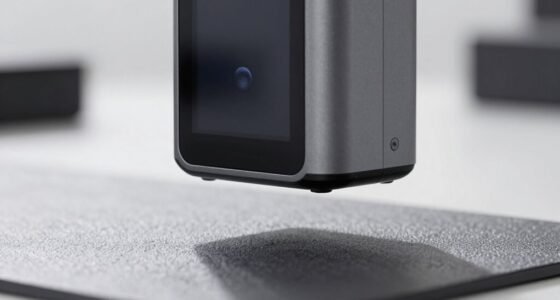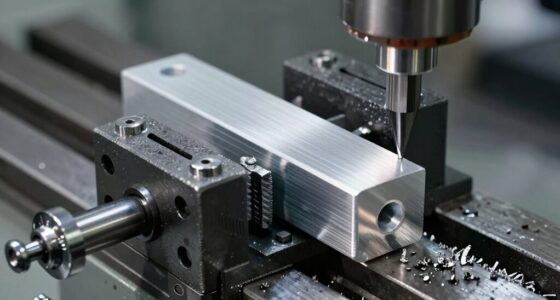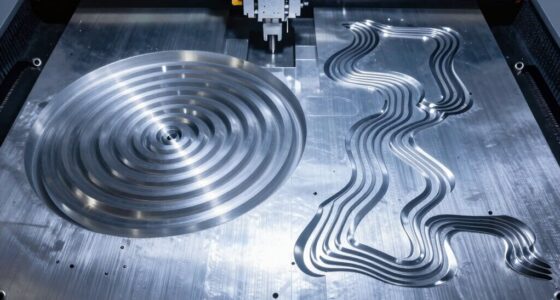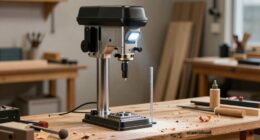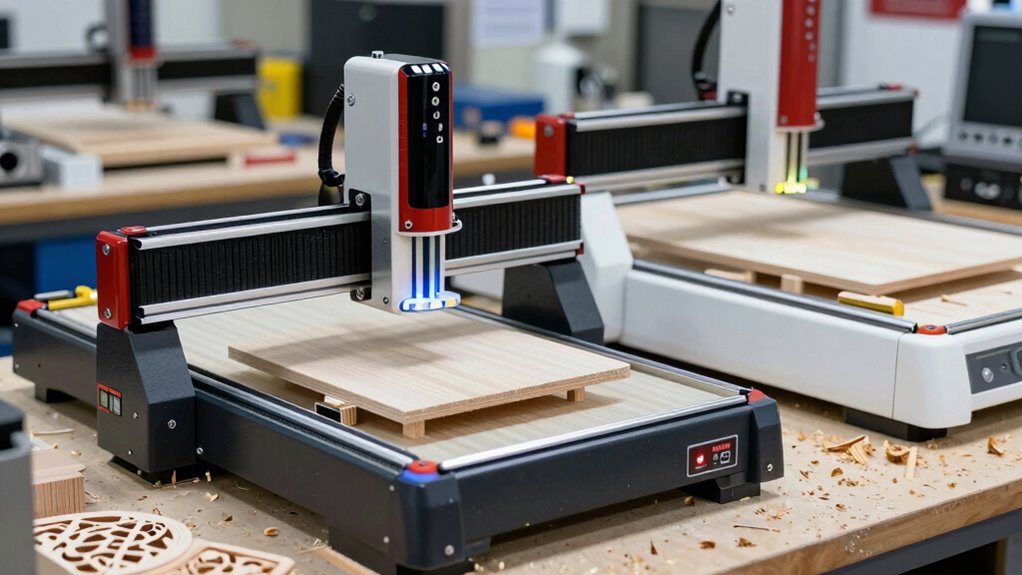

Hobby CNCs are designed for versatility, letting you work with a range of materials like wood, plastics, and soft metals, and often offer higher precision for complex projects. Craft-friendly CNCs focus on ease of use and safety, making them ideal for beginners or smaller projects such as paper or foam crafts. If you’re curious about how each type suits different goals or skill levels, you’ll find more details below to help you choose the right fit.
Key Takeaways
- Hobby CNCs offer greater material versatility and precision for complex projects, while craft CNCs focus on simplicity and safety for smaller tasks.
- Hobby CNCs support a wider range of materials, including soft metals, plastics, and hardwoods, unlike craft CNCs which mainly handle paper and foam.
- Craft CNCs are designed for ease of use and quick setup, making them ideal for beginners and smaller-scale projects.
- Hobby CNCs typically require more calibration and maintenance but enable detailed, intricate designs.
- The choice depends on project complexity, material needs, and user skill level, with hobby CNCs suited for advanced experimentation.

While both hobby CNCs and craft-friendly CNCs are designed to help you create detailed projects, they serve different needs and skill levels. If you’re exploring the world of CNC machining, understanding these differences can help you choose the right tool for your projects. Hobby CNCs typically focus on offering a broader material versatility, allowing you to work with a variety of materials like wood, plastics, and soft metals. This flexibility enables you to experiment and create diverse projects without being limited by the machine’s capabilities. Craft-friendly CNCs, on the other hand, prioritize ease of use and safety, making them ideal for hobbyists who are just starting out or working on smaller, more delicate projects. They may not handle as wide a range of materials but excel at producing precise results on specific mediums like paper, foam, or thin wood sheets.
Hobby CNCs offer material versatility, while craft-friendly models focus on ease of use and safety for delicate projects.
Material versatility is a key factor that differentiates hobby CNCs from craft-focused models. Hobby CNCs often come with features that support different bit types and adjustable settings, so you can tailor your machine to suit your material of choice. This broad compatibility means you can take on more complex projects and push your creative boundaries. Craft-friendly CNCs tend to have simplified setups and limited material options, which streamlines the process for beginners but might restrict your project scope as you grow more experienced. Additionally, understanding the different capabilities of each type can help you better match a machine to your specific needs. Recognizing material compatibility is essential for selecting a machine that aligns with your intended projects and skill level. A thorough understanding of machine features can also aid in making a more informed purchase decision, especially for those new to CNC technology. Knowing machine maintenance and calibration requirements can further ensure long-term success with your chosen device.
Precision accuracy is another critical aspect you’ll notice when comparing the two. Hobby CNCs generally boast higher precision, thanks to more advanced stepper motors and finer control systems. This accuracy is essential if you want to produce intricate, detailed designs or parts that fit together perfectly. Craft-friendly CNCs deliver enough precision for most hobbyist projects but may not reach the same level of detail, especially for complex or highly detailed work. However, they are usually easier to calibrate and operate, which benefits those new to CNC machining.
Ultimately, your choice depends on your project goals and skill level. If you want flexibility in materials and the ability to create complex, precision parts, a hobby CNC might be your best bet. If you’re looking for a straightforward machine that’s safe and easy to operate for smaller, decorative projects, a craft-friendly CNC will serve you well. Understanding these differences helps you invest in the right machine, ensuring your creative journey is both enjoyable and productive.

FoxAlien Masuter Pro 3-Axis CNC Router Machine, Beginner Hobby Engraving Machine All-Metal Structure for Wood Acrylic MDF Nylon Routing Milling Carving
All-Aluminum Structure & Enhanced Stability: Engineered with an all-metal framework and linear rail Z-axis, the FoxAlien Masuter Pro…
As an affiliate, we earn on qualifying purchases.
As an affiliate, we earn on qualifying purchases.
Frequently Asked Questions
Can Hobby CNCS Be Used for Commercial Production?
Yes, you can use hobby CNCs for commercial production, but you’ll need to take into account material compatibility and cost considerations. Hobby CNCs often handle smaller batches and lighter materials, which might limit your options for larger-scale projects. If your production demands grow, investing in a more robust, industrial-grade CNC could be necessary. Keep in mind that durability and precision are key factors when shifting from hobby to commercial work.
What Safety Features Differentiate Craft-Friendly CNCS From Hobby Models?
Think of craft-friendly CNCs as guardians at the gate, equipped with safety sensors that detect obstructions and prevent accidents. They often feature emergency stop buttons, allowing you to halt operations instantly if needed. These safety features go beyond basic models, offering added protection and peace of mind. With such safeguards, you can focus on your craft, knowing the machine actively safeguards you from potential hazards.
Do Craft-Friendly CNCS Support Advanced Software Integrations?
Yes, craft-friendly CNCs support advanced software integrations. You’ll find they offer good software compatibility, allowing you to use popular design and control programs. Plus, many models have upgrade potential, so you can enhance their software features over time. This flexibility makes them ideal for both beginner and experienced crafters who want to expand their projects and improve precision with evolving technology.
How Long Is the Typical Lifespan of Hobby Versus Craft CNCS?
A hobby CNC typically lasts around 3 to 5 years, while craft-friendly CNCs can last 5 to 10 years with proper care. Your device’s lifespan depends on factors like material compatibility and how often you use it. To maintain precision accuracy over time, regularly calibrate your machine and choose models built with durable components. Proper maintenance helps guarantee your CNC stays reliable and effective for your projects.
Are There Specific Maintenance Requirements for Craft-Friendly CNCS?
Think of craft-friendly CNCs as fine-tuned instruments that need gentle care. You should follow a regular maintenance schedule, checking and cleaning components frequently. Lubrication requirements are usually light but essential; you’ll want to keep moving parts smooth and free of grime. Maintenance frequency varies based on usage, but generally, a weekly inspection and lubrication routine helps keep your machine humming along like a well-oiled orchestra.
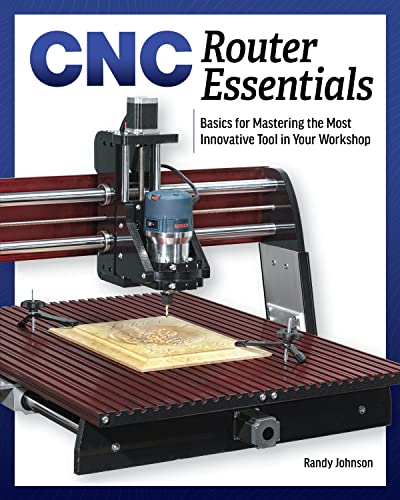
CNC Router Essentials: The Basics for Mastering the Most Innovative Tool in Your Workshop
As an affiliate, we earn on qualifying purchases.
As an affiliate, we earn on qualifying purchases.
Conclusion
So, now you see that choosing between hobby CNCs and craft-friendly CNCs is like picking the right tool for your adventure. Whether you’re a weekend warrior or a craft connoisseur, understanding their differences helps you make smarter choices. Think of it as finding the perfect pair of shoes—you want comfort, support, and a little flair. With the right CNC, you’ll turn your ideas into reality, one cut at a time.
FoxAlien Masuter Pro 3-Axis CNC Router Machine, Beginner Hobby Engraving Machine All-Metal Structure for Wood Acrylic MDF Nylon Routing Milling Carving
All-Aluminum Structure & Enhanced Stability: Engineered with an all-metal framework and linear rail Z-axis, the FoxAlien Masuter Pro…
As an affiliate, we earn on qualifying purchases.
As an affiliate, we earn on qualifying purchases.

Complete Starter Guide to Making Wooden Boxes: Learn to Craft Beautiful and Practical Containers for Everyday Use (Fox Chapel Publishing) Woodworking Techniques and Projects from Beginner to Advanced
As an affiliate, we earn on qualifying purchases.
As an affiliate, we earn on qualifying purchases.