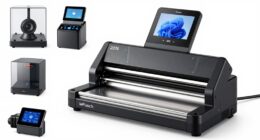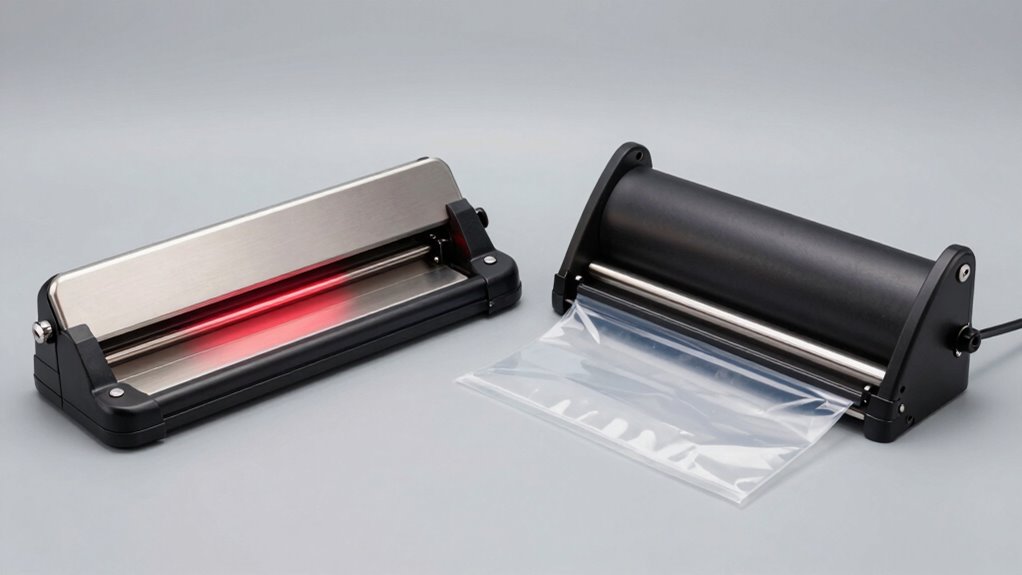
When choosing between impulse and band sealers, consider your packaging needs. Impulse sealers are ideal for small batches and lightweight materials, offering quick, reliable seals. Band sealers suit high-volume production, handling heavy or rigid materials with strong, consistent seals. Your production volume, material type, and budget will guide your choice. To guarantee you pick the best option for secure, durable packaging, explore the detailed differences and tips below.
Key Takeaways
- Impulse sealers are ideal for small-scale, lightweight packaging needing quick, reliable seals, while band sealers suit high-volume, heavy-duty packaging.
- Choose impulse sealers for precise control and lower initial costs; opt for band sealers for continuous, large-volume sealing and greater durability.
- Impulse sealers offer fast sealing times suitable for small batches; band sealers provide faster, consistent seals for large production runs.
- Consider material compatibility: impulse sealers work well with lightweight plastics; band sealers handle heavier or irregular shapes effectively.
- Match your production volume and sealing speed requirements to select the most efficient, cost-effective sealer for your packaging needs.
Which Sealer Is Right for Your Packaging Needs?
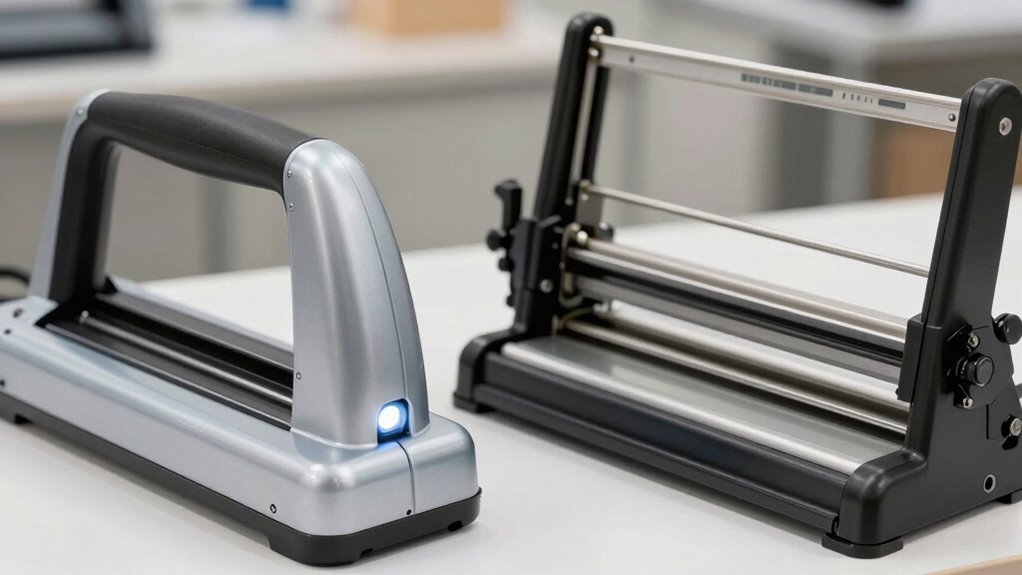
Choosing the right sealer depends on your specific packaging needs. If you require a high seal strength for durable, long-lasting packages, a band sealer often provides more consistent, stronger seals, especially for larger or thicker materials. On the other hand, if speed is a priority, an impulse sealer generally offers faster sealing times, making it ideal for small-scale or quick-turnaround tasks. Consider the type of product you’re packaging—if you need a quick, reliable seal for lightweight items, an impulse sealer could be best. For heavier or more rigid materials demanding greater seal strength, a band sealer delivers better performance. Additionally, understanding the seal quality and the technology behind each sealer can help you make an informed decision. Seal technology plays a crucial role in determining the effectiveness and durability of your seals. Ultimately, balancing sealing speed and seal strength will guide you toward the most suitable option for your specific packaging needs.
What Are Impulse and Band Sealers? (Basics of Sealing Methods)
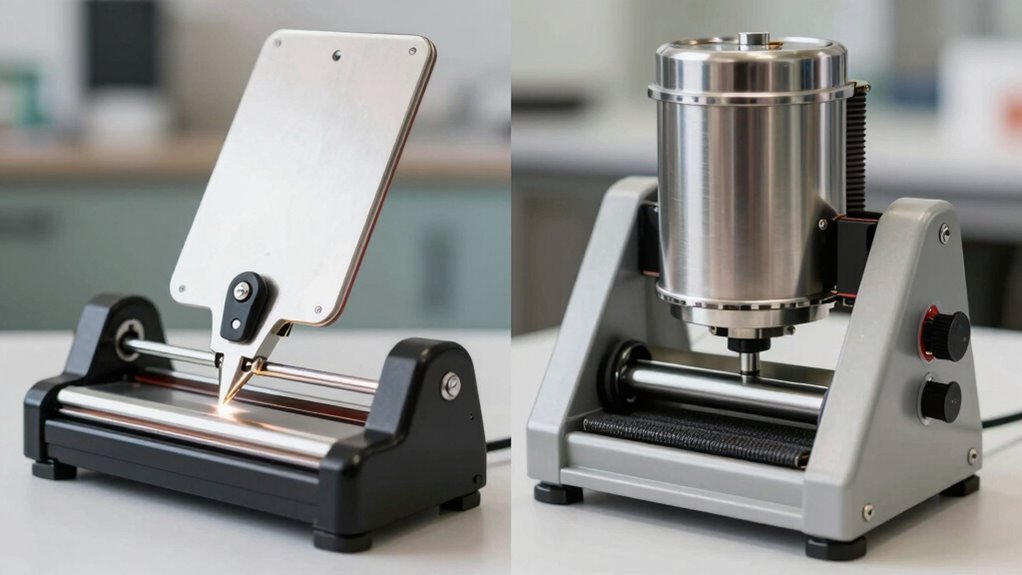
Understanding the basics of sealing methods helps you determine which equipment suits your packaging tasks. Impulse sealers use electrical current to generate heat instantly, offering quick sealing speeds and consistent sealant efficiency. In contrast, band sealers wrap around the package, providing continuous sealing for larger or irregularly shaped products. The key differences include sealing speed, with impulse sealers ideal for small batches, and their precise control, whereas band sealers excel in high-volume production. Additionally, the sealing process in impulse sealers allows for quick adjustments to sealing parameters, enhancing flexibility in various applications. Here’s a quick comparison: seal integrity
| Feature | Impulse Sealer | Band Sealer | Common Use Cases |
|---|---|---|---|
| Sealant Efficiency | High for small packs | Suitable for large volumes | Food packaging, industrial lines |
| Sealing Speed | Fast for small seals | Continuous, high-speed | Bulk sealing |
| Application | Small to medium-sized bags | Long, continuous seals | Heavy-duty packaging |
How Do Impulse Sealers Work? (Mechanics and Benefits)
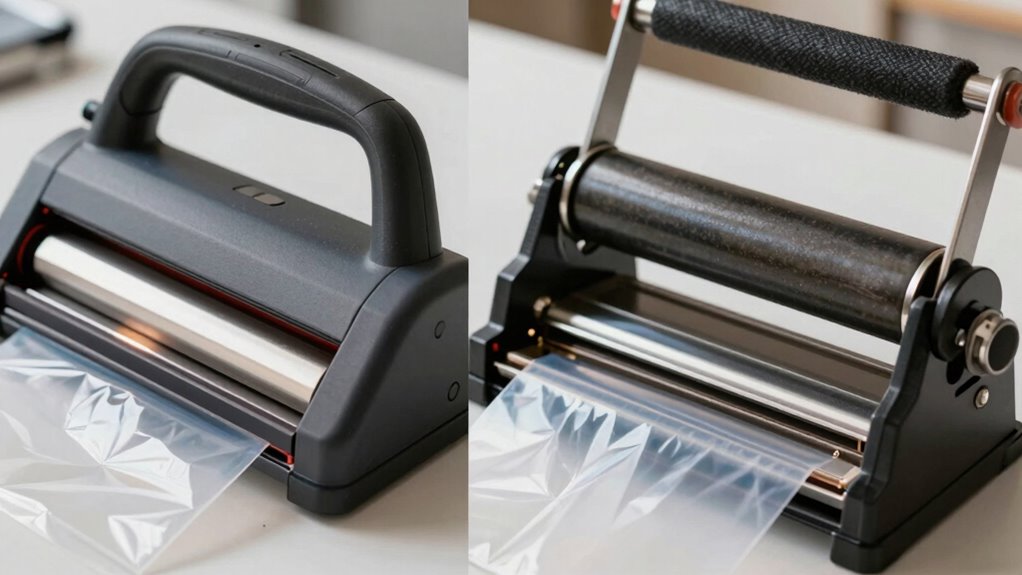
Impulse sealers operate by rapidly generating heat through an electric current that flows only when the seal is activated. This quick heat application melts the thermoplastic material, creating a strong, durable seal. Because they only heat during sealing, impulse sealers offer excellent energy efficiency, reducing power usage and operational costs. Their mechanics ensure consistent seal integrity, preventing leaks or weak spots. When you use an impulse sealer, you benefit from:
- Precise control over sealing time
- Reduced energy consumption
- Strong, reliable seals
- Minimal heat exposure to packaging
This makes impulse sealers ideal for small-scale or delicate packaging tasks. Their quick operation and focus on seal integrity ensure your products are well-protected without unnecessary energy waste. Thermoplastic sealing is the key process that enables impulse sealers to achieve such precise and reliable results.
How Do Band Sealers Function? (Heavy-Duty Sealing Explained)
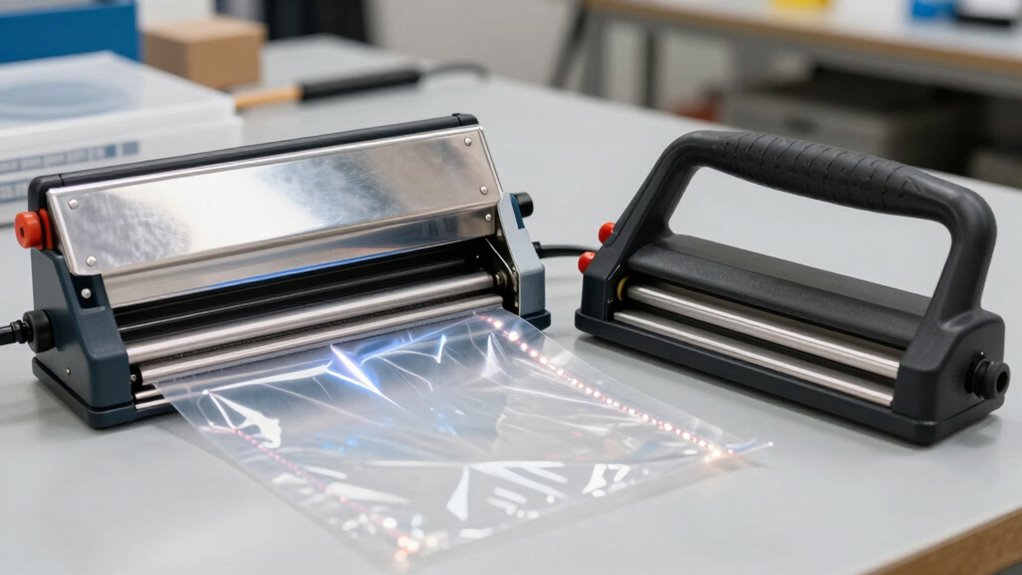
Band sealers use a heated metal band as their main component, and the heating element’s mechanics guarantee consistent, heavy-duty sealing. As you operate the sealer, the seal welding process fuses materials quickly and securely, even under demanding conditions. Material compatibility is key, so understanding which plastics or films work best helps you achieve durable, reliable seals every time.
Heating Element Mechanics
The heating element in a band sealer plays a crucial role in creating a strong, airtight seal on various packaging materials. It works by converting electrical energy into heat through electrical resistance. As current passes through the element, heat is generated, which is transferred efficiently to the sealing band. This process involves:
- Heat transfer from the element to the material, ensuring even sealing
- Maintaining consistent electrical resistance for stable temperature control
- Using durable materials to withstand high temperatures during continuous operation
- Adjusting temperature settings based on the type of packaging material
This precise control of heat transfer and electrical resistance ensures a reliable, high-quality seal, whether you’re sealing plastics, foils, or other flexible materials. Proper functioning of the heating element is essential for heavy-duty, consistent sealing performance.
Seal Welding Process
Understanding how the heating element generates heat is just the first step; the actual sealing process involves a precise welding of materials. When you operate a band sealer, the heated sealing bar presses against the seal material, causing the polymers to melt and fuse together. The sealing speed plays a vital role here—moving too quickly can result in weak bonds, while moving too slowly may waste time. The continuous band design allows for consistent pressure and heat distribution, guaranteeing a strong, airtight seal across long or bulky packages. Proper control of temperature and speed ensures that the seal material melts uniformly, creating a durable, professional finish. This heavy-duty process is essential for sealing products securely in industrial settings.
Material Compatibility
Material compatibility is essential when using band sealers, as different packaging materials respond uniquely to heat and pressure. To guarantee a strong, durable seal, you need to match your materials with the sealer’s capabilities. Factors like sealing speed and electrical requirements play vital roles in achieving ideal results. For example, thicker films such as laminated plastics require higher temperatures and longer sealing times, while thinner materials seal quickly. Consider these points:
- Some plastics, like polyethylene, work well with standard settings
- Heavy-duty materials may need adjustable temperature controls
- Sealing speed influences the quality of your seal
- Electrical requirements vary depending on the sealer’s power capacity
- Understanding material properties is crucial to optimize sealing parameters and prevent material damage. Additionally, recognizing how smart home automation can assist in monitoring and controlling sealing conditions can improve overall efficiency. Incorporating real-time monitoring tools can further enhance consistency and prevent errors during sealing processes. Being aware of material-specific sealing techniques can also help tailor your approach for different packaging needs.
Matching these factors ensures reliable seals and prevents material damage, saving time and resources.
What Factors Should You Consider When Choosing a Sealer? (Capacity, Material, Budget)
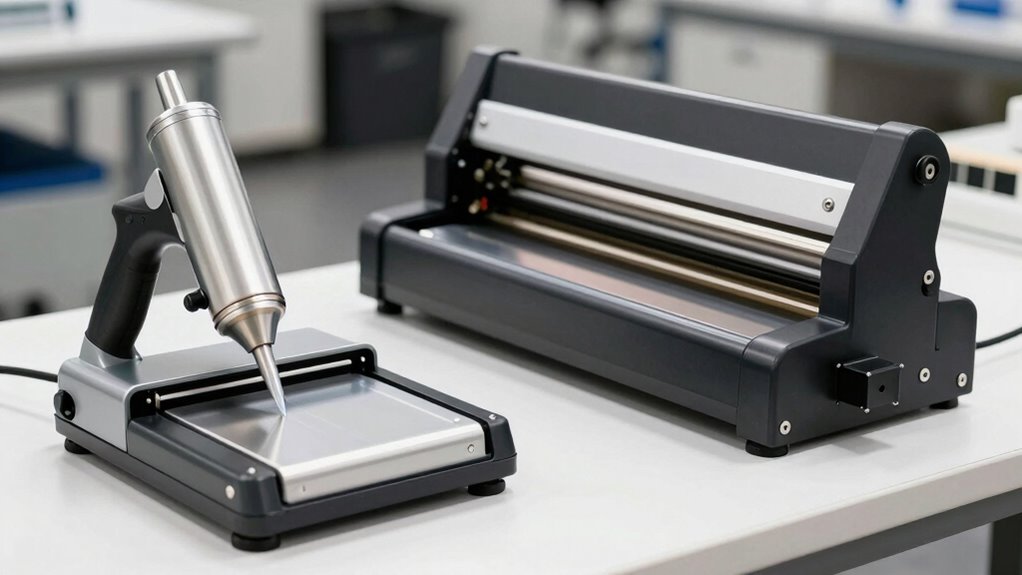
When selecting a sealer, it’s important to take into account factors like capacity, the materials you’ll be sealing, and your budget. Consider the sealer’s durability—will it withstand frequent use without breaking down? This guarantees long-term reliability. Material compatibility is also vital; some sealers work better with certain plastics or films, so choose one that suits your packaging materials. Your capacity needs depend on your production volume; a higher-capacity sealer may be necessary for larger operations. Budget plays a role too—more durable, versatile sealers tend to cost more upfront but save money over time through reduced maintenance and replacements. Additionally, paying attention to safety features can ensure reliable and secure operation over time. The maintenance requirements of a sealer can also influence your overall operational costs and should be factored into your decision. Incorporating proper training for operators can further improve efficiency and safety in your packaging process. Balancing these factors helps you select a sealer that fits your specific needs, ensuring efficiency, quality, and cost-effectiveness.
Which Sealer Is Better for Different Bag Types? (Sealing Capabilities)
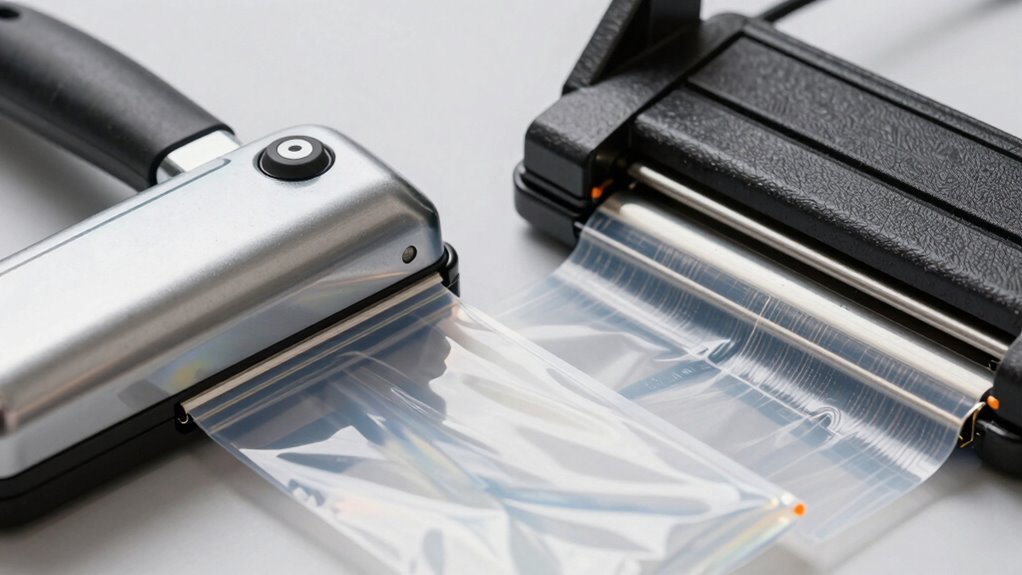
Choosing the right sealer depends on your bag’s thickness and sealing needs. You’ll want to take into account sealing width options and whether the sealer supports different sealing styles. Your choice should match the specific bag type to ensure a secure, reliable seal.
Bag Thickness Compatibility
Understanding which sealer handles different bag thicknesses better is crucial for achieving a secure seal. Your choice depends on the bag material and the thickness you need to process. Impulse sealers excel with thinner bags, offering quick sealing speed and consistent results. Band sealers are more versatile, handling thicker, multi-layer bags efficiently. Consider these points:
- Impulse sealers work best with lightweight plastics and thin films.
- Band sealers can seal heavier, multi-layer or laminated bags.
- Thicker bags may require higher sealing temperature settings.
- Sealing speed impacts productivity; faster is often better for thin bags.
Matching your bag material and thickness with the right sealer ensures durability and efficiency. Always test with your specific bags to find the ideal sealing parameters for secure, long-lasting seals.
Sealing Width Options
Sealing width plays a vital role in determining which sealer is best suited for your bag types. A wider sealing width allows for stronger, more durable seals, especially on larger or thicker bags. Impulse sealers typically offer narrower sealing widths, making them ideal for small to medium bags, while band sealers provide wider seals suitable for larger or bulk packaging. Adjusting the sealing temperature is essential to optimize the sealing width without damaging the bag material. Sealing speed also matters; faster speeds increase productivity but can compromise seal integrity if not set correctly. For thicker or more rigid bags, a wider sealing width with controlled sealing temperature and appropriate sealing speed ensures a secure, reliable seal, matching your packaging needs accurately.
Flexibility in Sealing Types
The type of sealer you select directly impacts its ability to handle different bag materials and sizes. Impulse sealers excel with thin, flexible plastics, offering quick, clean seals that enhance sealing aesthetics. They’re ideal for small to medium bags but may struggle with thicker or textured materials. Band sealers, however, provide greater flexibility for sealing larger or irregularly shaped bags, thanks to continuous operation and adjustable sealing lengths. They can handle a variety of materials, including heavy-duty films, with consistent results. When choosing, consider the environmental impact—impulse sealers use less energy for smaller jobs, while band sealers are better for bulk production. Your decision should align with your bag types to ensure superior sealing quality and efficiency. Additionally, understanding sealing capabilities can help optimize your packaging process for different materials and production scales. Recognizing the material compatibility of each sealer type ensures you select the most appropriate equipment for your specific packaging needs.
What Are the Costs, Maintenance Needs, and Longevity of Sealers?

Have you considered how much you’ll spend on different types of sealers over their lifespan? A thorough cost comparison involves not just the initial purchase price but also ongoing maintenance needs and durability. Impulse sealers usually cost less upfront and are simple to maintain, but their parts may wear out faster, reducing longevity. Band sealers tend to be more expensive initially but are built for heavy-duty use, offering longer-lasting performance with less frequent repairs. Regular maintenance, like cleaning and replacing worn parts, guarantees your sealer operates efficiently and extends its lifespan. Additionally, understanding the safety considerations associated with each type of sealer helps ensure safe operation over time. Moreover, the cost-effectiveness of a sealer is influenced not only by its initial price but also by its operational costs and potential repairs, making careful evaluation essential. For example, selecting the right jewelry materials for piercings can influence healing times and reduce infection risks, contributing to overall satisfaction and fewer complications. Considering the ease of use of each sealer can also impact your efficiency and reduce operator fatigue, ultimately affecting long-term costs. Furthermore, evaluating the energy consumption of each sealer can help you reduce operational expenses and environmental impact. Overall, understanding these factors helps you choose a sealer that balances initial costs with long-term durability, ensuring you get the best value for your investment.
How Do You Troubleshoot Common Sealing Problems? (Impulses and Bands)
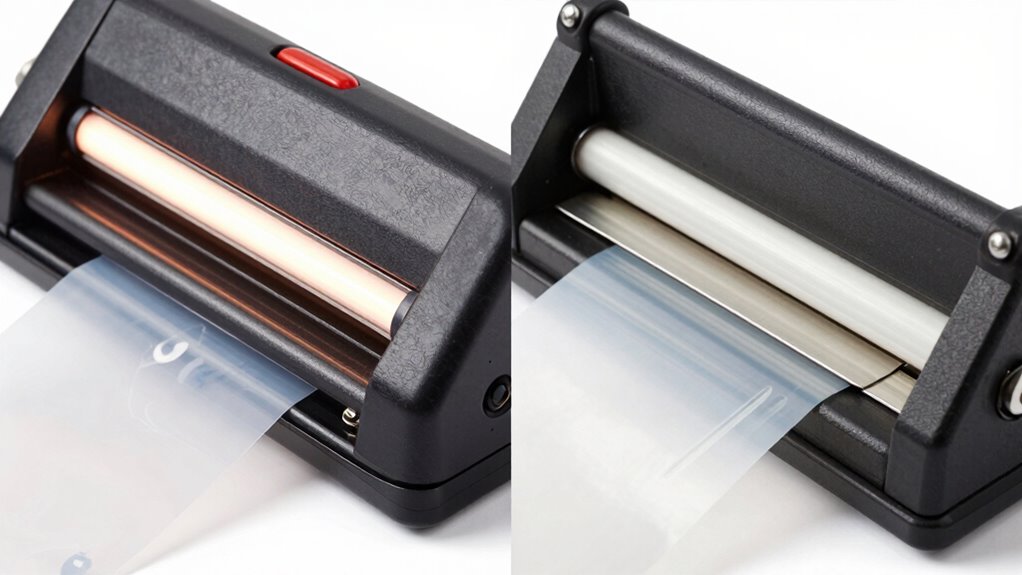
When your sealer isn’t performing as expected, identifying and fixing common issues can save you time and money. Troubleshoot by checking the seal material—if it’s too thick or uneven, it may prevent proper sealing. Confirm the equipment safety features are engaged and functioning correctly. For impulse sealers, verify the heating element and timer settings; for band sealers, inspect the band tension and sealing bar alignment. Also, examine the power supply for consistent voltage. Common problems include weak seals, uneven sealing, or seal jams. Regularly clean the sealing surfaces to remove debris or residue that could compromise the seal. Proper tool maintenance helps ensure optimal performance and longevity of your equipment. Always handle equipment with care to prevent damage. Ensuring your equipment meets the correct specifications is crucial for effective sealing. Proper troubleshooting helps maintain seal integrity and extends your equipment’s lifespan.
How to Pick the Right Sealer Based on Your Production Volume
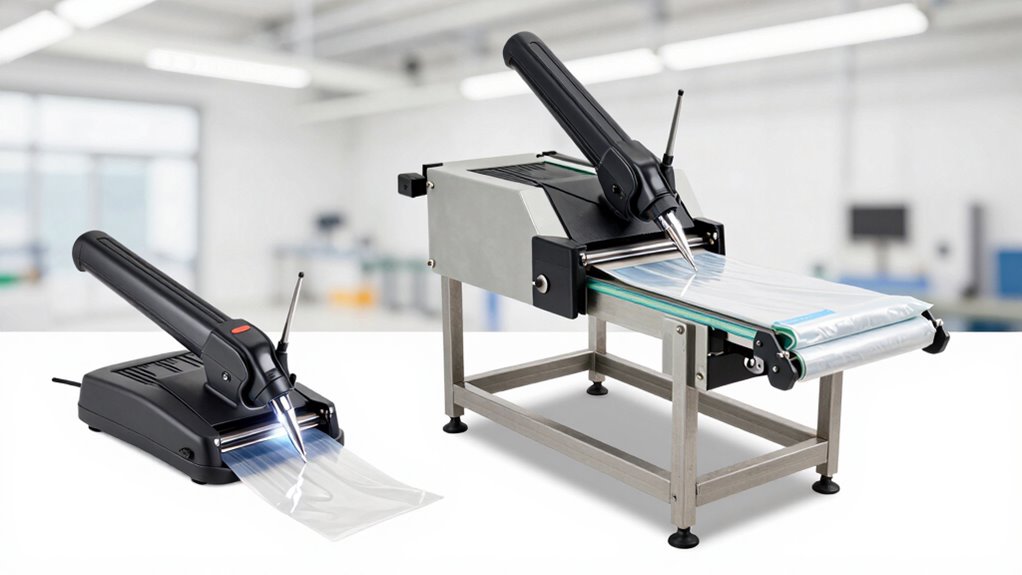
Choosing the right sealer depends largely on your production volume, as different equipment suits different throughput needs. If you’re running high volumes daily, a band sealer offers superior sealing efficiency, enabling faster processing and consistent results. It’s ideal for maintaining uniform packaging aesthetics across large batches. Conversely, if your production is smaller or intermittent, an impulse sealer provides flexibility, ease of use, and precise control, though it may not match the speed of a band sealer. Consider your volume needs carefully—higher volumes demand equipment that maximizes efficiency without sacrificing quality, while lower volumes benefit from the versatility and simplicity of impulse sealers. By matching your production scale with the appropriate sealer, you ensure ideal sealing efficiency and attractive packaging aesthetics.
Final Tips for Secure, Durable Packaging Seals
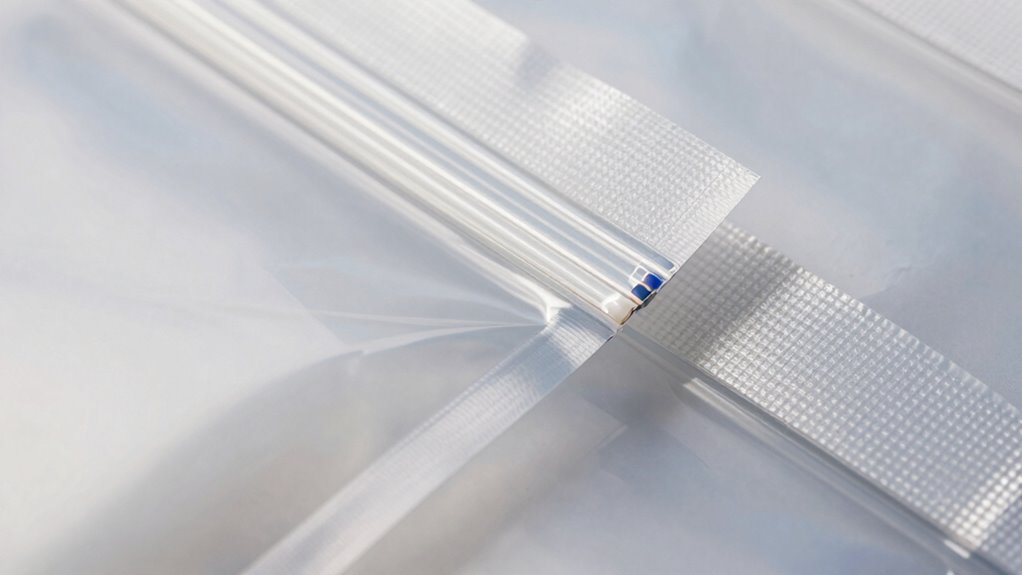
To guarantee your packaging remains secure and durable, paying attention to sealing techniques is key. Ensuring seal integrity helps prevent leaks and maintains product safety, meeting packaging standards. Here are some final tips:
- Clean the sealing surfaces thoroughly to remove dust or moisture.
- Use appropriate sealing parameters for your material and sealer type.
- Apply consistent pressure and speed to avoid weak spots.
- Regularly inspect seals for signs of wear or damage, re-sealing if necessary.
- Understanding sealing methods can help you choose the best technique for your specific packaging needs. Incorporating connected equipment like smart sealing devices can also enhance consistency and efficiency in your sealing process. Proper maintenance of sealing equipment can extend its lifespan and improve sealing quality. Additionally, selecting the right sealant materials can significantly impact the durability of your packages. Maintaining optimal seal integrity is essential for ensuring long-lasting, secure seals that protect your products effectively.
Frequently Asked Questions
Can Impulse and Band Sealers Be Used for Heat-Sensitive Materials?
Yes, impulse and band sealers can be used for heat-sensitive materials, but you need to take into account heat sensitivity and material compatibility. Impulse sealers are better for delicate, heat-sensitive items because they deliver quick, controlled heat, reducing risk of damage. Band sealers generate more heat and are suitable for thicker or more durable materials. Always test on a small sample first to ensure the sealing process won’t harm your packaging.
What Safety Features Should I Look for in a Sealer?
You should look for safety features like a safety lock, which prevents accidental activation, and overheating protection to avoid damage and guarantee safe operation. These features help protect you from burns or equipment failure. A safety lock keeps the sealer secure when not in use, while overheating protection automatically shuts the device off if it gets too hot. Prioritizing these features keeps your packaging process safe and efficient.
How Energy-Efficient Are Impulse Versus Band Sealers?
Ever wondered which sealer saves more energy? Impulse sealers are generally more energy-efficient because they only consume power during sealing, reducing overall energy consumption. Band sealers tend to use more power consistently, making them less power-efficient for small or intermittent tasks. If energy savings matter, impulse sealers are your best choice, as they optimize power efficiency and minimize electricity use, helping you cut costs and reduce environmental impact.
Are There Portable Options for Impulse or Band Sealers?
Yes, there are portable options for both impulse and band sealers. You can find mobile sealing devices designed for on-the-go use, which are lightweight and battery-operated. These portable options allow you to seal packages efficiently in various locations without needing a bulky machine. Whether you need a compact impulse sealer or a portable band sealer, these mobile sealing devices make flexible, on-site packaging easy and convenient.
How Does Sealing Speed Impact Product Packaging Efficiency?
Sealing speed directly affects your packaging efficiency by determining how quickly you can process each package. Faster sealing speeds allow you to seal more products in less time, boosting productivity and reducing labor costs. However, if the speed is too high, it might compromise seal quality, so finding a balance is key. Optimizing sealing speed helps streamline your workflow and ensures consistent, reliable packaging, saving you time and resources.
Conclusion
Choosing between impulse and band sealers depends on your packaging needs, budget, and production volume. Don’t worry—if you start with a small impulse sealer, you can upgrade later as your business grows. Imagine the confidence of sealing each package perfectly, knowing your seals are secure and durable. With the right sealer in hand, you’ll keep your products fresh and your customers satisfied, making packaging a seamless part of your success.