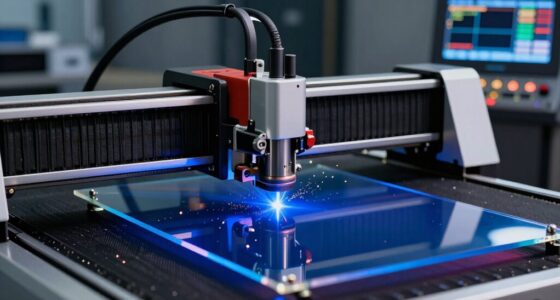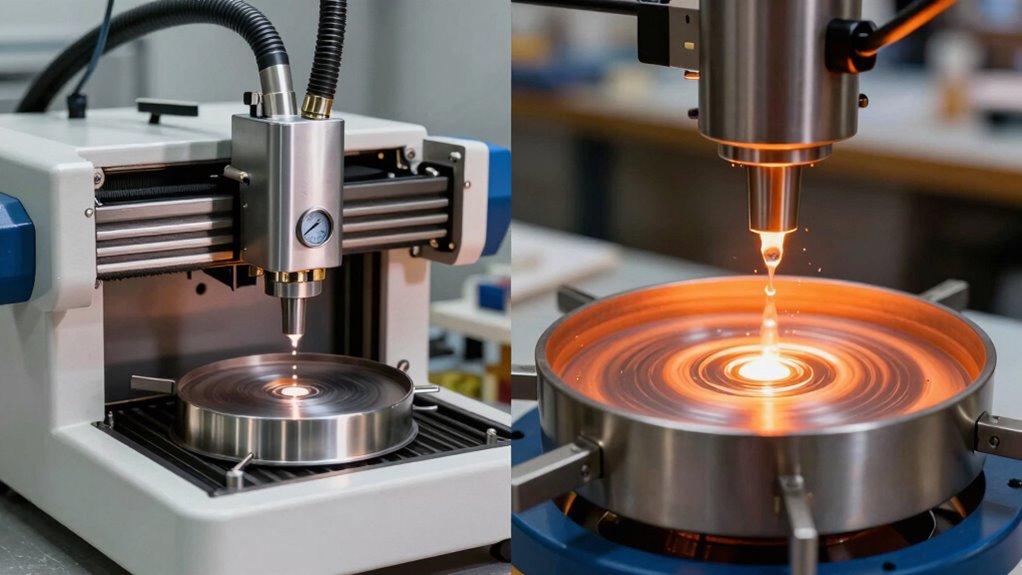

If you’re choosing between vacuum and centrifugal casting for jewelry, know that vacuum casting provides a cleaner surface, reduces porosity, and captures intricate details with precision. It’s perfect for delicate alloys and high-quality finishes. Centrifugal casting forces molten metal into complex molds quickly but may leave a rougher surface. Understanding how each method solves specific challenges helps you select the best process for your jewelry projects—explore further to discover which suits your needs best.
Key Takeaways
- Vacuum casting creates a sealed environment that reduces porosity and improves surface finish by removing trapped air during metal flow.
- Centrifugal casting uses high-speed spinning to ensure even metal distribution, especially in complex molds, but may result in rougher surfaces.
- Vacuum casting is ideal for delicate, detailed jewelry and high-precision projects, while centrifugal casting suits dense, intricate designs with less finishing.
- Vacuum methods enhance surface smoothness and reduce defects, leading to higher quality finishes on intricate jewelry pieces.
- Production speed, cost, and complexity influence method choice, with vacuum casting being faster for high-volume, detailed work and centrifugal suited for complex shapes.
Which Jewelry Casting Technique Is Right for You? Vacuum vs. Centrifugal
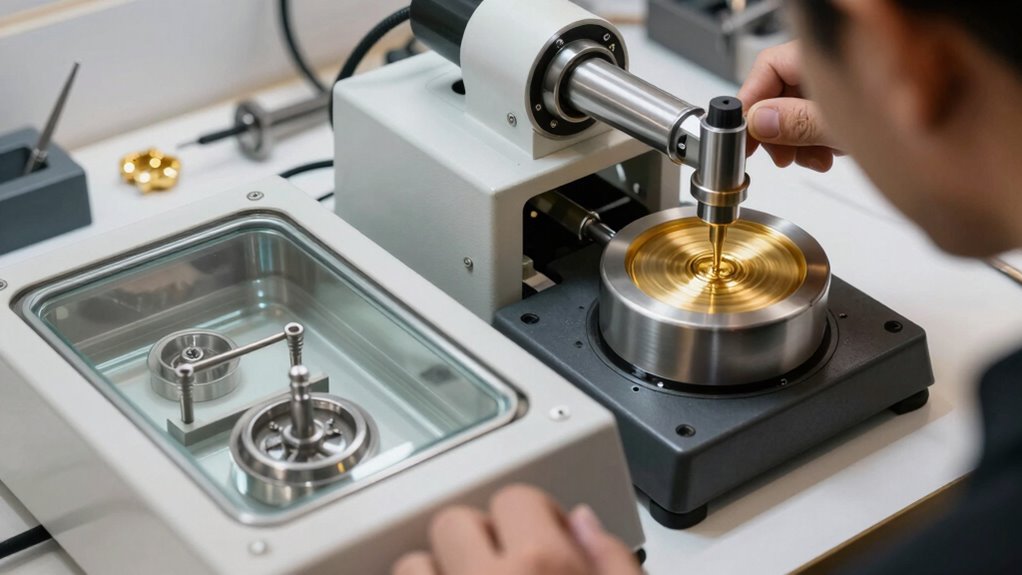
When choosing between vacuum and centrifugal casting, it’s important to contemplate how each technique works and which best suits your needs. With vacuum casting, you use a sealed environment to draw out air and gases from the casting mold, resulting in fewer voids and a smoother finish. This method is ideal for delicate metal alloys and intricate designs. Color accuracy plays a significant role in evaluating the quality of the final jewelry piece, especially when fine details matter. Additionally, vacuum casting can help reduce porosity in the final product, leading to a more uniform and high-quality finish. Centrifugal casting, on the other hand, spins the casting mold at high speeds, forcing the molten metal alloy into all corners of the mold with pressure. It’s especially effective for producing dense, solid pieces with less porosity, even with thicker or more complex molds. Your choice depends on the specific properties of your metal alloy and the intricacy of your casting mold, ensuring you achieve the desired quality and detail in your jewelry pieces.
Understanding the Key Factors in Choosing a Casting Method
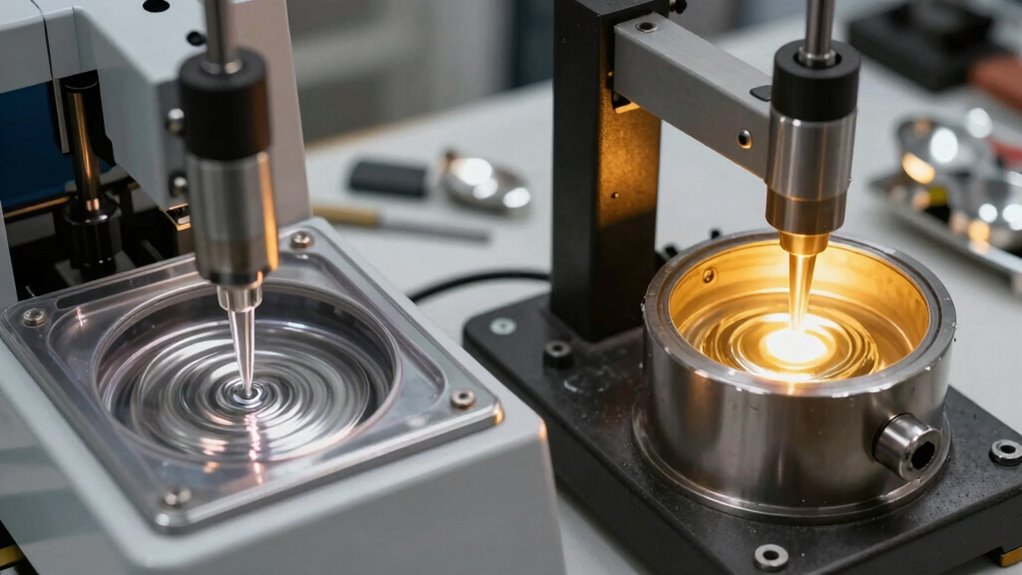
Choosing the right casting method requires evaluating several key factors that influence the final quality of your jewelry piece. First, consider alloy selection, as different alloys respond better to specific casting techniques; some may require higher temperatures or more precise control. Next, assess mold materials—some mold types handle high heat better or produce smoother finishes, affecting your choice. Additionally, think about the complexity of your design and the level of detail needed. Cost, production volume, and turnaround time also matter, as vacuum casting often offers superior surface quality for small runs, while centrifugal casting might suit larger batches. By understanding how alloy selection and mold materials interact with each casting method, you can make an informed choice that ensures durability, finish, and overall quality of your jewelry. Moreover, casting techniques can influence the final appearance and structural integrity of your pieces, making it essential to select the most suitable method for your specific needs. A thorough understanding of casting process advantages can help optimize your workflow and achieve the desired results. Additionally, considering the method’s compatibility with design complexity can further improve the quality and efficiency of your casting process.
How Vacuum Casting Helps Reduce Porosity and Improve Surface Finish
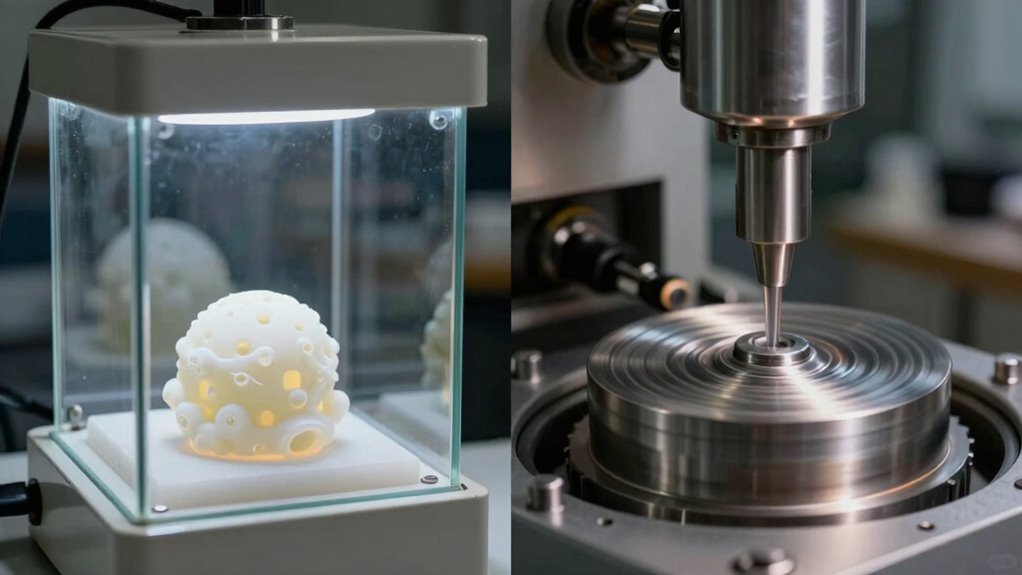
Vacuum casting substantially reduces porosity by removing air bubbles during the process, leading to stronger, higher-quality jewelry. It also enhances surface finish, resulting in smoother, more refined surfaces. By understanding these benefits, you can choose techniques that improve the overall quality of your castings. Incorporating proper ventilation considerations can further optimize casting results and safety. Additionally, employing free floating methods can minimize surface defects and improve casting consistency. Proper material handling is essential to maintain the integrity of the casting process and prevent contamination.
Porosity Reduction Techniques
Porosity is a common challenge in jewelry casting, as trapped air and gas can create voids that weaken the final piece and mar its surface. To combat this, vacuum casting is highly effective for porosity prevention because it removes air bubbles from the mold and molten metal before solidification. By creating a sealed environment, you increase casting accuracy and reduce the likelihood of porosity forming during the process. This technique ensures that the metal flows smoothly into all mold details, minimizing voids and surface imperfections. Additionally, vacuum casting helps achieve a more consistent, high-quality surface finish. The controlled environment created by vacuum casting also contributes to better control over the casting process, leading to more predictable results. Proper temperature control during the process further enhances the quality by preventing gas entrapment. Implementing appropriate techniques during casting can significantly reduce defects caused by trapped gases, ensuring a higher-quality final product. Utilizing vacuum technology is especially beneficial when working with intricate designs or alloys prone to porosity, as it greatly improves the overall quality and durability of the jewelry. Overall, using vacuum technology enhances your ability to produce durable, precise jewelry pieces with fewer defects caused by trapped gases.
Surface Finish Enhancement
By actively removing air bubbles during the casting process, vacuum technology considerably enhances the surface finish of jewelry pieces. This reduces surface imperfections, leading to improved surface quality and finish consistency. With fewer voids, your jewelry exhibits a smoother, more polished look. The vacuum process also minimizes porosity, resulting in fewer post-casting corrections. To visualize, consider this comparison:
| Aspect | Vacuum Casting | Centrifugal Casting |
|---|---|---|
| Surface Quality | High, smooth, fewer imperfections | Moderate, possible surface flaws |
| Finish Consistency | Reliable, uniform results | Variable, dependent on process |
Choosing vacuum casting ensures a superior surface finish, making your jewelry stand out with refined detail and durability. Additionally, understanding surface finish enhancement helps optimize your casting techniques for better results. Incorporating vacuum technology into your workflow is a key step toward achieving consistently high-quality jewelry, especially when aiming for imperfection reduction and a polished final product. Proper process control during vacuum casting further ensures consistent, high-quality outcomes.
Why Centrifugal Casting Is Ideal for Small or Complex Jewelry Pieces
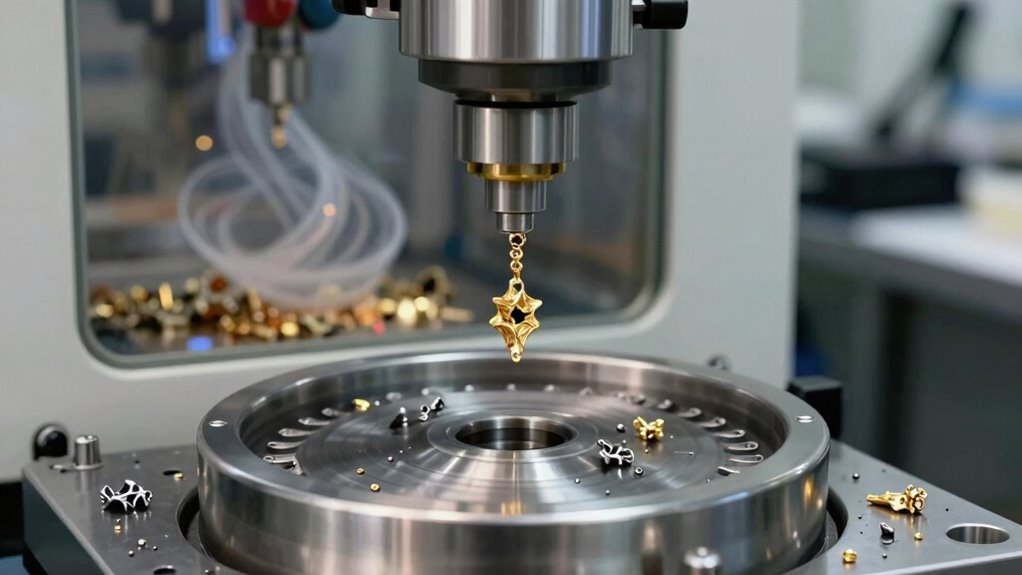
Centrifugal casting is especially well-suited for small or intricate jewelry pieces because it guarantees even metal distribution and minimizes defects. Its design ensures that alloy selection is critical; choosing the right alloy improves flowability and reduces porosity in detailed designs. The process uses specialized casting equipment that applies centrifugal force, pushing the molten metal into every tiny detail of the mold. This technique effectively fills complex cavities, making it ideal for delicate or intricate designs that might be challenging with other methods. The consistent pressure during casting helps prevent air pockets and surface imperfections, ensuring a high-quality finish. Additionally, automation in modern casting has enhanced precision and repeatability in the process. Overall, centrifugal casting offers precise control for small or complex jewelry pieces, delivering detailed, defect-free results that meet the highest standards of craftsmanship.
Speed and Cost: Which Casting Method Saves You Time and Money?
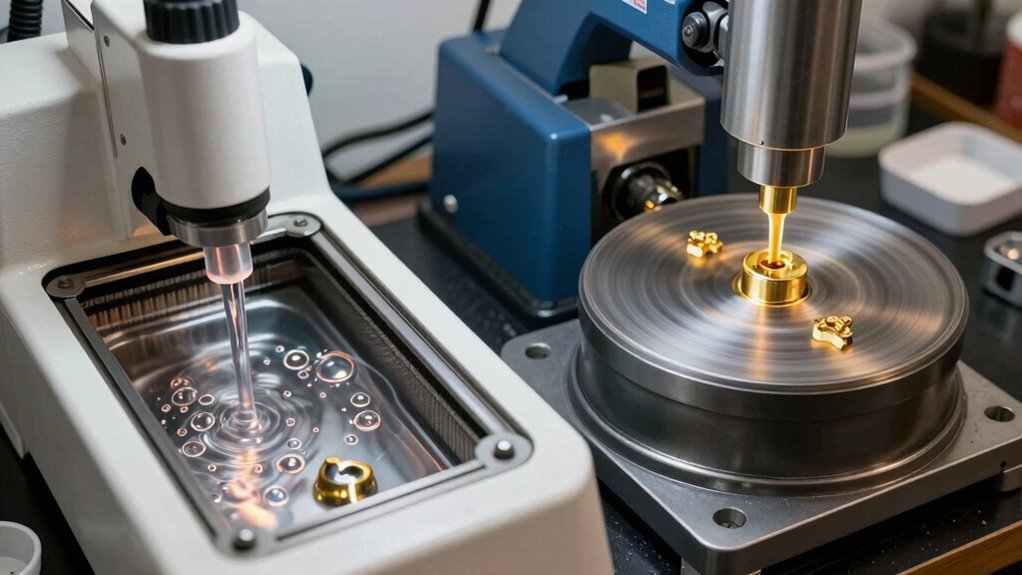
When choosing a casting method, you’ll want to contemplate how quickly it produces finished pieces and how much each process costs. Some methods offer faster production times and lower material expenses, helping you save money and meet deadlines. Additionally, labor and setup costs can considerably impact your overall budget, so understanding these factors is essential. Proper technique can also influence the safety and quality of your castings, making it an important consideration in selecting the right method. Incorporating casting safety protocols can further enhance the quality and reliability of your finished jewelry. Moreover, understanding the economic implications of each method can aid in making more cost-effective decisions in your jewelry production process. Recognizing the technological advancements in casting can also lead to improved efficiency and product consistency.
Production Speed Advantages
Choosing the right casting method can considerably impact your production speed and costs. Vacuum casting often accelerates the process by reducing the time needed for wax pattern creation and mold handling. Centrifugal casting, while potentially slower in wax pattern fabrication, speeds up casting once molds are prepared. To compare, consider this table:
| Aspect | Vacuum Casting | Centrifugal Casting |
|---|---|---|
| Wax Pattern Production | Faster due to precise control | Similar, but may require longer setup |
| Casting Mold Handling | Quicker, less preparation time | Slightly longer preparation |
| Overall Speed | Generally faster for high-volume work | Effective for complex designs |
Your choice affects how quickly you turn wax patterns into finished jewelry, directly influencing your workflow efficiency. Additionally, understanding casting techniques can help optimize your production process for better results.
Material Cost Efficiency
Understanding the material costs associated with each casting method can help you make smarter decisions that save both time and money. When comparing vacuum and centrifugal casting, consider how metal alloy selection impacts overall expenses, as some alloys are more cost-effective or easier to work with. Additionally, casting equipment maintenance plays a role, since cleaner, well-maintained equipment reduces material waste and minimizes rework.
Key factors include:
- Selecting alloys that optimize durability without inflating costs
- Regular maintenance to prevent material loss and equipment downtime
- Choosing the method that minimizes material waste based on project size and complexity
Labor and Setup Expenses
Optimizing material costs often involves selecting the right casting method, but equally important are the labor and setup expenses that influence overall efficiency. Vacuum casting typically requires more initial setup but reduces labor time with quicker mold preparation. Centrifugal casting involves simpler equipment, lowering setup costs, but may need more adjustments during the process. Consider this comparison:
| Aspect | Vacuum Casting | Centrifugal Casting |
|---|---|---|
| Setup Expenses | Higher due to equipment needs | Lower, simpler setup |
| Labor Time | Faster, less ongoing work | Slightly longer, more adjustments |
| Safety Precautions | More strict, safety gear needed | Generally simpler, safer |
Choosing the right method depends on your casting materials and safety precautions, balancing initial investment with ongoing labor costs.
Which Process Ensures More Precision for Intricate Jewelry Designs?
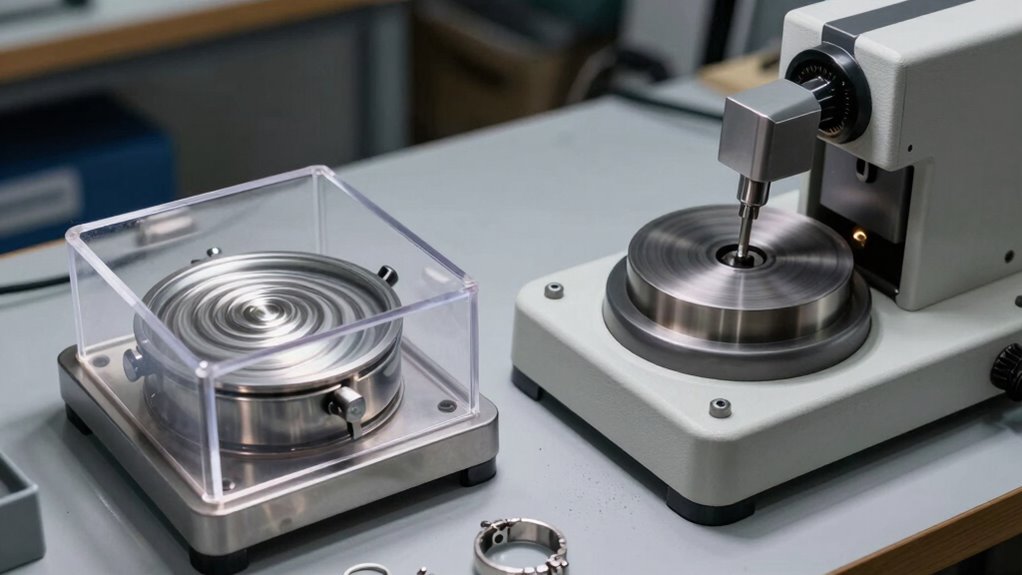
When it comes to creating intricate jewelry designs, the process that offers the highest precision is often the lost wax casting technique. This method provides exceptional precision accuracy, making it ideal for complex designs with fine details. Because you can sculpt the wax model precisely, the final metal piece closely matches your original vision.
Key advantages include:
- Superior detail reproduction for intricate patterns
- Reduced risk of distortions during casting
- Better control over design complexity
While both vacuum and centrifugal casting can produce precise results, lost wax casting ensures you achieve the most accurate and detailed outcomes. If precision accuracy for complex designs is your goal, this technique is your best choice.
How to Choose the Best Casting Method for Your Jewelry Projects
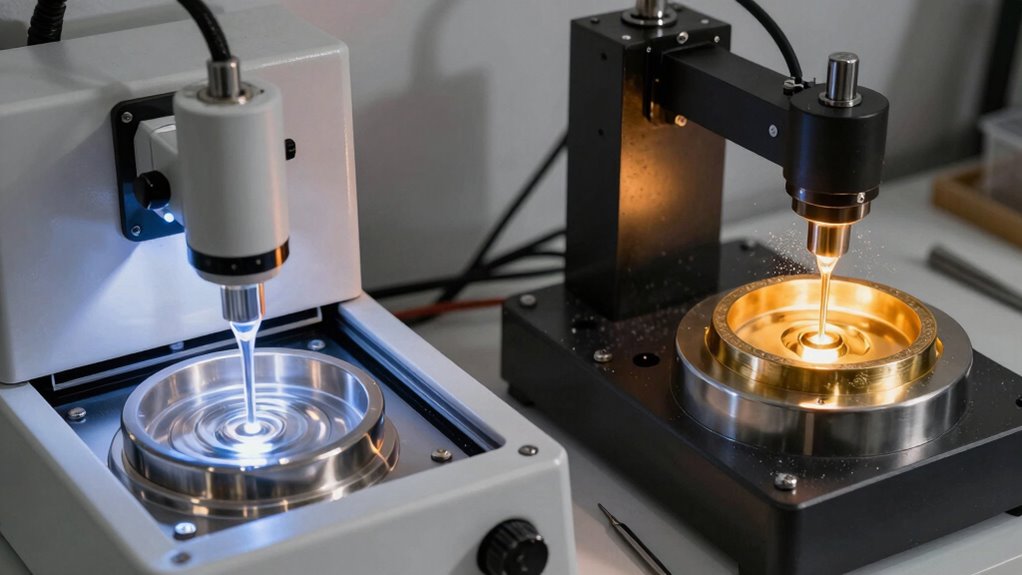
Choosing the right casting method depends on your specific jewelry project needs. Consider material compatibility first—some metals perform better with vacuum casting, while others suit centrifugal methods. Think about the intricacies of your design; vacuum casting often delivers smoother finishes for detailed work. Equipment maintenance is also vital; vacuum systems require regular upkeep to prevent contamination, guaranteeing quality results. Centrifugal casting typically demands less maintenance but may be less precise for complex designs. Evaluate your project’s complexity, material requirements, and available resources before deciding. If precision and intricate detail are priorities, vacuum casting might be the best fit. For simpler designs and faster production, centrifugal casting could be more efficient. Making this choice helps optimize your workflow and guarantees consistent, high-quality jewelry pieces.
Frequently Asked Questions
What Are the Environmental Impacts of Vacuum Versus Centrifugal Casting?
You might notice that vacuum casting generally has a smaller environmental footprint since it uses less energy and produces fewer emissions compared to centrifugal casting. Vacuum systems often recycle and filter gases, reducing waste. Centrifugal casting, on the other hand, consumes more energy due to its high-speed operation and may generate more waste. Overall, choosing vacuum casting can help lower your jewelry studio’s environmental impact.
How Do Casting Methods Affect the Recyclability of Jewelry Materials?
Did you know that nearly 90% of recycled jewelry retains over 95% of its original material purity? Casting methods markedly influence recyclability; vacuum casting maintains better alloy compatibility and minimizes contamination, making recycling more efficient. Centrifugal casting, while faster, can introduce impurities that complicate recycling. Your choice of method impacts not only production quality but also how easily materials can be reclaimed, ensuring sustainability in jewelry making.
Can Both Casting Techniques Be Used With All Types of Precious Metals?
Both casting techniques, vacuum and centrifugal, can’t be used with all types of precious metals due to metal compatibility and casting limitations. You need to take into account each method’s specific requirements and restrictions. For example, some metals may require the controlled environment of vacuum casting, while others can be safely cast using centrifugal methods. Always check the compatibility and limitations of each process with your chosen metal to ensure quality results.
How Do Casting Methods Influence the Need for Post-Processing or Finishing?
You’ll find that casting methods markedly impact your post-processing needs. Vacuum casting usually results in a smoother casting surface finish and fewer residual inclusions, reducing finishing time. Conversely, centrifugal casting may leave rougher surfaces and more residual inclusions, requiring additional polishing and cleaning. By choosing the right technique, you can minimize post-process steps, ensuring your jewelry achieves a high-quality finish with less effort.
Are There Specific Safety Considerations Unique to Each Casting Process?
When choosing a casting process, safety isn’t one-size-fits-all. You need to keep your guard up for fire hazards, especially with centrifugal casting, which involves high heat and molten metal. Always wear protective gear like gloves and eye protection, regardless of the method. Vacuum casting may pose less risk, but you should still prioritize safety. Both require proper ventilation and caution to prevent accidents, so don’t cut corners.
Conclusion
Choosing between vacuum and centrifugal casting is like selecting the right brush for your masterpiece. Each method paints a different picture—vacuum guarantees a smooth, flawless canvas, while centrifugal handles intricate details with precision. Think of it as sculpting with a gentle breeze or a powerful gust. By understanding their strengths, you’ll craft jewelry that shines as brightly as your vision, turning raw materials into stunning works of art.