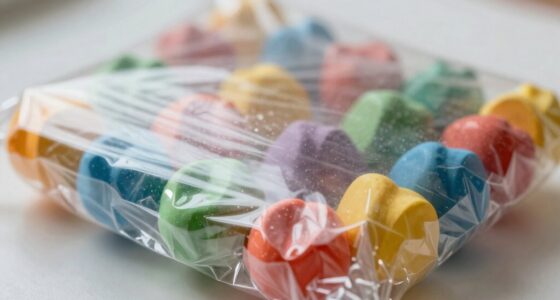
To cut tumbling time in half, choose the right media for your jewelry material—ceramic for rough surfaces, plastic for delicate pieces, or aluminum oxide for quick scratch removal and shine. Proper media selection speeds up polishing and improves results. Keep media clean, monitor wear, and adjust cycle times to optimize efficiency. If you want to uncover more tips for faster, professional finishes, keep exploring how different media impact jewelry polishing.

Get business pricing on tools and workshop supplies
- Business-only prices and quantity discounts
- Tax-exempt purchasing
- Multiple users, one account, clear invoices
Key Takeaways
- Select abrasive media like aluminum oxide for faster removal of scratches and quicker polishing results.
- Use ceramic media for durable, efficient smoothing, reducing overall tumbling time.
- Match media type and grit size to jewelry material to optimize polishing speed and quality.
- Incorporate polishing compounds and adjust tumbling cycles to enhance surface finish faster.
- Regularly inspect and replace worn media to maintain effectiveness and prevent process delays.
Jewelry tumbling media aluminum oxide
As an affiliate, we earn on qualifying purchases.
As an affiliate, we earn on qualifying purchases.
What Are the Best Tumbling Media for Jewelry Finishing?
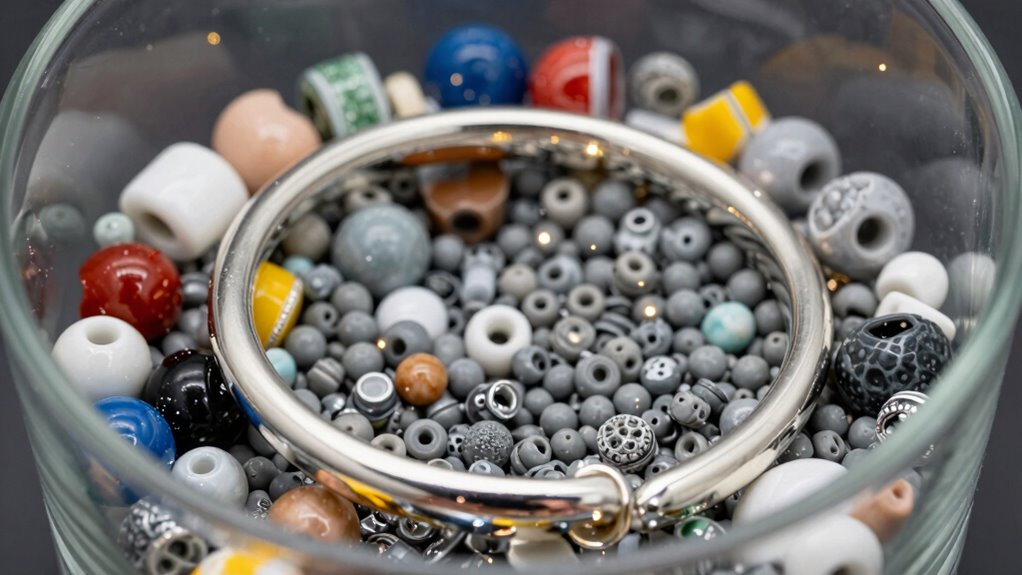
Choosing the right tumbling media is essential for achieving a smooth, polished jewelry finish. Different tumbling media types, such as ceramic, plastic, and aluminum oxide, serve specific purposes in jewelry polishing techniques. Ceramic media is durable and excellent for refining and smoothing rough surfaces, while plastic media works well for delicate pieces that need gentle polishing. Aluminum oxide, a popular abrasive, quickly removes scratches and enhances shine. Your choice depends on the jewelry material and desired finish. Using the appropriate tumbling media guarantees efficient results and reduces processing time. Understanding media compatibility and proper selection can significantly impact the quality of your finished jewelry. Additionally, selecting media with the appropriate abrasive properties can further improve your polishing outcomes. When selecting tumbling media, consider the material compatibility to ensure it works effectively with your jewelry types. Proper tumbling techniques also play a crucial role in achieving optimal results. By selecting the right media, you’ll enhance your jewelry’s appearance with minimal effort, making your tumbling process more effective and your finished pieces gleam with professional quality.
How Do Different Tumbling Media Affect Jewelry Results?
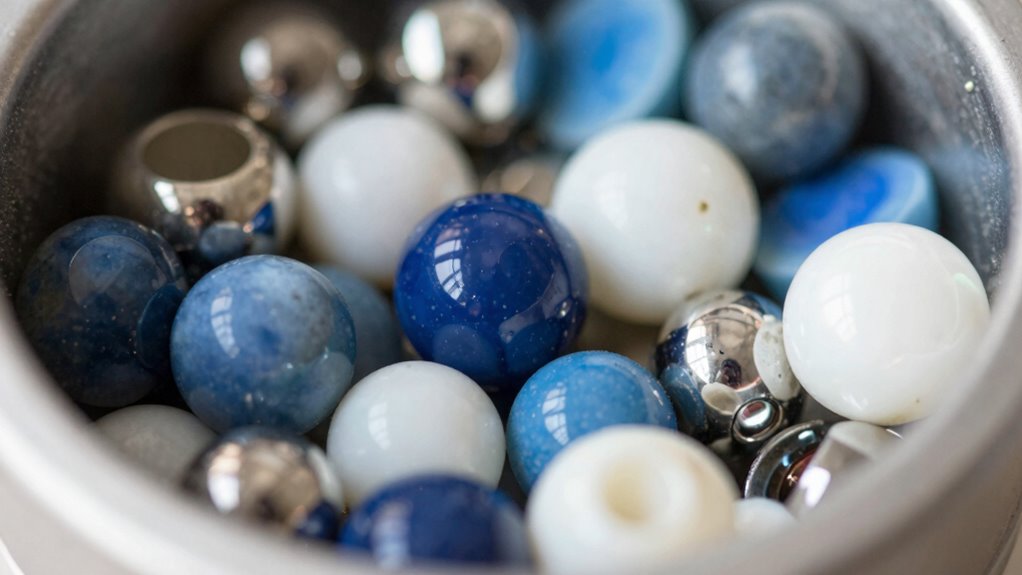
Ever wondered how different tumbling media influence the final look of your jewelry? The type of media you choose affects both the surface finish and overall appearance. Some media, like ceramic or plastic, provide a gentle polish, resulting in a smooth, shiny surface. Others, such as abrasive stones, create a matte or textured look. Tumbling media durability plays a role here; more durable media withstand longer use and maintain effectiveness over multiple runs. Media reusability is also important—reusable media saves money and reduces waste, but over time, it may lose effectiveness and need replacing. The right media choice balances desired jewelry results with durability and reusability, ensuring efficient polishing without compromising quality. Additionally, understanding the media properties helps in selecting the best options for specific finishing goals. Incorporating advanced tumbling techniques can further enhance results and efficiency in jewelry finishing. Moreover, selecting media based on technology-driven formulations can optimize polishing speed and surface quality for different jewelry types. Recognizing the impact of media hardness allows for more precise control over the surface texture and overall appearance of the finished jewelry.
How to Choose the Right Tumbling Media for Your Jewelry Material
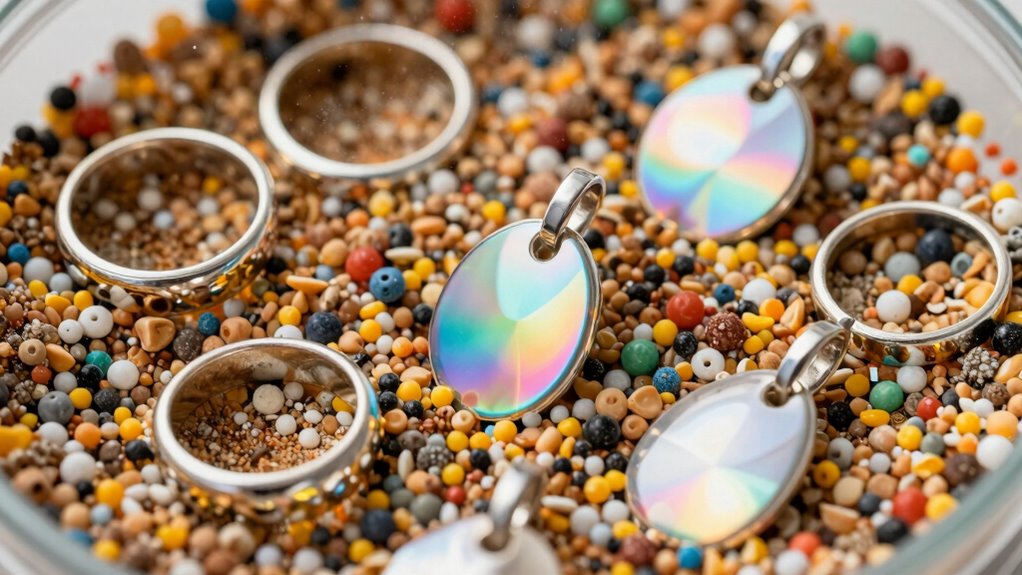
Selecting the right tumbling media depends on the type of jewelry material you’re working with, as different stones and metals respond best to specific abrasives and finishes. Proper tumbling media selection guarantees excellent results and minimizes damage. To choose the best media, consider these factors: trustworthy information—consulting reliable sources can help you determine the appropriate media for your specific jewelry materials. Additionally, understanding the piercing material compatibility ensures that the media used will not cause corrosion or damage to sensitive jewelry components. Knowing the media durability for different materials can also help you select options that last longer and provide consistent results. Moreover, selecting the right media also involves considering the machine compatibility, ensuring the media size and type suit your tumbling equipment for optimal performance. Being aware of material properties can further refine your media choice, leading to faster polishing and better finishes.
Tips to Speed Up Jewelry Tumbling and Achieve a Perfect Finish
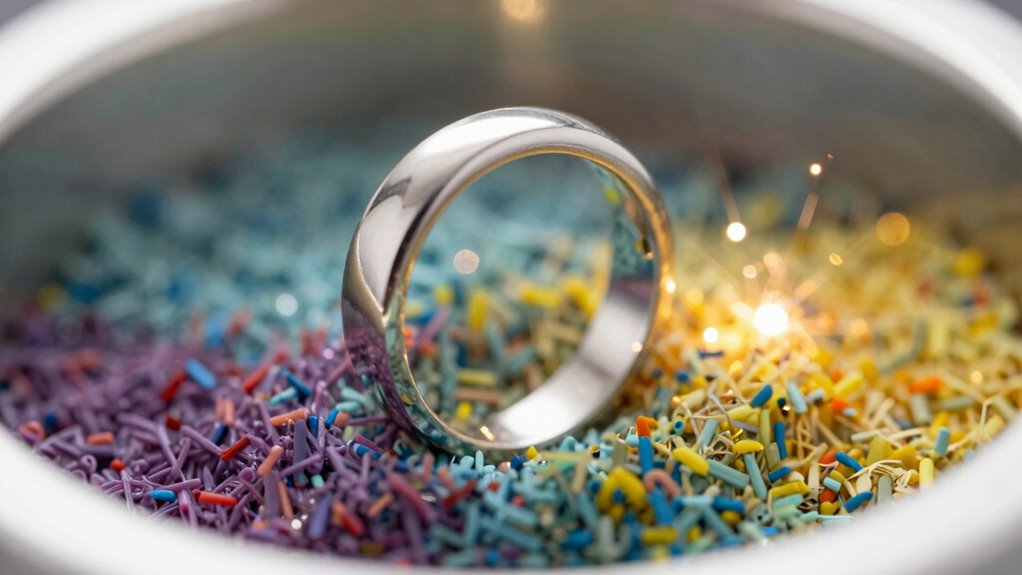
To speed up your jewelry tumbling process and achieve a flawless finish, focus on optimizing your tumbling parameters and routine. Start by carefully selecting the right tumbling media, as this directly impacts the efficiency and quality of finishes enhancement. Using media suited for your jewelry material guarantees faster material removal and smoother surfaces. Keep your tumbling cycle consistent, checking periodically to prevent over- or under-processing. Adjust the rotation speed and tumbling time based on the media and desired results. Adding a small amount of polishing compound can further improve finishes. Remember, the key is balancing media selection with proper tumbling settings, which together help cut time in half while delivering professional-quality results. Additionally, understanding the media compatibility with your jewelry type ensures optimal results and minimizes processing time. Incorporating appropriate tumbling techniques can further streamline your workflow and enhance overall efficiency, especially when applying proper loading procedures to maximize media contact and movement within the tumbler. Paying attention to water quality can also influence the effectiveness of your tumbling process, leading to better finishes and less abrasion of your jewelry. Exploring the use of plant-based remedies in your routine can also promote overall well-being and reduce stress, supporting a more holistic approach to your jewelry crafting process.
Common Troubleshooting Tips for Jewelry Tumbling Media Issues
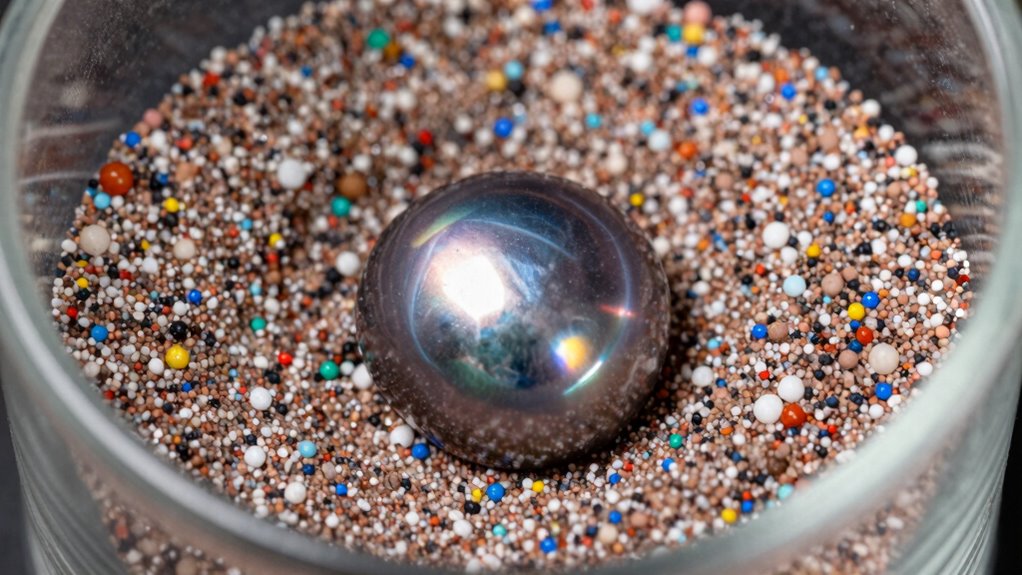
When jewelry tumbling media isn’t performing as expected, troubleshooting becomes essential to identify and resolve common issues. Media contamination or debris can cause inconsistent results, so start by inspecting the media for dirt or buildup. Regularly maintain natural beauty by ensuring your media is clean and free from residues that could impair polishing quality. Here are some tips:
- Clean the media thoroughly to remove any contamination that could affect polishing quality.
- Replace worn or broken media pieces, as damaged media can hinder performance and cause uneven results.
- Ensure you’re using the correct media type and grit size for your jewelry, since mismatched media can lead to inconsistent results.
- Consider using monitoring tools to track media performance and identify when replacements are necessary, helping to optimize your tumbling process.
- Incorporating proper media selection based on your specific jewelry materials can significantly improve polishing efficiency and consistency.
- Regularly checking for media contamination can help prevent buildup that decreases the effectiveness of the polishing process.
- Additionally, ensuring proper media maintenance can extend the lifespan of your tumbling media and enhance overall results.
Frequently Asked Questions
How Do I Recycle or Dispose of Used Tumbling Media Safely?
You should first check local regulations for media disposal, as rules vary by area. If recycling options are available, clean the used media thoroughly and take it to a designated recycling center. If disposal is necessary, place the media in a sealed bag and dispose of it with your regular waste, ensuring it’s labeled properly if required. Always prioritize environmentally friendly options whenever possible to minimize impact.
Can I Mix Different Types of Media in One Tumbler?
Mixing different types of media in one tumbler isn’t recommended; it’s like trying to mix oil and water. For best results, stick to media compatibility guidelines and avoid media mixing tips that could damage your jewelry or prolong polishing time. Combining media can cause uneven finishing and unnecessary wear on your tumbler. Keep each batch uniform to ensure consistent, professional-looking results and save time by following proper media handling techniques.
What Safety Precautions Should I Take During Tumbling and Polishing?
You should always wear protective gear like gloves and goggles during tumbling and polishing to prevent chemical exposure and debris injuries. Handle chemicals carefully, following manufacturer instructions, and work in a well-ventilated area. Keep a clean workspace, and wash your hands afterward. These precautions guarantee your safety while maintaining effective results, helping you avoid accidents and skin irritations that can occur during media handling and tumbling processes.
How Often Should I Replace or Clean My Tumbling Media?
You should replace your tumbling media when its lifespan is nearing its end, usually after several uses, or if it shows signs of deterioration. Regularly cleaning your media is essential; aim for a thorough cleaning after every few sessions to maintain effective polishing. Don’t wait until performance drops—stay vigilant. Proper media replacement and cleaning guarantee consistent results and extend the life of your equipment, saving you time and effort.
Are There Eco-Friendly or Biodegradable Tumbling Media Options Available?
Yes, you can find biodegradable media and eco-friendly abrasives for tumbling jewelry. These options break down naturally, reducing environmental impact. Look for media made from materials like coconut shells, corncobs, or biodegradable plastics. Eco-friendly abrasives such as pumice or crushed walnut shells also work well. Choosing these alternatives helps you polish your jewelry effectively while being kind to the environment. Always check product labels to verify they’re genuinely biodegradable or eco-conscious.
Conclusion
By choosing the right tumbling media, you’re wielding a magic wand that transforms rough edges into sparkling gems, cutting your finishing time in half. With a little guidance, you’ll turn your jewelry into shimmering masterpieces faster than ever. Think of your tumbling process as a well-choreographed dance—each media type playing its part perfectly. Keep troubleshooting tips in mind, and soon, your jewelry will shine brighter than a star, all thanks to your savvy media choices.
Fall yard work Picks
leaf blowers
As an affiliate, we earn on qualifying purchases.