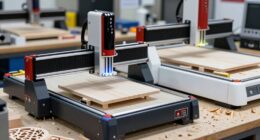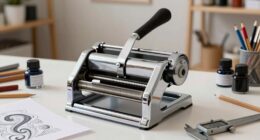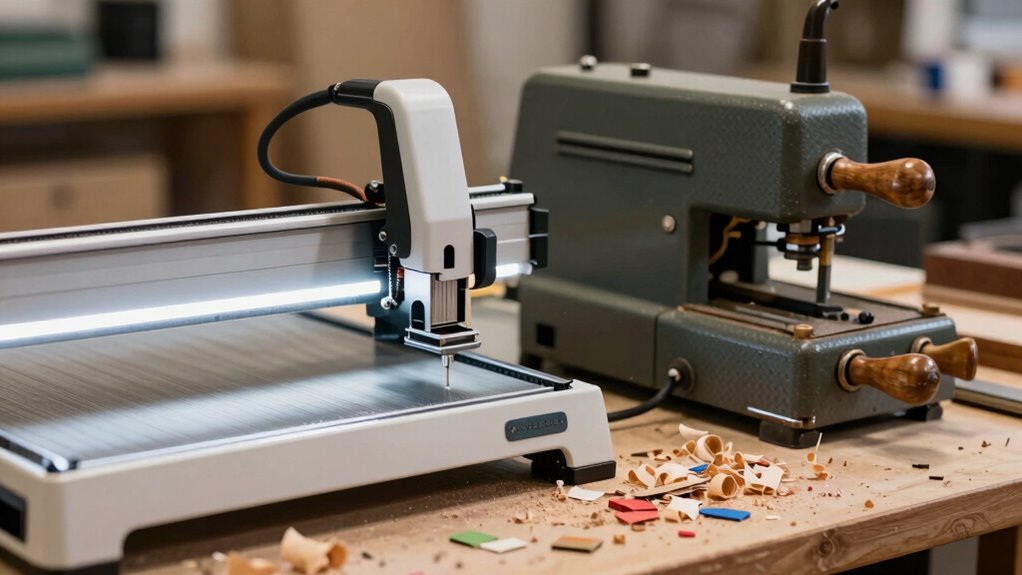

To decide between a laser and a traditional cutting machine, consider your material types, project complexity, and budget. Laser cutters excel with delicate, detailed designs on thin materials like acrylic, paper, or fabric, but may struggle with thicker or denser materials. Traditional machines are better for larger, tougher materials like leather and metal. Balance your project needs and costs—more versatile equipment offers flexibility. Keep exploring to find out which option suits your creative goals best.
Key Takeaways
- Consider material compatibility: laser cutters excel with delicate, thin materials, while traditional machines handle thicker, denser materials better.
- Match project complexity: choose laser cutters for detailed, intricate designs; traditional machines for larger, robust projects.
- Balance budget and investment: laser cutters offer precision but may be costlier; traditional machines are often more affordable for heavy-duty work.
- Prioritize safety and material handling: understand safety precautions and material limitations for each machine type.
- Evaluate future versatility: select equipment adaptable to a variety of materials to support diverse and evolving project needs.
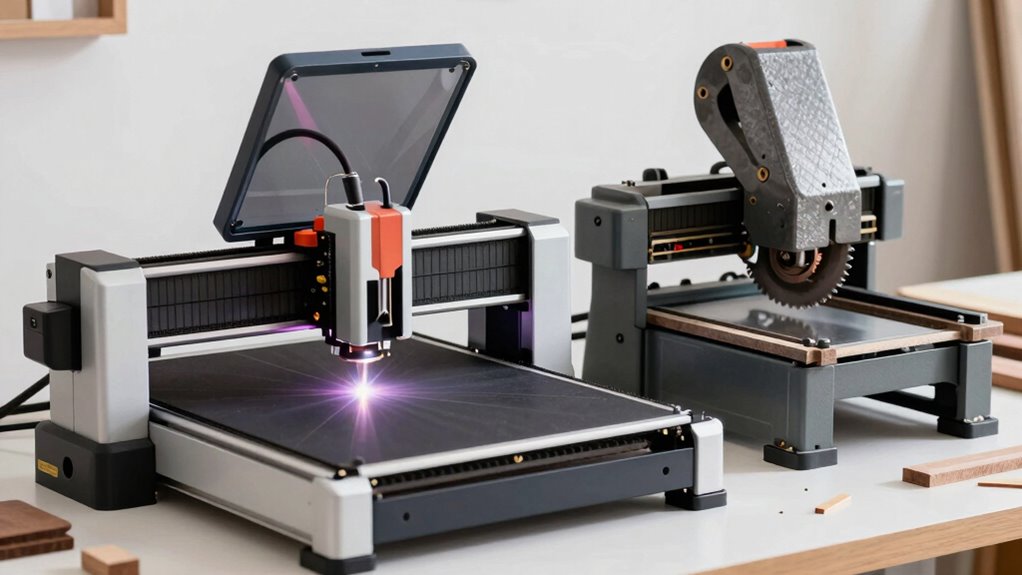
Choosing the right cutting equipment can greatly impact your project’s quality and efficiency. When deciding between a laser and a traditional cutting machine, you need to take into account several factors, starting with material compatibility. Different machines excel with different materials. For example, laser cutters work best with thin, delicate materials like paper, fabric, acrylic, and certain types of wood. They produce precise, intricate cuts and are ideal for detailed designs. However, if you’re working with thicker or more robust materials such as heavy fabric, leather, or metal, a traditional cutting machine — like a die cutter or CNC router — might be more suitable. These machines can handle denser materials and larger scales, but they might not achieve the same level of fine detail as laser cutters.
Choosing the right cutting machine depends on material type, project complexity, and budget for optimal results.
Material compatibility isn’t just about what you’re cutting now; it also involves taking into account future projects. If your work involves diverse materials, a versatile machine or a combination of equipment could be worth the investment. Keep in mind that some materials may require specialized settings or safety precautions when using a laser cutter, so knowing what you’ll be working with helps you choose equipment that’s compatible without risking damage or safety issues. Additionally, understanding material compatibility can help you avoid costly mistakes or equipment damage. Considering material versatility can also ensure you select a machine that accommodates your evolving creative needs. Being aware of material limitations can further guide your decision to prevent issues during operation or project completion. Moreover, understanding material safety considerations is crucial to ensure safe usage and proper handling of different materials with your chosen equipment. Recognizing material-specific safety precautions can help you operate your equipment more confidently and prevent accidents.

ACMER S1 Laser Engraver, 6000mW Laser Engraver Machine Higher Accuracy Lazer Cutter and Engraving Machine with Working Area 130x130mm,0.04mm Laser Spot Engraving Machines & Tools
Fr*e AcmerTool Engraving Software Included: The engraver is fully optimized for AcmerTool, our self-developed engraving software, which is…
As an affiliate, we earn on qualifying purchases.
As an affiliate, we earn on qualifying purchases.
Frequently Asked Questions
What Safety Precautions Are Necessary for Each Machine Type?
You should prioritize material safety and wear protective gear with both machines. For laser cutters, guarantee proper ventilation, eye protection, and avoid inhaling fumes. For cutting machines, wear gloves, eye protection, and work in a well-ventilated area to prevent inhaling dust or debris. Always read safety instructions, keep guards in place, and handle materials carefully to prevent accidents and ensure safe operation.
How Do Maintenance Costs Compare Between Laser and Cutting Machines?
Think of your machine as a garden: a laser is a sleek, high-maintenance rose, while a cutting machine is a sturdy, dependable tree. Laser maintenance expenses tend to be higher due to delicate parts and precision optics, which require regular upkeep. In contrast, cutting machines generally have a lower cost comparison for maintenance, making them more budget-friendly long-term. Your choice depends on balancing initial investment with ongoing upkeep.
Can Both Machines Handle the Same Materials?
Both machines can handle a variety of materials, but their material versatility depends on the specific model and capabilities. Laser machines excel at cutting and engraving materials like wood, acrylic, and leather, while cutting machines often handle thicker or more flexible materials such as fabric and paper. You need to take into account machine compatibility with your preferred materials to guarantee the best results, as not all machines are suited for every material type.
What Is the Typical Learning Curve for Operating Each Machine?
The learning curve for operating each machine might feel like mastering a new language—intense but doable. Laser cutters often require more operator training due to their precision and safety protocols, making them seem intimidating at first. Conversely, cutting machines usually have a gentler learning curve, thanks to their straightforward controls. Both offer impressive material versatility, but expect some trial and error as you become confident in your skills.
Are There Size Limitations for Projects With Each Machine?
You’ll find size limitations vary between machines, affecting your project size options. Laser cutters typically have smaller workspaces, making them ideal for detailed, smaller projects, while larger cutting machines can handle bigger pieces. Consider material compatibility too; lasers work well with delicate materials like acrylic or wood, but larger projects requiring thicker or diverse materials might benefit from a bigger cutting machine. Match your project size and material needs with the machine’s capacity for best results.

VEVOR Leather Cutting Machine, 10.2 x 5.9 in Embossing Plate Manual Die Cutter, 0.47 in Pressure Stroke Leather Embossing Machine, Dual Guide Shafts Die Cut Machine for Various of Materials
3306 lbs Impressive Load Capacity: The leather cutting machine features high-strength roller bearings and a top-quality manganese steel…
As an affiliate, we earn on qualifying purchases.
As an affiliate, we earn on qualifying purchases.
Conclusion
Ultimately, choosing between a laser and a cutting machine comes down to your specific needs, your budget, and your creative goals. Will you prioritize precision, versatility, or speed? Will you focus on delicate details or larger projects? By weighing these factors carefully, you can decide which machine aligns best with your vision. Remember, whether you choose a laser or a cutting machine, your craftsmanship will shine brighter when it matches your passion and purpose.

FoxAlien Masuter Pro 3-Axis CNC Router Machine, Beginner Hobby Engraving Machine All-Metal Structure for Wood Acrylic MDF Nylon Routing Milling Carving
All-Aluminum Structure & Enhanced Stability: Engineered with an all-metal framework and linear rail Z-axis, the FoxAlien Masuter Pro…
As an affiliate, we earn on qualifying purchases.
As an affiliate, we earn on qualifying purchases.
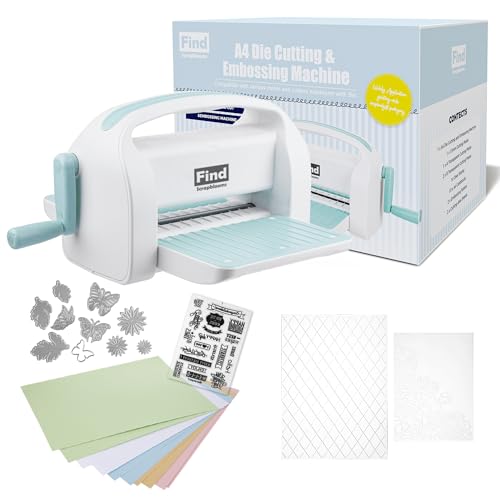
Find Scrapblooms 9 inch Opening Die Cutting Machine for Card Making, Foldable A4 Die Cut and Embossing Machine Complete Set for Scrapbooking,DIY Paper Craft (Gift Box)
A4 Manual Die Cutting and embossing Machine comes with 10pcs colorful cardstock paper,2pcs die cuts, 1set clear stamp,…
As an affiliate, we earn on qualifying purchases.
As an affiliate, we earn on qualifying purchases.