
To go from idea to template in pattern drafting, start with selecting the right fabric that matches your design and suits its behavior. Take precise measurements with a flexible tape, ensuring accuracy for a good fit. Understand how fabric properties, like stretch or stiffness, influence pattern adjustments and ease. Transfer your measurements carefully to your pattern paper, using tools for precision. Continuing will help you master these fundamentals and create perfectly fitting templates for your projects.
Key Takeaways
- Start with clear idea and purpose to guide pattern design and fabric choice.
- Take accurate body measurements using a flexible tape for proper template creation.
- Select fabric considering its weight, stretch, and behavior to influence pattern adjustments.
- Transfer measurements precisely onto pattern paper, using rulers and marking tools for accuracy.
- Adjust pattern draft based on fabric properties, ensuring correct ease and fit for the final garment.
Have you ever wondered how clothing fits perfectly from a simple piece of fabric? The secret lies in the art of pattern drafting, which begins with careful fabric selection and precise measurement techniques. When you’re starting out, choosing the right fabric isn’t just about style; it’s about understanding how different materials behave and how they’ll drape on your body. For example, lightweight cottons and linens are ideal for breathable shirts, while heavier wool or denim suits sturdy jeans or jackets. Your choice impacts the pattern’s design, ease, and overall look, so it’s essential to select fabric that aligns with your project’s purpose.
Once you’ve picked your fabric, the next fundamental step is measurement techniques. Accurate measurements serve as the foundation for creating a well-fitting template. You’ll want to take your measurements carefully, using a flexible measuring tape, and confirm the tape is snug but not tight. Measure key areas like your bust, waist, hips, shoulder width, and arm length, paying close attention to how your body naturally contours. Write these numbers down, double-check your figures, and consider how much ease you want in your finished garment. Remember, the goal of measurement techniques is to capture your body’s true shape, which helps in drafting a pattern that fits comfortably and looks tailored.
Accurate measurements are essential for creating well-fitting, tailored garments.
As you translate your measurements into a pattern, understanding how fabric selection influences pattern drafting is vital. Different fabrics stretch or hold shape differently, so you might need to adjust your measurements slightly based on the fabric’s properties. For instance, a stretchy knit might require less ease, whereas a woven fabric may need additional allowance for movement. Knowing these nuances allows you to modify your measurements accordingly, making sure the pattern will translate into a flattering, well-fitting garment.
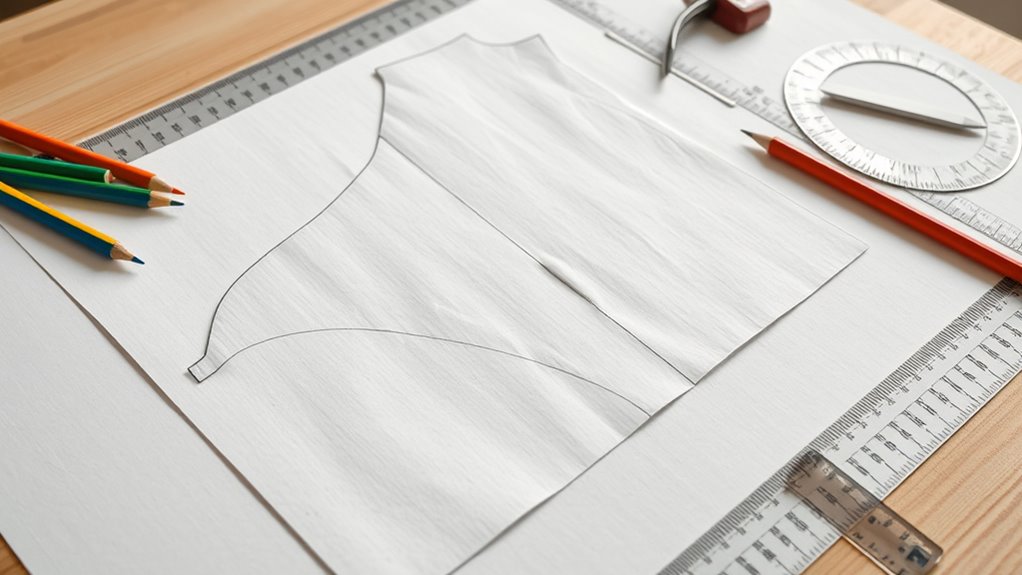
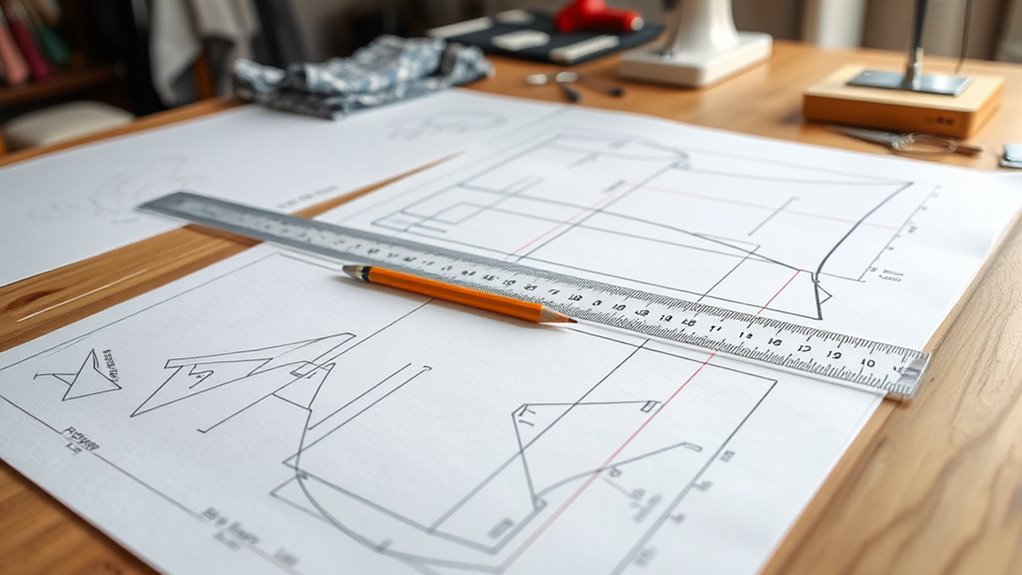
Practicing measurement techniques also involves learning how to mark and transfer those measurements onto pattern paper accurately. Use rulers, curves, and marking tools to create smooth lines that reflect your measurements. This process demands precision because even small errors can affect the final fit. As you gain confidence, you’ll develop an intuitive sense for how fabric properties and measurements work together, allowing you to draft patterns that fit your body perfectly from an initial piece of fabric. To conclude, thoughtful fabric selection combined with accurate measurement techniques aligns with fabric properties and paves the way for successful pattern drafting, transforming simple fabric into custom-fit clothing.

iBayam 2 Pack Tape Measure Measuring Tape for Body Fabric Sewing 60"/150cm
- Pack Size: 2 measuring tapes included
- Length: 60 inches / 150 cm
- Design: Double-sided, soft, portable
As an affiliate, we earn on qualifying purchases.
As an affiliate, we earn on qualifying purchases.
Frequently Asked Questions
What Tools Are Essential for Pattern Drafting?
You need essential drafting tools like rulers, French curves, and hip curves to create precise pattern lines. Fabric selection is vital, so choose the right fabric for your project. Use pencils or tailor’s chalk for marking, and scissors or rotary cutters for cutting your fabric. These tools help you develop accurate patterns from your ideas, ensuring your final garment fits well and looks professional. Always keep your drafting tools organized for efficient work.
How Do I Choose the Right Fabric for My Pattern?
Choosing fabric is like dating—look for those with fabric properties that match your pattern’s personality. If your design demands stretch, go for spandex; if drape is key, choose silk. Pattern compatibility matters too—stiff fabrics won’t bend to delicate seams. Trust your pattern’s cues: read the fiber content, consider weight, and test swatches. With a little detective work, you’ll pick the perfect fabric to bring your idea to life.
Can Pattern Drafting Be Learned Without Prior Sewing Experience?
Yes, you can learn pattern drafting without prior sewing experience. The learning curve might be steep at first, but with patience and the right beginner tips, you’ll improve quickly. Focus on understanding basic concepts like measurements and shapes before diving into complex designs. Practice regularly, watch tutorials, and don’t be afraid to make mistakes. Over time, you’ll develop confidence and skills, making pattern drafting an enjoyable and rewarding process.
How Do I Adjust Patterns for Different Body Sizes?
Think of your pattern as a blueprint that adapts to your unique shape. To adjust for different body sizes, you’ll focus on size adjustments and fit modifications, like grading between sizes or adding darts. Carefully measure your body, then modify the pattern accordingly—widening or narrowing sections as needed. This process personalizes your pattern, ensuring a perfect fit that reflects your individual form and style.
What Are Common Mistakes to Avoid in Pattern Drafting?
To avoid common pattern drafting mistakes, you should double-check for fitting inaccuracies and symmetrical errors. Always measure carefully and compare your pattern pieces to guarantee they match perfectly. Avoid rushing through the process, as haste can lead to uneven lines or distorted shapes. Use proper tools and techniques, like tracing and marking, to maintain accuracy. Regularly review your work to catch mistakes early and create well-fitting, symmetrical patterns.
Conclusion
Now that you’ve learned the basics of pattern drafting, you’re ready to turn ideas into tangible templates. Think of it as blending creativity with precision—your imagination shapes the design, but accuracy brings it to life. With practice, you’ll see how a simple sketch transforms into a detailed pattern, much like a rough draft becomes a finished piece. Embrace both the art and science behind pattern drafting, and watch your sewing projects come to life.