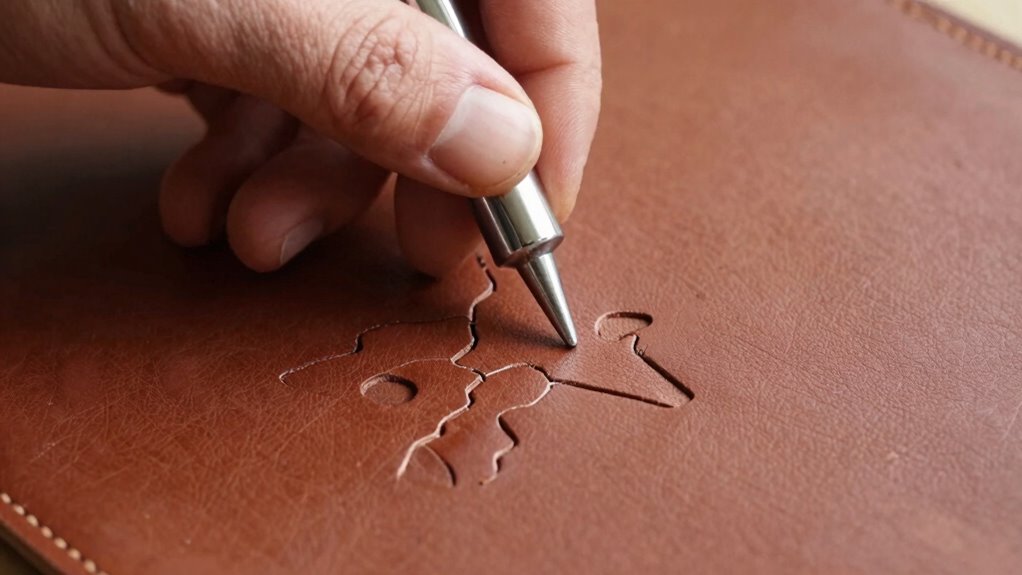
To cut leather shapes like a pro with a clicker press, start by choosing the right press and sharp, durable dies suited for your leather weight. Guarantee proper alignment and secure the die tightly to avoid shifting, which causes waste. Adjust pressure based on leather thickness, and test on scraps first. Maintain your equipment and optimize your workspace for efficiency. Keep practicing, and you’ll master precise cuts with minimal material loss—more tips await if you continue exploring.
Key Takeaways
- Select the appropriate clicker press with sufficient strength and safety features for your leather thickness and project size.
- Craft durable, sharp dies with proper clearance to ensure clean, precise cuts and reduce material waste.
- Properly align and securely clamp dies and leather to prevent shifting and achieve consistent results.
- Adjust press pressure based on leather thickness, and test on scrap to optimize cut quality and minimize waste.
- Maintain an organized workspace, keep tools sharp, and regularly calibrate your press for efficient, professional leather shaping.
How to Choose the Right Clicker Press for Leatherwork
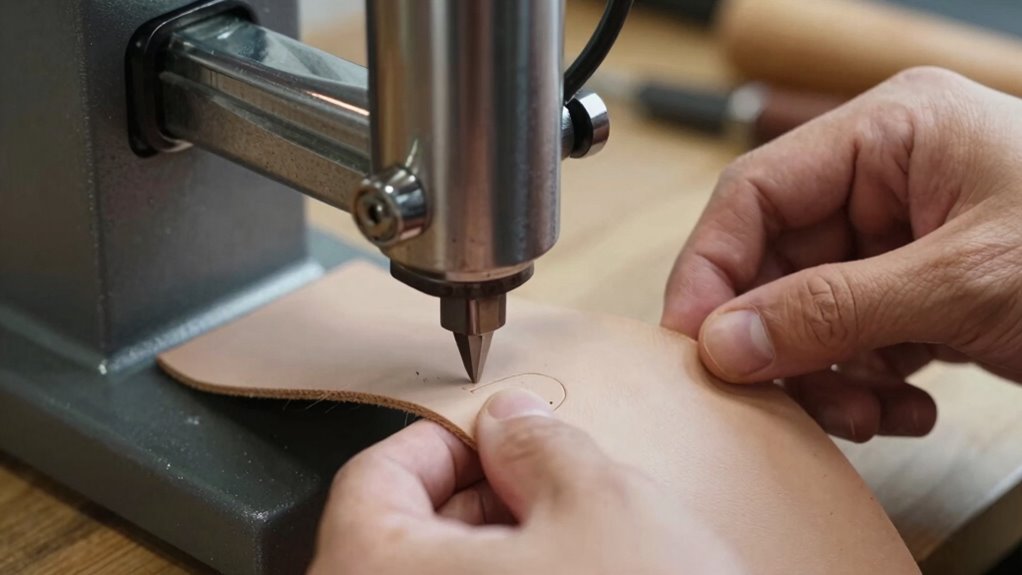
Choosing the right clicker press for leatherwork depends on understanding your specific project needs and material thickness. Start by considering the type of leather you’ll use and its density, as this influences the press’s strength and capacity. Material selection is key—thicker, tougher leathers require a more powerful press with higher cutting force. Safety precautions are equally important; confirm your press has safety features like guards or emergency stops to prevent injury during operation. Check the press’s maximum capacity to match your typical project sizes. Additionally, consider the ease of use and whether the press allows for quick adjustments. Understanding the material properties of your leather can help you choose a press that offers optimal performance for your projects. Proper maintenance procedures can extend the lifespan of your equipment and ensure consistent results. Regularly inspecting and cleaning your press ensures safe operation and maintains its cutting accuracy. Incorporating manufacturer guidelines and recommended settings tailored to your specific machine will also enhance performance and safety. To further ensure reliable operation, familiarize yourself with recommended safety practices for handling and operating heavy equipment. By evaluating these factors, you’ll select a clicker press that’s efficient, safe, and tailored to your leatherworking needs.
Understanding the Basics of Your Clicker Press
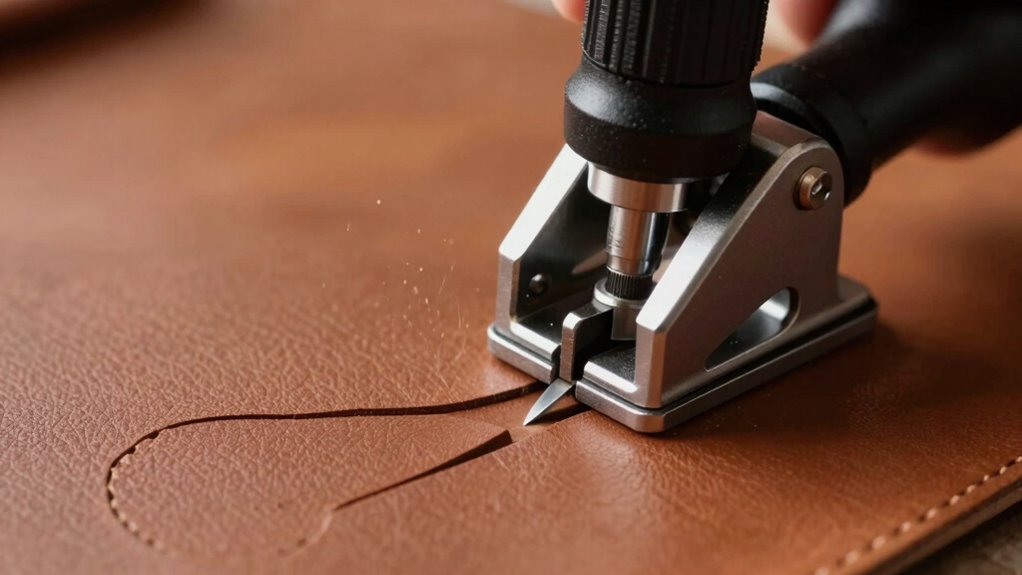
To operate your clicker press effectively, you need to understand its main components and how they work together. Learning proper techniques guarantees safety and precision during each press. Let’s review the essential parts and best practices to get the most out of your equipment. Additionally, understanding tool maintenance and regular inspection can extend the lifespan of your press and improve its performance. Being aware of contrast ratio and its influence on image quality can also help you optimize your setup for clearer, more detailed results. Regularly checking electric safety features ensures safe operation, especially when working with high-powered machinery. Implementing a well-planned shop layout can streamline your workflow and reduce the risk of accidents during operation. Proper shop organization further enhances efficiency and safety during your projects.
Press Components Overview
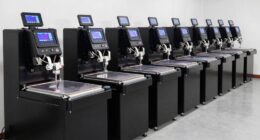
Understanding the basic components of your clicker press is essential for effective operation and maintenance. The press frame provides the sturdy foundation, supporting all other parts and guaranteeing stability during use. It’s vital to inspect the frame regularly for any signs of wear or damage. Safety features are built into the press to protect you, such as emergency stop buttons and safety guards that prevent accidental activation. The mechanical arm or handle is what you use to operate the press, applying downward force to cut the leather. Other components include the cutting die holder and compression plates, which hold your dies securely in place. Knowing how these parts work together helps you troubleshoot issues quickly and guarantees safe, efficient cutting every time. Additionally, understanding the innovative safety features incorporated into modern clicker presses can further enhance your safety and efficiency during operation. Familiarity with press maintenance routines ensures longevity and optimal performance of your equipment. Regular cleaning and inspection of component alignment can prevent malfunctions and improve the precision of your cuts. Maintaining proper machine calibration also plays a crucial role in achieving consistent, high-quality results, and staying informed about technological advancements can help you optimize your cutting processes.
Proper Operation Techniques
Proper operation of your clicker press is key to achieving accurate cuts and ensuring safety. Start by maintaining an ergonomic setup, with your work height and hand positions comfortable to reduce fatigue. Always follow safety precautions, such as wearing gloves and eye protection, and keeping hands clear of the cutting path. Before pressing, double-check that the die and leather are aligned properly. Use smooth, controlled movements to apply even pressure, avoiding sudden or excessive force. Regularly inspect the press for wear or damage. Integrating connected equipment can further enhance precision and safety during operation. Additionally, understanding machine maintenance helps prevent malfunctions and extends the lifespan of your press. Proper press calibration ensures consistent results and reduces material waste. To maintain optimal performance, consult your machine’s manual regularly and perform routine inspection and cleaning. Here’s a quick guide:
| Step | Safety Precaution | Ergonomic Tip |
|---|---|---|
| 1 | Wear protective gear | Adjust height for comfort |
| 2 | Keep hands clear | Use proper stance |
| 3 | Check alignment | Maintain neutral wrist position |
Setting Up Your Clicker Press for Precise Cutting
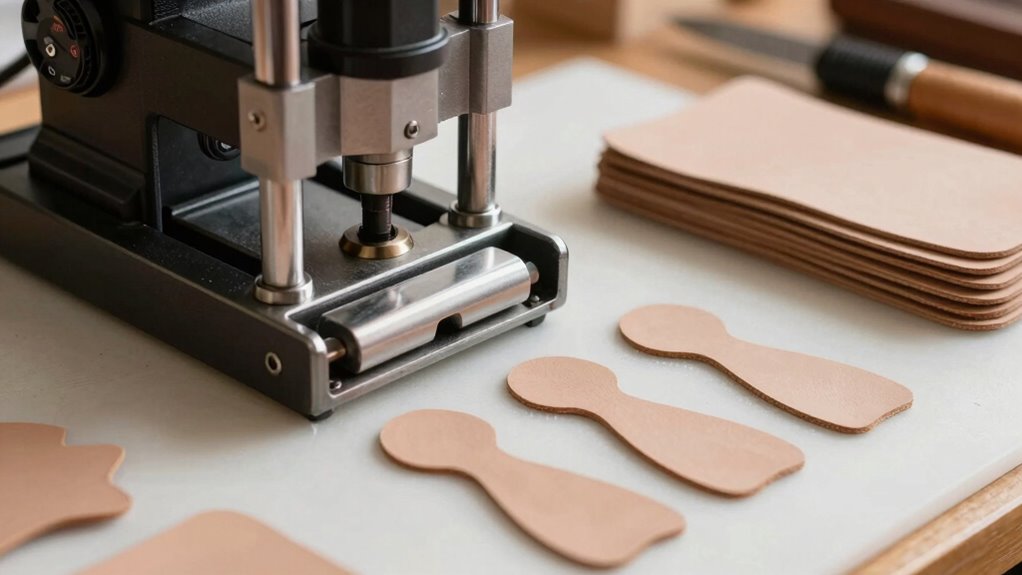
Ensuring your clicker press is accurately set up is essential for precise cuts every time. Start by checking the alignment of your cutting die and the leather. Properly positioning the leather guarantees clean, consistent shapes, reducing waste. Before cutting, consider how your leather stamping or dyeing techniques might affect thickness or surface texture. Adjust the press pressure accordingly—too much pressure can distort the leather, while too little may cause incomplete cuts. Test on scrap leather first. Make sure the die is securely fastened to prevent shifting. Proper setup is a crucial factor in achieving reliable results. Fine-tuning these settings guarantees sharp, accurate cuts and helps you maintain control, especially when working with dyed or stamped leather. Additionally, paying attention to environmental conditions such as humidity can influence the leather’s behavior during cutting. Maintaining appropriate humidity levels can help prevent warping or moisture-related issues, ensuring consistent results. Being aware of material properties and how they respond to environmental changes can further improve your cutting precision. Material consistency plays a vital role in minimizing errors, saving you time and material.
Designing and Using Leather Cutting Dies Effectively
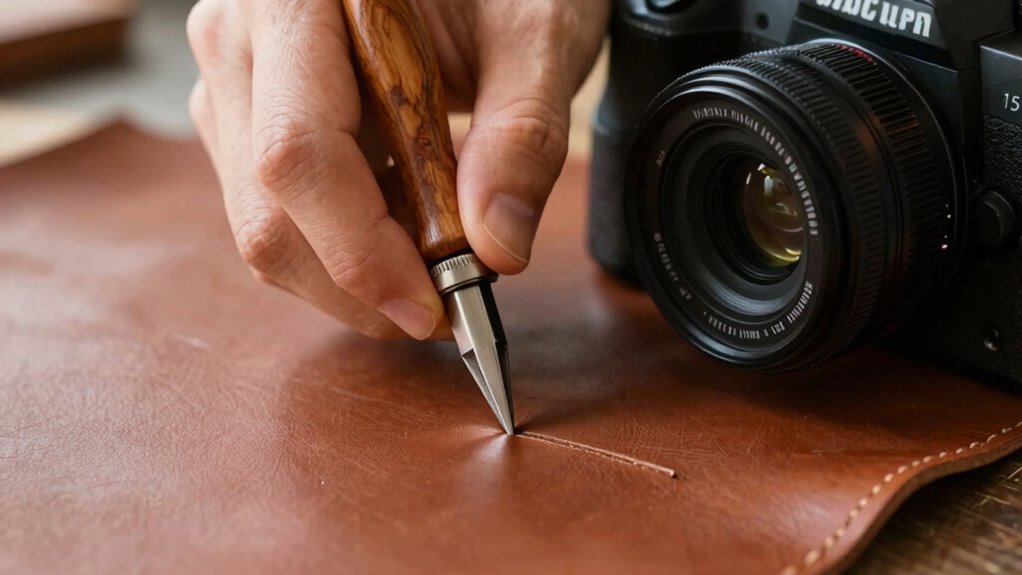
Choosing the right materials is key to making durable, accurate leather cutting dies. You’ll want to craft precision dies that match your project needs, ensuring clean cuts every time. Properly aligning and securing your dies guarantees consistent results and prevents mishaps during pressing. Additionally, considering the layout and workflow of your workspace can streamline your process and reduce errors. Ensuring your workspace is optimized for efficiency and safety can further improve the quality and consistency of your leather cutting process. Paying attention to material selection helps prevent damage to your dies and extends their lifespan.
Selecting Proper Materials
Have you ever wondered how selecting the right materials can make or break your leather cutting die projects? Your choice of leather thickness is vital—thinner hides cut more easily and reduce waste, while thicker leather offers durability. Confirm your material compatibility by matching the leather’s properties with your die design and clicker press setup. Using incompatible materials can cause uneven cuts, damage your dies, or lead to wasted hides. Always test a small piece first to confirm the leather’s responsiveness and how well it responds to your die. Choosing the right leather thickness and verifying material compatibility helps you create clean, precise shapes without unnecessary waste or frustration. Proper material selection is key to efficient, professional results in your leatherworking projects.
Crafting Precision Dies
Designing effective leather cutting dies requires careful attention to detail and a clear understanding of your project’s goals. Start with die material selection, choosing durable materials like steel that can withstand repeated use without dulling or breaking. Consider die design principles, such as creating sharp, clean edges and ensuring proper clearance around the cutting shape to prevent material bunching. Precision in your die design guarantees consistent, accurate cuts, reducing waste and saving time. Keep in mind that complex shapes may need additional support or reinforcement to maintain stability during cutting. By focusing on these aspects, you’ll craft dies that deliver clean, precise shapes every time, making your leather projects more professional and efficient. Proper planning at this stage pays off in quality results.
Aligning and Securing Dies
To achieve precise and consistent cuts, you must carefully align and secure your leather cutting die before starting the press. Proper die alignment ensures the shape is accurate, while securing dies prevents movement during cutting, reducing waste and errors. Start by positioning the die directly over the leather, checking that edges match your pattern. Use clamps or hold-downs to firmly secure the die in place, ensuring it doesn’t shift. Double-check the alignment before applying pressure. Securing dies correctly maintains consistent results across multiple cuts. Remember, a well-aligned and secured die saves time and material, making your workflow more efficient.
- Check die alignment before pressing
- Use clamps or hold-downs for security
- Confirm the die sits flush on the leather
- Re-align if the die shifts during setup
Techniques for Accurate, Waste-Free Leather Cutting
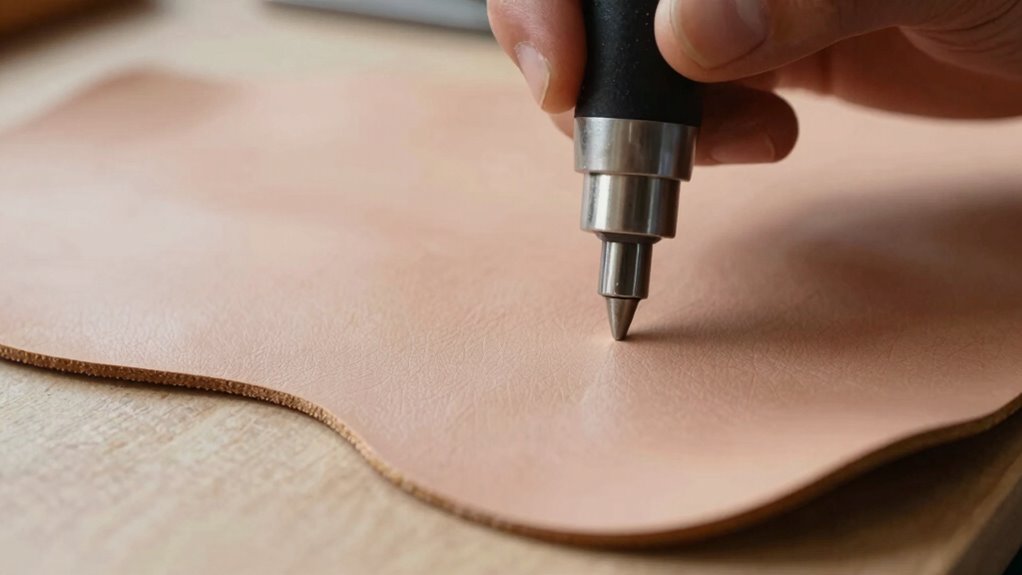
Achieving accurate, waste-free leather cutting requires careful technique and attention to detail. Use a sharp, properly aligned clicker press to ensure clean cuts every time. Keep your leather flat and secure, avoiding shifting that causes uneven edges. When planning cuts, visualize the pattern and consider how leather tooling or dyeing techniques might influence placement. For example, a detailed design might need precise positioning to avoid damage. Think of your leather like a grid:
| Pattern Placement | Cutting Line | Waste Reduction |
|---|---|---|
| Centered | Straight | Minimal scraps |
| Offset | Curved | Efficient use |
| Symmetrical | Jagged | Less waste |
| Near Edges | Rounded | Maximize yield |
| Design Focused | Precise | No excess |
This approach helps you minimize waste and achieve perfect cuts, enhancing your leatherwork’s quality.
Troubleshooting Common Clicker Press Problems
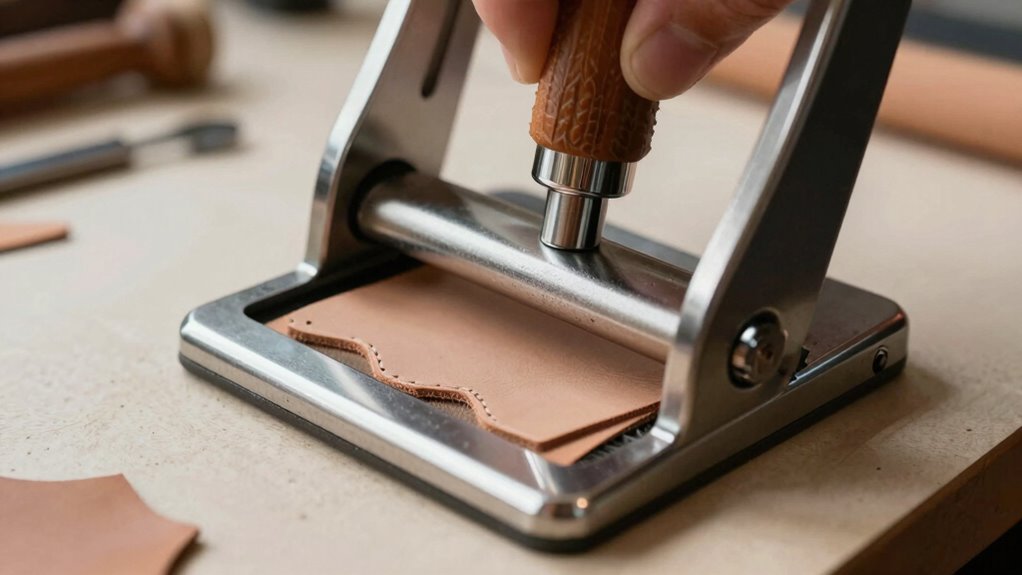
Even with careful techniques, clicker presses can encounter common problems that disrupt your workflow and compromise cut quality. You might face issues like jamming or uneven cuts, which can waste material and slow production. To troubleshoot, first check for common jam issues: debris, misaligned dies, or worn-out parts often cause jams. Next, examine the sharpness of your cutting dies—dull blades lead to uneven cut problems. Ensure the press’s pressure settings are correct; too little pressure causes incomplete cuts, too much can damage the material. Finally, verify that the leather is properly positioned and secured. Regular cleaning, proper alignment, and timely maintenance help prevent these issues, ensuring smooth operation and consistent, clean cuts every time.
Prevent jams and uneven cuts by maintaining proper blade sharpness, pressure, and material securing techniques.
- Common jam issues caused by debris or misalignment
- Uneven cut problems due to dull blades or incorrect pressure
- Material shifting or improper securing leading to inconsistent shapes
- Worn or damaged components affecting overall performance
How to Maintain Your Clicker Press and Extend Its Life
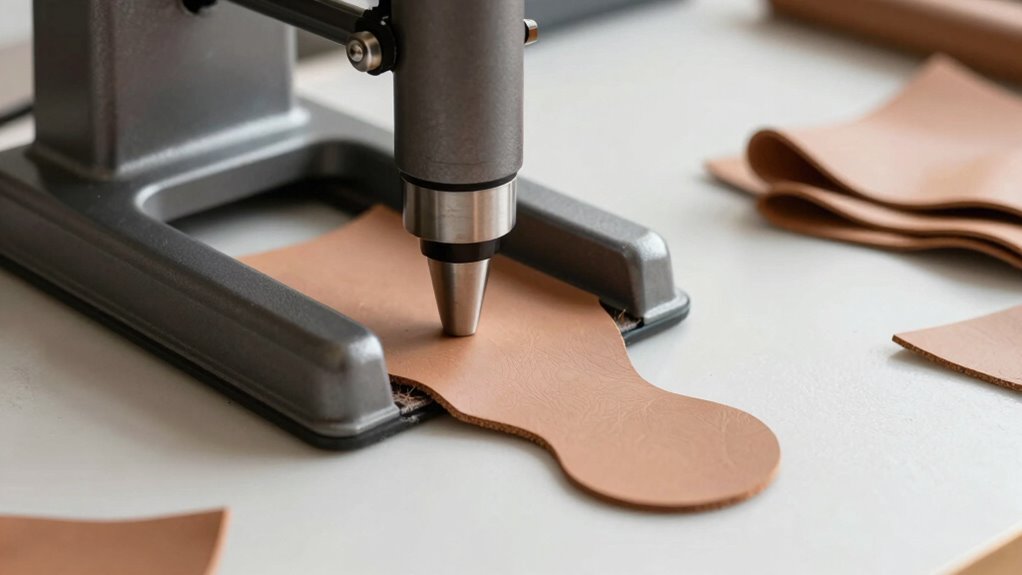
Regular maintenance is essential to keep your clicker press running smoothly and to extend its lifespan. Consistently perform clicker maintenance by cleaning the press and removing debris that can cause wear and misalignment. Lubricate moving parts periodically to prevent rust and ensure smooth operation. Check the die regularly for signs of dullness or damage, as sharp, well-maintained dies improve die longevity and cut quality. Tighten bolts and fasteners to avoid unnecessary strain during operation. Proper storage also matters; keep the press in a dry, clean area to prevent corrosion. By staying proactive with these maintenance steps, you reduce the risk of breakdowns and keep your equipment in top condition. Ultimately, good maintenance practices directly contribute to longer-lasting, more reliable die performance.
Tips for Improving Efficiency When Cutting Multiple Shapes
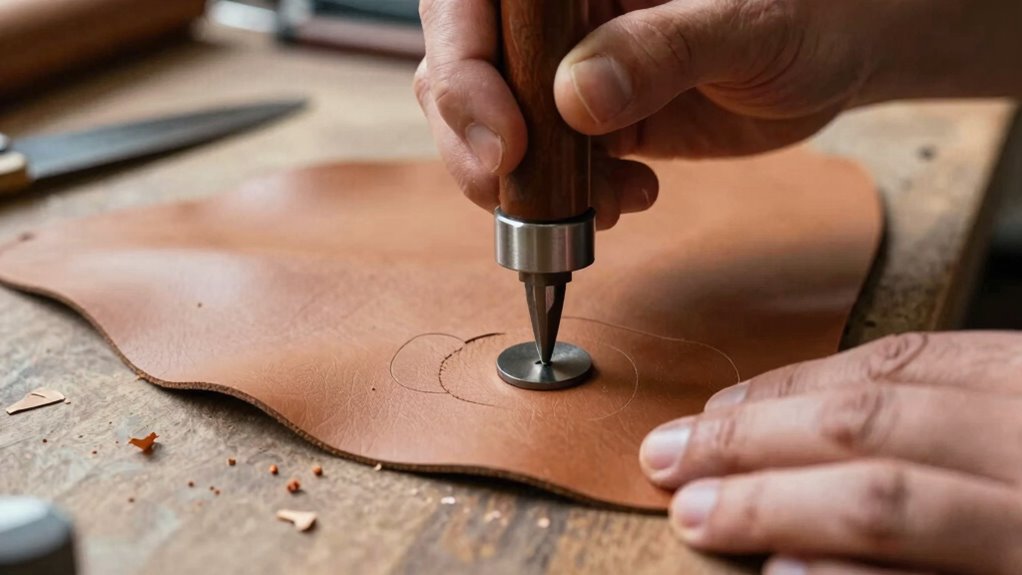
To improve efficiency when cutting multiple shapes, start by organizing your workspace and tools. Keep your marking techniques consistent to speed up the process and reduce errors. Use a dedicated area for leather storage to keep hides accessible and in good condition, minimizing time spent searching for materials. Stack your leather properly to avoid unnecessary movement and damage. Also, batch similar shapes together to streamline cutting and maximize your clicker press’s capacity. Label your templates clearly for quick reference, and consider pre-marking common shapes to save time during setup. These steps help maintain a smooth workflow, reduce waste, and keep your focus on precision instead of hunting for tools or materials. Efficiency is all about preparation and smart organization.
Frequently Asked Questions
Can I Use My Existing Press for Different Types of Leather?
Yes, you can use your existing press for different types of leather if it offers good press versatility. Just make certain the dies you choose are compatible with your press to avoid issues. Check the dies compatibility carefully, especially for thicker or softer leathers. With the right dies and adjustments, your press can handle various leather types efficiently, saving you time and money while maintaining precise cuts.
What Safety Precautions Should I Follow When Operating a Clicker Press?
Safety gear is your first line of defense against accidents, so always wear gloves, eye protection, and earplugs. While operating the clicker press, stay alert and never bypass emergency procedures—know how to quickly stop the machine if needed. Keep your workspace clean, and never reach into the press while it’s moving. These precautions safeguard you and ensure smooth, safe operation every time.
How Do I Store Leather Dies to Prevent Damage?
To prevent damage, store your leather dies properly by using designated die storage racks or sturdy containers. Keep them flat and in a cool, dry environment to avoid warping or rust. Regularly inspect your dies for signs of wear and clean them with leather maintenance products to guarantee longevity. Proper die storage helps maintain their sharpness and shape, making your cutting process more precise and efficient.
Is It Possible to Customize Shapes Beyond Standard Die Options?
Absolutely, you can go beyond standard die options with custom die design! Imagine having shape flexibility that turns your creative ideas into reality, no matter how wild or intricate. You’re not limited anymore—design your unique shapes, and we’ll bring them to life. Custom dies let you craft exactly what you envision, giving your projects a professional edge while unlocking your creativity without boundaries.
How Do I Calibrate the Pressure for Different Leather Thicknesses?
To calibrate the pressure for different leather thicknesses, start with light pressure and gradually increase. Use pressure adjustment controls and test cuts to find the best force that cuts cleanly without damaging the material. Employ calibration techniques like making sample cuts on scrap leather, then adjusting until you achieve consistent, precise results. Remember, proper calibration ensures efficient, high-quality cuts tailored to each leather thickness.
Conclusion
Mastering your clicker press can boost your leatherwork efficiency and reduce waste. Did you know that properly maintained presses can last over 20 years? By choosing the right press, setting it up precisely, and practicing accurate cutting techniques, you’ll save time and hides. Keep troubleshooting and maintaining your equipment to guarantee longevity. With these tips, you’ll craft professional-quality shapes every time—waste-free and effortless—turning your leather projects into true works of art.