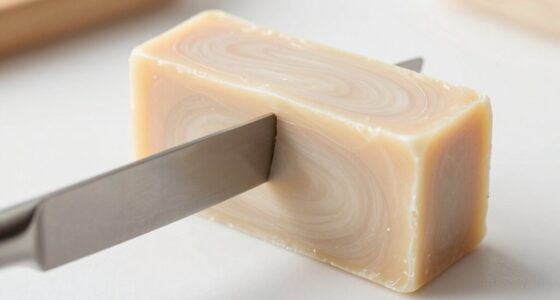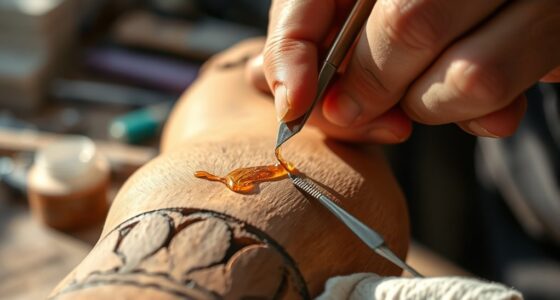

To capture sharp textures with a macro lens, focus precisely by using manual focus, focus stacking, or focus peaking, and stabilize your camera to prevent shake. Use small apertures to increase depth of field, but avoid diffraction by not going too small. Proper lighting and a steady setup are essential for highlighting surface details without blurriness. Keep exploring and applying these techniques to master clear, textured macro images.
Key Takeaways
- Use a dedicated macro lens with appropriate magnification and compatibility for sharp detail capture.
- Select smaller apertures (f/16–f/22) to maximize depth of field and maintain texture clarity.
- Stabilize your camera with tripods or remote triggers to prevent movement and focus shifts.
- Focus precisely using manual focus or focus stacking to ensure textures are sharp across the subject.
- Employ diffused or side lighting to enhance surface details without glare or harsh shadows.
Why Does Macro Photography Need Special Focus Techniques?

Because macro photography involves capturing tiny subjects at very close distances, precise focus is vital to achieve sharp images. The shallow depth of field in macro shots means only a small area is in focus at once, often leaving important details blurry. To overcome this, photographers use techniques like focus stacking, where multiple images are taken at different focus points and combined to create a fully sharp photo. Managing the depth of field becomes essential, enabling you to highlight textures and fine details that might otherwise be lost. These focus techniques ensure your macro images are crisp and clear, revealing textures and intricate structures with precision. Without careful focus control, your close-up shots risk turning into blurry disasters instead of stunning, detailed captures. Additionally, understanding the contrast ratio of your equipment can help you better assess the image quality and achieve more vibrant, detailed results. Knowing your equipment’s dynamic range can further enhance the ability to capture subtle tonal variations in textures. Moreover, mastering focus accuracy is crucial because even tiny misalignments can compromise the entire shot’s clarity. Paying attention to lens quality can significantly improve your macro focus results, as higher-quality lenses tend to have better focus precision and sharpness. Furthermore, using proper stabilization techniques can prevent camera shake, ensuring your images remain sharp and well-focused.
How Do You Master Focus Settings for Macro?

Mastering focus settings for macro photography requires you to understand and control your camera’s autofocus modes and manual focus options. To achieve sharp textures, experiment with autofocus techniques like single-point focus, which gives you precise control, or focus lock to stabilize your shot. Switching to manual focus allows you to fine-tune the focus exactly where you need it, especially in tricky lighting or low contrast situations. Additionally, camera controls such as focus assist features can greatly enhance your ability to lock onto fine details. Consider these key points: – Use focus peaking if available to confirm sharpness during manual focus. – Switch between autofocus and manual focus depending on the subject and environment. – Practice steady, deliberate adjustments to avoid focus hunting. – Combine focus lock with manual focus for greater control in challenging macro scenarios. Incorporating advanced focusing techniques can further improve your macro results and help you capture textures without blurriness. To optimize your focus in various conditions, understanding how autofocus modes work can significantly impact your success. Additionally, understanding depth of field principles helps in managing how much of your subject remains in sharp focus, especially in macro photography. Knowing how to utilize focus distance effectively can also contribute to achieving crisp images.
How Can You Control Depth of Field for Sharp Textures?

Controlling depth of field (DOF) is essential for capturing sharp textures in macro photography. To achieve this, you need precise depth control, which is primarily influenced by aperture adjustment. A smaller aperture (higher f-number) increases DOF, keeping more of your subject in focus. Conversely, a wider aperture (lower f-number) creates a shallow DOF, isolating textures for artistic effect. Use the table below to guide your aperture choices:
| Aperture Setting | Effect on Depth of Field | Best Use Case |
|---|---|---|
| f/16 – f/22 | Maximum depth | Detailed textures |
| f/8 – f/11 | Moderate depth | Balanced sharpness |
| f/2.8 – f/5.6 | Shallow depth | Focused textures, background blur |
How to Choose the Best Macro Lens for Clear Results

To choose the best macro lens for clear results, start by ensuring it’s compatible with your camera. Consider the magnification and working distance to match your shooting needs, and pay attention to the aperture and focus range for sharp, detailed images. These points will help you select a lens that delivers consistent, high-quality close-ups. Additionally, understanding lens compatibility and how it impacts your photography setup can prevent frustrating mistakes and ensure seamless use. Being aware of connected home fitness concepts can also inform your choice of versatile, adaptable equipment that suits your specific needs.
Compatibility With Camera
Choosing the right macro lens for your camera starts with guaranteeing compatibility. You need to verify sensor compatibility, whether your camera uses a full-frame or crop sensor, as this affects image quality and field of view. Additionally, consider autofocus capabilities, as some macro lenses offer fast, reliable autofocus, which can be essential for capturing sharp textures quickly. Understanding sound healing science can also inspire creative approaches to photography, emphasizing the importance of precise focus and clarity. To guarantee proper fit and performance, check:
- Lens mount compatibility with your camera body
- Sensor size requirements (full-frame vs. APS-C)
- Autofocus system support for your camera model
- Compatibility with your camera’s image stabilization features
Matching these factors guarantees your macro lens delivers clear, detailed results without unnecessary hassle or blurry disasters.
Magnification and Working Distance
Understanding magnification and working distance is essential when selecting a macro lens that produces sharp, detailed images. Magnification ratios determine how large your subject appears on the sensor, with higher ratios capturing finer details. Working distance refers to the space between your lens and the subject; a shorter distance offers greater detail but less room for lighting or positioning.
| Magnification Ratio | Working Distance |
|---|---|
| 1:1 | Shorter |
| 2:1 | Very short |
| 1:2 | Longer |
| 1:5 | Longest |
| 1:10 | Extended |
Choose a lens with the right balance of magnification ratios and working distance suited to your subject and workspace for clear, sharp results.
Aperture and Focus Range
Selecting the right aperture and focus range is essential for capturing sharp, detailed macro images. Your choice of aperture control directly impacts the depth of field, which determines how much of your subject remains in focus. A narrower aperture (higher f-number) increases the depth of field, ensuring more detail is sharp and clear. Conversely, a wider aperture (lower f-number) creates a shallow depth of field, isolating your subject from the background. To achieve ideal results, consider these factors:
- Use smaller apertures for greater depth of field in intricate textures
- Balance aperture settings to prevent blurring due to too shallow focus
- Adjust focus carefully for precise sharpness at critical points
- Experiment with aperture control to find the sweet spot between background blur and focus depth
- For optimal performance, choose a macro lens designed with Vetted quality to ensure clarity and reliability in capturing textures.
How Can Tripods and Stabilizers Prevent Blurry Shots?

Using tripods and stabilizers keeps your camera steady, preventing unwanted movement. This helps reduce handshake that can cause blurry shots, especially with macro photography. By choosing the right equipment, you guarantee your shots stay sharp and clear. Additionally, simple organizing strategies can help keep your photography gear organized and accessible, making it easier to set up quickly for each shot. Incorporating proper technique into your workflow can further enhance stability and image quality. Regularly practicing camera stabilization methods can also improve your overall shot sharpness and confidence. Moreover, understanding essential oils for macro photography can help you relax and maintain focus during extended shooting sessions, leading to better results. Developing a consistent shooting routine can also contribute to more reliable and crisp images over time.
Steady Camera Positioning
When you want sharp, clear images with a macro lens, keeping your camera steady is essential. Proper camera stability minimizes motion blur and captures fine textures accurately. Using tripods and stabilizers offers a solid foundation, reducing reliance on shaky handheld techniques. To enhance stability, consider these strategies:
- Utilize a sturdy tripod with adjustable legs
- Employ a remote shutter release or timer to avoid camera shake
- Use a stabilizer or gimbal for dynamic shots
- Lean against a stable surface to steady your hands
Reduce Handshake Movement
One of the most effective ways to prevent blurry shots with a macro lens is by reducing handshake movement through the use of tripods and stabilizers. Handshake reduction is essential because even small tremors can cause significant blurring at high magnifications. Stabilization techniques, such as mounting your camera on a sturdy tripod, provide a stable platform, minimizing vibrations during shot setup and exposure. Using a stabilizer or monopod can also help if a full tripod isn’t practical. Keep your camera close to the stabilizer for maximum support, and avoid touching the lens or camera body during exposure. These methods guarantee your camera remains steady, capturing sharp textures and fine details without the distraction of motion blur.
Use Proper Equipment
Tripods and stabilizers are essential tools for preventing blurry shots with a macro lens because they provide a solid, unmoving platform for your camera. This stability is vital when capturing fine textures, especially in low light conditions where you might rely on lighting gear. Using a sturdy tripod ensures your camera stays still during long exposures, reducing shake. Stabilizers like gimbals help when working handheld, offering extra control. Keep your camera in a dedicated camera bag with compartments for lighting gear and accessories to avoid accidental bumps. Additionally, investing in quality tripods and stabilizers improves precision, letting you focus on composition. With the right equipment, you minimize vibrations and maintain sharpness, creating stunning macro images free of blur. Proper camera stabilization techniques are crucial for achieving crisp, detailed macro shots.
What Lighting Techniques Boost Macro Texture Detail?

Lighting plays a crucial role in revealing the intricate textures in macro photography. To enhance texture, focus on lighting techniques that create shadows and highlights, emphasizing surface details. Use side lighting or diffused natural light to add depth and dimension, making textures pop. Ring lights or macro flash units provide even illumination, reducing shadows that can hide fine details. Experiment with small adjustments in light angle to find the ideal setup for texture enhancement. Avoid harsh, direct light that can flatten details or cause glare. Instead, aim for soft, controlled lighting that accentuates surface nuances without washing them out. Incorporating proper light positioning can significantly improve the visibility of subtle textures. Proper filtering techniques can also help in managing light quality for sharper, more detailed textures. Understanding lighting quality is essential for capturing sharp, detailed textures, transforming ordinary macro shots into mesmerizing, textured images. Additionally, being aware of precious metal investment options can help in diversifying your portfolio for long-term financial growth. Mastering lighting adjustment techniques allows photographers to fine-tune their setups for optimal texture capture.
What Are Common Mistakes That Cause Blurry Macro Images: and How to Fix Them?

Blurry macro images often stem from camera shake, improper focus, or insufficient depth of field, which can all be frustrating when trying to capture fine details. To fix this, start by stabilizing your camera with a tripod or resting it on a steady surface. Use manual focus for precision, and check your lens cleaning to ensure no smudges interfere with clarity. Additionally, applying sharpening techniques in post-processing can enhance edge definition without introducing noise. Avoid rushing your shots—use a smaller aperture to increase depth of field, but balance it to prevent diffraction. Remember, keeping your lens clean eliminates dust or fingerprints that can cause soft images. These steps help prevent blurry macro shots and improve overall sharpness and detail.
How Can Post-Processing Enhance Texture Sharpness and Clarity?

Post-processing offers powerful tools to enhance texture sharpness and clarity in your macro images. By applying post processing sharpening, you can highlight fine details that may appear soft or blurry straight out of the camera. Adjusting sharpness carefully ensures textures stand out without creating unnatural halos. Color correction also plays an essential role; enhancing contrast and adjusting tones can make textures more vivid and defined. Correcting color imbalances brings out subtle variations in surface details, making textures pop. Additionally, noise reduction helps maintain clarity in areas with high ISO settings or low light, preventing grain from obscuring fine details. When combined thoughtfully, these post-processing techniques enable you to produce crisp, detailed macro images that truly showcase texture. Incorporating image editing techniques can further refine your results and elevate your macro photography. Understanding post-processing workflows ensures you can systematically enhance your images without overdoing it. Exploring workflow efficiency can also help streamline your editing process and achieve consistent results.
Frequently Asked Questions
What Camera Settings Are Best for Macro Texture Photography?
For sharp macro texture photos, you should use a small aperture, like f/16 or f/22, to increase your depth of field and keep more of your subject in focus. Adjust your aperture settings based on your distance from the subject, ensuring enough light enters without sacrificing clarity. Use a tripod to stabilize your shot, and consider manual focus for precise control, capturing detailed textures without blurriness.
How Does Subject Movement Affect Macro Focus Accuracy?
Like a dancer in motion, your subject’s movement can throw off your macro focus, making it hard to lock onto textures. To improve accuracy, you need a narrower depth of field and stable lighting conditions, which help the camera quickly adapt. Keep your shutter speed high, and stabilize your camera to minimize vibrations. This way, your shot stays sharp, capturing fine details even when your subject tries to dance away.
Can Smartphone Cameras Achieve Sharp Macro Textures?
Smartphone cameras can achieve sharp macro textures, but you need good lighting techniques and control over depth of field. Use natural light or a ring light to illuminate your subject evenly, reducing blur and enhancing detail. Tap to focus precisely, and keep your distance steady to avoid camera shake. Utilizing manual or macro mode, if available, also helps capture crisp textures, making your close-up shots impressive despite device limitations.
What Accessories Improve Macro Image Stability?
To improve macro image stability, you should invest in a sturdy tripod, which enhances tripod stability and prevents camera shake during close-up shots. Additionally, enabling your camera’s image stabilization feature helps minimize blur caused by slight movements. Using these accessories together guarantees your macro images are sharp and detailed, allowing you to capture textures flawlessly without worrying about blurry disasters.
How to Identify and Avoid Common Macro Focusing Errors?
They say, “A stitch in time saves nine,” and the same applies to macro focusing. To avoid focusing pitfalls, double-check your focus point and use a smaller aperture to increase depth of field. Watch for shallow focus areas that can easily lead to blurry disasters. Practice patience, and take multiple shots to ensure your subject is sharp. Staying attentive guarantees you capture crisp, detailed macro images every time.
Conclusion
With the right focus, lighting, and steady hands, your macro shots can reveal intricate textures like never before. Imagine capturing tiny dewdrops sparkling on a leaf or the delicate veins of a leaf in crisp detail. By mastering these techniques, you’ll transform everyday objects into mesmerizing worlds of texture and depth. So, keep experimenting, stay patient, and let your camera’s eye uncover beauty hidden in the smallest details.