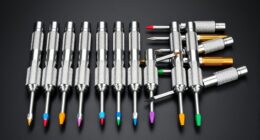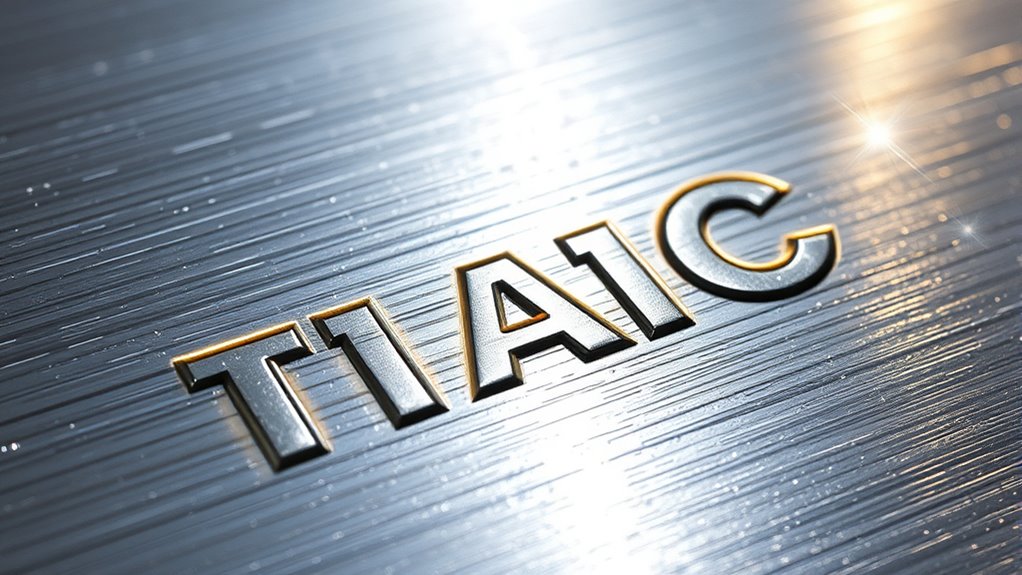

Metal stamping combines shaping with surface enhancements like engraving and textures to create durable, striking parts. You can add lettering using laser or mechanical engraving for precision, while textures like brushed or matte finishes boost visual interest. Surface treatments such as anodizing or plating enhance durability and appearance. Understanding how to combine these techniques guarantees your stamped components stand out and last longer. Keep exploring to discover more tips and tricks for perfecting your metal stamping projects.

Get business pricing on tools and workshop supplies
- Business-only prices and quantity discounts
- Tax-exempt purchasing
- Multiple users, one account, clear invoices
Key Takeaways
- Metal stamping combines forming and engraving to add lettering and textures efficiently to various metals.
- Laser and mechanical engraving methods enable detailed, durable markings on stamped metal surfaces.
- Surface treatments like anodizing, plating, or powder coating enhance visual appeal and corrosion resistance.
- Textures such as matte, brushed, or embossed effects create visual interest and tactile differentiation.
- Integrating engraving with surface finishes results in high-quality, customized metal components.
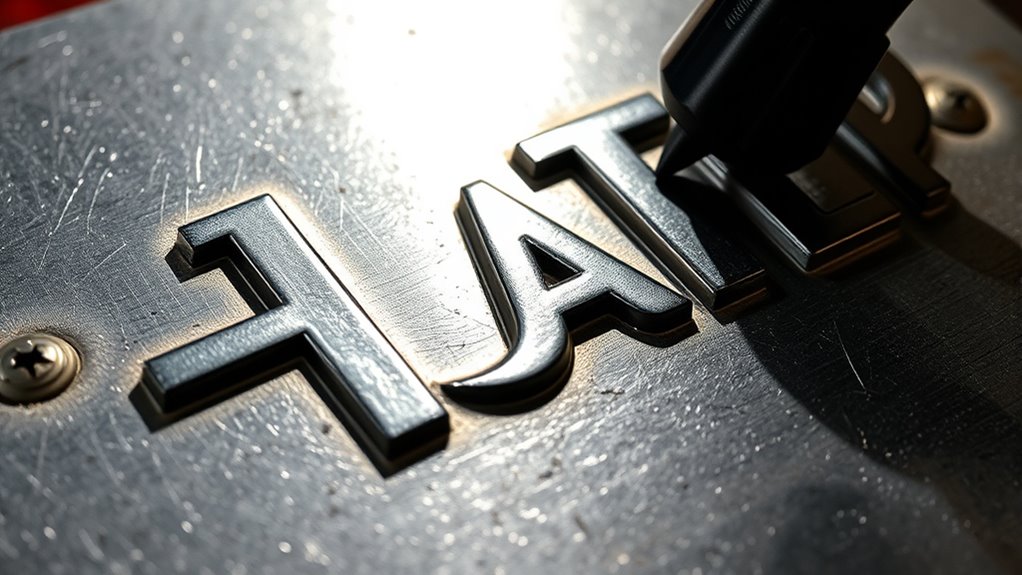
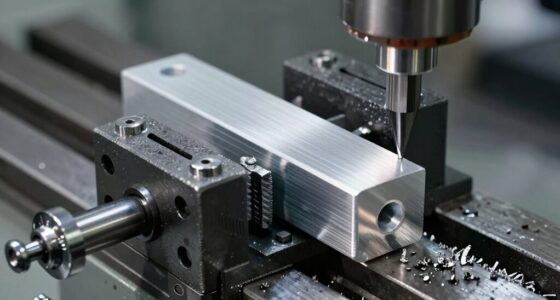
Ever wondered how intricate metal parts are produced efficiently and accurately? The answer lies in advanced metal stamping processes combined with expert techniques like engraving and surface treatments. When it comes to adding lettering or textures to stamped metal, understanding the role of engraving techniques is essential. These methods allow you to carve or imprint precise designs, logos, or text onto the metal surface, giving your parts a professional and customized appearance. Whether you’re working with soft metals like aluminum or harder alloys, engraving can be achieved through various means, such as laser engraving, mechanical engraving, or chemical etching. Each technique offers different levels of detail and durability, so selecting the right one depends on your project’s requirements. Laser engraving, for example, provides fine detail and high speed, making it ideal for intricate lettering or detailed textures. Mechanical engraving, on the other hand, involves physically carving into the metal, which is suitable for thicker or more durable markings. Chemical etching uses acids or other chemicals to remove material selectively, creating sharp, permanent designs. Combining these engraving techniques with surface treatments enhances the overall look and longevity of your stamped parts. Surface treatments like anodizing, plating, or powder coating not only improve corrosion resistance but also add aesthetic value. For instance, anodizing can give aluminum parts a matte or glossy finish while providing a suitable background for engraved lettering, making it stand out more prominently. Plating, such as nickel or chrome, adds a shiny, reflective surface that complements engraved text or textures, creating a sleek, professional appearance. Powder coating can provide a durable, colorful finish that protects the metal from scratches and environmental damage. When you incorporate surface treatments into your process, you can also achieve different textures that add depth and visual interest. Textures can be created through embossing, stamping, or applying specialized surface finishes that mimic patterns like brushed or matte effects. These textured surfaces can make your parts more tactile and visually appealing, especially for decorative or functional purposes. The key to success lies in understanding how these engraving techniques and surface treatments work together, ensuring your stamped metal parts meet both aesthetic and functional standards. By mastering these processes, you can produce high-quality metal components that are not only precise and durable but also visually striking, elevating your product’s overall appeal.
As an affiliate, we earn on qualifying purchases.
Frequently Asked Questions
What Types of Metals Are Best for Intricate Stamping Designs?
You should choose soft metals like copper, brass, or aluminum for intricate stamping designs. These metal alloy choices are easier to shape and detail, making fine lettering and textures more achievable. Keep surface finish considerations in mind; a smooth, clean surface helps prevent defects and enhances detail precision. By selecting the right metal and maintaining a good surface finish, you’ll get crisp, detailed stamped designs that look professional and polished.
How Does Temperature Affect the Stamping Process and Results?
Is temperature control the silent conductor of your stamping symphony? When you manage temperature, you directly influence stamping quality—too hot, and metals may warp or lose detail; too cold, and they may crack or resist imprinting. By maintaining ideal temperature, you ensure clean, crisp designs and consistent results. Proper temperature management keeps your stamping process smooth, preventing defects and elevating your craftsmanship to a new level of precision.
Can Metal Stamping Be Used on Recycled or Reclaimed Metals?
Yes, you can use recycled or reclaimed metals for stamping. You might notice variations in metallic color due to their previous treatments, but that adds character. Using reclaimed metals reduces environmental impact and promotes sustainability. Just verify the metals are clean and free of contaminants, so the stamping process produces precise results. Overall, recycled metals are a viable option that supports eco-friendly practices without sacrificing quality.
What Are Common Challenges When Creating Textured Finishes?
Creating textured finishes is like walking a tightrope—you need precision to avoid surface irregularities. Your main challenge is maintaining a consistent texture across the metal, as uneven pressure or inconsistent stamping can cause imperfections. Achieving uniform surface irregularities demands skill and attention to detail. If you don’t, the finish may look uneven or unprofessional. Mastering this balance ensures your textured surface stays smooth and visually appealing.
How Long Does a Typical Metal Stamped Piece Last?
A typical metal stamped piece lasts for years, especially if you consider durability testing and proper finishing. To prevent metal corrosion, you should apply protective coatings and use corrosion-resistant materials. Regular maintenance helps extend its lifespan, ensuring it withstands environmental factors. With proper care, your stamped metal can remain vibrant and functional for many years, making it a reliable choice for jewelry, badges, or decorative items.
Conclusion
Now that you’ve learned the basics of metal stamping, you’re ready to craft your own unique pieces with confidence. Remember, whether you’re adding intricate lettering or textured finishes, patience and practice are your best allies—just like a seasoned artisan from yore. So go ahead, wield your tools like a modern blacksmith, and bring your creative visions to life. The world’s your oyster, and your metal masterpiece is just a stamp away.
Fall yard work Picks
leaf blowers
As an affiliate, we earn on qualifying purchases.