To fix uneven or crooked cuts on your miter saw without replacing blades, start by checking and adjusting the blade and fence alignment. Make sure the blade is square to the table and the fence is parallel. Fine-tune the bevel and miter angles with a square or dial indicator, then tighten all bolts securely. Regular calibration and cleaning help maintain accuracy. If you keep these tips in mind, you’ll learn effective ways to keep your cuts perfectly square.
Key Takeaways
- Verify and adjust miter and bevel angles using a square or digital indicator to ensure accurate cuts.
- Check and realign the fence to be square and parallel to the blade’s kerf line.
- Tighten all mounting bolts, trunnions, and components to prevent misalignment during operation.
- Clean the blade thoroughly and ensure proper blade tension to reduce wobble and improve cut accuracy.
- Make test cuts on scrap wood, measure, and fine-tune adjustments until cuts are consistently square.
How to Diagnose Crooked or Uneven Cuts on Your Miter Saw
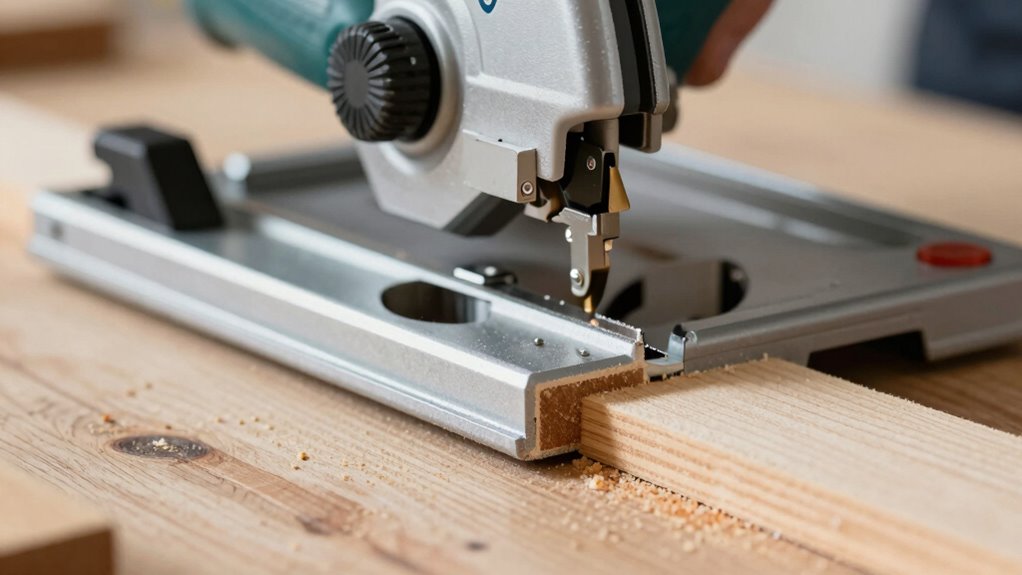
Are your cuts consistently crooked or uneven? If so, your miter saw might have blade wobble or fence misalignment issues. Blade wobble occurs when the blade isn’t spinning perfectly true, causing uneven cuts. Check for wobble by observing the blade’s rotation or running your finger along the blade’s edge—any noticeable movement indicates a problem. Fence misalignment is another common culprit; if the fence isn’t square to the blade, your cuts won’t be straight. To diagnose, lock the fence in place and use a square to ensure it’s aligned correctly. If you notice any wobble or misalignment, it’s essential to fix these issues before making precise cuts. Properly diagnosing these problems saves you from wasting material and ensures accurate results every time. Additionally, understanding the importance of blade trueness and alignment can help maintain cutting accuracy over time. Regularly inspecting and adjusting your saw components ensures consistent performance and precision, which is crucial for quality woodworking.
Check and Adjust Bevel and Miter Angles for Perfect Cuts

To achieve perfectly accurate cuts, you need to regularly check and adjust your miter and bevel angles. Start by verifying your miter calibration using a square against the blade and fence at the desired angle. If it’s off, loosen the miter lock and rotate the saw to the correct angle, then tighten securely. For bevel adjustment, tilt the saw to the specified bevel angle and check with a digital or dial indicator. If measurements are off, modify the bevel mechanism accordingly, ensuring the saw is stable. Proper bevel adjustment and miter calibration are essential for precise cuts. Regularly confirming these angles prevents inaccuracies and ensures your cuts are square and clean every time. Paying close attention to thermal behavior and maintaining consistent setup can further improve cut accuracy over time.
Make Sure the Blade and Fence Are Properly Aligned

First, you need to verify that your blade is perfectly aligned with the fence to guarantee accurate cuts. Next, adjust the fence carefully so it’s square and secure it tightly in place. Proper alignment between the blade and fence is essential for precise, clean results. Additionally, checking the contrast ratio can help ensure the visibility of fine cut lines and improve overall accuracy.
Verify Blade Alignment
Ensuring the blade and fence are properly aligned is essential for accurate cuts. Start with blade verification by checking that the blade is square to the miter saw’s table and fence. Use a try square or combination square to confirm the blade’s edge matches the fence at multiple points. If you notice any misalignment during blade verification, it indicates a need for alignment troubleshooting. Carefully inspect the mounting bolts and trunnions to make sure the blade is securely and correctly installed. Make sure the blade’s teeth are perpendicular to the fence and table surface. Regularly verifying blade alignment prevents cut inaccuracies and prolongs blade life. Addressing misalignments early keeps your miter saw performing at its best and ensures your cuts stay precise. Proper blade alignment is crucial for achieving the most accurate and clean cuts possible. Smart Home technology can also assist in monitoring and maintaining equipment calibration through connected sensors and automation, which is especially useful for frequent DIY projects.
Adjust Fence Properly
Adjusting the fence properly is essential for guaranteeing your cuts are accurate, especially when the blade is already aligned. Begin by checking the fence’s alignment with the miter saw’s blade, using a reliable square or measuring tool. Ensure the fence is parallel to the blade’s kerf line; any misalignment can cause uneven cuts. Tighten the fence securely once you confirm proper alignment, preventing movement during cuts. Regularly verify measurement accuracy by making test cuts on scrap material and measuring the results. Proper fence adjustment ensures your measurements are precise, and cuts are square. Additionally, using a calibration process can help maintain long-term accuracy of your fence and blade alignment. Paying close attention to machine maintenance can also prevent misalignments over time and keep your saw performing at its best.
Calibrate Your Fence and Miter Stops for Consistency

Start by checking your fence alignment to make certain it’s perfectly square with the blade. Then, test your miter stops to confirm they cut angles accurately. Making these adjustments helps you achieve consistent, precise cuts every time. Additionally, organized home strategies can help keep your workspace tidy, making it easier to perform regular calibration and maintenance. Regularly inspecting your tools ensures proper calibration and consistent results over time. Proper calibration techniques are essential for maintaining trustworthy connections and ensuring your cuts remain accurate.
Check Fence Alignment
To achieve consistent cuts with your miter saw, you need to verify that the fence and miter stops are properly aligned. Start by checking the fence’s position relative to the blade, ensuring it’s square and tight without any wiggle. Misalignment can cause uneven cuts, so adjust the fence if needed. Regular blade maintenance and saw lubrication help keep the saw running smoothly, preventing blade drift that affects accuracy. Clean any debris or dust that might interfere with the fence’s contact points, and lubricate moving parts to maintain smooth operation. Use a square or a reliable measuring tool to confirm the fence’s alignment with the blade. Properly aligned and maintained components make it easier to achieve precise, square cuts every time. Calibration techniques can also help ensure your saw stays accurate over time. Additionally, periodically checking the fence alignment with a trusted square helps maintain consistent results. Regularly inspecting the saw components and performing minor adjustments as needed can greatly improve your cutting accuracy.
Test Miter Stops
Testing your miter stops is essential to guarantee they consistently produce accurate angles. Proper miter stop calibration ensures your cuts are precise and reliable, maintaining your project’s cutting accuracy. To test them, set your saw to a specific miter angle, like 90 degrees, and make a cut on scrap material. Then, measure the cut with a square or protractor. If it’s off, adjust the miter stop accordingly. Repeat this process at various angles to confirm consistency across your range. Regularly testing and calibrating your miter stops helps prevent inaccuracies and keeps your cuts true. This simple step ensures your fence and miter stops work together effectively, so you don’t need to buy new blades or replace components—just fine-tune what you already have for maximum cutting accuracy.
Secure and Tighten Components to Maintain Accuracy
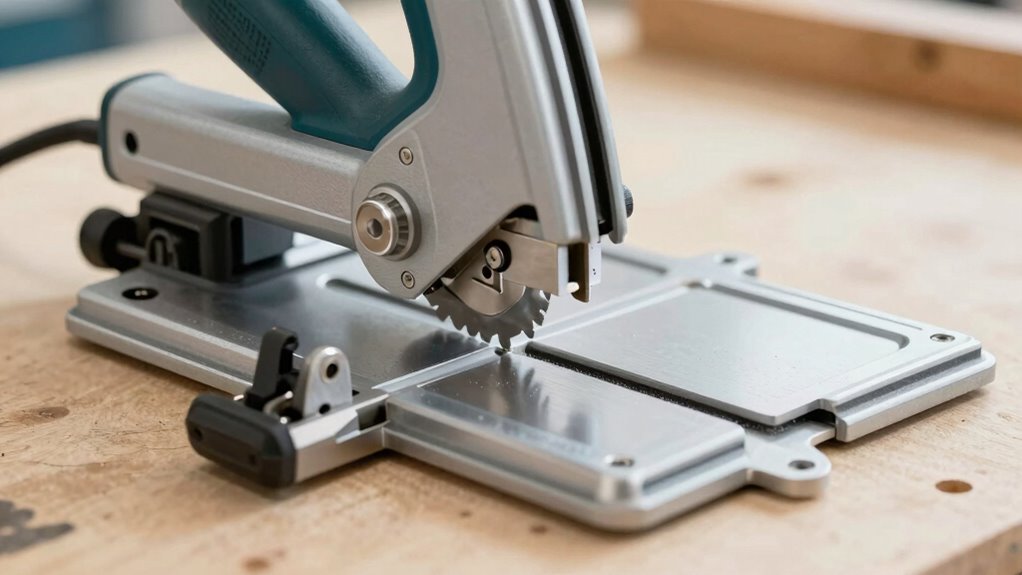
Ensuring that all components are securely tightened is essential for maintaining your miter saw’s accuracy. Loose parts can cause misalignments, leading to uneven cuts. Start by checking the blade tension; a blade that’s too loose or too tight affects cut precision. Adjust it according to the manufacturer’s instructions to guarantee proper tension. Next, verify the motor calibration; if the motor isn’t properly calibrated, the saw’s movement may be inconsistent. Tighten any bolts or screws holding the saw’s arm, fence, and base. Regularly inspect and tighten all fasteners to prevent shifting during operation. When components are secure, your saw stays aligned, providing consistent, accurate cuts without needing new blades. Proper maintenance keeps your saw performing at its best, especially by monitoring power tool safety features and operational settings. Additionally, paying attention to proper maintenance can prolong the life of your equipment and ensure ongoing precision. Checking component stability regularly helps catch issues early and maintain cut accuracy over time. Incorporating routine preventive maintenance can further enhance your saw’s reliability and performance.
Test Cuts to Fine-Tune and Confirm Your Saw Is Square
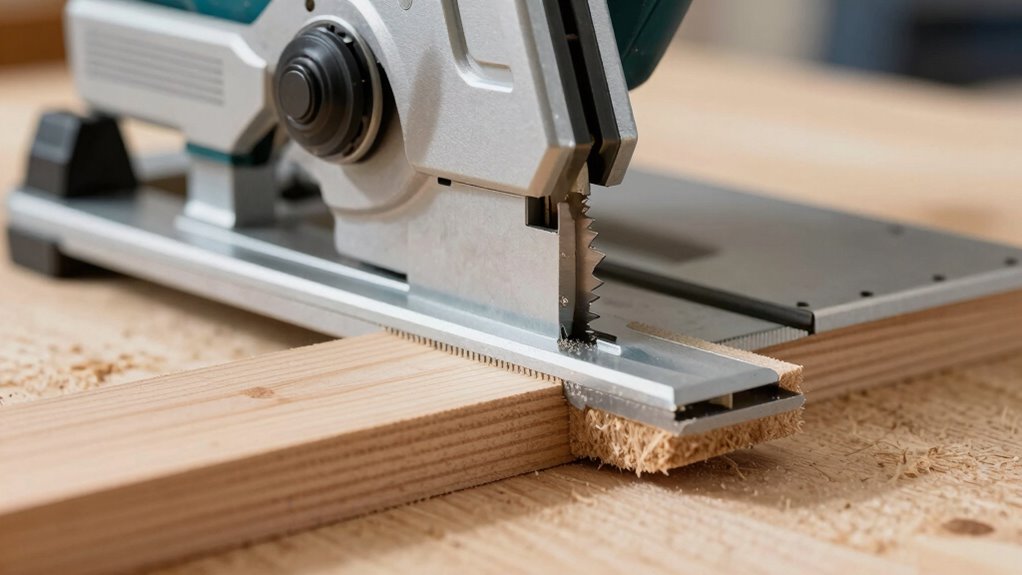
Performing test cuts is the most effective way to verify and fine-tune your miter saw’s squareness. Start by making a cut on a scrap piece of wood, then measure the resulting angle and edge for accuracy. If the cut isn’t perfectly square, it indicates your saw needs calibration. Use a speed square or combination square to check the cut’s squareness and adjust the saw’s settings accordingly. If your blade is dull or damaged, consider blade replacement, as a dull blade can cause inaccurate cuts. Repeating the test cut after adjustments helps ensure your saw maintains precision and proper calibration, saving you time and money while improving your cut quality. This process helps ensure your saw maintains precision without the need for buying new blades, saving you time and money while improving your cut quality. Understanding art care can also help you appreciate the craftsmanship behind quality tools and materials used in woodworking. Additionally, regularly inspecting for blade alignment ensures your cuts stay true over time.
Maintain Your Miter Saw Regularly for Best Results

Regular maintenance keeps your miter saw cutting accurately and safely. Start by regularly inspecting and sharpening your blade to ensure clean, precise cuts. Proper blade maintenance prevents uneven cuts and prolongs blade life. Dust management is equally important; dust buildup can interfere with cutting accuracy and cause mechanical issues. Use a vacuum or compressed air to remove sawdust from the motor housing, blade guard, and vents after each use. Keep the miter saw’s moving parts lubricated as recommended by the manufacturer to maintain smooth operation. Check the alignment of the fence and miter settings periodically, especially after cleaning. Additionally, understanding blade safety and proper handling techniques helps prevent accidents and ensures optimal performance. Being aware of saw calibration procedures can further improve cut accuracy. Regularly reviewing miter saw specifications can help you identify potential issues early. Maintaining proper Dust management practices and keeping your tools clean are essential for sustained accuracy. By staying consistent with blade maintenance and dust management, you’ll keep your saw performing at its best, ensuring accurate cuts every time without unnecessary repairs or replacements.
Troubleshoot Common Issues Without Replacing the Blade
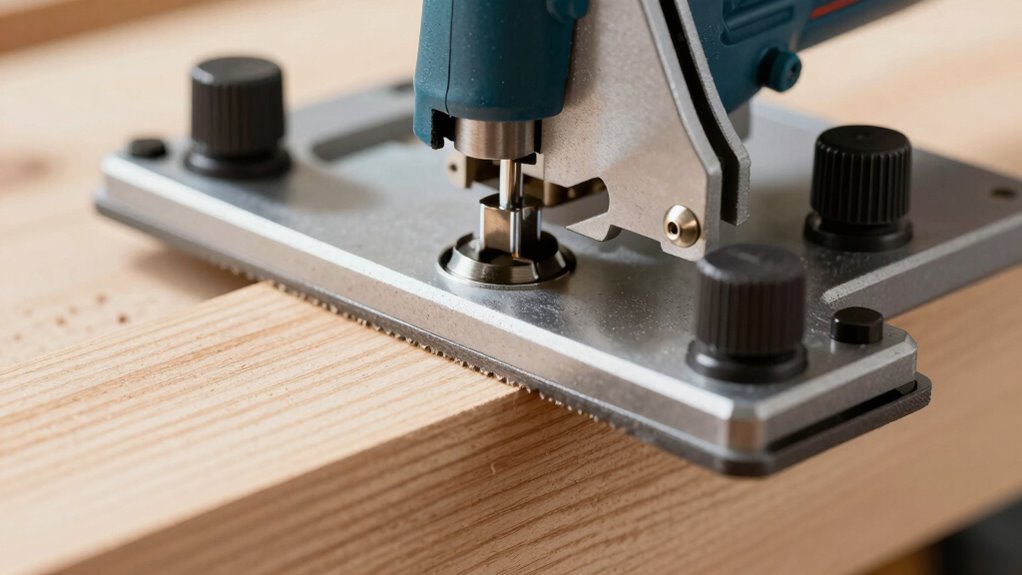
When your miter saw isn’t cutting as accurately as before, don’t rush to replace the blade. Often, blade wear is the culprit, causing uneven or rough cuts. Check for signs like dull edges or chipped teeth. Also, saw dust buildup can impair blade performance, leading to inaccuracies. Clean the blade thoroughly with a brush or compressed air to remove debris that can cause wobbling or misalignment. Inspect the blade for signs of wear or damage; if it’s dull or chipped, sharpening might restore its effectiveness. Regular maintenance, including cleaning and checking for wear, can extend your blade’s life and improve cut precision without the need for replacement. Additionally, understanding the importance of proper saw setup and alignment can help maintain accuracy and prevent issues. Ensuring blade tension is correct is also crucial for maintaining straight cuts and avoiding wobble. Troubleshooting these common issues helps maintain accuracy and saves you money.
Tips to Keep Your Miter Saw Cutting Square on a Budget
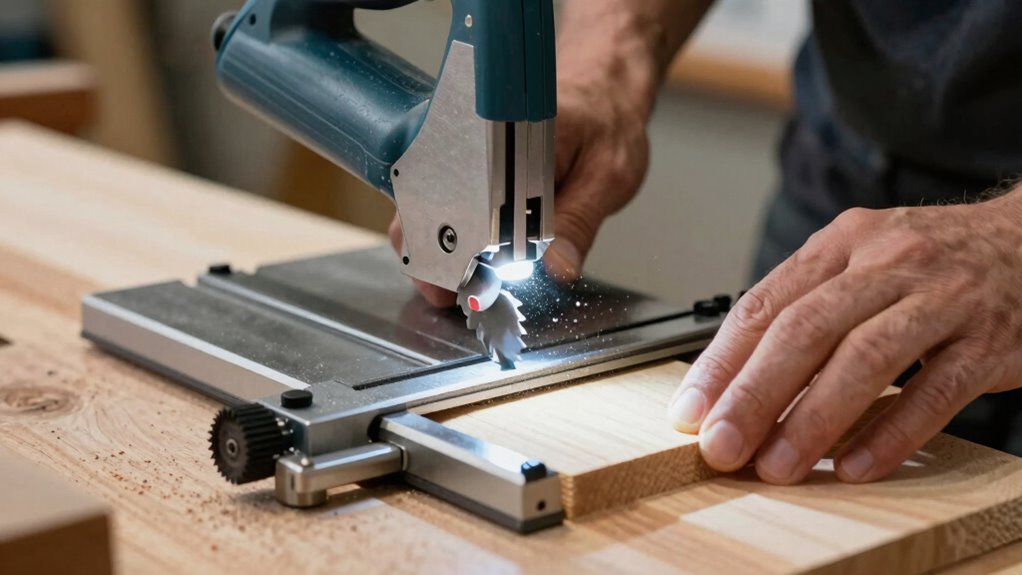
Keeping your miter saw cutting square doesn’t have to break the bank. Regular blade sharpening ensures your cuts stay precise without needing a new blade. Dull blades cause inaccuracies, so honing yours with a sharpening tool or sending it out saves money and maintains accuracy. Additionally, good dust collection is essential; dust buildup can misalign the saw or obscure your view, leading to skewed cuts. Keep the dust port clean and clear to guarantee smooth operation. Check and calibrate your saw’s bevel and miter angles periodically—often, small adjustments can restore accuracy without extra cost. By maintaining your blade through sharpening and ensuring effective dust collection, you’ll prolong your saw’s precision and performance without splurging on new blades or equipment.
Frequently Asked Questions
Can Worn-Out Blades Cause Inaccurate Cuts Even if Aligned Properly?
Yes, worn-out blades can cause inaccurate cuts even if they’re aligned properly. Blade wear leads to dull edges, which contribute to cut inconsistency and rough finishes. As the blade becomes dull, you’ll notice more splintering and less precision, making it harder to achieve square cuts. To maintain accuracy, regularly inspect and replace blades when they show signs of wear, ensuring your cuts stay clean and precise every time.
How Does Blade Type Affect Cut Precision and Accuracy?
Think of your blade as a trusted partner in craftsmanship—its materials and tooth design shape every cut you make. High-quality blades, crafted from durable materials like carbide, deliver cleaner, more precise cuts, while the tooth design influences smoothness and accuracy. Cheaper blades wear faster and produce rougher edges, leading to inaccuracies. So, choosing the right blade type directly impacts your cut’s precision and your project’s success.
What Are Signs of a Misaligned or Damaged Miter Saw That Aren’T Obvious?
If your miter saw shows blade wobble or produces inconsistent cuts, it might be misaligned or damaged. You may notice the cuts aren’t as clean or square as they should be, even if the blade appears fine. Look for uneven bevels or angles, unusual vibrations, or if the saw struggles to hold a steady position. These signs indicate you should check the alignment and inspect the blade for damage before continuing.
Is It Necessary to Recalibrate After Each Blade Change?
Think of your saw as a finely tuned orchestra—every component must be in harmony. You don’t need to recalibrate after every blade change, but it’s wise to verify blade maintenance and saw calibration regularly. New blades can slightly shift settings, so a quick check ensures accuracy. By maintaining your blades and periodically calibrating, you keep your cuts precise without unnecessary adjustments, ensuring your projects stay flawless and safe.
Can Environmental Factors Impact the Accuracy of My Miter Saw?
Environmental factors can definitely impact your miter saw’s accuracy. Dust buildup on the saw’s mechanisms can cause it to misalign, so regular cleaning is crucial. Additionally, fluctuations in ambient temperature can affect the saw’s materials, leading to slight shifts in cuts. To maintain precision, keep your workspace clean, ensure proper ventilation, and avoid extreme temperature changes. Regular maintenance helps your saw stay accurate, regardless of environmental conditions.
Conclusion
With these simple steps, you can keep your miter saw cutting perfectly square without the expense of new blades. Imagine making flawless, beveled edges on your project, knowing your saw is precisely calibrated. No need to worry about costly replacements—just a little routine maintenance and adjustment. Soon, you’ll be confident every cut is accurate, saving you time and money. Keep your tools sharp, aligned, and ready to craft with perfection every time.