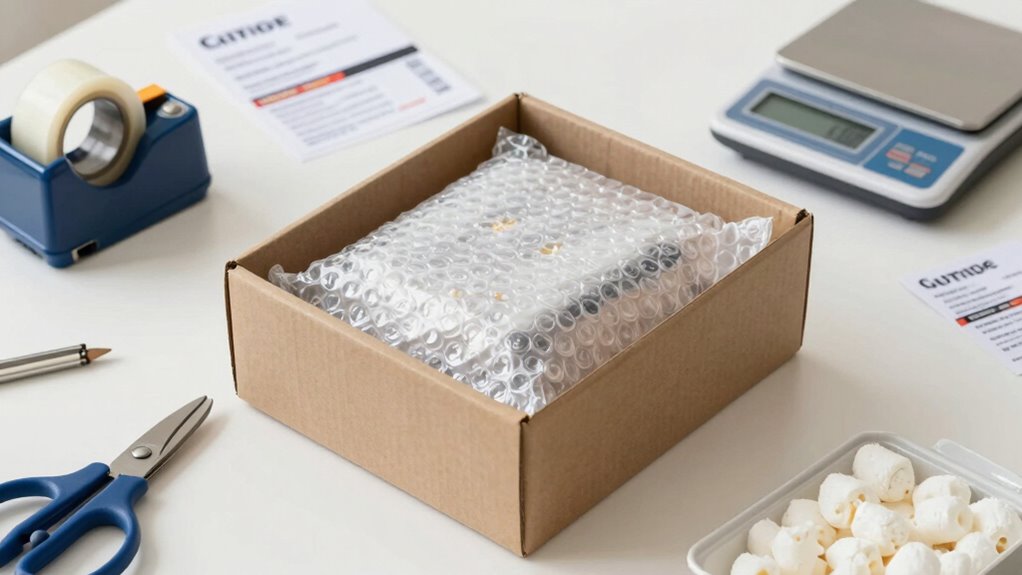
To ship like a pro and prevent returns, choose the right packaging materials that suit your product’s needs, especially for fragile items. Use sturdy boxes, proper cushioning, and fill gaps to avoid movement. Seal packages securely with quality tape and label them professionally with handling instructions. Avoid common mistakes like overpacking or insecure seals. Incorporate branding and ensure you meet carrier guidelines—keep your process smooth and damage-free. Keep going for detailed tips to perfect your packaging strategy.
Key Takeaways
- Use sturdy, appropriately sized boxes with sufficient cushioning to protect products during transit.
- Clearly label packages with handling instructions and “Fragile” markers to ensure careful handling.
- Secure all seals with strong tape and tamper-evident seals to prevent accidental openings or tampering.
- Accurately label shipping details and include detailed documentation and photos for tracking and damage claims.
- Follow standardized packaging procedures to ensure consistency, reduce errors, and minimize damage risks.
Why Proper Packaging Prevents Shipping Returns
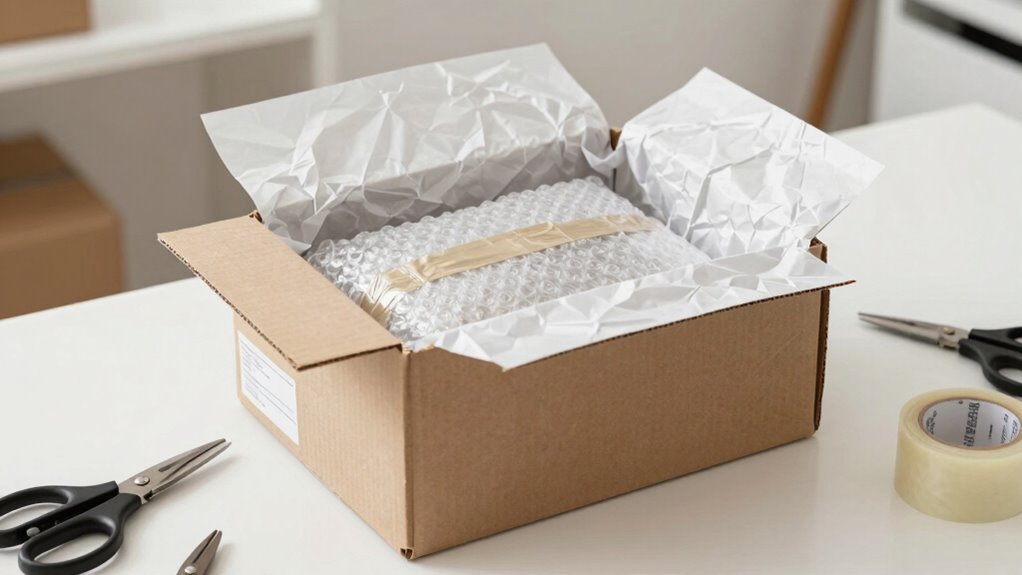
Proper packaging is essential because it directly influences whether a product arrives undamaged. Using the right packaging materials guarantees your items are protected during transit, reducing the risk of breakage or spoilage. Choose sturdy boxes, bubble wrap, or padding suited to your product’s fragility. Clear, accurate shipping labels are equally important; they prevent misdelivery and ensure your package reaches the right recipient promptly. Well-placed labels also help handlers identify the contents’ fragility or special handling instructions. When you combine high-quality packaging materials with precise shipping labels, you minimize damage and errors, which considerably cuts down on returns. Proper packaging not only safeguards your products but also builds trust with your customers by delivering items in excellent condition. Additionally, understanding shipping regulations can ensure compliance and prevent delays or issues during transit. Being aware of packaging standards helps ensure your packages meet industry requirements and reduces the risk of rejection or damage. Incorporating proper sealing techniques further enhances the security and integrity of each package during transit. Using appropriate packaging sizes also prevents movement within the box, protecting your items from unnecessary stress or impact during handling.
Choose the Right Packaging Materials for Your Products
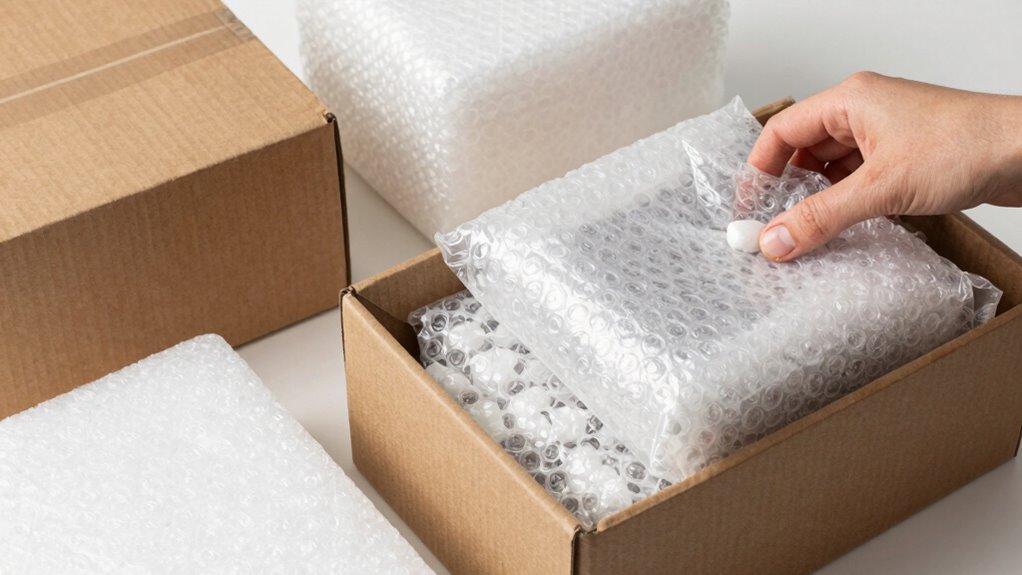
Selecting the right packaging materials is essential because it directly impacts how well your products withstand handling and transit. You want durable options that protect your items while minimizing waste. Eco-friendly options, like recycled cardboard or biodegradable fillers, not only reduce your environmental footprint but also appeal to eco-conscious customers. Custom branding materials, such as branded boxes or tissue paper, enhance your brand visibility and create a professional unboxing experience. Guarantee your packaging is appropriate for your product’s size and fragility, avoiding excess filler or thin materials that may cause damage. Additionally, considering packaging durability ensures your items arrive intact and maintains a positive customer perception. Incorporating sustainable packaging options can also improve your brand image and meet increasing consumer demand for environmentally responsible practices. Paying attention to protective packaging techniques helps prevent damage during transit and ensures customer satisfaction. Understanding product protection strategies can further optimize your packaging choices for safety and efficiency.
Pack Fragile Items Safely and Securely
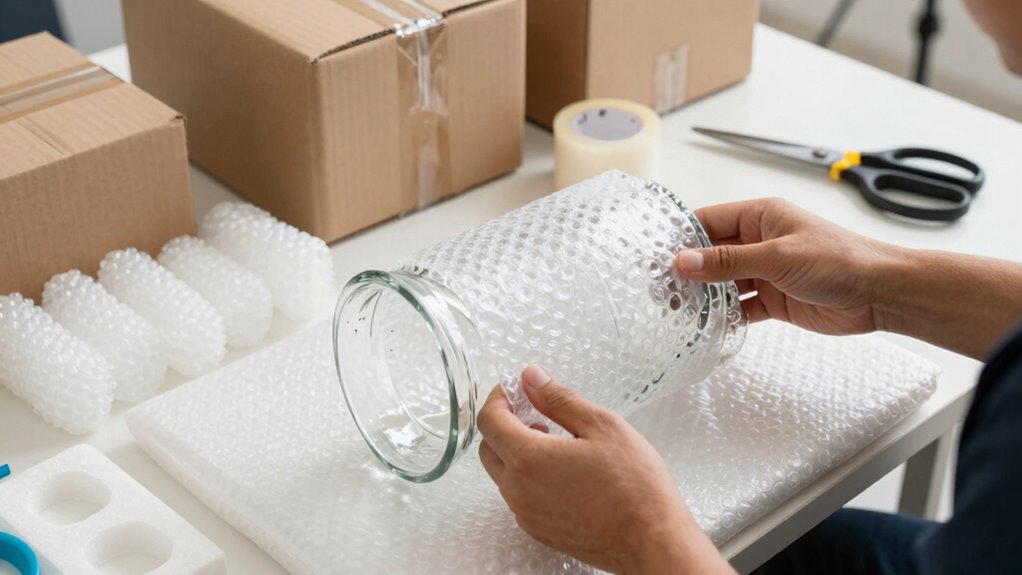
When packing fragile items, taking extra care to secure them properly can prevent costly damages during transit. Start by wrapping each item in bubble wrap, ensuring all sides are cushioned. Use enough layers to absorb shocks and prevent movement. Next, fill the bottom of your box with foam peanuts to create a stable base. Place the wrapped item in the center, then surround it completely with foam peanuts or additional bubble wrap. Fill all gaps to prevent shifting during shipping. Seal the box securely with strong packing tape, and label it as “Fragile” to alert handlers. Properly cushioning fragile items reduces the risk of damage, saving you the costs and hassle of returns. Being meticulous during packing makes a significant difference in transit safety. Additionally, understanding the importance of filtration and cushioning can help you choose the best packing materials for delicate items. Ensuring that your packaging materials have appropriate shock absorption capabilities can further enhance protection during transit. To optimize safety, consider using shock-absorbing padding designed specifically for fragile goods. Incorporating protective materials that offer superior shock absorption can significantly minimize impact risks during shipping, especially when combined with durable packaging solutions.
Fill Gaps and Cushion Items to Protect During Transit
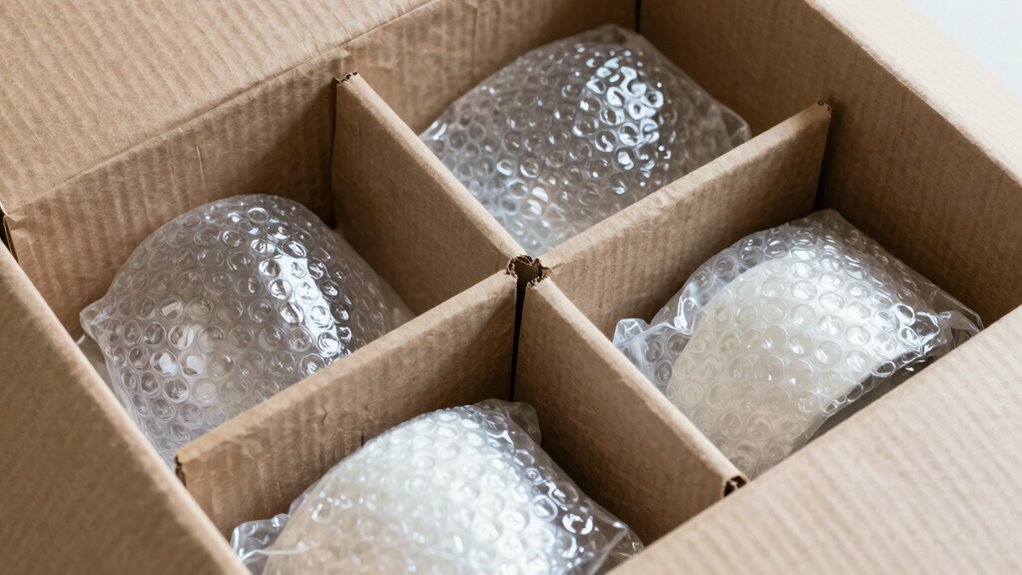
After securely wrapping and positioning your fragile items, the next step is to fill any remaining gaps inside the box. Use cushioning materials to prevent movement and absorb shocks during transit. Proper padding techniques make certain your items stay secure and intact. Consider the following:
- Fill gaps with crumpled packing paper or bubble wrap
- Use foam peanuts or air cushions for larger spaces
- Place padding around all sides of items for full protection
- Avoid overpacking, which can cause pressure damage
- Use sturdy corner protectors for added stability
- Ensure that the cushioning materials support detailed image rendering in dark scenes for optimal viewing experiences.
- Additionally, verify that the packaging techniques adhere to best practices to minimize the risk of returns due to damage.
Seal and Label Your Packages Professionally
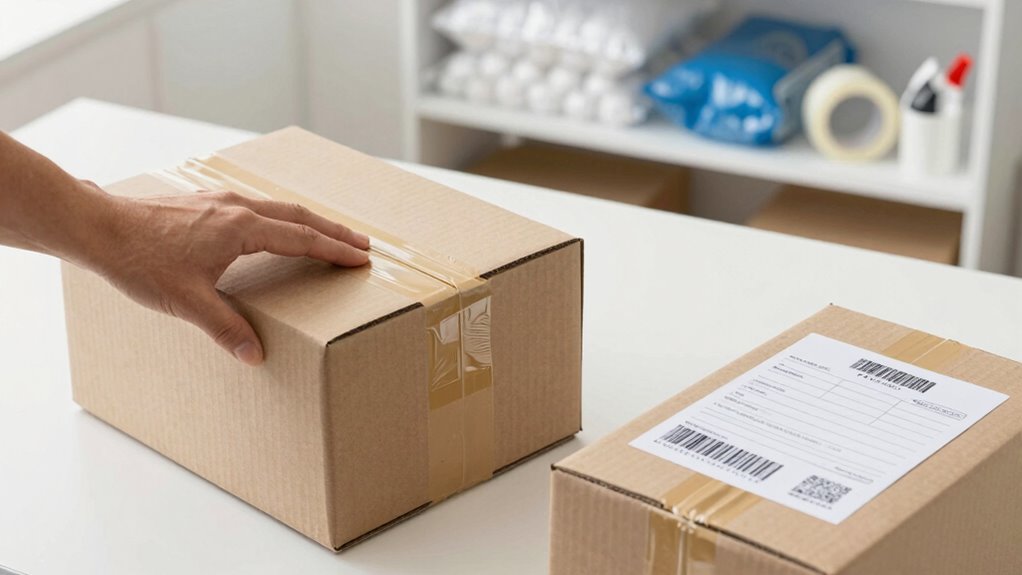
To guarantee your packages arrive intact, you need to seal and label them professionally. Use clear labels so customers can easily identify their orders, and apply proper seals to prevent tampering. Don’t forget to include handling instructions to guide carriers and recipients alike. Additionally, ensuring the integrity of packaging can be supported by using proper sealing techniques, which are essential for maintaining security and preventing damage during transit. Incorporating appropriate packaging materials further enhances protection by cushioning items and reducing movement within the box. Employing quality assurance processes ensures each package meets safety standards before shipping. Paying attention to packaging design can also help streamline the packing process and reduce errors. Furthermore, understanding packaging regulations can help ensure compliance with industry standards and avoid delays.
Use Clear Labels
Using clear and professional labels on your packages is essential to guarantee they arrive accurately and on time. Good label clarity ensures the carrier can easily read the information, reducing delays. To achieve this, use labels with legible fonts, high contrast, and a clean design. Ensure barcode accuracy by scanning labels before shipping to prevent misreads. Proper labeling minimizes delivery errors and customer frustration. Keep these tips in mind:
- Use large, easy-to-read fonts
- Maintain high contrast between text and background
- Double-check barcode scans for accuracy
- Avoid cluttered or faded labels
- Position labels flat and centered on the package
- Be aware of label standards to ensure compliance and smooth processing
Implementing local automation can further streamline your labeling process, reducing manual errors and increasing efficiency. Clear, well-placed labels streamline the shipping process and help your packages reach customers intact, reducing the chance of returns. Additionally, understanding shipping regulations can prevent compliance issues that may cause delays or returns. Incorporating quality control measures for labeling can also help catch errors before packages are shipped.
Apply Proper Seals
Have you ever received a package that looked poorly sealed or unprofessional? Proper sealing guarantees your package stays intact during transit and reassures customers that their order is secure. Use tamper evident seals for added security—they show clearly if someone has tried to open the package. Applying tamper proof packaging, like sturdy tapes and reinforced seals, prevents accidental or intentional openings. Make sure to seal all seams tightly, avoiding gaps or loose areas. Consistent, professional sealing not only protects your products but also enhances your brand image. When your packages look secure and well-sealed, customers trust your business more, reducing the likelihood of returns caused by damage or tampering. Proper sealing is a simple yet vital step toward shipping like a pro.
Include Handling Instructions
Including clear handling instructions is essential for guaranteeing your packages arrive intact and in good condition. Proper packaging labels communicate how your items should be handled during transit, reducing the risk of damage. Use bold, legible text and universally recognized symbols to highlight fragile or heavy items. Ensure handling instructions are visible and waterproof to withstand weather conditions. Properly labeling your packages helps carriers understand the importance of careful handling.
- Use clear, concise language on packaging labels
- Incorporate symbols for fragile, keep upright, or this side up
- Place handling instructions in visible spots on the package
- Use waterproof labels to prevent smudging or fading
- Keep instructions consistent and easy to understand
Streamline Your Packing Process for Efficiency
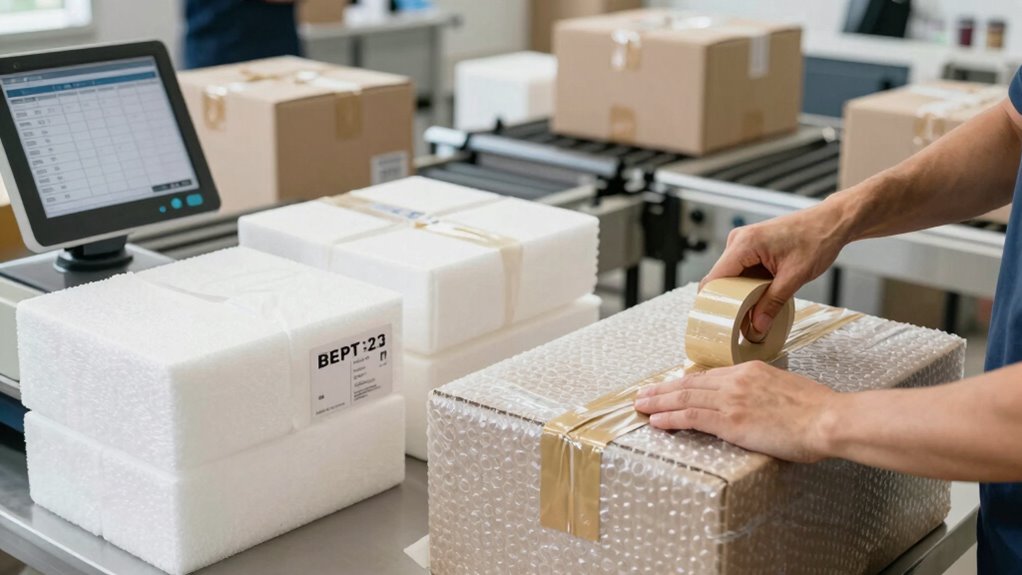
To make your packing process more efficient, focus on organizing your workspace and preparing materials in advance. Keep essential supplies within easy reach, such as boxes, tape, and labels, to save time. Streamlining your workflow helps improve labeling accuracy, reducing errors that can lead to returns. Use consistent labeling methods to ensure shipments are correctly identified and tracked. Additionally, prioritize packaging sustainability by choosing eco-friendly materials, which can simplify your process and appeal to environmentally conscious customers. Pre-measure and pre-fold packing materials, so you’re not wasting time during each order. Establishing a clear, efficient routine minimizes mistakes, speeds up your packing, and ensures every package is ready to ship smoothly. A well-organized setup keeps your process smooth and your workflow optimized.
Avoid Common Packaging Mistakes That Cause Damage

A streamlined packing process sets the foundation for preventing damage during shipment. To avoid common packaging mistakes, focus on proper fragile handling and packaging sustainability. First, ensure fragile items are cushioned with quality packing materials like bubble wrap or foam inserts. Second, always choose sturdy boxes that can withstand shipping stresses. Third, avoid overpacking or underpacking, which can cause movement and damage. Fourth, seal packages securely to prevent openings during transit. Fifth, use clear labeling for fragile items to alert handlers. These steps help prevent damage caused by careless handling and improper packaging. Implementing sustainable packaging practices, like recyclable fillers, also reduces environmental impact. By paying attention to these details, you minimize returns and improve customer satisfaction.
Add Branding to Your Packaging for a Professional Look
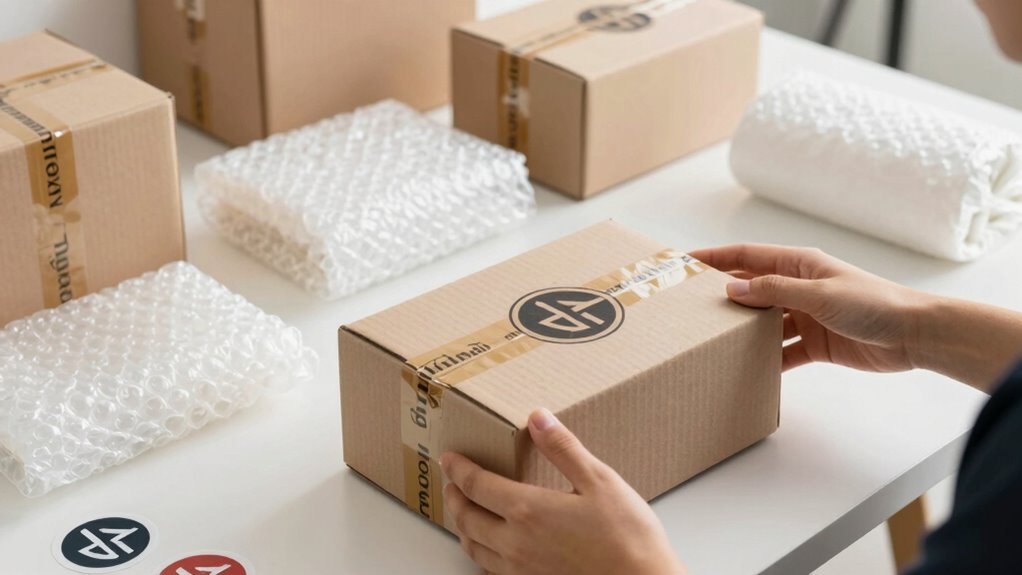
Adding branding to your packaging boosts professionalism and builds recognition. Focus on strategic logo placement, keeping colors consistent with your brand, and incorporating custom elements that stand out. These points help create a polished look that leaves a lasting impression and reduces the chance of returns.
Logo Placement Strategies
Effective logo placement is crucial in creating a professional look that reinforces your brand identity. To maximize logo visibility, position it where customers naturally look, such as the center of the box or on the top flap. Guarantee consistent placement across all packages to maintain brand consistency. Avoid cluttering the design; a clean logo draws attention and looks polished. Use high-quality printing to prevent smudging or fading that can diminish your brand’s professionalism. Incorporate your logo on multiple sides if possible, so it’s visible from different angles. Remember, strategic placement not only enhances appearance but also fosters brand recognition and trust.
- Place the logo at eye level for easy visibility
- Keep it centered for a balanced look
- Use contrasting colors for clarity
- Avoid covering important product info
- Maintain consistent positioning across shipments
Consistent Color Schemes
Using a consistent color scheme across your packaging helps strengthen your brand identity and makes your products instantly recognizable. Color consistency creates a cohesive look that customers associate with your business, boosting trust and professionalism. When your packaging maintains a unified color palette, it reinforces branding cohesion and ensures your products stand out on shelves or in transit. Avoid mixing too many colors or changing shades unexpectedly, as this can confuse customers and dilute your brand message. Instead, select a few signature colors aligned with your branding, and adhere to them across all packaging materials. This consistency not only enhances visual appeal but also helps prevent packaging errors, as recognizable colors act as visual cues for handling and inventory management.
Custom Packaging Elements
Incorporating custom branding elements into your packaging instantly elevates its professional appearance and reinforces your brand identity. Custom packaging with unique branding elements makes your shipments stand out and builds trust with customers. You can add:
- Custom logos and artwork
- Branded tissue paper or fillers
- Tailored stickers or seals
- Unique packaging materials
- Personalized thank-you notes
These branding elements not only enhance your packaging’s visual appeal but also create a memorable unboxing experience. When customers see consistent branding, it fosters confidence in your business and reduces the chance of returns caused by confusion or dissatisfaction. By investing in custom packaging, you show attention to detail and professionalism, ultimately strengthening customer loyalty and brand recognition.
Ensure Your Packaging Meets Shipping Carrier Requirements
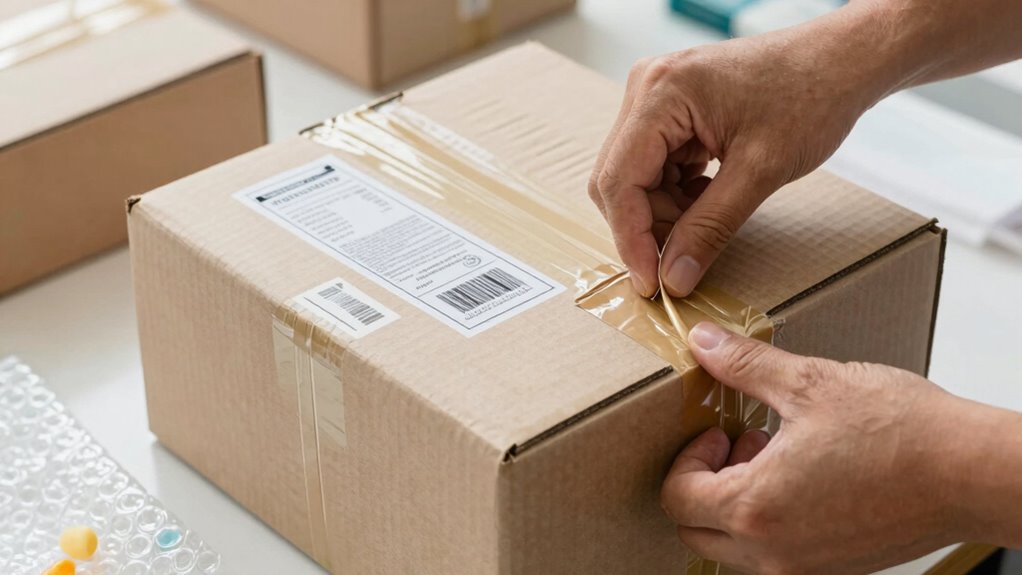
To prevent returns caused by shipping issues, you need to make certain your packaging complies with your carrier’s requirements. Understanding shipping regulations and packaging standards is essential for smooth deliveries. Check your carrier’s guidelines for size, weight limits, and labeling rules, and verify your packaging meets these standards precisely. Use sturdy materials that can withstand handling and transit stresses, avoiding fragile or weak packaging. Properly sealing and labeling your packages also reduces the risk of damage and misdelivery. If you overlook these requirements, your shipment may be delayed, returned, or incur additional charges. Regularly review your carrier’s policies, as they can change. Meeting shipping regulations and packaging standards not only prevents returns but also helps maintain your reputation for reliable delivery.
Track and Document Shipments to Support Damage Claims
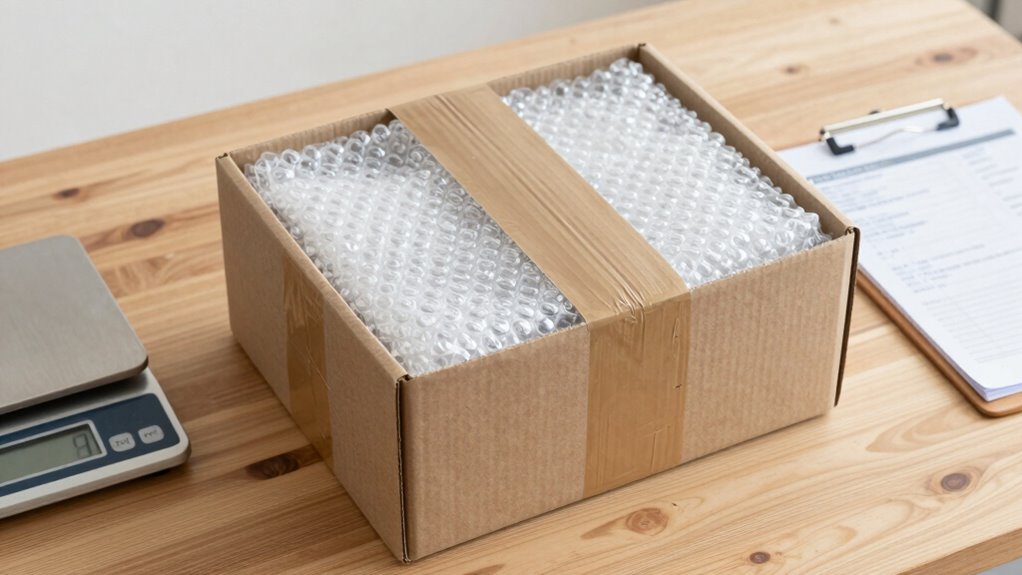
Keeping accurate shipment records and digital tracking documentation is essential when addressing damage claims. These records help you prove the condition of your packages during transit and support your case if issues arise. By staying organized and detailed, you can streamline the resolution process and reduce return rates.
Accurate Shipment Records
Maintaining accurate shipment records is essential for resolving damage claims efficiently. Proper documentation supports your inventory management and helps prove the condition of goods during transit. When you track and record shipments carefully, you have clear evidence for insurance claims and damage disputes. Be sure to:
- Record detailed packaging descriptions and photos
- Keep copies of shipping labels and receipts
- Log tracking numbers and delivery confirmations
- Document any damages upon receipt
- Store all records securely for future reference
These practices ensure you can quickly verify shipment details, support damage claims, and streamline the resolution process. Accurate records minimize delays, protect your business, and help you recover costs through shipping insurance or claims, saving you time and money in the long run.
Digital Tracking Documentation
Digital tracking documentation builds on accurate shipment records by providing real-time updates and verifiable proof of delivery. By using packaging innovations that incorporate eco-friendly materials, you guarantee your shipments are both sustainable and durable. These advancements make it easier to track packages at every stage, reducing the risk of lost items and supporting damage claims when issues arise. When you scan and record shipments digitally, you create a clear trail that proves the condition and timing of delivery. This documentation simplifies resolving disputes and minimizes returns caused by damage or misplacement. Embracing digital tracking along with eco-conscious packaging not only enhances transparency but also demonstrates your commitment to sustainability, making your shipping process more efficient and trustworthy.
Frequently Asked Questions
How Can I Reduce Packaging Costs Without Sacrificing Quality?
To reduce packaging costs without sacrificing quality, you should focus on using cost-effective materials that still protect your products. Additionally, consider investing in packaging automation, which streamlines your process and minimizes waste. By selecting the right materials and automating your packaging steps, you can save money while maintaining high standards, ensuring your products reach customers securely and professionally, all without increasing expenses.
What Are the Best Practices for Eco-Friendly Packaging?
To adopt eco-friendly packaging, you should prioritize sustainable materials like recycled paper, kraft, or corrugated cardboard. Opt for biodegradable options such as plant-based plastics and compostable fillers to minimize environmental impact. Always choose packaging that’s durable yet eco-conscious, and educate your customers about recycling or composting. Implementing these practices not only reduces waste but also boosts your brand’s green reputation, attracting eco-minded customers.
How Do I Handle Oversized or Irregularly Shaped Items?
When handling oversized or irregularly shaped items, you should focus on custom fitting and protective padding. Measure the item carefully and choose a box that fits snugly or create a custom package that contours to its shape. Use ample protective padding like bubble wrap or foam to prevent movement and damage during transit. This approach guarantees your item stays secure, reducing the likelihood of returns and ensuring customer satisfaction.
What Tools Can Speed up the Packaging Process?
To speed up your packaging process, use automated fillers to quickly fill void spaces, saving time and reducing waste. Label printers help you produce clear, professional shipping labels instantly, minimizing errors and delays. Combining these tools allows you to streamline your workflow, guarantee accurate labeling, and handle high volumes efficiently. With these aids, you can package faster, improve accuracy, and keep your shipping process running smoothly.
How Do I Train Staff on Proper Packaging Techniques?
You train your staff on proper packaging techniques by demonstrating handling labeling carefully, ensuring they understand every step. Use hands-on practice, offer clear instructions, and encourage questions to boost staff motivation. Regularly review processes and provide feedback to reinforce best practices. Recognize their progress to keep them motivated, and create a supportive environment where they feel confident handling labels and packing efficiently, reducing errors and returns.
Conclusion
By mastering proper packaging, you’re like a skilled artist protecting your masterpiece. When you choose the right materials, pack carefully, and label everything professionally, you reduce returns and keep customers happy. Avoid common mistakes, add your branding, and follow carrier guidelines to guarantee smooth shipping. Think of your packaging as a sturdy shield—it keeps your products safe through the journey. With these steps, you’ll ship like a pro and boost your business’s reputation.