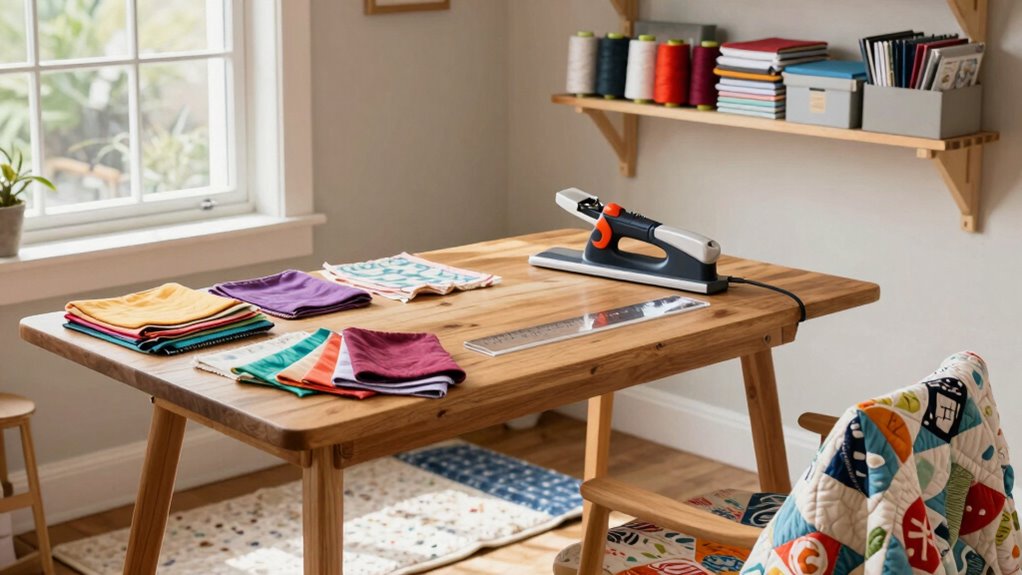

To plan your home quilting setup before spending big, start by choosing the right tools, like quality threads and storage solutions, based on your fabric types and project needs. Organize your space with clear bins, shelves, and well-maintained machines to prevent costly mistakes. Use digital tools for project planning and thread management to boost efficiency. Proper planning saves money, reduces waste, and creates an inspiring workspace. Discover more tips to set up your perfect quilting area.
Key Takeaways
- Assess your quilting space to determine available area and organization needs before purchasing supplies.
- Prioritize quality storage solutions for fabric, threads, and tools to prevent damage and improve workflow.
- Research and select versatile, high-quality threads suitable for various fabric types to ensure durability and professional results.
- Plan your layout with digital tools to manage inventory, project timelines, and optimize workspace efficiency.
- Regularly maintain your sewing machine and set up proper thread tension to ensure consistent stitching and reduce costly repairs.

Before you invest a lot of money into a home quilting setup, it’s essential to plan carefully. Your first step is understanding the importance of choosing the right thread selection. Quality thread matters because it affects the durability and appearance of your finished quilt. Look for threads that match the fabric types you plan to use and consider thread weight and fiber content. For example, cotton or polyester threads are versatile options and suitable for most projects. If you’re planning intricate quilting, a finer thread might be better, but for sturdier, everyday quilts, a thicker thread provides added strength. Always test different threads on small fabric samples to see how they handle tension and how they look once stitched. Proper thread selection helps prevent issues like puckering, breakage, or uneven stitching, saving you time and frustration down the line. Additionally, choosing the right digital tools can help you organize your supplies and plan your projects more efficiently. Using digital tools can also assist in creating detailed project layouts and managing your fabric inventory more effectively. Incorporating thread management techniques can further improve your quilting process by ensuring your threads are stored and used efficiently, reducing waste and tangling. Maintaining a consistent thread tension during sewing is also crucial for achieving professional-looking results and avoiding skipped stitches or uneven seams. Regularly checking your sewing machine settings and maintenance can also help maintain optimal tension and stitch quality throughout your projects.
Next, consider how you’ll manage fabric storage. A well-organized storage system keeps your fabrics accessible and protected from dust, moisture, and sunlight, which can cause fading or damage. Before you buy large amounts of fabric, assess your space and plan storage solutions that fit your setup. Clear plastic bins with labels work well for sorting by color or fabric type, and stackable shelves make it easy to see what you have at a glance. Rolling carts with multiple compartments can keep your most-used fabrics close to your workspace. Folding fabric neatly and storing it in a cool, dry place prevents wrinkles and damage. Also, think about how you’ll organize remnants and scraps—using small containers or hanging files can help you find pieces quickly when you need them. Efficient fabric storage not only reduces clutter but also makes your quilting process smoother, as you won’t waste time searching for the right materials. Maintaining a clean workspace ensures a more enjoyable and productive quilting experience.
In planning your setup, remember that investing in good storage and choosing the right thread are foundational steps that save you money and headaches later. They ensure your workspace is functional, your materials are protected, and your projects come out looking professional. Take the time to research and invest in quality storage solutions and threads suitable for your projects. This way, your quilting experience becomes more enjoyable and less stressful, turning your space into a productive, inspiring environment. Proper planning upfront guarantees that every dollar you spend on your quilting setup goes toward creating beautiful, lasting quilts rather than fixing avoidable mistakes or replacing poorly chosen supplies.
As an affiliate, we earn on qualifying purchases.
Frequently Asked Questions
How Much Space Do I Need for a Home Quilting Setup?
You’ll want at least a 4×6-foot space for your quilting setup, providing enough room to maneuver comfortably. Make certain to include proper lighting options, like adjustable lamps or overhead lights, to see details clearly. Keep thread storage nearby to stay organized and prevent clutter. Adequate space ensures you can quilt smoothly, with easy access to tools, while good lighting and thread storage make your process efficient and enjoyable.
What Safety Precautions Should I Consider When Setting Up?
Sure, because nothing says “quilt enthusiast” like risking life and limb, right? First, wear proper safety gear—gloves, goggles, maybe a dust mask—and double-check electrical safety. Keep cords tucked away to avoid tripping, and verify your outlets are grounded. Never ignore warning signs or overreach with tools. Your quilting sanctuary should be safe enough to enjoy, not turn into a DIY disaster zone.
Which Tools Are Essential for Beginner Quilters?
As a beginner quilter, you’ll want essential tools like sharp scissors, a rotary cutter, and a cutting mat. Focus on thread selection that matches your fabric and suits your quilting techniques, ensuring durability and a polished look. A quilting ruler can help with precise measurements. These tools will set a strong foundation for your projects, making your quilting experience smoother and more enjoyable from the start.
How Do I Organize Fabric and Supplies Efficiently?
Clutter and calm collide when you organize fabric and supplies efficiently. Use clear bins for fabric storage, sorting by color or type to easily find what you need. Incorporate small containers or drawer units for supply organization, keeping tools and notions within reach. Label everything clearly, and designate a dedicated space for each item. This way, your quilting area stays tidy, inspiring creativity, and making your projects more enjoyable.
Can I Set up a Quilting Space in a Small Apartment?
Yes, you can set up a quilting space in a small apartment. Focus on efficient fabric storage by using vertical shelves or stackable containers to save space. For quilt design, choose a compact worktable that doubles as storage. Keep essential tools nearby, and utilize wall space for organizers. Prioritize a clutter-free environment to inspire creativity, making your small apartment a cozy, functional quilting haven.
Conclusion
By planning your quilting setup carefully, you’re laying a solid foundation for your creative journey—like building a house on rock, not sand. Take the time to map out your space, prioritize your needs, and budget wisely. With a little foresight, you’ll turn your quilting area into a welcoming workshop that inspires you to stitch your dreams into reality. Remember, a well-thought-out setup is the key to endless quilting adventures without breaking the bank.