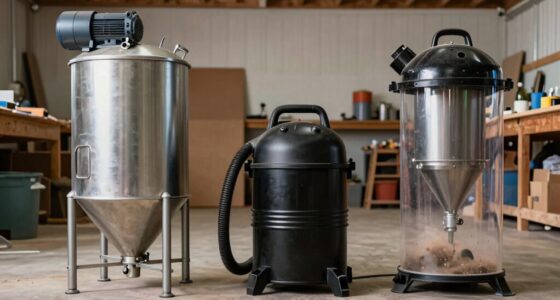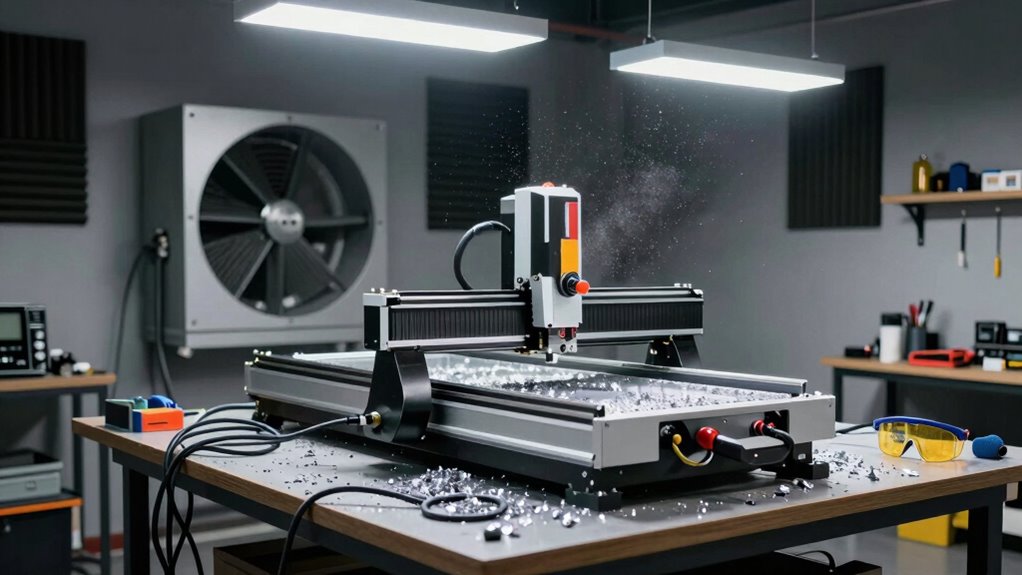
Before buying a CNC, consider your workspace size, ensuring there’s enough room for operation, maintenance, and future upgrades. Ask about dust and debris management options like extraction systems, and plan for proper ventilation to keep the area clean and safe. Think about noise levels, especially if your space shares walls with quieter areas, and explore noise control solutions. Also, check if the machine matches your material needs and power setup. Keep these questions in mind to make an informed choice and create an efficient workspace.
Key Takeaways
- Measure available workspace to ensure proper fit, clearance, and room for maintenance and future upgrades.
- Assess dust and debris management needs, including dust extraction systems and workspace ventilation.
- Consider noise levels and plan for soundproofing or quieter machine options, especially in shared spaces.
- Verify material compatibility and machine capabilities for your specific projects and materials.
- Ensure electrical power supply and software compatibility meet the CNC machine’s requirements.
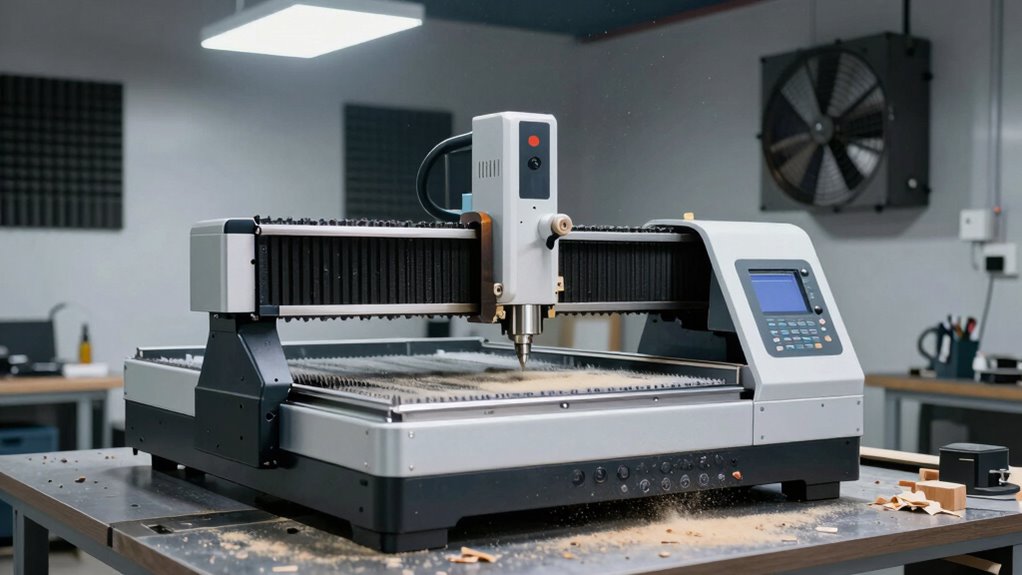
Are you contemplating purchasing a CNC machine but unsure where to start? Before making a decision, it’s essential to evaluate your workspace and understand the practical considerations involved. One of the first things you need to think about is the space you have available. CNC machines come in various sizes, from compact units suitable for small workshops to larger models that require dedicated areas. Measure your workspace carefully to ensure the machine fits comfortably, leaving enough room for operation and maintenance. Remember, a cramped environment can hinder workflow and safety, so plan for additional space for tools, materials, and possible future upgrades. Additionally, consider workspace planning to optimize your layout and ensure efficient workflow. Dust and noise are other critical factors that often get overlooked. CNC machining generates a significant amount of dust, chips, and debris, especially when working with wood, plastics, or certain metals. You’ll need to consider how to contain and manage this dust to keep your workspace clean and safe. Installing proper dust extraction systems or enclosures can dramatically reduce airborne particles, protecting your health and prolonging your equipment’s lifespan. Noise levels can also be substantial depending on the type of machine and materials used. If your workspace shares walls with living areas or quiet environments, you might need soundproofing measures or choose quieter models. Being aware of these factors beforehand helps prevent disruptions and ensures a more comfortable working environment. Material compatibility is another key aspect to address before buying a CNC. Different machines are designed to work with specific materials—wood, plastics, metals, or composites—so you need to match your intended projects with a machine capable of handling those materials efficiently. Not all CNCs are suitable for heavy-duty metal work, for example, so understanding what materials you plan to cut or carve will influence your choice. It’s also important to consider the power supply requirements to ensure your workspace can support the machine’s electrical needs. Alongside this, you should consider the software requirements. Some CNC machines come with proprietary software that may have specific hardware needs or learning curves, while others support more versatile, open-source options. Make sure the software is compatible with your computer and that you’re comfortable with its interface and capabilities. This can save you time and frustration in the long run, especially if you plan to run complex or precise projects.

Artsian 01 CNC Engraving Machine with Dust Extraction System and High-Efficiency Fixtures for Processing Aluminum, Brass, Wood, Plastic, and PCD Boards
High strength, high-speed motion system: WIZMAKER ARTISAN 01 has MGH12 linear guides on the X and Z axes,…
As an affiliate, we earn on qualifying purchases.
As an affiliate, we earn on qualifying purchases.
Frequently Asked Questions
What Are the Long-Term Maintenance Costs for a CNC Machine?
Long-term maintenance costs for a CNC machine mainly come from regular tool calibration and lubrication routines. You’ll need to budget for replacing worn tools and maintaining proper calibration to guarantee precision. Lubrication helps prevent wear and tear, extending the machine’s lifespan. These ongoing expenses vary based on usage, but staying consistent with maintenance routines minimizes costly repairs and keeps your machine running smoothly over time.
How Does Ambient Temperature Affect CNC Machine Performance?
Ambient temperature critically impacts your CNC machine’s performance. If the ambient stability isn’t maintained through proper temperature regulation, fluctuations can cause thermal expansion or contraction of components, leading to inaccuracies. Consistent temperatures ensure precise operation and prolong machine lifespan. You should invest in climate control solutions to keep the environment steady, preventing performance issues caused by temperature variations that could compromise your machining quality and consistency.
Can a CNC Be Operated Remotely or With Automation?
A stitch in time saves nine, and the same applies to CNC operation. You can operate a CNC remotely or integrate automation, boosting efficiency and safety. Remote operation allows you to control the machine from afar, while automation integration streamlines workflows, reducing manual effort. Both options are valuable for maximizing productivity, especially in busy or hazardous environments, ensuring you stay in control without being physically present at the machine.
What Are the Best Practices for Dust Collection and Filtration?
To guarantee effective dust management, you should invest in a high-quality filtration system that captures fine particles and keeps your workspace clean. Regularly maintain and replace filters to keep airflow ideal. Use a dust collection system with appropriate ducting that directs debris away from your work area. Additionally, consider adding a downdraft table or localized extraction near the CNC to minimize airborne dust and improve safety.
How Does Noise Level Impact Nearby Work Areas?
Imagine your work environment as a symphony—noise levels from a CNC can disrupt harmony. Noise mitigation becomes vital, especially in nearby work areas, to prevent distractions and guarantee safety. High noise levels can cause fatigue and reduce productivity. By considering noise impact, you create a more comfortable, efficient workspace, allowing you and your team to focus without the distraction of loud machinery, fostering a better overall work environment.

16 Pack Self-Adhesive Soundproof Wall Panels, 12 x 12 x 0.47 in Sound Proof Foam Panels for Walls, 1.2lb/ft³ High Density, Thicker 0.47in, Acoustic Panels, Noise Dampening Panels Studio Black
【Excellent Quality】: This wall soundproofing foam board is made of high-quality 100% polyester, odorless and flame retardant. There…
As an affiliate, we earn on qualifying purchases.
As an affiliate, we earn on qualifying purchases.
Conclusion
Before you buy a CNC, consider the space it’ll need, how to manage dust, and the noise levels. These factors can greatly impact your workshop’s safety and comfort. Did you know that nearly 60% of hobbyists report dust as their biggest challenge? Planning ahead ensures your CNC setup is efficient and enjoyable. By asking the right questions now, you’ll save time and money later, making your woodworking journey smoother and more satisfying.
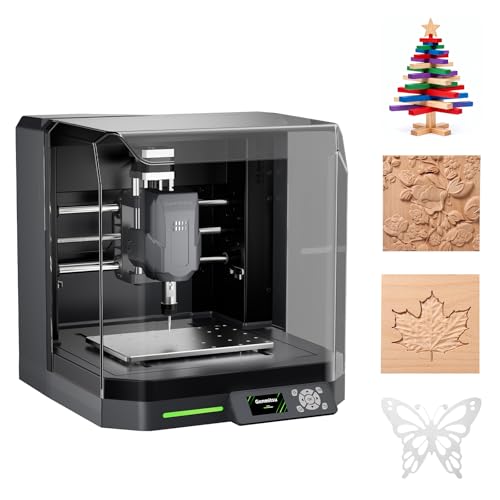
Genmitsu Cubiko CNC Router Machine with Enclosure, PCB Milling Machine, Smart Desktop CNC with Auto Z-Probing, WiFi & APP Supported, Great for Polishing, Drawing, Woodworking
CNC for Everyone: Ready to use out of the box—no assembly. Plug in and carve with ease. Supports…
As an affiliate, we earn on qualifying purchases.
As an affiliate, we earn on qualifying purchases.

LUNYEE 3018 PRO MAX CNC Machine 500W All-Metal CNC Router Machine 3 Axis Limit Switches & Emergency-Stop with GRBL Offline Control for Cutting Wood Acrylic MDF Plastic, Working Area: 300 x 180 x 80mm
500W Spindle & High Speed CNC Router Machine: The 500w Spindle is a Robust and Versatile Component Design….
As an affiliate, we earn on qualifying purchases.
As an affiliate, we earn on qualifying purchases.