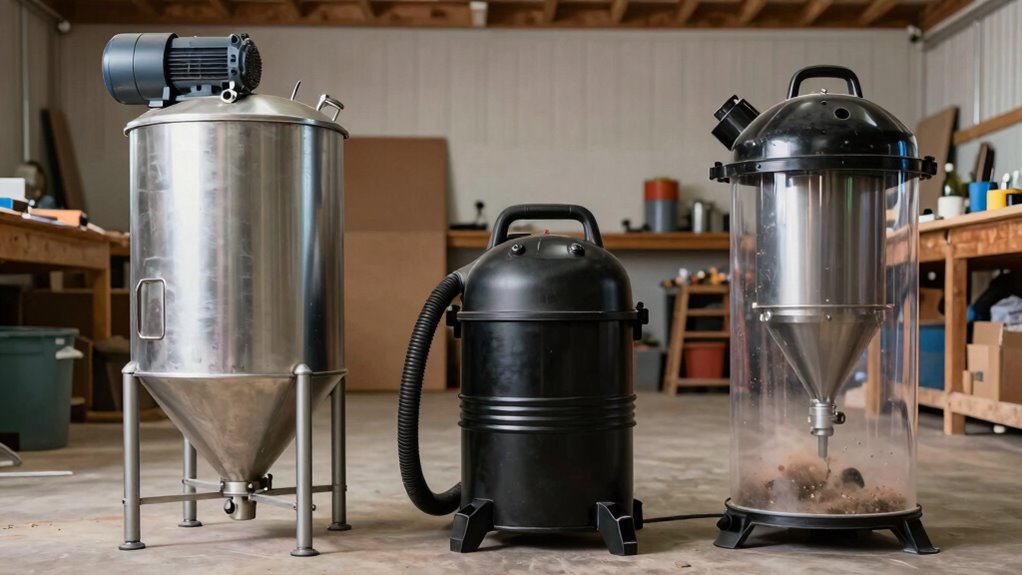

To build an effective dust plan, match your choice to your workspace needs. Use a dust collector for high-volume, fine dust capture in larger workshops, while a shop vac is better for quick, spot cleanups. Incorporate a cyclone system to pre-separate debris, reducing filter clogging and increasing efficiency. Combining these systems creates a safer, cleaner environment. Keep in mind the costs, maintenance, and proper setup—more details on crafting the perfect dust control plan wait for you.
Key Takeaways
- Match system type to dust size and volume for optimal indoor air quality and safety.
- Combine cyclone separators with stationary dust collectors for efficient debris and dust management.
- Use shop vacuums for quick, spot cleanup but rely on larger systems for continuous, heavy-duty dust removal.
- Consider portability, capacity, and filtration standards when selecting between stationary and mobile dust control solutions.
- Regular maintenance and workflow planning ensure effective dust containment and system longevity.
dust collector for woodworking shop
As an affiliate, we earn on qualifying purchases.
As an affiliate, we earn on qualifying purchases.
How to Choose the Right Dust Control System for Your Workshop
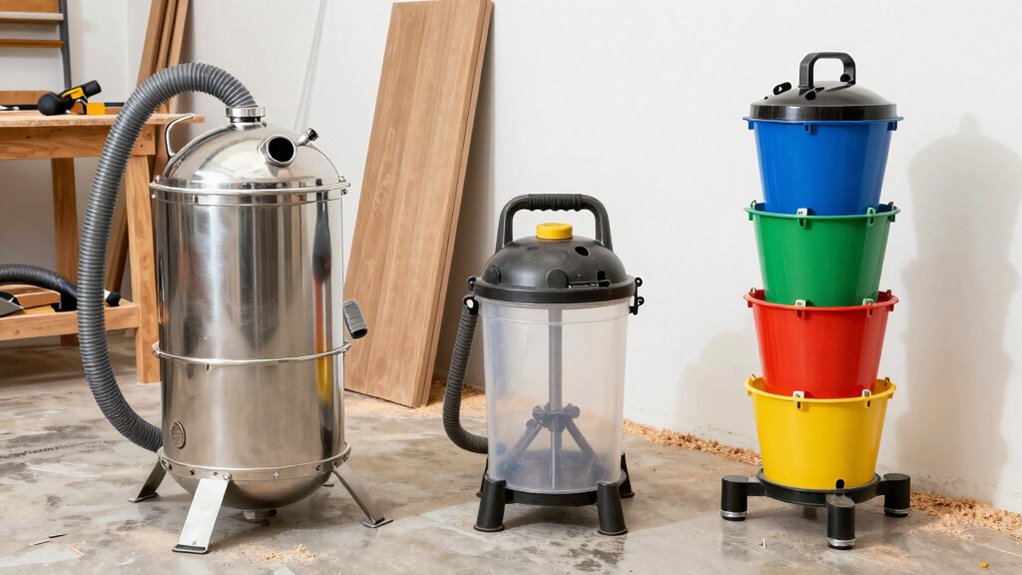
Choosing the right dust control system for your workshop depends on understanding your specific needs and the types of projects you tackle. Your goal is to improve air quality and reduce dust hazards that can affect your health and workspace safety. Consider the volume of dust generated and the size of particles produced during your work. If dust hazards pose a serious concern, a powerful dust collector might be necessary to keep the air clean. For small projects or occasional cleanup, a shop vac could suffice. Cyclones offer efficient dust separation but may require more space and setup. By evaluating your work frequency, dust production, and safety priorities, you can select a system that effectively manages dust and maintains a healthier workshop environment. Additionally, understanding the different types of dust control systems can help you make an informed decision tailored to your workshop needs. For example, assessing the air filtration capacity of each system ensures it can handle your workshop’s dust levels effectively.
Key Factors to Consider When Selecting Dust Collectors, Shop Vacs, or Cyclones
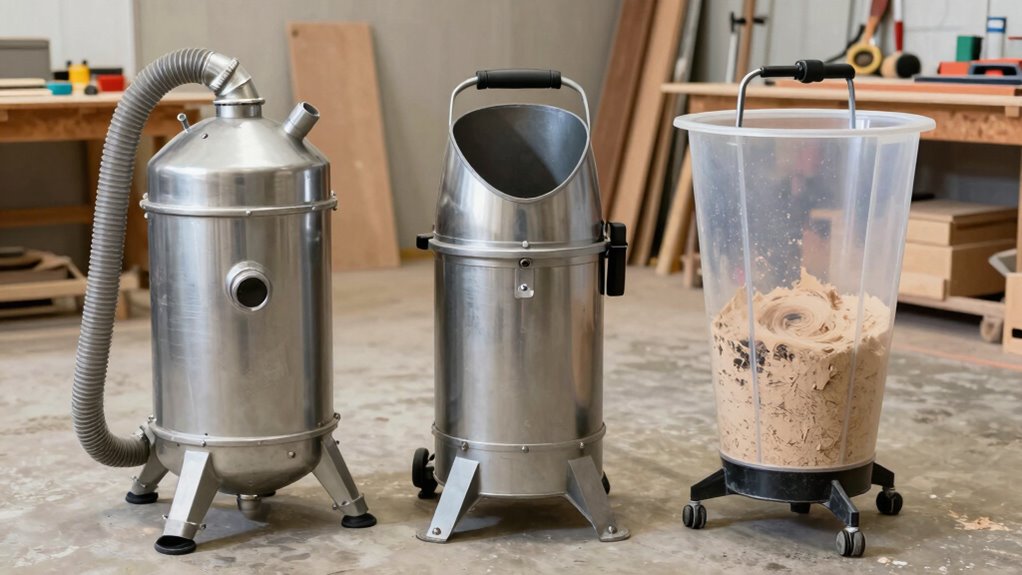
When selecting between dust collectors, shop vacs, or cyclones, it’s important to weigh several key factors to guarantee you pick the right system for your workshop. Consider these critical points:
- Air quality – Confirm the system effectively captures fine dust to maintain a safe, healthy environment.
- Capacity – Match the system’s volume and airflow to your workload to prevent inefficiencies.
- Safety protocols – Choose equipment with proper filtration and dust containment features to protect your health.
- Budget and maintenance – Balance upfront costs with ongoing upkeep to sustain ideal performance.
What Are the Main Differences Between Dust Collectors, Shop Vacs, and Cyclones?
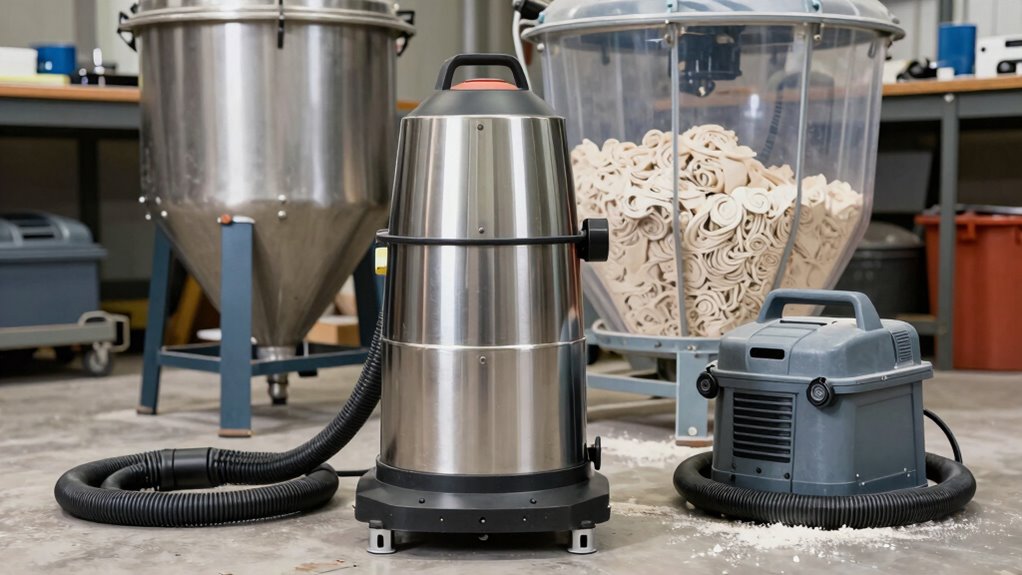
Understanding the main differences between dust collectors, shop vacs, and cyclones helps you choose the right tool for your needs. You’ll notice variations in filtration efficiency, portability, and dust collection capacity that impact performance. Let’s explore how these points set each option apart. Additionally, Gold IRA markets demonstrate the importance of selecting reliable and trusted options, similar to choosing the right dust management system. For instance, natural filtration systems used in eco-friendly pools highlight sustainable practices that can also influence your selection of equipment for a healthier environment.
Filtration Efficiency Differences
Filtration efficiency is a key factor that sets dust collectors, shop vacs, and cyclones apart. Your choice depends on how well they trap fine particles. Dust collectors typically have high air filter ratings, often meeting HEPA standards, capturing 99.97% of particles 0.3 microns or smaller. Shop vacs usually feature less efficient filters, suited for larger debris but not fine dust. Cyclones excel at pre-separating larger particles before they reach the filter, reducing clogging and maintaining efficiency. Here’s what to contemplate:
- HEPA standards in dust collectors provide superior filtration for fine dust.
- Shop vacs often lack HEPA-grade filters.
- Cyclones improve overall efficiency by removing larger debris early.
- Air filter ratings directly impact the effectiveness of dust containment.
- Filtration efficiency directly influences the quality of indoor air and the health of users.
Portability and Size
Are you wondering how portability and size differ among dust collectors, shop vacs, and cyclones? Dust collectors tend to be larger and heavier, offering powerful performance but requiring dedicated storage solutions. Their bulky design makes them less portable but ideal for stationary setups in workshops. Shop vacs, on the other hand, feature a compact, portable design that’s easy to carry around, perfect for quick cleanup or job site use. Cyclones usually fall somewhere in between—they’re larger than shop vacs but more mobile than dust collectors, often with wheels or handles for ease of movement. Your choice depends on your space and mobility needs. If portability is key, shop vacs and cyclones provide flexible storage solutions, while dust collectors suit fixed, larger workshop environments.
Dust Collection Capacity
When it comes to dust collection capacity, the main differences lie in how much debris each tool can handle before needing to be emptied. Dust collectors typically have larger capacities, allowing for longer airflow runs without interruption. Shop vacs usually handle less volume, requiring frequent emptying but offering quick setup. Cyclones excel at separating dust efficiently, maintaining consistent airflow and extending filter lifespan. Additionally, ventilation considerations play a crucial role in optimizing overall dust management systems. Consider these key points: 1. Dust collectors support high-volume debris, reducing downtime. 2. Shop vacs are suited for smaller, quick cleanup tasks. 3. Cyclones optimize airflow, preventing filter clogging. 4. Longer filter lifespan is achieved through effective dust separation. Choosing the right system depends on your dust load and need for airflow optimization.
Which Dust Control System Works Best for Small Workshops or Spot Cleaning?

When selecting a dust control system for small workshops or spot cleaning, portability and storage are key factors to take into account. You want a setup that’s easy to move around and doesn’t take up too much space. Additionally, evaluating cleaning efficiency and power helps ensure you pick a system that handles dust effectively without overkill. Considering dust collection capacity can also be helpful, as a well-designed dust system can minimize airborne particles and improve overall air quality in your workspace. Moreover, understanding the filter maintenance requirements of each system can ensure sustained performance and safety over time. Incorporating automatic shut-off features can further enhance convenience and safety during operation. Integrating smart technology such as sensors or remote controls can also streamline operation and maintenance, making your dust management more efficient and responsive.
Portability and Storage
If you’re trying to decide which dust control system fits best in a small workshop or for spot cleaning, portability and storage are key factors to weigh. A system with portable storage and a compact design makes setup and transport effortless. Consider these points:
- Size of the unit—smaller models are easier to move around.
- Weight—lighter models reduce strain during relocation.
- Hose length—long hoses improve reach without cumbersome setup.
- Storage options—built-in compartments or foldable components save space.
A shop vac often excels here with its compact design and easy portability, ideal for quick cleanups. Cyclones and dust collectors may require more space and heavier equipment, making them less suitable for tight quarters.
Cleaning Efficiency and Power
For small workshops or spot cleaning tasks, choosing a dust control system with strong cleaning efficiency and power is essential to keep the workspace clean and safe. Airflow optimization is key to maximizing dust extraction, ensuring debris is quickly and effectively removed. A system with high suction power can handle various dust particle sizes, from fine particles to larger debris, preventing buildup and health hazards. Shop vacuums excel at spot cleaning because of their focused suction, while cyclones offer continuous airflow with less filter clogging, maintaining consistent power. Dust collectors, with larger motors and optimized airflow, efficiently handle larger areas and heavier dust loads. Selecting a system that balances airflow and suction power based on your cleaning needs will make your workspace cleaner and safer. Understanding airflow is vital for choosing the right dust control system for your specific needs.
How Do Cyclone Systems Maximize Efficiency and Reduce Dust Mess?
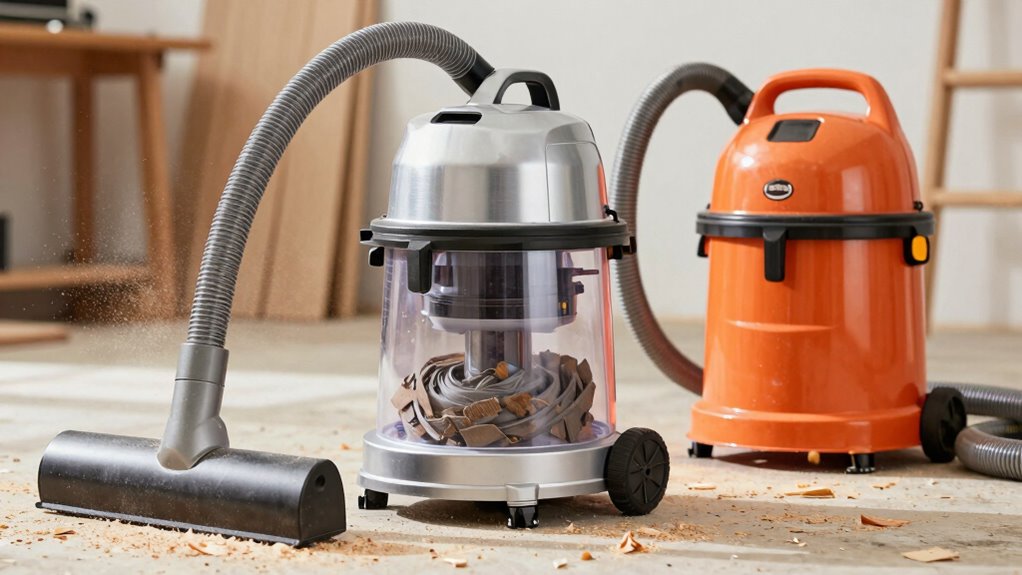
Cyclone systems maximize efficiency and reduce dust mess by separating larger debris from fine dust particles before they reach the filter. This process improves airflow optimization and minimizes filter clogging, ensuring consistent suction. To achieve this, consider these key features:
- Centrifugal Force: Spins dust-laden air, pushing larger debris into a collection bin.
- Design Shape: Uses conical or cylindrical chambers to enhance separation.
- Airflow Path: Maintains steady, optimized airflow, reducing turbulence that stirs up dust.
- Dust Particle Size Handling: Effectively captures fine dust, preventing it from reaching filters and escaping back into your workspace.
Comparing Costs, Maintenance, and Performance of Dust Collection Options
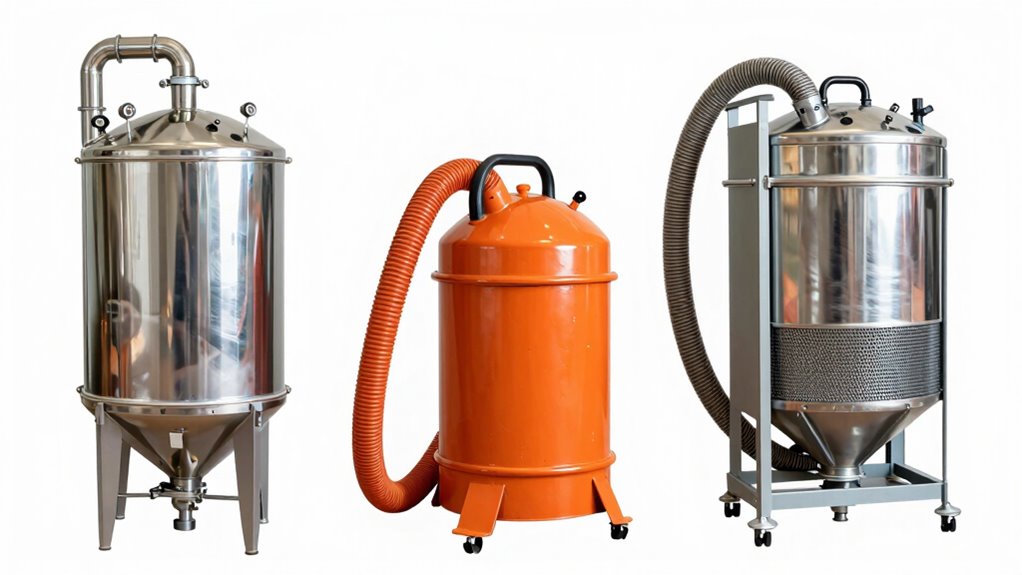
When choosing between dust collection options, understanding their costs, maintenance needs, and performance is essential to making an informed decision. Dust collectors typically cost more upfront but excel in air quality and safety protocols, offering high performance with minimal maintenance. Shop vacuums are affordable and portable but may struggle with continuous use and dust volume. Cyclones strike a balance, reducing dust mess and maintaining airflow efficiency, but require some upkeep. Properly understanding dust management systems can help you select the best option for your workspace. Additionally, considering long-term operational costs can influence the overall value of each system. Evaluating airflow efficiency and dust containment capabilities is crucial to optimizing your setup. Here’s a quick comparison: field‑of‑view and imaging‑scale examples can help visualize the practical differences in airflow and dust handling capabilities among these systems.
How to Integrate Multiple Dust Control Systems for Total Workspace Safety
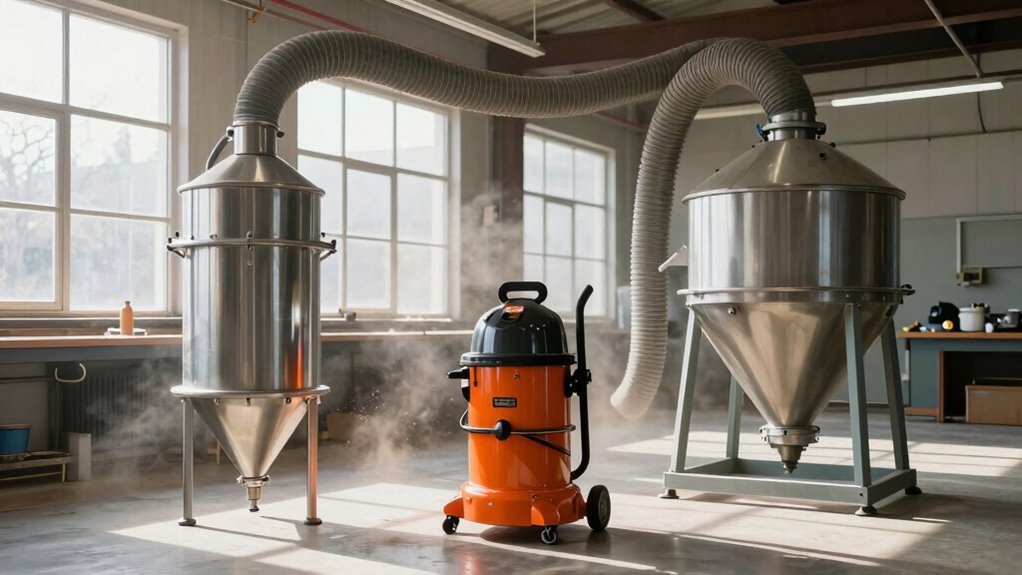
Integrating multiple dust control systems can substantially enhance your workspace safety by addressing different types of dust and debris. To optimize dust safety and air filtration, consider these steps:
- Combine a cyclone separator with a central dust collector to handle large debris and fine dust efficiently. Connected equipment can improve overall system performance.
- Use shop vacs for spot cleaning and hard-to-reach areas, reducing airborne particles.
- Install air filtration units strategically to capture residual dust, improving overall air quality.
- Create a workflow that directs dust from tools directly into collection systems, minimizing airborne dust exposure.
- Regular maintenance and timely filter replacements ensure these systems operate at peak efficiency, maintaining a safe workspace environment.
This integrated approach ensures maximum dust removal, promotes cleaner air, and creates a safer workspace. Properly combining these systems minimizes health risks and maintains a cleaner environment, keeping dust safety at the forefront.
Common Mistakes to Avoid When Setting Up Your Dust Management Plan
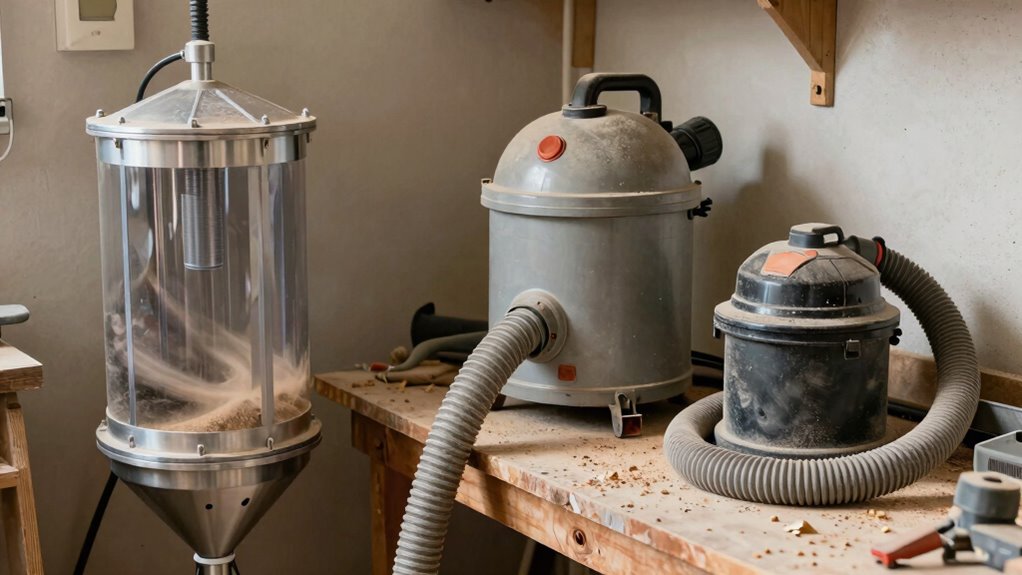
Setting up your dust management system without careful planning can lead to ineffective dust removal and potential health hazards. One common mistake is neglecting proper workshop ventilation, which is vital for dispersing dust particles and maintaining air quality. You might also overlook dust hazard awareness, underestimating the importance of good air filtration and containment. Failing to match your dust collection method to your workspace size and type can cause inadequate dust extraction. Another mistake is installing equipment without considering airflow requirements or maintaining clear paths for dust to travel. Avoid ignoring regular system checks and filter replacements, which can diminish performance. Properly planning your setup helps guarantee your dust control system effectively protects your health and keeps your workspace safe. Additionally, integrating home security systems can ensure your workshop remains secure during off-hours, preventing theft or vandalism.
Frequently Asked Questions
How Do I Determine the Right Airflow Rate for My Workshop?
To determine the right airflow rate for your workshop, start with an airflow calculation based on your tools’ dust emission levels. Measure the cubic feet per minute (CFM) needed to capture dust effectively. Use this data for system sizing, guaranteeing your dust collector or cyclone can handle the required CFM. Proper airflow ensures efficient dust extraction, protecting your health and keeping your workspace clean.
What Safety Precautions Should I Take With Dust Collection Systems?
Safety first, because an ounce of prevention is worth a pound of cure. Always wear proper personal protective gear like masks and goggles when operating dust collection systems. Make certain electrical safety by inspecting cords and connections regularly, avoiding overloads and moisture. Keep the work area clean and well-ventilated, and never bypass safety features. Following these steps keeps you safe and your dust system working efficiently, so you can focus on your project with peace of mind.
Can I Retrofit Existing Tools With Dust Collection Attachments?
Yes, you can retrofit existing tools with dust collection attachments, but you should check tool compatibility first. Some tools may not have standard ports or may require adapters, making retrofit challenging. Measure your tool’s dust port and select compatible attachments. Be prepared for potential challenges like fitting issues or reduced mobility. With some effort and proper parts, you can improve dust control and make your workspace cleaner and safer.
How Often Should I Clean or Replace Filters in These Systems?
Think of your filters as the lungs of your system; they need care to keep breathing freely. You should check and clean filters regularly—ideally every few weeks—especially after heavy use. Follow your manufacturer’s replacement schedule, typically every 6 to 12 months, or sooner if airflow drops or dust escapes. Proper filter maintenance guarantees your system runs efficiently, preventing dust buildup and prolonging its lifespan.
Are There Environmental Considerations When Choosing Dust Collection Equipment?
Yes, environmental considerations matter when choosing dust collection equipment. You should prioritize systems that improve air quality and minimize airborne dust, protecting your health and the environment. Proper waste disposal is also key—look for units that safely contain and dispose of dust and debris. Opting for energy-efficient models reduces your carbon footprint. By making eco-conscious choices, you guarantee a healthier workspace and contribute to environmental sustainability.
Conclusion
Remember, a chain is only as strong as its weakest link. By understanding the differences and choosing the right dust control system for your workshop, you’ll keep your space cleaner, safer, and more efficient. Whether you opt for a dust collector, shop vac, or cyclone, integrating the right tools guarantees dust doesn’t become a hidden hazard. Invest wisely, maintain regularly, and stay vigilant—your workshop’s health depends on it.