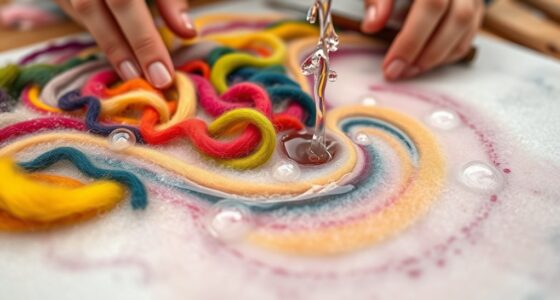
To stay safe while rug tufting, always handle blades with care, use blade guards, and store blades securely away from children. Wear protective gloves, masks, and goggles to prevent injuries and inhalation of dust and fumes. Keep your workspace organized, well-ventilated, and free of clutter. Be cautious with adhesives, applying glue carefully in ventilated areas, and avoid overheating electrical tools. Following these safety rules helps protect you, and there’s more to learn for a safer tufting experience.
Key Takeaways
- Always use blade guards, handle blades with care, and store them securely to prevent cuts during tufting.
- Apply glue in well-ventilated areas while wearing gloves and masks to avoid inhaling fumes and skin contact.
- Maintain a clean, organized workspace to reduce trip hazards and ensure safe handling of tools and materials.
- Ensure proper ventilation with fans or air purifiers to control dust, fibers, and fumes from adhesives and fibers.
- Wear protective gear like goggles, gloves, and masks, and regularly inspect tools and safety equipment for optimal safety.
What Are the Main Safety Risks in Rug Tufting?
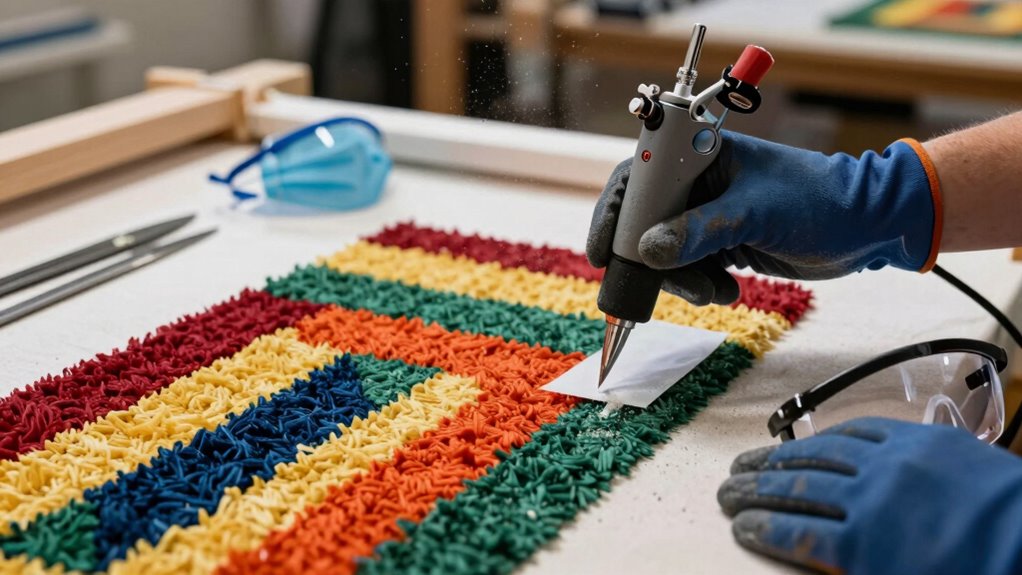
Rug tufting can be an enjoyable craft, but it also comes with several safety risks you need to be aware of. Fire hazards are a primary concern, especially when working with electrical tools or adhesives that may overheat or emit fumes. You should always keep a fire extinguisher nearby and avoid using flammable materials near heat sources. Electrical safety is equally important; ensure cords are in good condition, avoid overloading outlets, and unplug tools when not in use. Misusing electric tufting guns or failing to follow safety instructions can lead to shocks or fires. Staying alert and maintaining a clean workspace helps prevent accidents. Recognizing these hazards keeps your craft safe and enjoyable. Additionally, understanding the contrast ratio of your projector can greatly improve your viewing experience by providing deeper blacks and brighter whites, which is especially important in dark room settings. To further enhance safety, always read and follow the manufacturer’s safety instructions when operating tufting equipment or handling adhesives. Being aware of the electrical wiring basics can also help prevent accidental shocks or fire hazards, especially in workshops with multiple power tools. Proper ventilation and awareness of chemical safety when using adhesives and other materials are also essential to avoid inhaling fumes or causing health issues. Educating yourself about workplace safety protocols can also help you create a safer environment for your craft.
How Do I Set Up a Safe and Organized Rug Tufting Workspace?
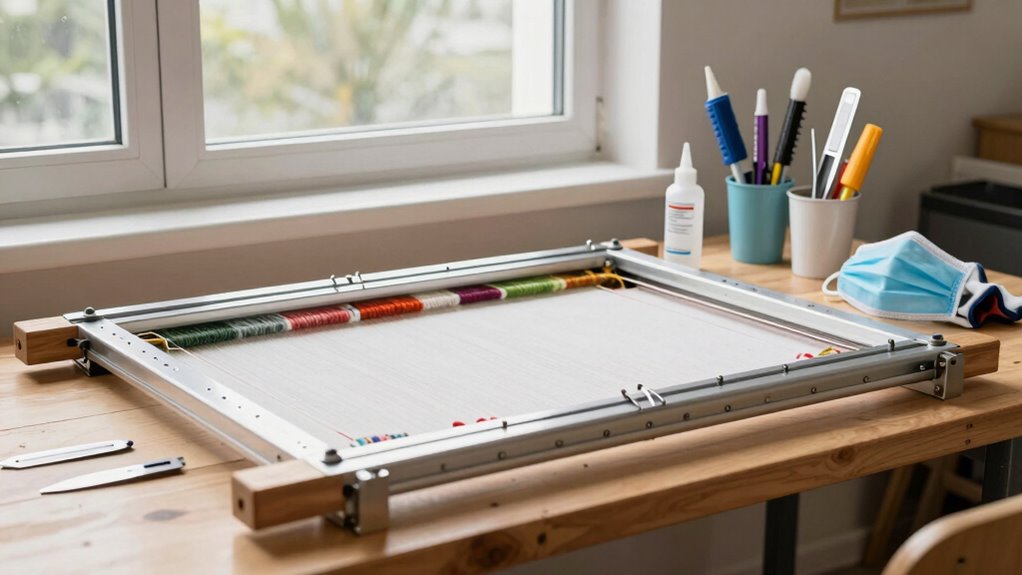
To guarantee safety and efficiency while tufting, you need to set up a workspace that’s both organized and hazard-free. Proper workspace organization helps keep your tools and materials accessible while reducing clutter that could cause accidents. Designate specific areas for tools, such as scissors, needles, and adhesives, and use tool storage solutions like shelves, containers, or pegboards to keep everything in order. Ensure your work surface is stable, clean, and free of obstructions. Good lighting is essential to avoid mistakes and accidents. Keep cords, dust, and debris contained and away from your work zone. Additionally, incorporating proper electrical setup ensures safe operation of power tools and equipment. A well-organized space minimizes risks, makes your workflow smoother, and helps you stay focused on safety while tufting. Regularly inspecting your workspace for potential hazards and maintaining a clean environment also supports home safety practices and prevents workplace injuries.
How Can I Handle and Maintain Blades Safely?
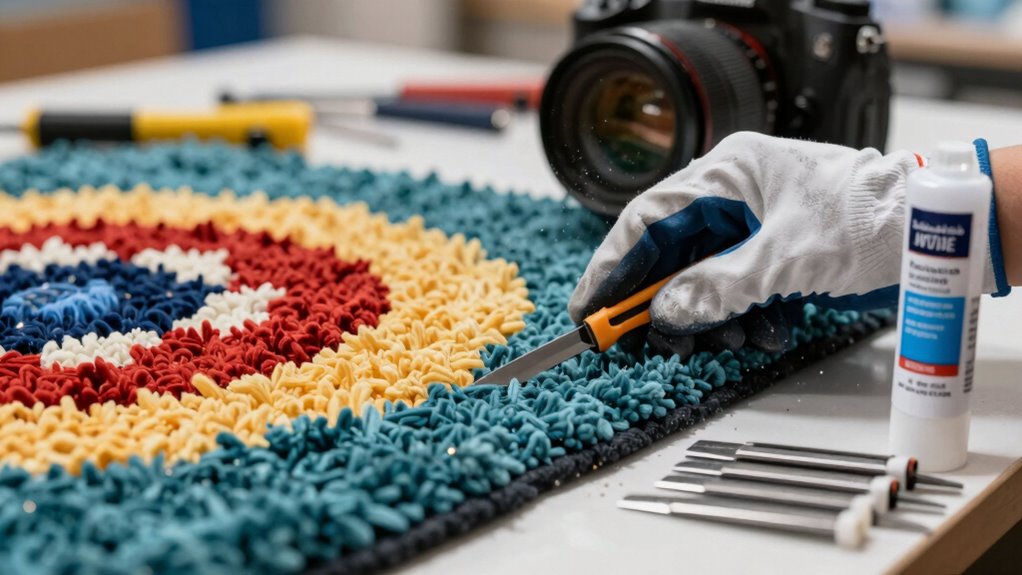
To handle and maintain blades safely, always use blade guards to protect your fingers during work. When replacing blades, do so carefully to avoid cuts, and store them in a secure location away from children. Properly maintaining and storing blades minimizes accidents and keeps your workspace safe. Additionally, regularly inspecting your blades for wear and tear ensures optimal safety and performance. Blade safety is essential to prevent injuries and extend the lifespan of your tools. Incorporating safety protocols into your routine further reduces the risk of accidents and promotes a secure working environment. Understanding pinball machine weights can also help in safely moving and installing heavy equipment in your workspace. Being aware of dust control measures can improve overall safety by reducing airborne particles and maintaining a clean workspace.
Use Blade Guards Properly
Using blade guards correctly is essential for safe rug tufting, as they provide a barrier between your hands and the sharp blade. Always verify your safety shields are properly attached before starting work. Check that the blade guards fit securely and aren’t cracked or damaged, which could compromise protection. When handling blades, keep the guards in place to prevent accidental contact during use. Don’t remove or bypass the safety shields, even if it feels inconvenient. Properly maintaining your blade guards reduces the risk of cuts and injuries. Regularly inspect them for wear and replace if necessary. Using the right blade guards and safety shields consistently is a simple but effective way to protect yourself during rug tufting. Safety protocols from smart home technology can also help create a safer workspace by alerting you to potential hazards.
Replace Blades Carefully
When replacing blades in your tufting tool, handle them with care to prevent accidents. During blade replacement, always wear gloves and use safety precautions to protect your fingers. Use a cloth or tool to grip the blade securely, avoiding direct contact with sharp edges. Make sure the tool is unplugged or powered off before starting. Carefully remove the old blade, keeping it away from your body and other surfaces. When installing a new blade, align it properly and tighten it securely, but don’t overtighten. Follow the manufacturer’s instructions for proper blade replacement procedures. Taking these safety precautions reduces the risk of cuts and injuries, ensuring a safe and efficient blade replacement process. Remember, handling blades carefully is essential for safe tufting.
Store Blades Safely
Properly storing blades is essential for maintaining their sharpness and safety. Always keep blades in a designated container to prevent accidental cuts. Use safety signage nearby to remind yourself and others of potential hazards. Store blades in a secure, dry place away from children and pets. Label the storage area clearly to avoid confusion. Here’s a quick reference:
| Blade Storage Tips | Safety Signage | Maintenance Reminder |
|---|---|---|
| Use a blade case or holder | Post hazard signs | Check blades regularly for dullness |
| Keep blades upright | Remind others to handle with care | Replace damaged blades immediately |
| Store in a dry place | Use clear warning labels | Clean blades after use |
Following these practices guarantees safe handling and prolongs the life of your blades.
How Do I Use Glue Safely During Rug Tufting?
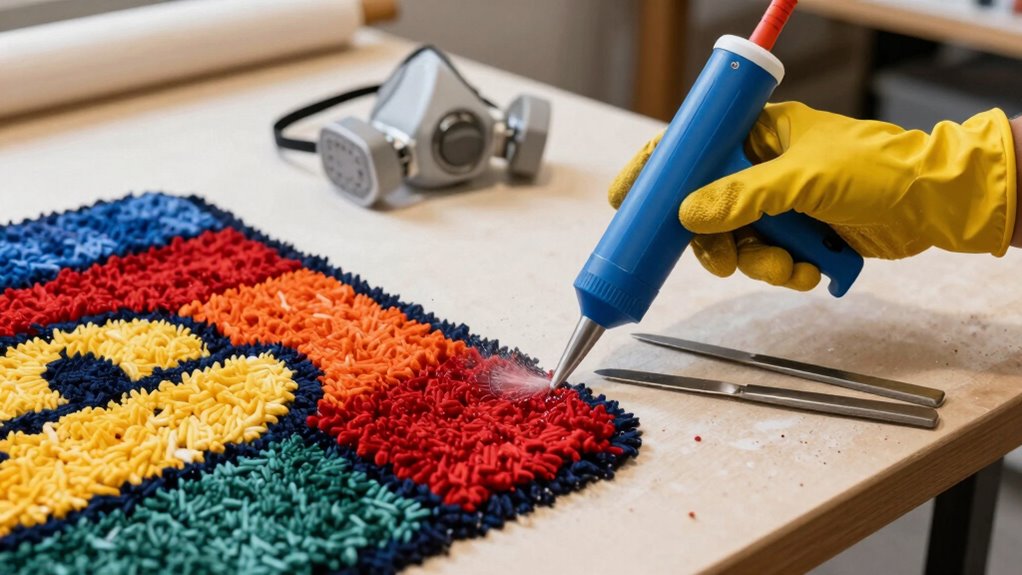
To make certain your safety during rug tufting, handling glue with care is vital. When applying glue, use a small brush or spatula for precise glue application, preventing excess that could cause spills or fumes. Always work in a well-ventilated area to guarantee proper airflow and reduce inhalation risks. Follow the manufacturer’s instructions for adhesive safety, including recommended drying times and surface preparation. Wear gloves to protect your skin from direct contact, and avoid inhaling fumes by wearing a mask if necessary. Keep glue containers tightly closed when not in use to prevent spills and fumes from escaping. Additionally, regularly checking for any adhesive hazards can help prevent accidents and ensure a safer working environment. Proper ventilation is crucial to disperse fumes and keep your workspace safe. Using protective gear such as masks and gloves further minimizes exposure to potentially harmful substances. Being aware of fume accumulation and how to effectively mitigate it can significantly enhance your safety. Ensuring proper storage of adhesives also plays a key role in maintaining a safe workspace. By practicing careful glue application and adhering to adhesive safety guidelines, you create a safer working environment and make your rug tufting project stays clean and safe.
How Can I Control Dust and Fumes While Working?
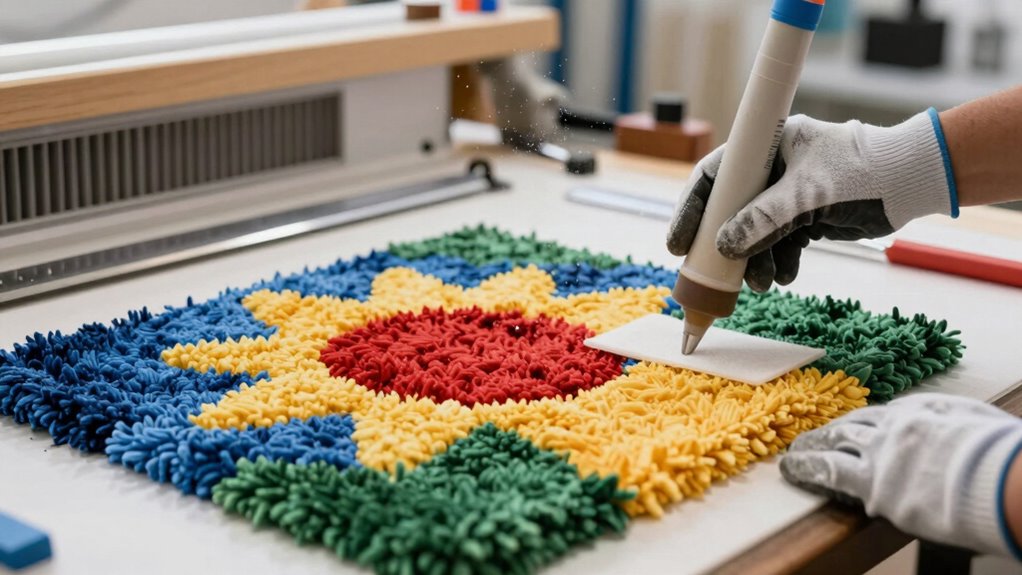
To keep dust and fumes under control, guarantee your workspace has proper ventilation. Wearing protective masks helps prevent inhaling harmful particles, and regular cleaning reduces dust buildup. These steps keep your environment safer and make your rug tufting process healthier. Additionally, using air purifiers with HEPA filters can further improve indoor air quality by capturing airborne particles. Ensuring proper ventilation systems are in place can significantly reduce airborne contaminants during your projects. Implementing air exchange strategies can also help maintain a safer breathing environment during prolonged work sessions. Incorporating dust collection tools can further minimize airborne dust and improve overall safety. Properly maintaining and utilizing dust management equipment is essential for ongoing safety in your workspace.
Use Proper Ventilation
When working with rug tufting materials that release dust and fumes, ensuring good ventilation is essential for your safety. Proper ventilation helps maintain air quality and reduces airborne dust, making dust control easier. Open windows and doors whenever possible, and use exhaust fans to direct fumes away from your workspace. If you work indoors, consider installing a ventilation system or air purifier equipped with HEPA filters to continuously clean the air. Avoid working in confined spaces with poor airflow. Regularly check that ventilation devices are functioning properly. Good airflow not only minimizes inhalation risks but also keeps your workspace safer and more comfortable. Remember, proper ventilation is a key step in managing dust and fumes effectively while you work.
Wear Protective Masks
Are you protecting yourself from dust and fumes while rug tufting? Wearing protective masks is essential to safeguard your respiratory health. Dust from fibers and fumes from adhesives or dyes can quickly become airborne, increasing health risks over time. Choose a well-fitting mask rated for particulate filtration, such as an N95 or higher, to effectively block airborne particles. Make sure your mask covers your nose and mouth completely and wear it whenever you’re working with dust or fumes. Regularly replace or clean masks to maintain their effectiveness. Taking these precautions helps prevent respiratory irritation and long-term health issues, keeping you safe and comfortable during your tufting projects. Proper workspace ventilation can also significantly reduce airborne contaminants and enhance safety. Implementing additional safety measures like air purifiers or exhaust fans can further improve air quality. Protecting your respiratory health should always be a priority in your workspace.
Regular Workspace Cleaning
Keeping your workspace clean is essential for controlling dust and fumes during rug tufting. Regular cleaning helps maintain good workspace organization, preventing dust buildup that can become airborne. Make a habit of sweeping or vacuuming your area frequently, especially after cutting or gluing. Proper tool maintenance also reduces dust and debris; sharp blades cut cleaner, creating less dust, while well-maintained tools last longer and perform better. Wipe down surfaces regularly to remove dust particles and avoid clutter that can trap airborne fibers. Using a vacuum with a HEPA filter can help trap fine dust particles, improving air quality. Staying organized and attentive to tool upkeep ensures a safer, cleaner environment, reducing health risks associated with dust and fumes during your tufting projects. Additionally, understanding Rhythm Failure techniques can help you develop more efficient workflows that minimize dust disturbance. Incorporating dust control measures, such as portable air purifiers, can further improve your workspace safety and air quality. Implementing proper ventilation techniques can also significantly reduce airborne dust and fumes, promoting a healthier workspace. Regularly updating your cleaning routines based on dust and fiber accumulation data can optimize safety practices and ensure ongoing health protection.
What Safety Gear Do I Need for Rug Tufting?
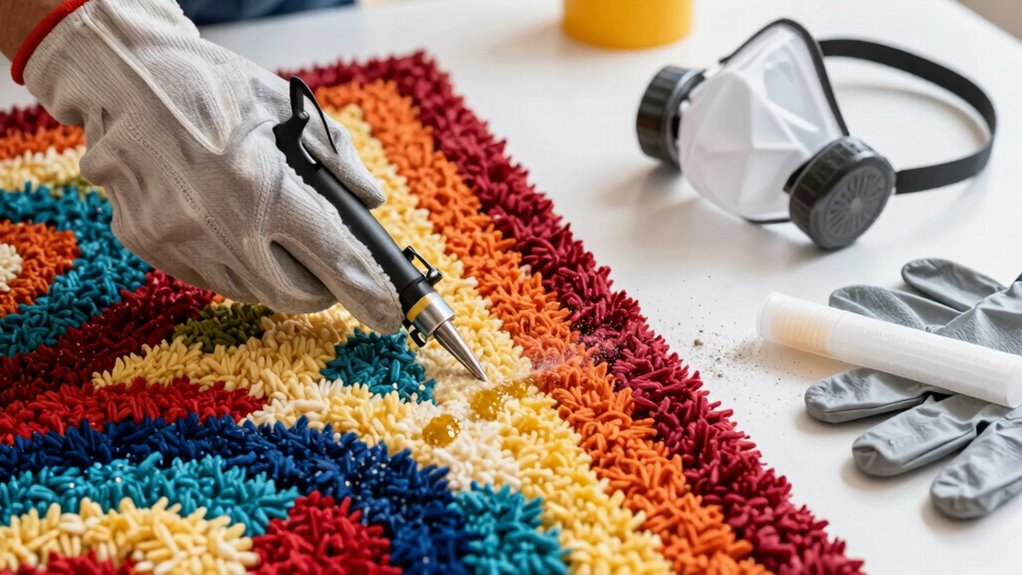
Safety gear is essential for protecting yourself while rug tufting, especially since the process involves sharp tools and potentially harmful materials. Wearing proper personal protective equipment helps prevent injuries and supports emergency preparedness. You should always have the right gear on hand to stay safe throughout your project.
Key safety gear includes:
- Safety goggles to protect your eyes from dust and debris
- Cut-resistant gloves for handling blades
- Dust masks to avoid inhaling fine fibers
- Ear protection if using loud equipment
- Aprons or protective clothing to keep your skin safe
Investing in quality safety gear ensures you’re prepared for accidental slips or dust exposure, making your rug tufting experience safer and more enjoyable.
What Common Safety Mistakes Should I Avoid?
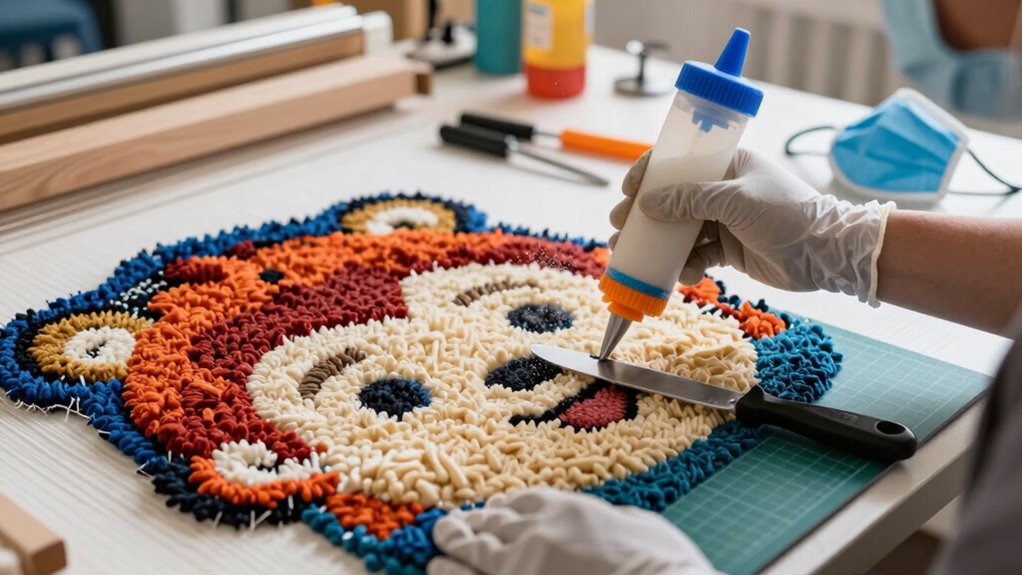
One of the most common safety mistakes in rug tufting is neglecting to double-check your workspace for hazards before starting. Failing to wear protective clothing can lead to injuries from sharp blades or glue spills. Also, ignoring emergency procedures puts you at risk if an accident occurs. To visualize a safe workspace:
| Hazard to Check | Safe Practice |
|---|---|
| Loose cords | Tidy cords and clear pathways |
| Sharp blades | Store blades safely when not in use |
| Dust and fumes | Ensure proper ventilation |
| Spills and leaks | Clean spills immediately |
Avoid rushing or skipping safety steps. Always review emergency procedures, like knowing how to handle cuts or chemical exposure. Staying vigilant helps prevent accidents and keeps your tufting project safe.
Frequently Asked Questions
What Are the Best Ventilation Practices for Rug Tufting Areas?
You should prioritize good air quality by using effective ventilation systems in your rug tufting area. Keep windows open when possible, and use exhaust fans to remove dust, fumes, and fumes from glue and adhesives. Consider installing air purifiers with HEPA filters to improve air quality further. Regularly maintain your ventilation setup to guarantee it functions properly, creating a safer, healthier workspace for you.
How Should I Dispose of Hazardous Waste Like Glue and Dust?
You should follow proper hazardous waste disposal procedures for glue and dust. Wear gloves and a mask to prevent contact and inhalation. Collect waste in sealed, labeled containers designed for hazardous materials. Check local regulations for safe cleanup procedures, as improper disposal can harm the environment. Never pour glue or dust down drains; instead, take them to a designated disposal facility. Always prioritize safety and compliance when handling hazardous waste.
Are There Specific Safety Certifications for Tufting Tools and Supplies?
Hold onto your hat, because safety certifications for tufting tools and supplies aren’t like your average knight’s armor. While there aren’t specific certifications just for tufting, look for tools that meet general safety standards and have reputable safety certifications like UL or CE. These verify your tools comply with safety guidelines, reducing risks. Always double-check product labels and manufacturer info to make sure your supplies meet the necessary tool standards for safe crafting.
How Often Should Safety Equipment Be Inspected or Replaced?
You should inspect your safety equipment regularly, ideally before each tufting session. Check for signs of wear or damage that could compromise its effectiveness. Replace items like gloves, masks, and protective eyewear when they show signs of deterioration to guarantee maximum safety. Considering equipment longevity and inspection frequency helps prevent accidents, so stay vigilant and replace safety gear promptly to protect yourself during tufting projects.
Can Children or Pets Safely Be Around a Rug Tufting Workspace?
Children and pets shouldn’t be around your rug tufting workspace. For child safety and pet safety, keep them out of the area during tufting to prevent accidents with sharp blades, glue, or dust. Always supervise and make sure the workspace is secure. If you need to leave, store tools safely and clean up thoroughly. Prioritizing safety helps protect your loved ones while you work on your rug projects.
Conclusion
Staying safe in rug tufting is like tending a delicate garden—you need the right tools, careful attention, and a watchful eye. By respecting the hazards and following these rules, you’ll keep your workspace a sanctuary of creativity rather than chaos. Think of safety gear and good habits as your trusty watering can and pruning shears—essential for nurturing your craft while avoiding unwanted surprises. Keep safety at the heart of your art, and your creations will flourish safely and beautifully.